Retailers have more data, more AI tools, and more technology than ever before. But many are still asking the same question: where is the measurable business impact?
Across the sessions at Love Generation, one answer became apparent: The retailers creating real value aren’t simply adding more technology. They’re building more context.
That context is what helps a retailer understand who a customer is, what they’re trying to achieve, how products relate to one another, which business goals matter, and what kind of experience will help someone take the next step. It’s what turns customer data into relevance, relevance into conversion, and conversion into sustainable growth.
For Voyado, this is where the future of retail is heading: connected customer experiences powered by customer understanding, product discovery, loyalty, personalization, and AI built for the realities of retail.
The retailers pulling ahead have one thing in common
Most retailers already have more data than they know what to do with, and the challenge now is less about collecting more signals and more about connecting them in a way that helps teams to act.
Customer behavior, product intent, loyalty data, campaign engagement, purchase history, and merchandising logic often live in different systems. When those systems are disconnected, the customer experience becomes disconnected too. Search results become less relevant, emails feel generic, recommendations miss the mark, and teams spend too much time managing tools and not enough time improving the experience. This is why retail context matters.
Retail context isn’t simply customer data. It’s the intelligence that gives every customer interaction meaning. It combines customer intent, product knowledge, merchandising priorities, and business goals so technology can make decisions the way an experienced retailer would.
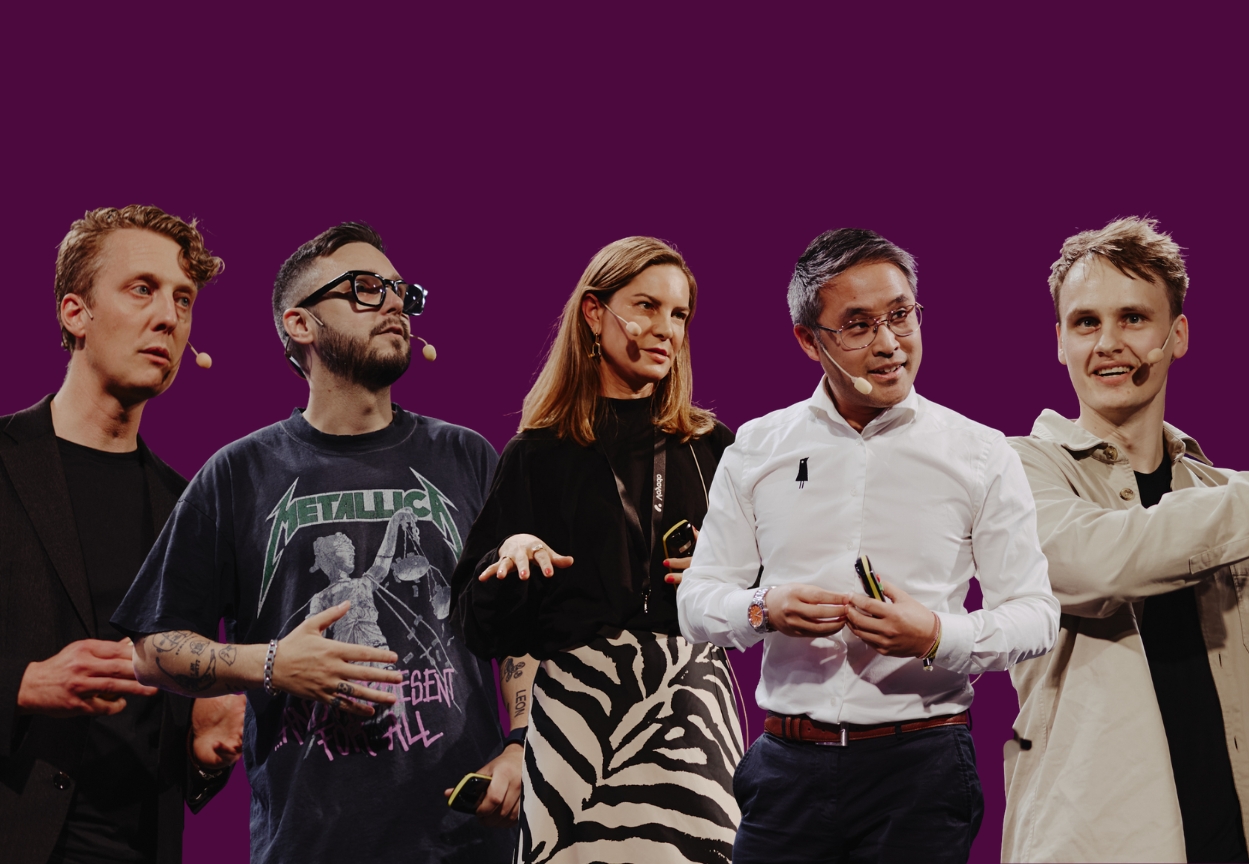
At Love Generation, this idea appeared again and again. H&M showed how better understanding customer intent can improve product discovery. Nordic Nest showed how knowing the customer can drive stronger commercial outcomes. Speakers on our panel showed that technology only creates value when it is applied to real business problems. And Fabian Hedin from Lovable reinforced the point that domain context matters: general intelligence is powerful, but retail has its own complexities.
Technology is at its most useful when it’s powered by context.
Why understanding intent changes everything
A good example of retail context is product discovery. Every search is a customer telling you what they’re trying to achieve. The question is whether your technology understands that intent or simply matches keywords.
That was one of the biggest takeaways from H&M’s Love Generation session. Product discovery is a commercial experience, not just a technical function, and when customers can’t find what they’re looking for, they leave. When search understands intent, handles language better, and connects customers with relevant products faster, the experience improves and so do the outcomes.
These results show why relevance matters so much in e-commerce. A better search experience does more than just make your site easier to use. It reduces friction at the exact moment a customer is showing buying intent.
This is where product discovery becomes part of a much bigger customer experience strategy. Search, recommendations, merchandising, and personalization all depend on understanding the relationship between customers, products, and intent. When that context is connected, retailers can guide customers more effectively from inspiration to purchase.
What Nordic Nest taught us about retail context
Nordic Nest brought the same principle to life from a different angle.
The company has always placed customer experience at the center of its business, with the goal of helping people create homes they love. As the company grew, the team wanted to bring customer data, personalization, automation, and product discovery closer together so every experience could become more relevant.
But as Nordic Nest’s own growth journey shows, relevance depends on understanding the full context around a customer’s decision.
In his Love Generation session, Bank Bergström shared how the company once launched a localized site in South Korea after seeing strong sales from Korean customers on its global site. On paper, localization looked like the obvious next step. In reality, sales dropped by more than 50%.
And the reason wasn’t simply technical. Nordic Nest had changed the customer context. For Korean customers, part of the appeal had been buying Scandinavian design directly from a Swedish company. Once the experience became localized, that distinction was less clear, and the brand was judged against local expectations instead.
It was a powerful reminder that customer understanding isn’t just about removing friction, but about knowing what customers value, why they choose you, and what role your brand plays in that moment.
As Bank put it: “Knowing your customer remains the biggest competitive advantage in retail.”
That idea sits at the heart of the context advantage. The more clearly a retailer understands its customers, its assortment and the intent behind every interaction, the more relevant the experience can become, whether that happens through search, email, SMS, loyalty, automation or product recommendations.
AI is only as good as the context behind it
AI was naturally a major theme at Love Generation this year, but the strongest message wasn’t that retailers should use more AI. It was that AI needs direction, data, and business context to create value.
Jennifer Roebuck Stevens spoke about the gap between AI experimentation and real transformation. Many organizations are testing tools, increasing individual productivity, and launching pilots, but fewer are turning those experiments into measurable business outcomes. The issue is rarely the technology alone but whether the organization has the right data, workflows, and priorities in place to make AI useful at scale.
The panel discussion echoed the same point, demonstrating that retailers seeing repeatable returns from AI aren’t just experimenting more but are focusing on the right problems, connecting teams, and using AI to improve decision-making and execution.
Voyado’s keynote brought this into a retail context, highlighting that the opportunity isn’t just to generate more content, more segments, or more recommendations. Instead, retailers should seek to connect data and decision-making so they can understand what’s happening and what should happen next much faster. That is, as we are seeing, the difference between AI as a standalone tool and AI as part of a customer experience platform.
When AI understands the retail context, it can help teams move from manual analysis to action, from broad campaigns to more relevant communication, and from disconnected experiments to measurable outcomes.
Connected experiences make context actionable
One message came through clearly across the Love Generation sessions: customer understanding only creates value when retailers can act on it.
A customer might discover a product through search, receive a personalized email, join a loyalty programme, browse again on mobile and later visit a store. To the customer, it is one journey. Too often, retailers still manage it through disconnected systems.
When customer data, product discovery, loyalty and marketing automation work together, every interaction becomes more relevant. Teams can personalize with greater confidence, respond to customer intent faster and make decisions based on a complete view of the customer journey.
This is where Voyado’s platform approach comes in. By bringing together customer data, marketing automation, loyalty, product discovery, personalization, and retail intelligence, retailers can turn customer understanding into action across every touchpoint.
The retailers winning tomorrow are building context today
The biggest lesson from Love Generation was that retailers need more connected, contextual, and customer-led experiences. Not more technology.
H&M showed how better product discovery can reduce friction and improve the shopping journey. Nordic Nest showed how understanding customers can translate into more orders from customers who use search. Jennifer Stevens and the panel showed why AI needs to be connected to real business problems. Lovable showed why domain context matters. And Voyado’s keynote tied those ideas together around a single vision: helping retailers create more relevant customer experiences through connected data, intelligence and action.
As AI capabilities become increasingly similar, competitive advantage will not come from chasing every new tool, but from the context those tools can act on.
The retailers creating measurable value are building that context today by connecting customer intent, product knowledge, retail expertise, and business goals, so they can act with greater relevance, move with greater confidence, and grow with greater impact.
That is the path from context to conversion.
And it is exactly what Voyado is built to help retailers do.
About Author