TL;DR
Knowing how to improve retail store operations starts with making better decisions. Too many retailers still rely on gut instinct, spreadsheets, and disconnected systems to manage staffing, merchandising, inventory, and store performance.
Data and AI help your team make smarter decisions every day. Instead of replacing people, they give store teams real-time insights into where to schedule staff, which products to promote, which customers to engage, and what’s driving sales across every location.
In this guide, you’ll learn how to improve retail store operations using data and AI across every major part of your business, with practical tactics you can use to increase efficiency, improve customer satisfaction, and drive better results.
Why store operations need a data upgrade in 2026
Retail operations have never been under more pressure. Your teams are expected to do more with less while delivering a better customer experience every day.
Labor costs keep rising. Online shopping continues to reshape the retail landscape. At the same time, every retail store is expected to improve efficiency, increase sales, and prove the value of every square foot.
The challenge is that many retail store operations still rely on disconnected systems.
- POS data is siloed.
- Customer data lives elsewhere.
- Staffing follows fixed schedules.
- Visual merchandising is rolled out the same way in every store.
Without connected data, it’s difficult to improve retail operations. Your team can’t connect sales transactions, inventory levels, customer behavior, and store performance to see what’s really happening.
Knowing how to effectively measure and use all your retail data is the foundation for making better decisions.
The retailers pulling ahead connect customer, product, and store data into one system, then use AI to turn that information into real-time action.
They adjust staffing, merchandising, and inventory based on what’s happening now, not what happened last week.
Customer identification and data capture at the point of sale
Customer identification is one of the highest-impact improvements you can make to your retail store operations. Every unidentified transaction is a missed opportunity to grow your customer data and improve future customer engagement.
Make customer identification fast and valuable
The easier it is to identify customers, the more often it happens.
Train store teams to identify customers using:
- A phone number.
- An email address.
- A loyalty card.
- An app or QR code.
Then give customers an immediate reason to say yes, such as loyalty points, a digital receipt, or a personalized offer.
With Voyado’s POS Accelerator, every identified purchase is linked to the customer’s profile in real time, making customer data collection in-store part of the normal checkout process.
Track and improve identification rates by store
Treat customer identification like any other store KPI.
Measure identification rates by:
- Store.
- Associate.
- Shift.
Higher identification rates create richer customer data, more accurate same-store sales reporting, and better omnichannel insights.
Use loyalty enrollment as the identification engine
The simplest way to identify more customers is through loyalty.
LAKRIDS BY BÜLOW made loyalty lookup easy with QR codes and POS integration. Today, almost 50% of in-store customers identify themselves as loyalty members, creating richer customer profiles for future personalization and engagement.
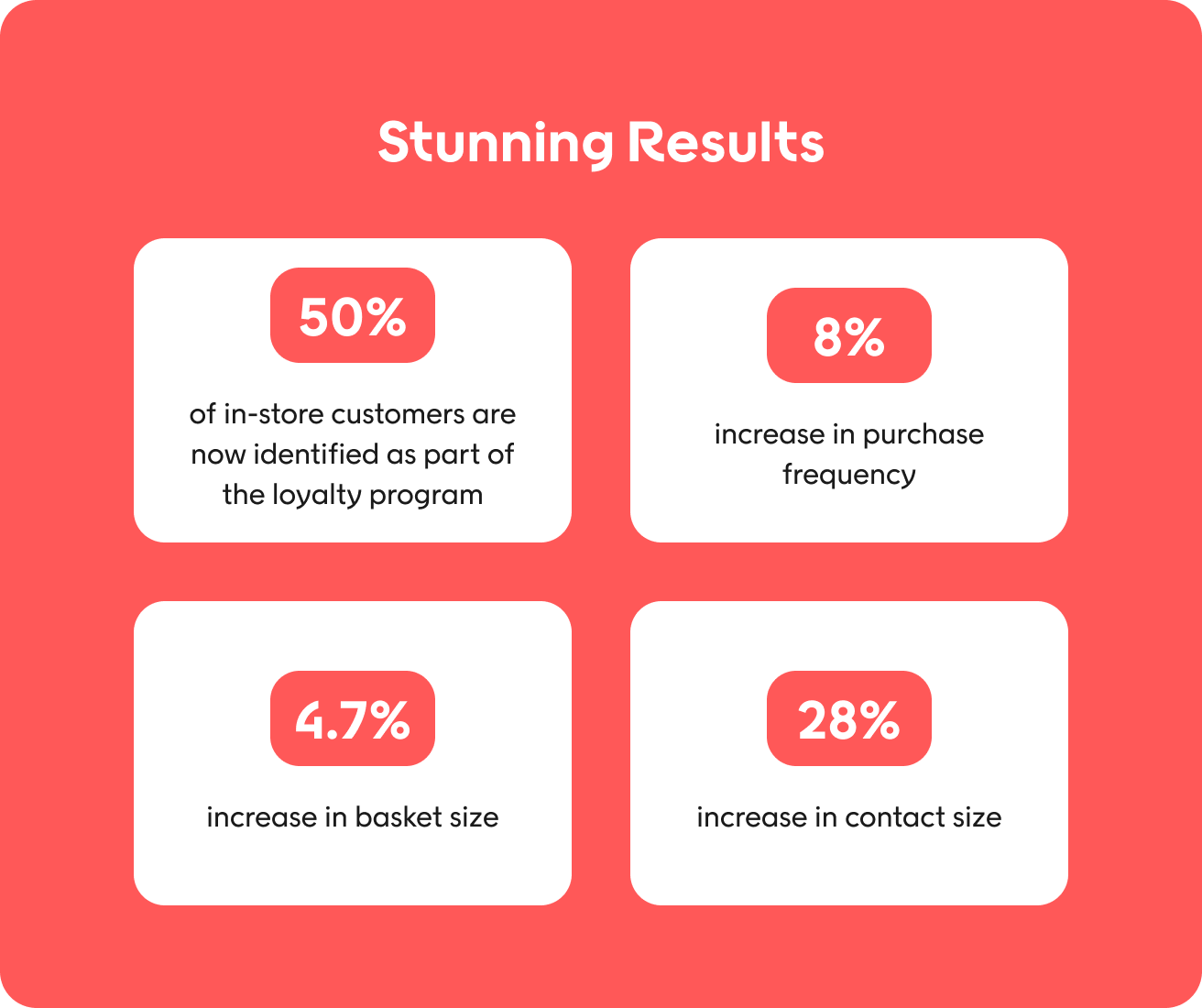
A modern customer loyalty platform turns every identified purchase into data that supports marketing, customer experience, and retail operations.
Staffing and labor optimization
Labor is the biggest controllable cost in retail store operations. The goal isn’t to reduce headcount. It’s to schedule the right people at the right time.
Match staffing to traffic and conversion patterns
Many retail stores still rely on fixed schedules.
Instead, use historical sales transactions, foot traffic, conversion rates, and customer behavior to forecast demand by hour, day, and season.
This helps you avoid:
- Overstaffing during quiet periods.
- Understaffing during peak trading hours.
- Lost sales caused by long queues.
Adding retail location analytics helps retail operations managers fine-tune staffing for each store instead of relying on one schedule for every location.
Identify high-performing associate behaviors
Your best associates leave clues in the data.
Track which behaviors consistently lead to:
- Higher conversion rates.
- Larger basket sizes.
- Better customer identification.
- Improved customer satisfaction.
Use these insights to coach store teams, strengthen employee training, and improve customer service skills. The goal is to raise the performance of every employee, not just identify your top performers.
Optimize scheduling across multi-store networks
Each store has different traffic patterns and sales potential.
Instead of distributing labor evenly, use demand forecasts to shift hours where they’ll have the biggest impact. That’s one of the fastest ways to improve retail operations across a multi-store network.
It’s also worth looking beyond today’s sales. Understanding customer lifetime value helps prioritize stores that attract your most valuable customers, while strong customer retention strategies help keep them coming back.
Smarter scheduling improves operational efficiency without increasing labor costs.
Store-level merchandising and assortment
Central merchandising creates consistency. Local adaptation is what improves store operations at the local level.
Localize assortments by store demand signals
Most retail stores don’t serve the same customers, so they shouldn’t stock the same products.
Use customer data and sales transactions to identify what sells best in each location, including:
- Categories.
- Sizes.
- Colors.
- Styles.
AI can then identify underperforming products and recommend better alternatives based on local demand.
Voyado’s Product Discovery Engine analyzes those demand signals, while its merchandising helps build store-specific assortments instead of relying on regional averages.
Align in-store merchandising with online behavior
Customers often decide what they want before they enter your store.
If a product or category is generating strong online interest, that should influence in-store displays and visual merchandising. Connected omnichannel data helps unify online and in-store behavior, giving store teams a clearer view of local demand.
Optimize product placement and store layout with basket analysis
Your POS data can tell you more than what customers bought. It also shows how they shop.
Use basket and adjacency analysis to improve:
- Product placement.
- Cross-merchandising.
- Display locations.
- Store layout.
You don’t need cameras or complex technology. Sales transactions from identified customers reveal buying patterns over time, helping retailers make smarter merchandising decisions and create a better shopping experience.
Inventory accuracy and stock optimization
Good inventory management is about having the right products in the right retail store at the right time. Data helps reduce stockouts, avoid excess inventory, and improve operational efficiency across your retail business.
Use real-time POS data for demand sensing
Weekly reports are often too late.
Real-time sales transactions give store teams and supply chain management earlier signals when demand changes. If a product starts selling faster than expected, replenishment can happen before stock levels become a problem.
That helps you:
- Prevent lost sales.
- Reduce excess inventory.
- Keep inventory levels aligned with demand.
Connect online demand signals to store inventory
Customers often signal demand before they buy.
If shoppers repeatedly search for or browse a product online, that information should influence inventory management in nearby stores. Connected omnichannel data helps unify online intent with in-store demand, making inventory tracking and replenishment more accurate.
By Malene Birger takes a similar data-first approach. By using customer behavior and segmentation to trigger more relevant engagement, they increased full-price shoppers by 109%, showing the value of acting on customer signals instead of waiting for sales alone.
Reduce shrinkage with data-driven loss prevention
Not every inventory issue starts in the warehouse.
Analyze POS data for patterns such as:
- Frequent voids.
- Unusual refund activity.
- Excessive discounts.
- Irregular transaction timing.
Instead of investigating every store equally, retail operations managers can focus on the locations and transactions where the data highlights the highest risk. That improves inventory management while reducing unnecessary investigations.
In-store conversion rate improvement
Conversion is one of the biggest opportunities in physical retail. Even small improvements can increase sales without adding more traffic.
Measure and benchmark store conversion
Most retail stores already track foot traffic and sales transactions. Fewer measure how many visitors actually buy.
Track conversion by:
- Store.
- Day.
- Shift.
- Promotion.
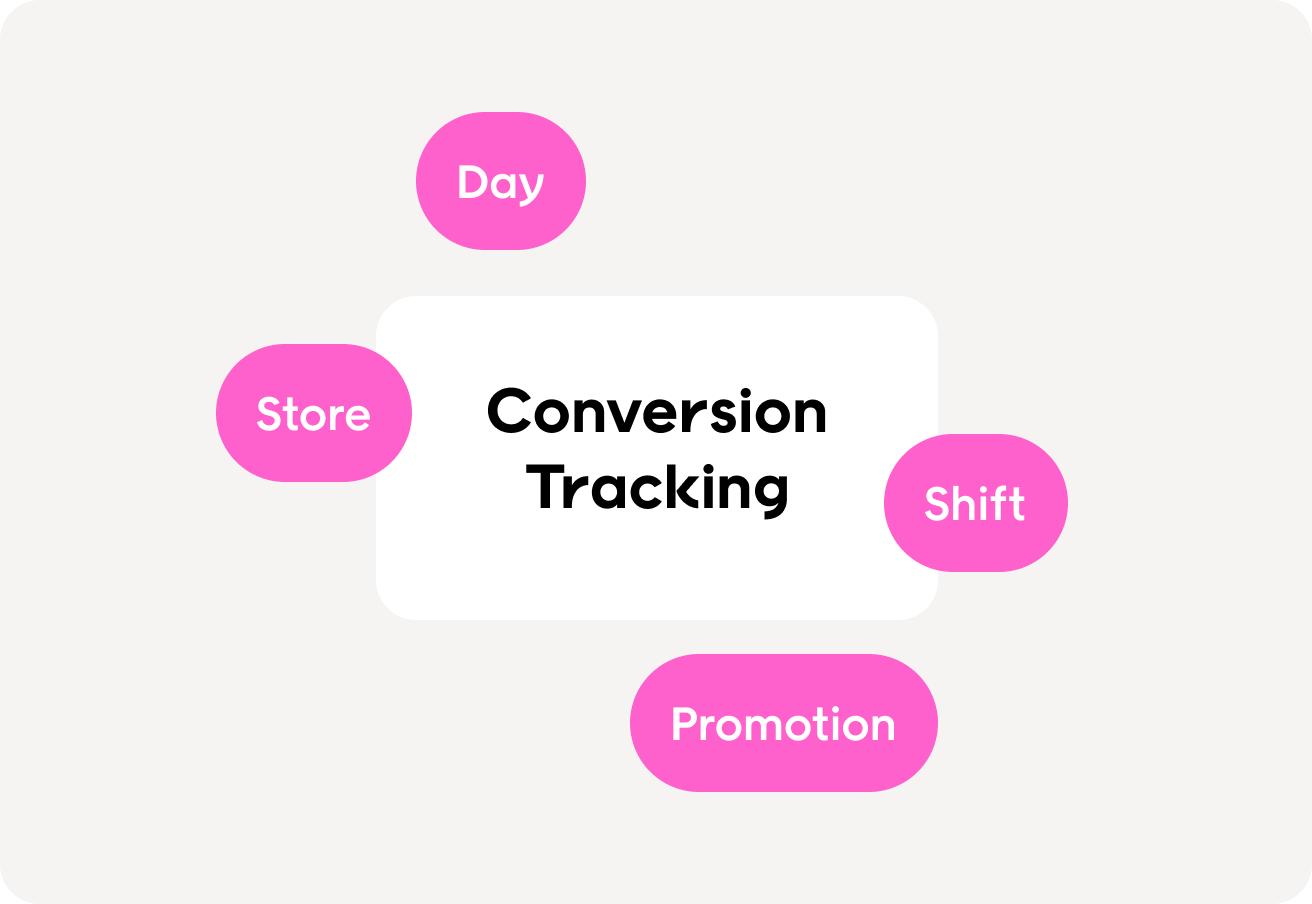
Benchmarking these numbers helps retail operations managers identify best practices, improve sales performance, and spot stores that need support.
Equip associates with customer context
Showing loyalty status, recent purchases, and preferences at checkout helps associates personalize customer interactions and recommend more relevant products. That’s precisely what personalization in retail looks like in-store.
By Malene Birger has seen the impact of using customer data to deliver more relevant experiences. Instead of offering every new customer a discount, the retailer tested a reminder about membership benefits.
“The customers that receive the benefit reminder email in the onboarding automation generate 66 percent more revenue than the customers that receive the email with the offer!” – Laufey Lúðvíksdóttir, CRM and Loyalty Specialist at By Malene Birger
The same principle applies in-store. When associates understand the customer in front of them, relevant conversations often outperform generic promotions.
Trigger in-store engagement from online behavior
Customers expect retailers to remember what they’ve already shown interest in.
If someone browses products online before visiting a store, use that intent to trigger a notification, alert an associate, or surface a personalized offer at checkout.
Unifying online shopping with in-store identification creates a more seamless shopping experience and strengthens customer engagement across sales channels.
Optimize the checkout experience
Long queues and slow checkout create unnecessary friction.
Keep the payment process fast with:
- Contactless payment.
- Fast loyalty lookup.
- Real-time rewards.
- Multiple payment options.
Reducing friction at the final step improves customer satisfaction, creates a unified customer experience, and increases the likelihood that every visit ends in a purchase.
Store performance measurement and analytics
You can’t improve what you don’t measure. Strong retail operations depend on consistent data that every retail store can act on.
Build store-level dashboards with the right KPIs
Give every store manager access to the same dashboard.
Track KPIs such as:
- Revenue.
- Sales transactions.
- Conversion rate.
- Customer identification rate.
- Loyalty enrollment rate.
- Average basket size.
- Sales performance.
- Same-store sales growth.
- Labor productivity.
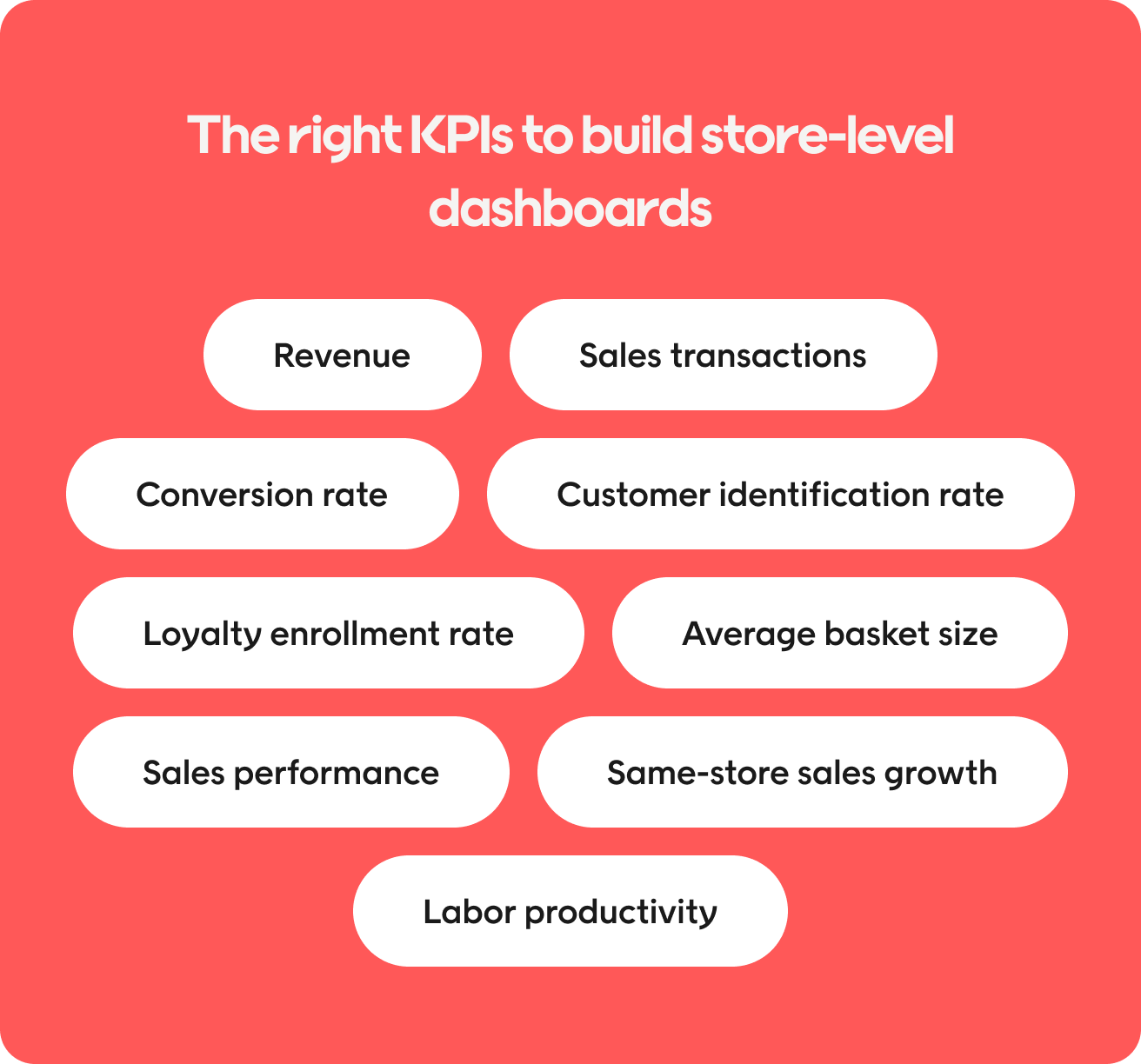
Using retail location analytics gives store teams visibility into local performance instead of waiting for reports from head office.
Compare stores with consistent data
Comparing stores only works if everyone measures performance the same way.
Standardize POS data, customer identification, and KPI definitions across every retail store. That creates fair benchmarks and helps retail operations managers identify best practices instead of comparing inconsistent data.
Connected omnichannel data combined with same-store sales reporting makes multi-store comparisons far more reliable.
Connect store analytics to customer analytics
The most valuable store insights come from connecting store performance with customer data.
Analyze which customer segments drive revenue, how much loyalty members contribute, and where long-term value is growing.
This requires POS data linked to customer profiles, not just store-level revenue reports. Strong retail customer analytics make those patterns much easier to spot.
Knowing how to effectively measure and use all your retail data helps retail operations managers turn those insights into better decisions across every retail store.
How Voyado helps retailers improve store operations
The biggest challenge in retail store operations isn’t a lack of data. It’s disconnected data. Voyado brings together your POS, customer, loyalty, and omnichannel data so every decision is based on the same information.
POS Accelerator: Build every decision on better data
Every in-store purchase is connected to the customer’s profile in real time.
You’ll be able to:
- Identify more customers.
- Analyze sales transactions more accurately.
- Measure store performance with confidence.
- Improve retail operations using complete customer data.
Unified customer profiles: Give every team the same customer view
Connected omnichannel data gives store associates, marketers, and analysts access to the same customer profile.
That means more relevant customer interactions, a more consistent customer experience, and better decisions across every retail store.
Native loyalty: Turn every checkout into a growth opportunity
A customer loyalty platform helps your team:
- Increase customer identification.
- Strengthen customer engagement.
- Enrich customer data with every purchase.
- Reward loyalty without slowing the checkout process.
Connected analytics: Act on insights faster
Voyado connects store performance, loyalty, and customer data in one platform.
Instead of reacting weeks later, retail operations managers can analyze customer data, spot changing sales patterns, and improve operational efficiency as issues emerge.
Strong retail customer analytics reveal where action is needed, while knowing how to effectively measure and use all your retail data helps turn those insights into measurable improvements.
If you’re ready to connect your POS, customer, and loyalty data in one platform built for retail operations, book a demo.
Final thoughts
Improving retail store operations isn’t about replacing store teams with technology. It’s about giving them better data to make smarter decisions on staffing, inventory, merchandising, and customer engagement.
The retailers seeing the biggest gains connect their POS, customer, loyalty, and analytics data into one system. When every sales transaction is linked to a customer profile, store operations become more efficient, customer satisfaction improves, and every retail store performs with greater confidence.
Start with the highest-impact improvements: customer identification, demand-based staffing, and store-level performance dashboards. That’s how to improve store operations without adding more manual work and how to streamline store operations as you scale.
FAQs
How can I improve retail store operations with data?
Connect POS data to customer profiles first. Then use those insights for staffing, inventory management, visual merchandising, and store performance measurement.
What KPIs should I track for store operations?
Track revenue, sales transactions, conversion rate, customer identification rate, loyalty enrollment, average basket size, sales performance, labor productivity, and inventory levels.
How does AI help retail store operations?
AI forecasts demand, supports managing inventory, optimizes staffing, detects unusual transaction patterns, and automates reporting so retail operations managers can act faster.
How do I improve customer identification in physical stores?
Use loyalty as your primary identification method. Train store teams to ask for a phone number, email, or app scan, and make the process quick by offering points or a digital receipt.
How do I connect online and in-store data?
Use a platform that combines POS, e-commerce, loyalty, and customer data into one profile. This lets online shopping and in-store purchases inform each other and creates a more unified customer experience.
How does Voyado help improve retail store operations?
Voyado connects POS, loyalty, and customer data in one platform. That helps retail operations managers improve customer engagement, personalize in-store experiences, and measure store performance with confidence.
What’s the biggest mistake retailers make with store operations data?
Keeping POS and customer data separate. Without connected data, it’s harder to improve retail operations, manage inventory, benchmark stores, and make informed decisions.
About Author