AI can look surprisingly simple from the outside. Launch a pilot. Test a new tool. Generate excitement. Then comes the difficult part: Getting people to actually trust it, adopt it, build around it, and turn early momentum into something that really changes the business.
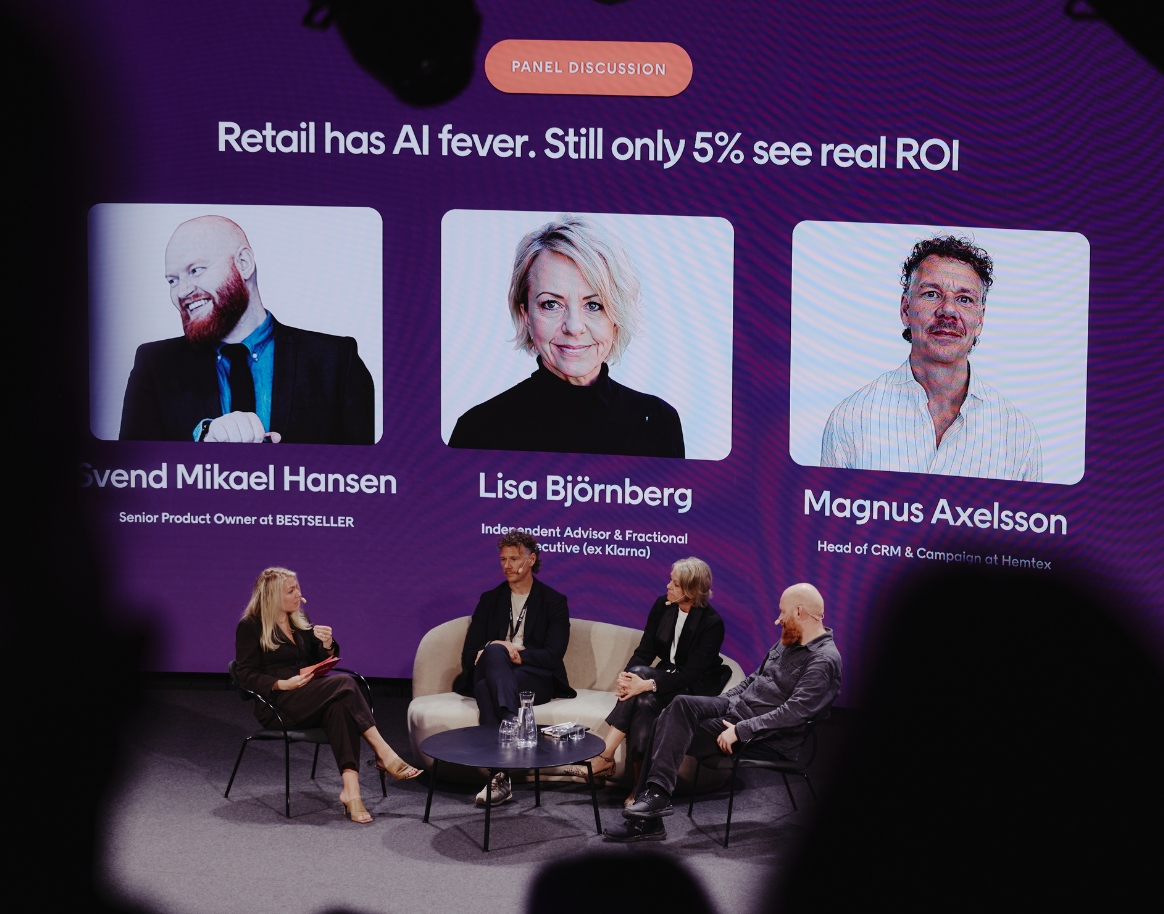
This Love Generation 2026 panel takes the conversation beyond experimentation and into the reality of making AI work at scale. Bringing together Svend Mikael Hansen from BESTSELLER, Magnus Axelsson from Hemtex, and transformation advisor Lisa Björnberg, who has experience leading change initiatives at companies including Klarna and HubSpot, the discussion offers a practical look at what organizations are learning as AI becomes part of everyday work.
The conversation moves through the gap between ambition and impact, and why so many initiatives stall before they create measurable value. Along the way, the panel explores the roles of culture, leadership, and trust, as well as the challenge of helping people move from curiosity to confidence.
There is plenty here for anyone navigating AI inside their own organization. Less focus on grand predictions, more focus on the decisions and behaviors that shape whether progress actually happens.
In this session, you’ll hear:
- Why so many AI initiatives end up trapped in experimentation mode
- The idea of “activity theatre” and how organizations accidentally create it
- Why culture can accelerate AI adoption or slow it down completely
- How trust influences whether teams actually use new tools
- The balance between structure and experimentation
- Practical lessons from companies working through AI transformation in the real world
- Why the human side of change keeps returning to the center of the conversation
Interested in this topic? Read our report, created in partnership with Retail Economics: The state of AI in European retail marketing and e-commerce.