TL;DR
Voyado chooses frequently bought together complements from product data, live stock, and shopper intent.
- Fix the data first. Clean attributes and random pairings. Best for: large, variant-heavy catalogs.
- Treat stock as eligibility. Hide sold-out add-ons. Best for: multi-market UK and EU ranges.
- Prove lift with control groups. Track profit per session. Best for: teams reporting to finance.
- Back live signals. H&M cut zero-hit search by 50%, and Voyado audits typically identify opportunities worth 10–20% in conversion uplift. Best for: your business case.
A shopper adds sneakers to the cart. The frequently bought together block then offers random best sellers or an out-of-stock add-on, when socks that fit would have grown the basket.
The root cause is inconsistent product data, undefined item relationships, and only a merchandiser knowing what goes together, which doesn’t scale.
This guide covers cross-sell strategies, complete-the-look, placement, data, and measurement for UK and EU e-commerce businesses under margin pressure. If you run a small online store in one market, a Shopify app will do. Everything below is for large, multi-market catalogs.
What frequently bought together is and how it works
Frequently bought together is a recommendation module that suggests products other shoppers bought alongside the item being viewed or added to the cart.
Basic tools count how often two products share a basket and show the strongest pairs.
That works for best sellers, but it breaks for new products, thin categories, and sold-out items. Voyado combines shopper behavior with product intelligence, product lifecycles, and up-to-date stock levels.
Why frequently bought together often feels random
Sneakers land in the cart, and the frequently bought together block suggests a phone case. That’s cross-sell recommendations ranked by popularity, blind to the basket.
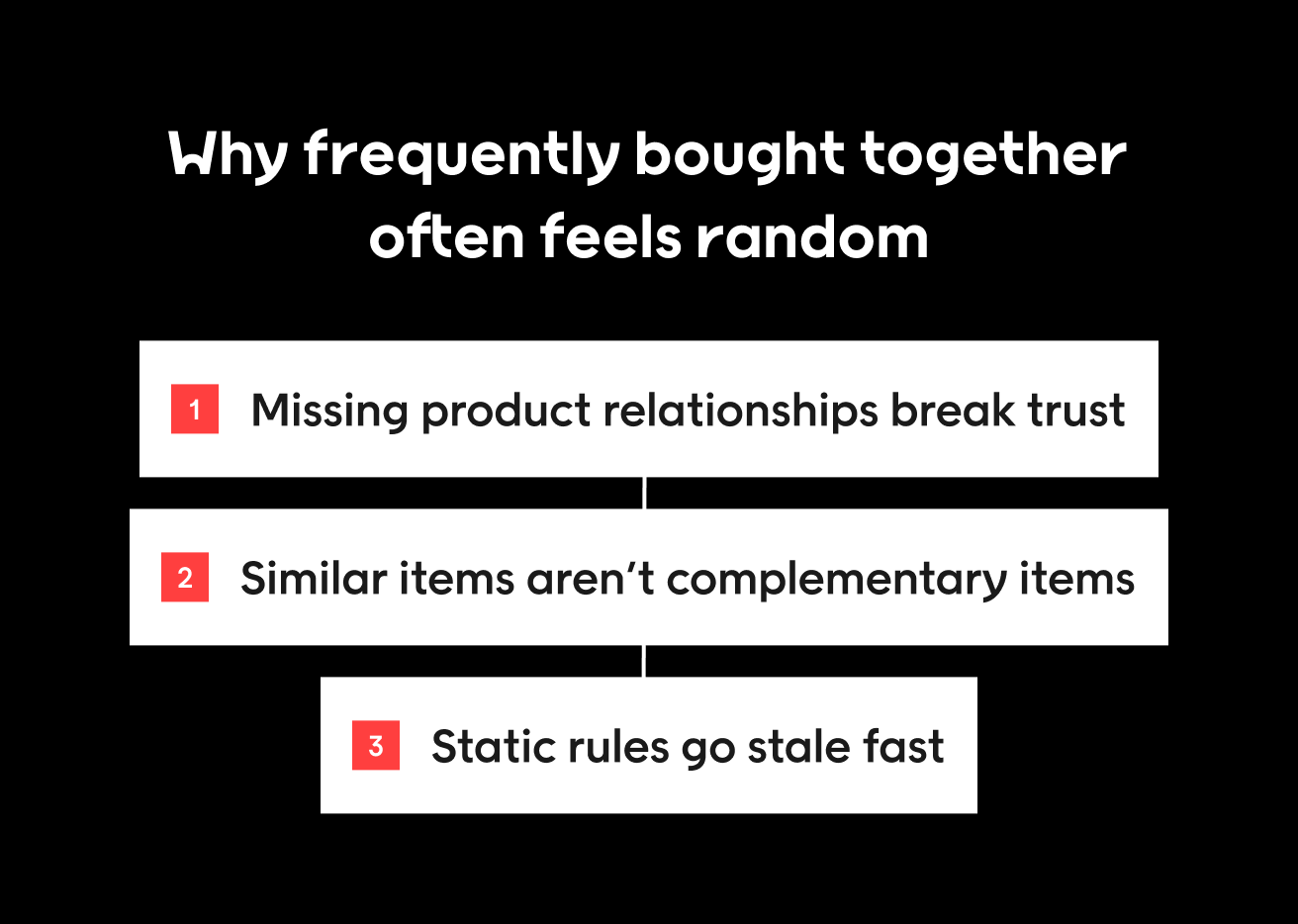
1. Missing product relationships break trust
Pairings fail when fit or occasion links live only in a merchandiser’s head. Voyado builds retail knowledge in, including how variants relate by size and color.
2. Similar items are not complementary items
Global best sellers and near-duplicates erode trust with loyal customers. Socks or a fitness watch complement sneakers. A second pair doesn’t.
3. Static rules go stale fast
Fixed bundles ignore seasonality, newness, and current behavior. H&M cut zero-hit search by 50% after adding richer signals into search and ranking.
Cross-selling, upselling, and complete the look are not the same job
When sneakers hit the cart, frequently bought together often lumps three tactics into one widget, so you can’t prove average order value (AOV) lift.
Upselling and cross-selling are different sales techniques with separate goals, as these cross-selling examples show.
Cross-selling finds the next useful item
Cross-selling focuses on the primary purchase, encouraging customers to add complements like sports socks or a fitness watch to their sneakers.
Upselling in e-commerce swaps in a better fit
In e-commerce, upselling encourages customers to trade up to a better model, premium support, or a larger pack when it fits intent.
An upsell replaces the item, while add-ons and bundles at a discounted price are separate jobs.
Complete the look drives styled discovery
In fashion, home, and beauty, styled combinations beat raw co-purchase data.
A London shopper viewing a linen blazer wants matching trousers, so define style attributes to complete the look at scale.
Cross-selling examples from UK and EU retail
ASOS shows a “Buy the Look” block on product pages with the other items the model is wearing.
Fashion brand JACK & JONES grew average order value by 33% with Voyado.
Why retail-trained AI picks better complements than generic AI
Frequently bought together breaks first without retail context. AI is only as good as its context, and Voyado brings retail context to every search and recommendation.
That gives your cross-selling strategies a faster start. 500+ retail brands trust Voyado.
Product data, crowd behavior, and the shopper: the 3 signals behind a good pairing
- Product intelligence understands attributes, newness, and product lifecycles.
- Shopper behavior in real time reveals what each visitor intends to buy.
- Customer personalization tailors results to each known customer.
Voyado keeps search, listings, and personalized recommendations aligned, so pairings stay consistent.
How to handle new products and seasonal ranges with little history
Frequently bought together struggles when products have no purchase history, like a spring range launching only in Spain.
Enriched category, material, size, color, and occasion attributes let it match complements on day one, and newness, season, and lifecycle stage shape ranking.
Tools that learn your data as they go get there eventually, while built-in retail knowledge gets there sooner.
The product data fixes that make cross-selling strategies scale
Effective cross-selling starts with catalog groundwork, and frequently bought together stops pairing sneakers with random extras once it’s done.
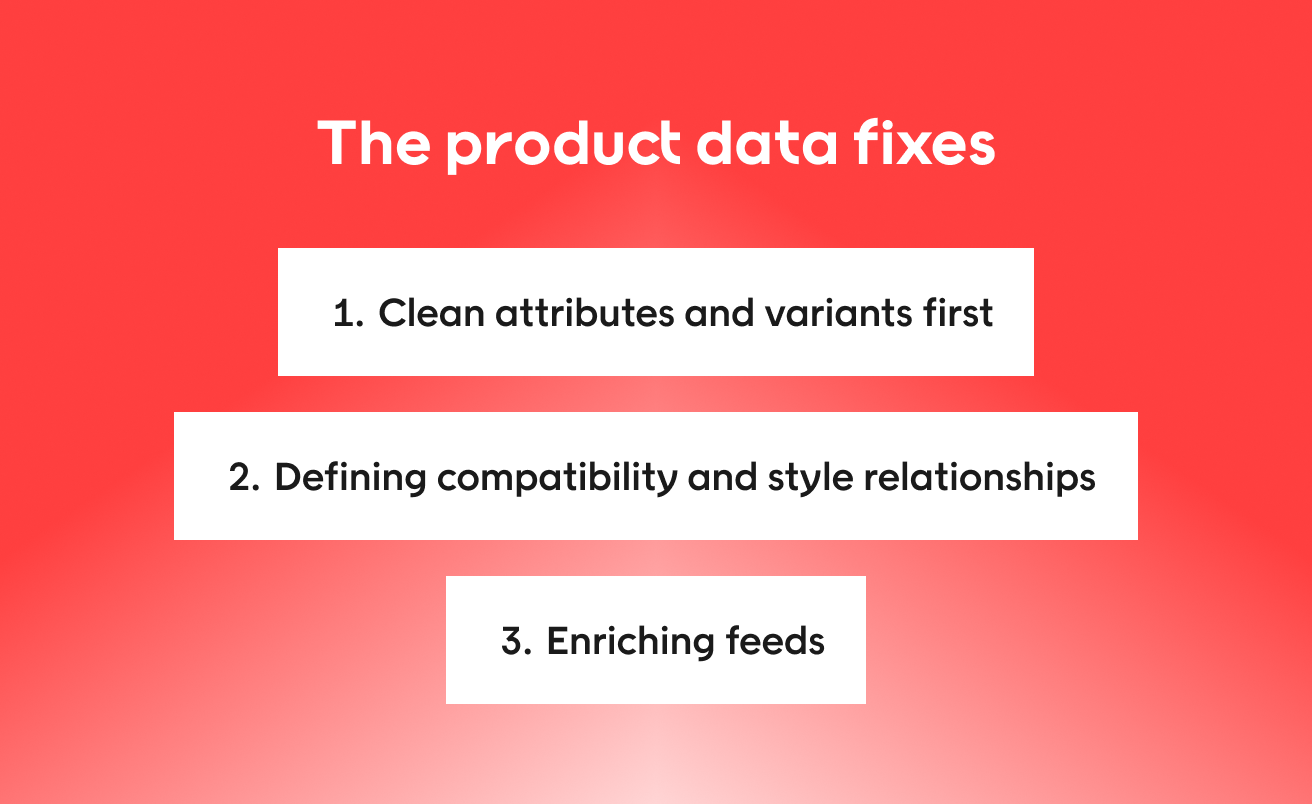
Clean attributes and variants first
To cross-sell effectively, standardize these fields:
- Size
- Color
- Material
- Compatibility
- Gender or audience
A UK 8 and an EU 42 can be the same sneaker, and mismatched formats block pairings.
Define compatibility and style relationships
Category tags aren’t enough. Map accessories, replacement parts, routines, and outfits explicitly.
A camera bag must fit the camera, and socks the sneaker’s sport and size.
Outerwear, trousers, and bags need style links that refresh with each seasonal collection.
Enrich feeds instead of relying on manual spreadsheets
Spreadsheet cleanup can’t keep pace with an enterprise catalog. For fashion catalogs, Voyado Product Discovery uses image analysis to automatically identify color, pattern, brand, materials, and occasion.
How stock-aware recommendations protect conversion
Make stock the first eligibility rule for frequently bought together, because cross-sell recommendations earn their place only when shoppers can buy them.
Exclude unavailable sizes and markets
A rain jacket in stock in Germany but sold out in the UK shouldn’t appear for UK shoppers.
Out-of-stock add-ons hurt customer satisfaction and lead to abandoned carts. Voyado uses real-time stock to keep them out.
Swap sold-out add-ons without breaking the look
If the first-choice running socks are gone, show another pair or a fitness watch that still fits the original purchase.
Capture demand with back-in-stock alerts
An opt-in back-in-stock alert turns a missed add-on into future revenue and supports customer retention.
Where and when to show cross-sells
Frequently bought together works best when shopper intent is high and friction is low. In cross-selling e-commerce, placement should match where the shopper is in the buying journey.
Product page cross-selling examples
Product pages suit replenishment, compatibility, and outfit building, like a sofa with cushions. Inconsistent feeds make blocks feel guessed, while clean data improves the customer experience.
Cart and mini-cart placements
The cart is high intent, but only relevant products in stock work there.
Cross-sell products like fitting socks or a fitness watch drive a higher average order value, and margin rules keep it profitable.
An add-to-cart signals customer buying intent, while a page view only means a shopper looked.
What to suppress at add-to-cart
Suppress items already in the cart or matching a previous purchase, plus anything that can’t ship, doesn’t fit, or hurts margin.
Ethical cross-selling helps shoppers finish a purchase instead of using aggressive sales tactics to convince customers. Voyado bases checkout recommendations on what’s already in the customer’s cart.
Search and browse results
Recommendations support the customer journey before the basket, and every unmatched intent is lost revenue.
Search that understands “something warm for hiking” can show socks and base layers beside the jacket.
With Voyado, shoppers can also describe products in their own words, and agentic discovery guides them to the right items through conversation, with no language barriers.
Editorial and guide pages
Post-content triggers turn guides into cross-selling opportunities by sending readers back to products. A UK half-marathon guide should end with shoes, socks, and a watch.
Carry the same pairing logic into email, SMS, and stores
Frequently bought together logic should extend beyond the website, because repeat visits build customer lifetime value.
With Voyado, the same recommendations can run in post-purchase and win-back emails and on-site messages, so offers stay consistent and strengthen customer relationships.
The initial transaction in-store should shape online pairings, and sales representatives can suggest the same complements.
When customer data should personalize cross-sell recommendations
Frequently bought together raises a decision: When does a pairing need customer data, and when is basket context enough?
For current customers, profile-based cross-sell recommendations need unified purchase, behavior, and customer loyalty data to avoid conflicting logic. Consent is often the governance gap.
Use behavior, loyalty, and purchase history where they help
Past purchases and loyalty preferences earn their place with existing customers. Voyado adjusts results in real time based on what it knows about each customer.
Sneakers in the cart can surface sports socks on context alone.
A new customer has no profile, and not every recommendation needs personal data, so context-only logic is a valid, lower-risk default.
Personalize only where consent allows
Under the General Data Protection Regulation (GDPR), UK GDPR, and cookie rules, document data use and personalize only where consent allows.
Reliable point-of-sale (POS), e-commerce, loyalty, and marketing connections keep consent consistent. Confirm your approach with legal counsel.
Localize pairings for each UK and EU market
Frequently bought together defaults often assume one US-style market. Random cross-sells fail first when assortments, prices, and delivery rules differ across your customer base.

Assortment, currency, and VAT
Illustratively, a £45.00 hoodie pairs with a £12.00 beanie in the UK.
In Ireland, the same hoodie at €55.00 pairs with a local scarf, both prices including value-added tax (VAT).
Language, labels, and local demand
Translate the add-on module title, such as “Passend dazu” for German shoppers. Voyado combines real-time stock levels and localization with your merchandising strategy.
The governance rules that stop pairings from conflicting
Frequently bought together needs governance more than constant manual upkeep. A short rule set keeps upselling and cross-selling consistent with your marketing strategy.
Decide margin versus conversion priorities
Your e-commerce lead sets the goal (margin, conversion, or a defined balance) before anyone tunes logic. Voyado then applies it through algorithmic merchandising.
Set exclusions, fallbacks, and campaign overrides
- Banned pairings
- Campaign priorities
- Local promotions
- Backup recommendations
Contextual best sellers make better fallbacks than global ones.
Review at each seasonal range change or campaign launch, with one owner per market reviewing customer feedback.
How to measure AOV lift without fooling yourself
Frequently bought together can look like a winner because clickers spend more, though they often would anyway.
Proof that cross-selling efforts work comes from a randomized control group in each UK and EU market.
Set up a holdout group before launch
Set control groups, test windows, and sample sizes before launch. Comparing clickers with non-clickers isn’t an incrementality test.
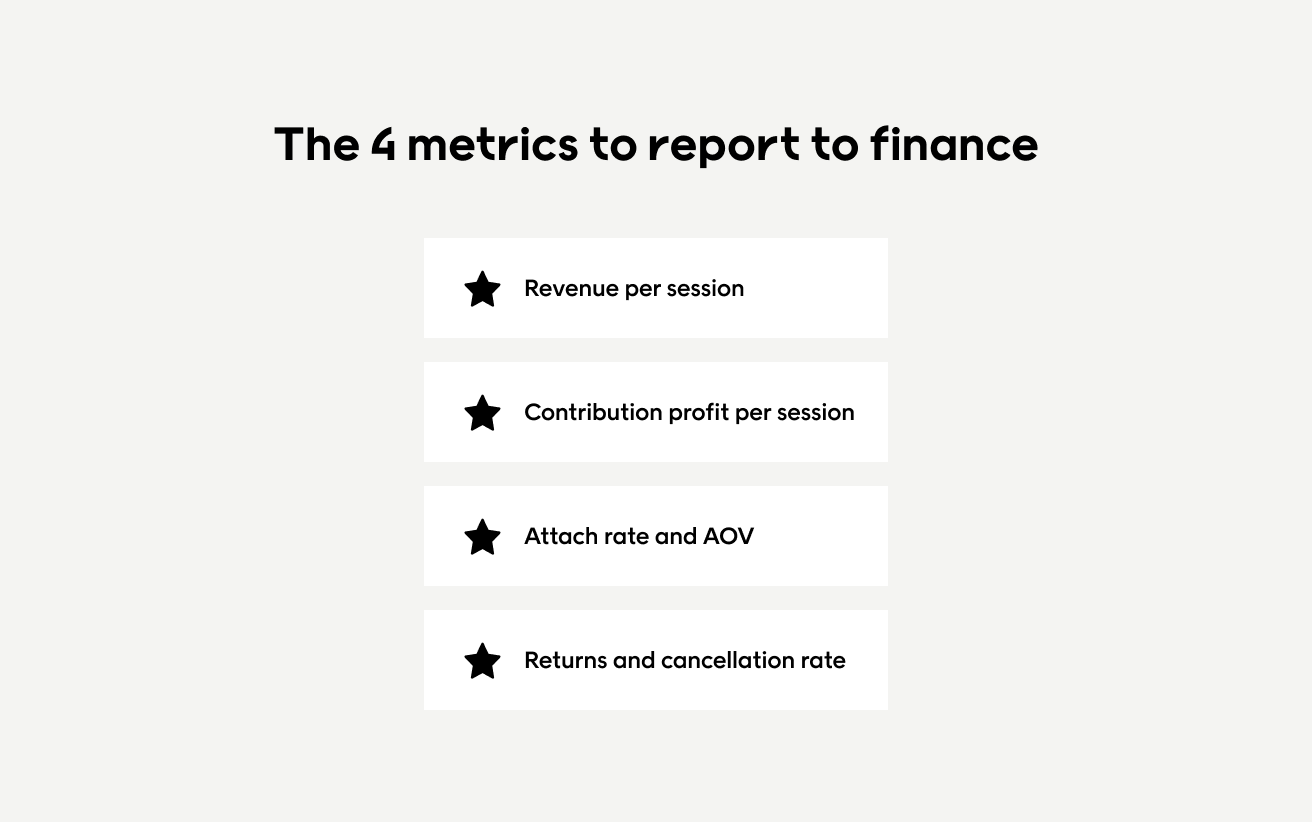
The 4 metrics to report to finance
Judge Voyado recommendations, like any others, on profit rather than clicks.
1. Revenue per session
Your cleanest top-line outcome, since a few large orders can’t overstate it.
2. Contribution profit per session
Add-ons can look like they’re boosting sales while eroding profit. Voyado Retail Media keeps sponsored products relevant, but call out flat or falling profit.
3. Attach rate and AOV
A bigger basket is the most obvious benefit, but neither metric stands alone.
4. Returns and cancellation rate
Bigger baskets mean little if items come back, and returns often signal customer dissatisfaction. Cleaner size and compatibility data can help cut avoidable returns.
Why clickers spend more, and why that proves nothing
Don’t claim recommendations increase sales from clicks or last-touch revenue alone. Demand control-group evidence from every vendor, Voyado included.
Widget or connected discovery? A 7-point frequently bought together scorecard
A set-and-forget frequently bought together tool often costs more than its license once manual fixes add up.
UK and EU pricing in £ and € isn’t always published, so request quotes from every vendor, Voyado included.
When a simple widget is enough
A small e-commerce store with a simple catalog, one market, and hand curation can manage with a widget.
When connected discovery pays off
Multi-market ranges, complex variants, and customer data split across POS, e-commerce, loyalty, and marketing signal your business model has outgrown widgets. Voyado Product Discovery is built for that point.
The 7 criteria to score
1. Catalog readiness
No tool rescues missing attributes, variants, or relationships, though automated attribute extraction speeds enrichment.
2. Market coverage
Can it adapt to local stock, margins, and demand without separate rules?
3. Recommendation relevance
Does it pick socks for sneakers over near-duplicates?
4. Integration effort
Count search, stock, POS, loyalty, and marketing connections, plus governance.
5. Storefront performance
Test load speed and stability on your own key pages.
6. Merchandising workload
Measure manual tuning, quality checks, and per-market upkeep.
7. Measurement quality
A tool that can’t prove lift with control groups can’t justify budget.
A 30-day readiness checklist for your team
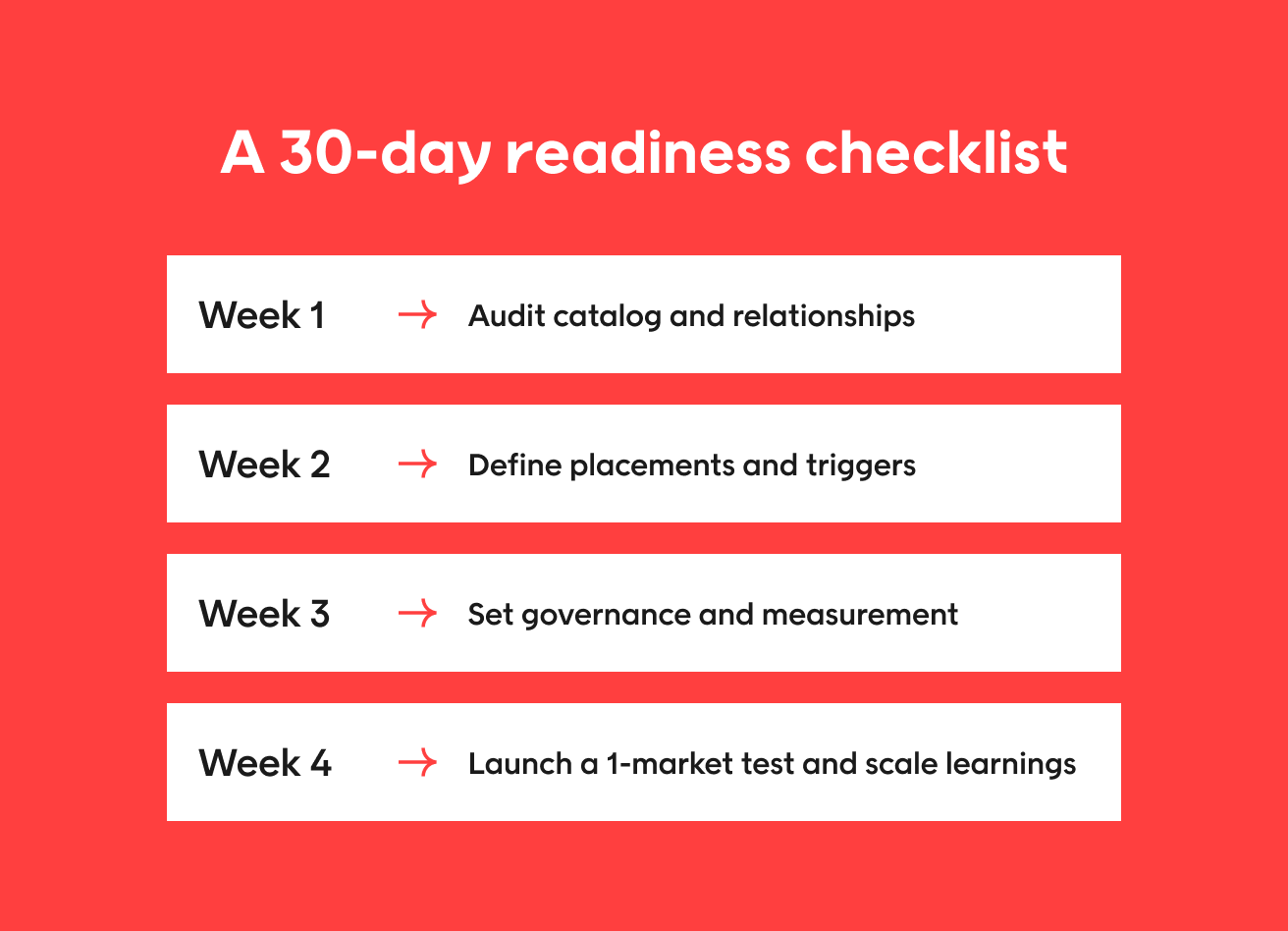
Week 1: audit catalog and relationships
Audit attributes, variants, compatibility fields, and stock feeds. If you run 1M+ monthly sessions, Voyado offers a free product discovery audit to check readiness.
Week 2: define placements and triggers
Decide which cross-selling techniques run at each stage of the sales process, starting with add-to-cart.
Week 3: set governance and measurement
Name owners (including in-store sales teams), exclusions, control groups, and KPIs before launch.
Week 4: launch a 1-market test and scale learnings
Start in one UK or EU market. Expand once localization, stock rules, and reporting are stable.
Fix the data, gate on stock, prove the lift
Frequently bought together pays off when it’s done right. Static, random cross-sells leave basket size flat, while context-aware, in-stock complements timed to intent grow it and increase customer lifetime value.
Voyado Product Discovery moves recommendations from static pairings to complements chosen from product data, live stock, and shopper intent across UK and EU markets.

FAQs
How does the frequently bought together algorithm work?
Good frequently bought together logic blends co-purchase data with product attributes, live stock, and shopper intent to suggest complementary products, like socks that fit the sneakers in the cart.
How do we tell whether a frequently bought together tool finds genuinely complementary products rather than just showing similar items or best sellers?
Complementary product recommendations should pass four demo checks: compatibility, variant fit, in-stock add-ons, and suppression of near-duplicates.
How should we test whether frequently bought together recommendations increase basket size and margin rather than discounting purchases shoppers would have made anyway?
Test frequently bought together with a randomized control group at session level, tracking contribution profit per session, returns, and AOV.
Can frequently bought together recommendations adapt to stock, margins, and local demand in each market without our merchandising team maintaining separate rules?
Yes, frequently bought together recommendations can adapt when eligibility and ranking use live stock, business rules, and market context. Algorithmic merchandising cuts rule maintenance.
How do frequently bought together tools handle new products and seasonal ranges when there isn't much purchase history in each country?
Frequently bought together tools handle new products and seasonal ranges with enriched attributes, relationships, newness, season, and in-session behavior until history builds. Voyado has this retail knowledge built in.