TL;DR
AI product recommendations help shoppers find the right products faster. By analyzing browsing behavior, purchase history, product data, margin, inventory, and context, modern recommendation engines improve product discovery and increase conversions.
Retailers now use recommendations across search, category pages, product pages, cart, email, and lifecycle marketing journeys.
Voyado connects recommendations with site search, agentic merchandising, and retail marketing automation, helping retailers turn shopper intent into stronger product discovery and revenue.
Why AI for product recommendations matters more in 2026
As e-commerce catalogs continue to grow, more products, variants, and choices make it harder for shoppers to find what they want quickly.
AI product recommendations help retailers guide shoppers toward relevant products using browsing behavior, purchase history, product data, and context.
This improves product discovery while supporting higher conversion rates, stronger average order value, and more revenue per visitor.
For many retailers, product discovery has become a core growth lever. Recommendations are now part of the strategy for helping customers find the right products faster and turning intent into purchases.
AI-powered product recommendations across the customer journey
AI-powered product recommendations help retailers surface relevant products across the ecommerce experience.
Recommendation engines use signals such as:
- browsing history
- purchase history
- customer interactions
- other behavioral data points
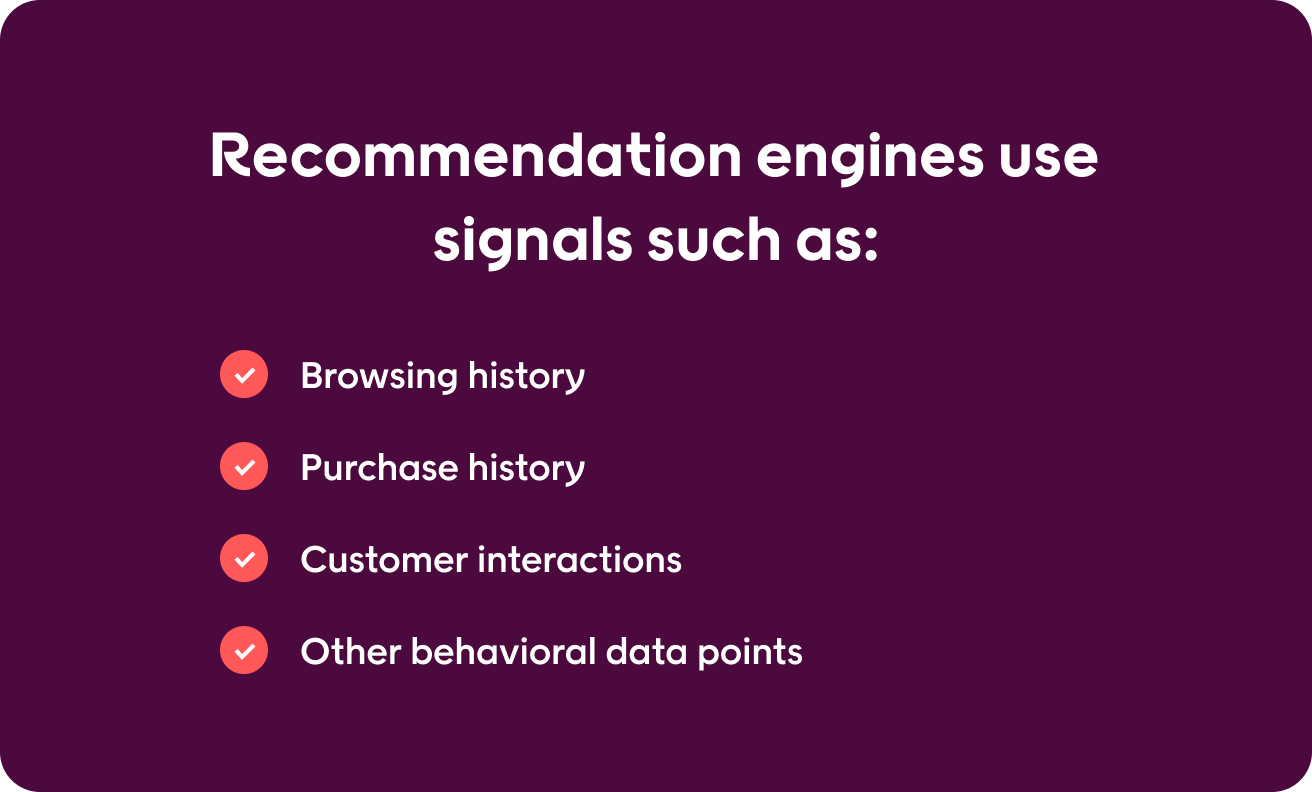
These signals power personalized product suggestions that improve customer experience and increase conversions.
A product discovery engine uses machine learning algorithms, collaborative filtering, and predictive analytics to turn product data and customer behavior into relevant recommendations across the ecommerce site and beyond.
Homepage and landing pages
Recommendation engines highlight relevant products, trending items, and personalized suggestions using browsing behavior, customer preferences, and historical data.
This helps online shoppers discover products faster and improves the personalized experience from the first visit.
Category pages and product listing pages
On category pages, machine learning algorithms help recommendation systems surface relevant product suggestions across large catalogs.
Signals such as purchasing patterns, past purchases, and similar customers guide product discovery and improve conversion rates.
Product detail pages
Product pages use personalized product recommendations to show complementary products, similar items, and bundles.
Collaborative filtering, browsing history, and previous purchases help generate tailored recommendations that increase average order value and help e-commerce businesses increase sales.
Cart and checkout
Cart and checkout recommendations surface relevant suggestions and complementary items based on cart contents, inventory management signals, and shopper preferences. AI-driven insights help boost average order value and e-commerce sales.
Email and lifecycle marketing
AI-powered recommendations also extend beyond the e-commerce website. When connected with retail marketing automation and unified customer data, the same recommendation engine can power
- browse abandonment,
- cart abandonment,
- replenishment,
- post-purchase,
- and win-back campaigns.
These personalized recommendations help e-commerce platforms automate customer engagement, strengthen customer loyalty, improve customer retention, and drive repeat purchases across digital marketing channels.
What makes AI-powered product recommendations effective
AI-powered product recommendations use product data, customer data, and behavioral signals.
Machine learning analyzes things like:
- browsing behavior
- purchase history
- customer interactions
This generates relevant product suggestions that support product discovery, increase conversions, and grow average order value on the e-commerce site.
Product recommendations connect these signals to deliver AI-powered recommendations that guide online shoppers toward relevant products and improve the overall customer experience.
Core inputs behind effective recommendations
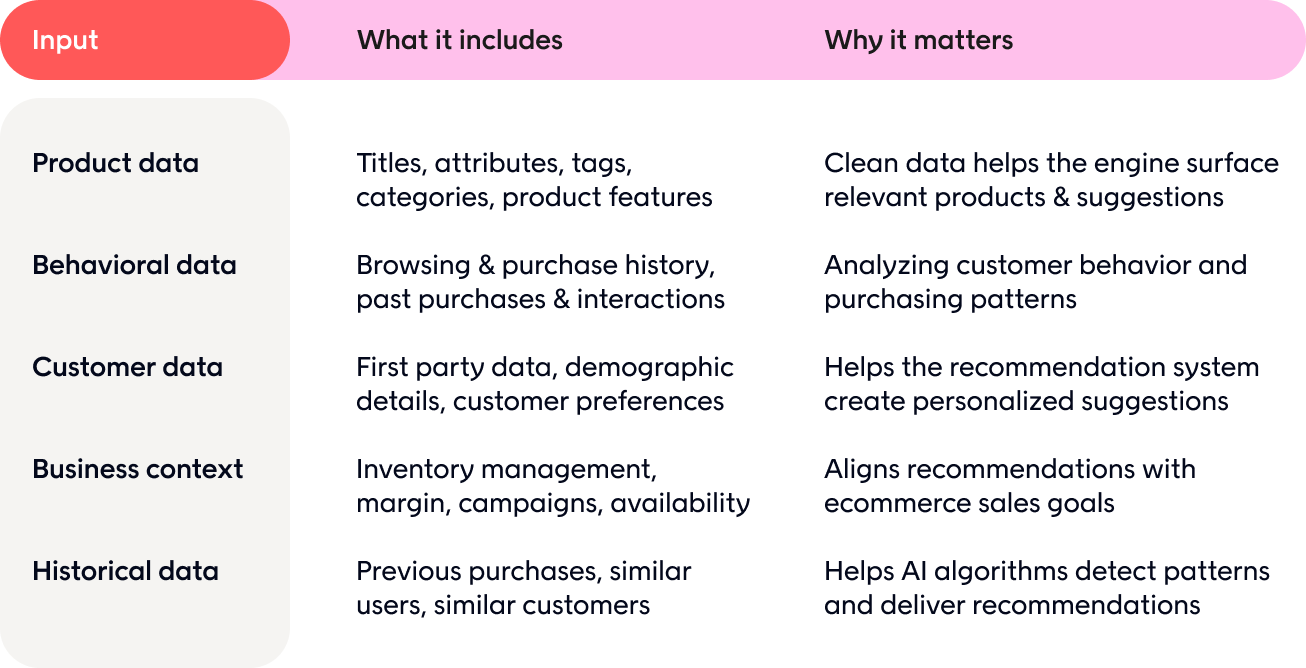
Recommendation engines on modern e-commerce platforms collect data over time to automate personalized recommendations based on customer behavior and shopper preferences, supporting product discovery and customer engagement.
Key recommendation strategies retailers should use
Retailers apply different recommendation strategies across the e-commerce site to surface relevant products and support product discovery. Here’s how:
Similar products
This shows alternatives using collaborative filtering, browsing behavior, and product features. It also helps shoppers compare options and continue product discovery on product pages.
Complementary products
Surface items frequently purchased together.
| Outcome | Impact |
| Cross-sell | Encourages add-on purchases |
| Higher basket value | Increases average order value |
| Revenue growth | Helps increase sales |
Best sellers by context
Highlight bestsellers based on where the shopper is in the journey.
- category best sellers
- audience-specific products
- campaign-driven items
This surfaces relevant products instead of generic global bestsellers.
Recently viewed and continue browsing
Uses browsing history and customer interactions to surface relevant suggestions and personalized suggestions.
Online shoppers can quickly return to items they previously explored, reducing friction in product discovery.
Personalized affinity recommendations
Personalized product recommendations rely on behavioral signals:
| Signal | Example |
| Browsing behavior | Categories or products viewed |
| Purchase history | Past purchases and preferences |
| Customer data | Customer preferences and interactions |
These personalized product suggestions encourage repeat purchases and strengthen customer loyalty and customer retention.
Campaign-aware recommendations
Campaign-aware recommendations blend AI algorithms with merchandising rules.
Retailers can highlight launches, promotions, or seasonal products while still generating relevant product suggestions.
When combined with site search, merchandising, and personalized product discovery, the recommendation engine can support product discovery across the entire e-commerce website while strengthening digital marketing and e-commerce sales.
How to measure whether AI product recommendations are working
Retailers should track clear metrics to understand how product recommendations influence revenue and engagement.
| Metric | What it shows |
| Click-through rate | Whether shoppers interact with recommendation modules |
| Add-to-cart rate | How often recommended products are added to the cart |
| Conversion rate | Whether recommendations help turn browsing into purchases |
| Average order value | Whether recommendations increase basket size |
| Revenue per visitor | Overall revenue impact of product discovery |
| Revenue influenced by recommendations | Share of sales driven by recommendation modules |
| Return rate | Whether recommended products lead to more or fewer returns |
| Engagement by placement | Which placements (homepage, product pages, cart) perform best |
Real-world results show the impact clearly. Swedish online retailer Adlibris uses AI-powered search and product recommendations across a catalog of more than 10 million products and a site serving three million visitors per month.
Through machine learning and continuous testing of product visibility and search relevance, the company achieved sales growth of up to 49% and conversion rates three times higher than the market average.
You can explore how to transform your e-commerce with AI search and product recommendations.
5 common mistakes retailers should avoid
AI-powered product recommendations can increase conversions, improve customer experience, and grow average order value.
But many e-commerce businesses limit results by misconfiguring their recommendation engine or ignoring key signals like customer data, browsing behavior, and purchase history.
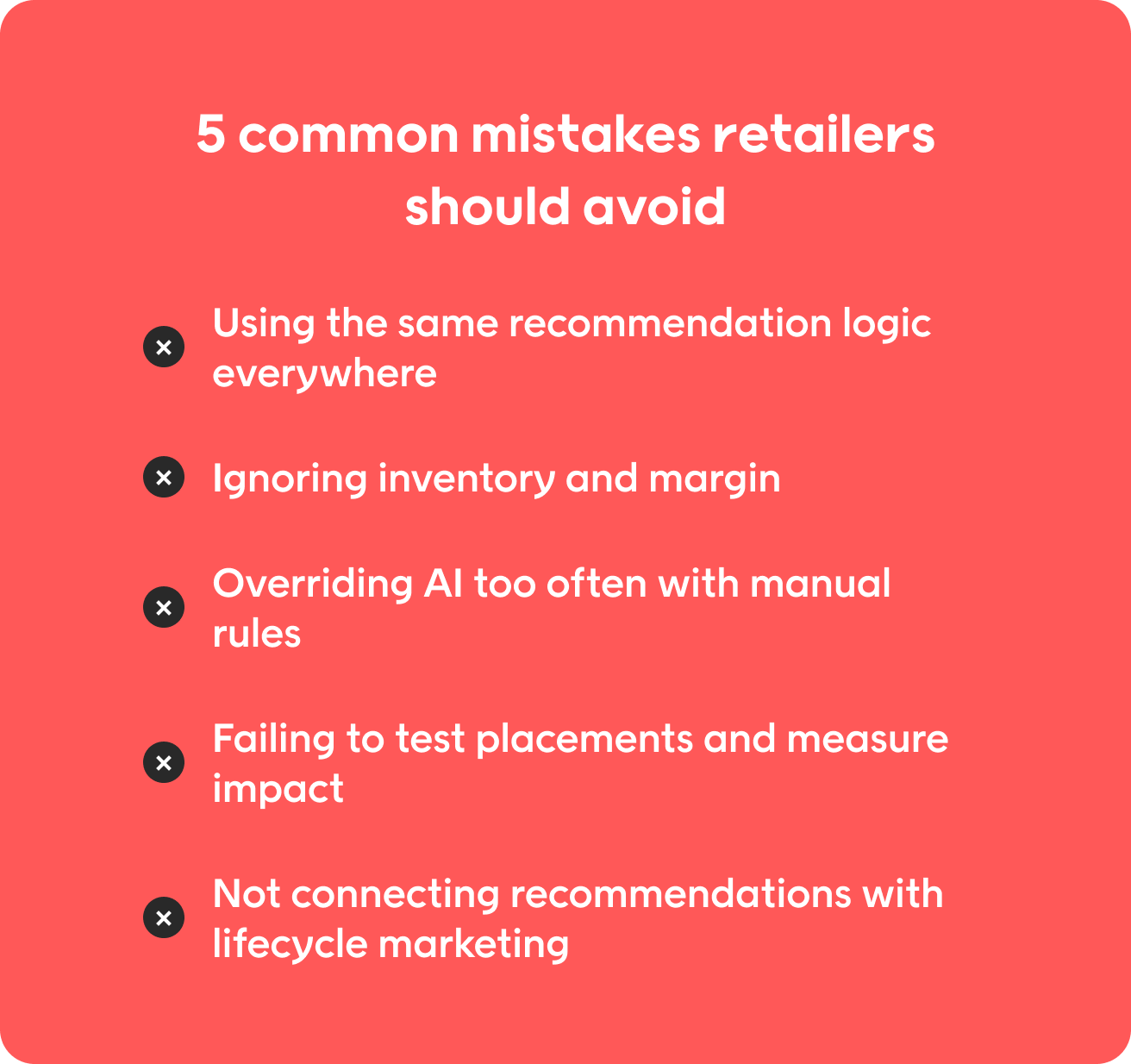
1. Using the same recommendation logic everywhere
Different parts of the e-commerce site require different recommendation strategies. Showing identical product recommendations across the homepage, category pages, and product pages ignores shopper intent.
What works better:
- adapt recommendations to page context
- use purchase history and browsing behavior signals
- adjust suggestions to shopper preferences
This helps relevant products appear at the right moment in the product discovery journey.
2. Ignoring inventory and margin
Recommendations should not rely only on machine learning algorithms. Business context matters.
| Signal | Why it matters |
| Inventory management | Prevents recommending unavailable products |
| Margin | Prioritizes profitable items |
| Campaign priorities | Aligns recommendations with merchandising goals |
Combining AI-driven recommendations with product data and business context helps increase sales and average order value.
3. Overriding AI too often with manual rules
Merchandising teams sometimes override AI-powered recommendations with fixed rules. This can block machine learning from identifying purchasing patterns across customer interactions, past purchases, and historical data.
AI algorithms need enough data points to generate:
- personalized product suggestions
- tailored recommendations
- relevant recommendations based on similar customers
Without that flexibility, the recommendation system cannot adapt to real customer behavior.
4. Failing to test placements and measure impact
Many retailers deploy product recommendations without tracking the right metrics.
Focus on key metrics such as:
- click-through rate
- conversion rates
- average order value
- revenue influenced by recommendations
When evaluating the top e-commerce search solutions, retailers often compare how platforms support testing placements and optimizing product discovery across the e-commerce site.
5. Not connecting recommendations with lifecycle marketing
Product recommendations should not live only on the e-commerce website.
To create exceptional online shopping experiences, retailers need to connect product recommendations with merchandising, campaigns, and lifecycle marketing so relevant products appear consistently across the entire customer journey.
How Voyado helps retailers move from recommendations to real product discovery
Product recommendations alone are not enough. Retailers need a recommendation engine that connects search, merchandising, and personalization so shoppers can actually discover relevant products.
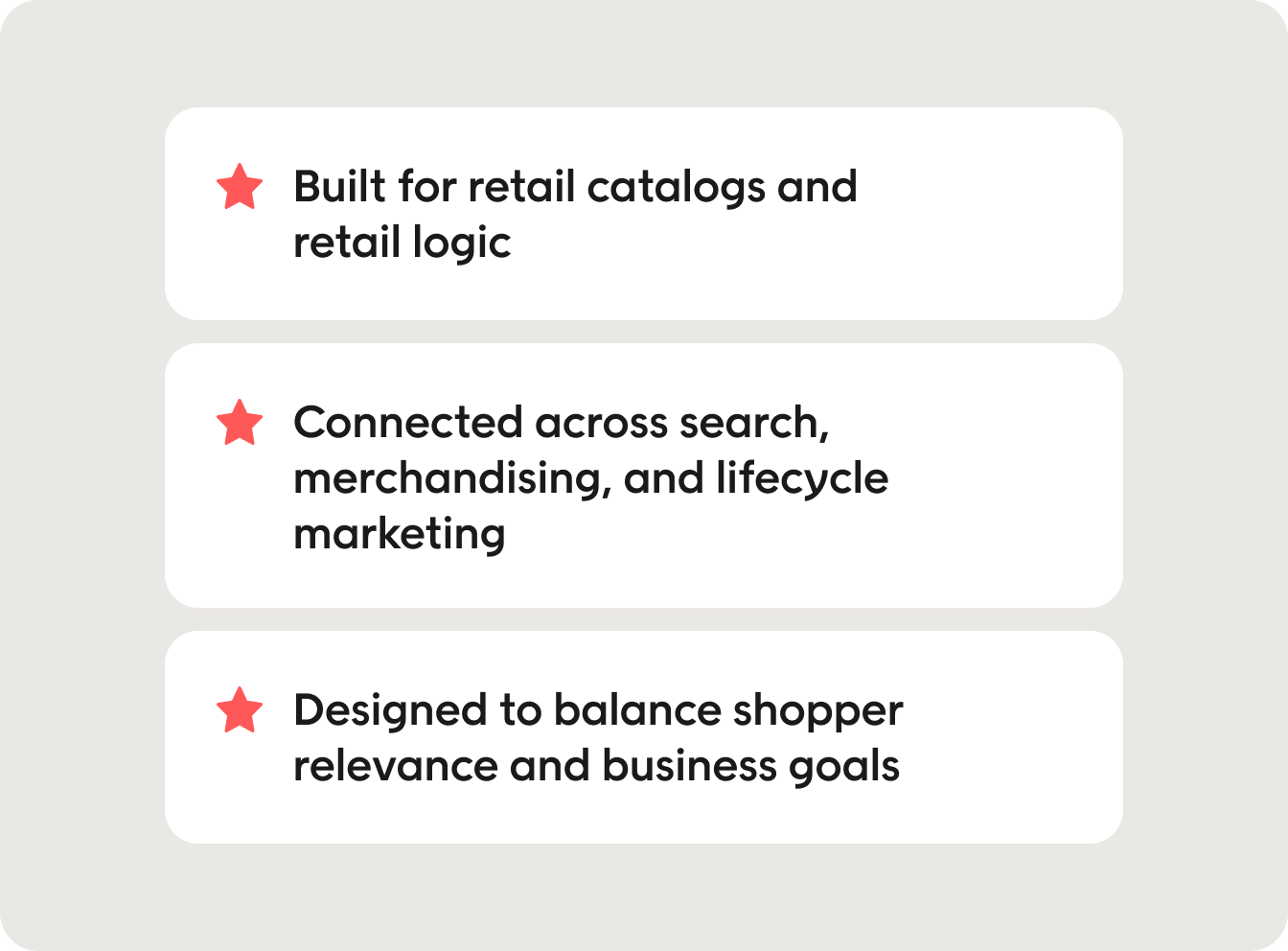
Voyado brings these capabilities together in one retail-focused product discovery engine.
Instead of isolated tools, retailers get a connected system that uses artificial intelligence, customer data, and behavioral signals to power recommendations across the entire e-commerce site.
Built for retail catalogs and retail logic
Retail catalogs are complex. Product discovery needs to understand categories, attributes, seasonal products, and purchasing patterns.
Voyado’s recommendation engine is built for that complexity. Machine learning, collaborative filtering, and content-based filtering analyze product data, browsing behavior, and past purchases to generate relevant product suggestions.
The goal is not just showing more products. It is helping the right customers discover relevant products faster while supporting boosting sales and higher lifetime value.
Connected across search, merchandising, and lifecycle marketing
Many retailers run separate tools for site search, product recommendations, and marketing automation.
Voyado connects these capabilities so product discovery works across the entire e-commerce website:
- site search surfaces relevant products in real time
- merchandising rules guide campaigns and launches
- recommendation engines generate personalized recommendations across pages and marketing channels
This means AI-powered recommendations support product discovery everywhere customers interact with the brand, not just on product pages.
Designed to balance shopper relevance and business goals
AI product recommendations matter because they must balance two things at once: what shoppers want and what the business needs.
Voyado’s AI algorithms combine customer behavior, customer preferences, demographic details, and historical data with retail priorities such as margin, inventory, and campaigns.
This allows retailers to generate relevant recommendations that improve customer satisfaction, support brand loyalty, and strengthen customer engagement.
The result is not just personalized recommendations. It is a product discovery system designed to improve customer satisfaction and help retailers grow long-term revenue.
Final thoughts
Most retailers already use product recommendations. The real question is whether those recommendations actually help shoppers discover products.
When suggestions feel random or repetitive, shoppers ignore them. That weakens customer satisfaction, brand loyalty, and conversion over time.
AI product recommendations work best when they connect shopper intent, product data, and merchandising strategy across the full e-commerce experience.
Retailers moving forward are treating recommendations as a product discovery capability, not just a personalization widget.
If you are evaluating your next step, focus on three things:
- Audit your current recommendation logic: Check whether recommendations are based on real customer behavior, product data, and browsing signals, or if they rely on static rules.
- Connect recommendations with search and merchandising: Product discovery improves when recommendations work alongside site search, navigation, and campaign priorities.
- Measure discovery impact, not just clicks: Track conversion, average order value, and revenue influenced by recommendations to see whether discovery is actually improving.
Voyado helps retailers bring these capabilities together so product recommendations support real product discovery across search, navigation, and lifecycle marketing.
If your team is evaluating how product discovery should evolve, book a demo to see how Voyado helps retailers turn product recommendations into smarter discovery and stronger e-commerce performance.
FAQs
What is AI for product recommendations?
AI for product recommendations uses artificial intelligence and machine learning to analyze customer behavior, browsing history, and purchase history to generate relevant product suggestions across an e-commerce site.
How do AI product recommendations work in e-commerce?
AI product recommendations use machine learning algorithms to analyze data points such as browsing behavior, past purchases, and customer interactions to show relevant products to shoppers in real time.
What data do recommendation engines need?
Recommendation engines rely on product data, customer data, browsing history, purchase history, and other behavioral signals to generate personalized recommendations and relevant suggestions.
Where should retailers use product recommendations?
Retailers commonly use product recommendations on the homepage, category pages, product pages, cart and checkout, and in lifecycle marketing campaigns such as email.
What is the difference between rule-based and AI-driven recommendations?
Rule-based recommendations rely on manual rules set by merchandisers, while AI-driven recommendations use machine learning to analyze customer behavior and automatically generate personalized product suggestions.
Can AI recommendations improve average order value?
Yes. AI-powered product recommendations can increase average order value by suggesting complementary products, bundles, and relevant items based on shopper behavior and purchasing patterns.
How are product recommendations connected to site search and merchandising?
Modern recommendation engines work alongside site search and merchandising rules so relevant products appear across search results, product pages, and campaigns.
How does Voyado approach AI for product recommendations?
Voyado connects AI-powered product recommendations with site search, merchandising, and personalized product discovery to help retailers surface relevant products and support stronger product discovery across the e-commerce experience.