TL;DR
Average order value (AOV) is one of the fastest ways to grow profit in e-commerce. But tactics like blanket discounts and basic free shipping thresholds rarely create lasting impact.
Stronger results come from relevance:
- Smarter product recommendations
- Personalized cross-sell and upsell
- Loyalty-driven incentives
- AI-powered merchandising that adapts to shopper intent
You’ll learn how to increase average order value that e-commerce teams can actually sustain across product pages, carts, and post-purchase moments.
Voyado connects product discovery, customer engagement, and loyalty in one retail-focused suite. Its retail-trained AI helps your team grow basket size using margin, inventory, and real shopper context.
Why AOV deserves more strategic attention in 2026
Traffic costs keep rising. Acquisition isn’t getting cheaper. And conversion rate optimization already gets most teams’ attention.
That makes average order value one of the fastest ways to grow profit in e-commerce.
When you increase average order value, you grow total revenue without needing more visitors or more transactions. The same customers generate more value per purchase. That supports stronger profit margins and more predictable e-commerce revenue.
Yet many teams struggle to consistently increase AOV.
Most e-commerce stores still rely on familiar tactics:
- Static product recommendations
- Generic cross-selling
- Simple product bundles
- One-size-fits-all free shipping thresholds
- Blanket volume discounts
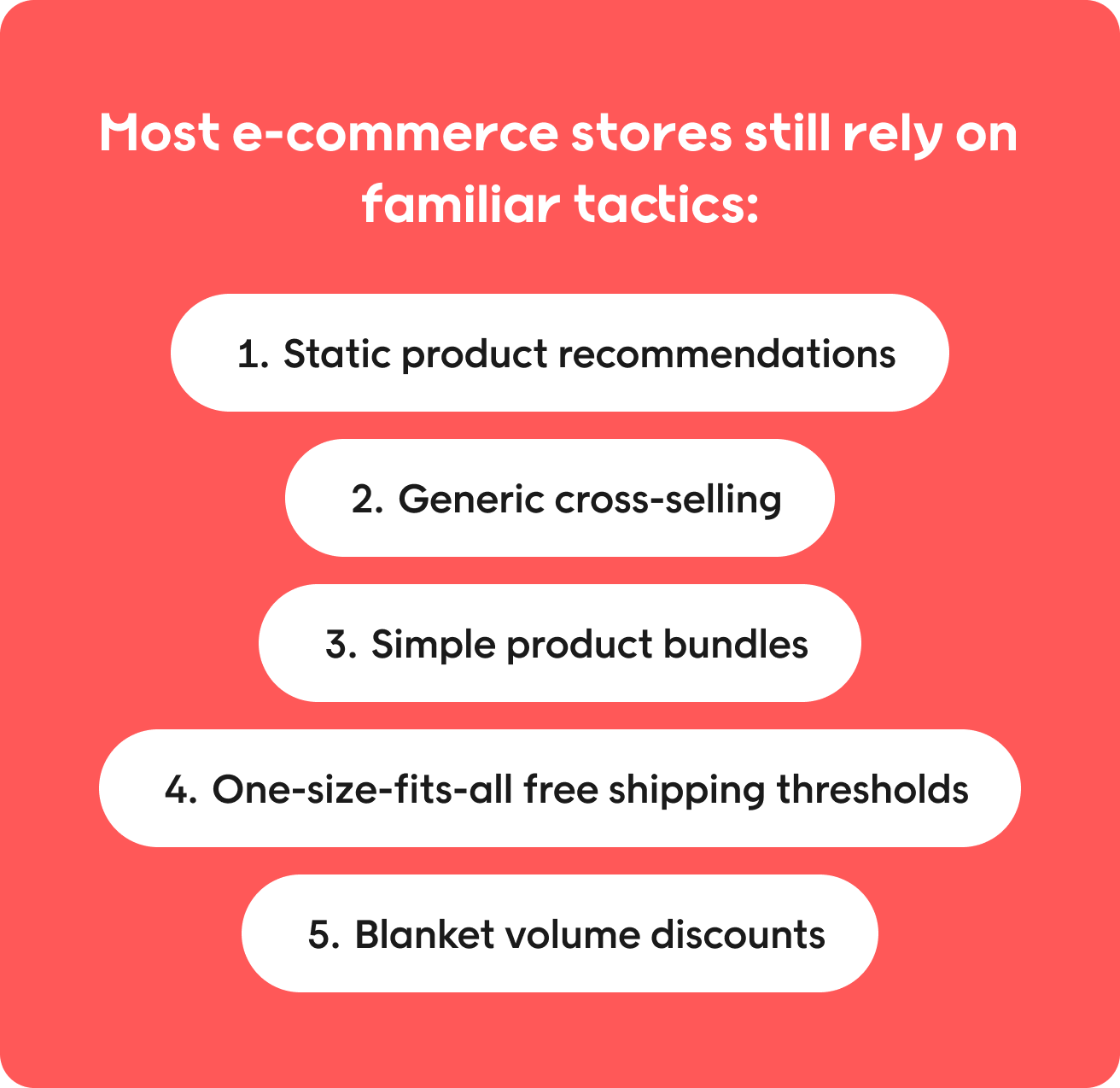
These tactics can lift order value in the short term. But they don’t reflect real customer behavior or product relationships. They don’t adjust to margin, inventory, or shopper intent. So they rarely drive reliable basket growth.
Some teams try generic AI to improve results. But generic AI doesn’t understand retail context. It can’t weigh product affinity, stock levels, pricing strategy, or margin. That makes its recommendations and merchandising decisions harder to trust when your goal is to increase AOV.
Stronger results come from connected systems.
- Product discovery shapes what shoppers see first.
- Merchandising influences perceived value through smarter e-commerce merchandising.
- Personalization adapts offers using purchase history and customer segments through effective personalization in retail.
When these systems work together, higher average order value becomes a predictable outcome instead of a one-off win.
7 proven tactics to increase average order value in e-commerce
These are the best strategies to increase average order value in e-commerce because they improve relevance instead of relying on blanket discounts.
When product discovery, personalization, merchandising, and loyalty work together, AOV growth will become more consistent across your e-commerce store.
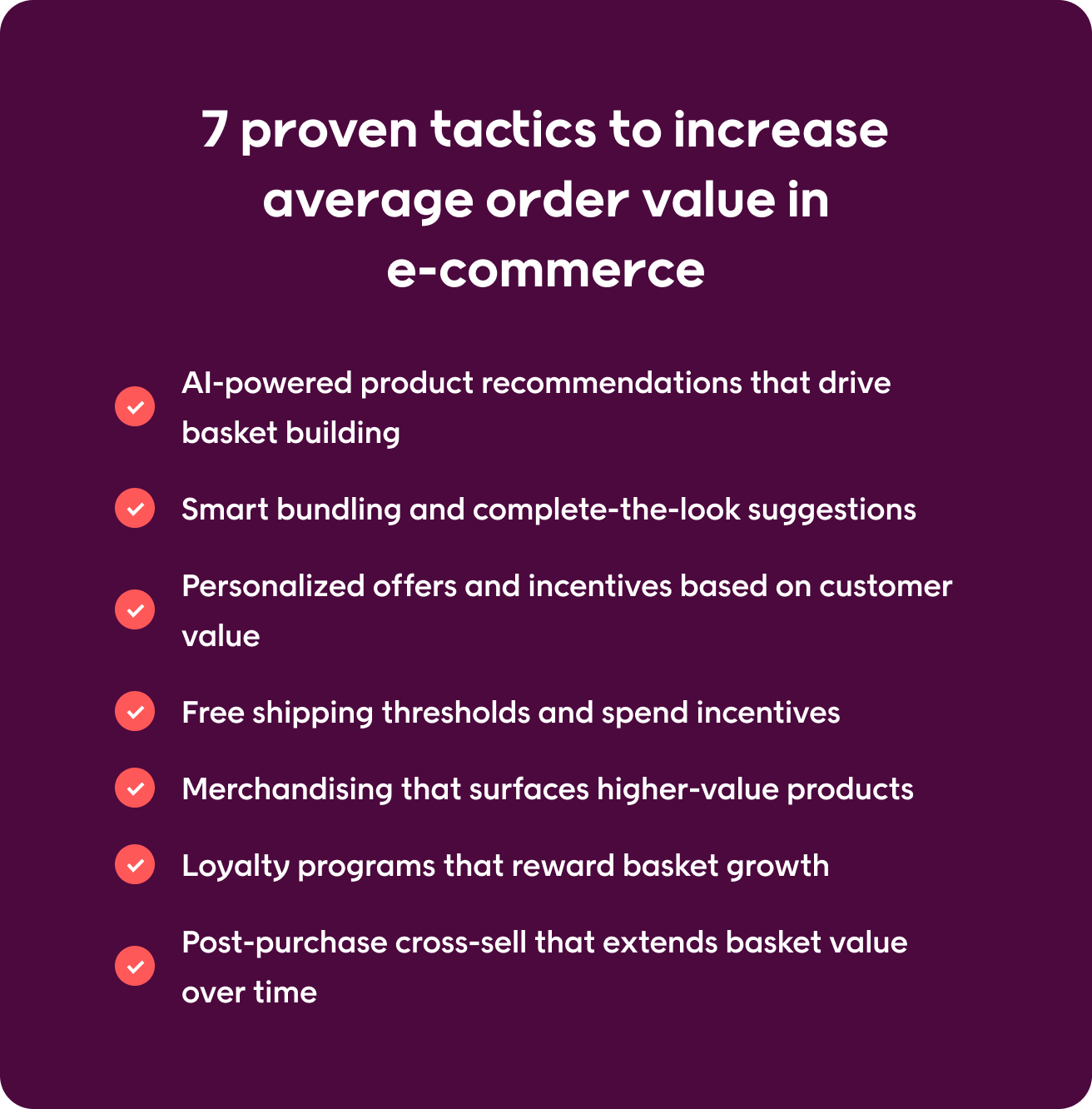
#1 AI-powered product recommendations that drive basket building
Product recommendations are one of the fastest ways to increase average order value when they reflect real shopper intent.
What this means in practice
AI-powered product recommendations use product affinity, purchase history, and category context to surface complementary products that belong together in the same basket.
Instead of relying on “frequently bought together” logic, they reflect how customers actually build larger purchases in your e-commerce site.
Each placement supports a different stage of basket building:
- Product pages introduce complementary products early
- Cart suggestions help shoppers reach a free shipping threshold
- Checkout prompts highlight a higher-priced product alternative
- Post-purchase upsells extend order value beyond a single session
How this increases AOV
When recommendations match customer behavior and product relationships, shoppers add items more naturally. That leads to higher average order value and stronger total revenue per visit.
We’ve noticed that retailers using structured product recommendations across these touchpoints create more consistent basket growth without relying on blanket volume discounts.
#2 Smart bundling and complete-the-look suggestions
Bundles increase the average order by making larger purchases easier to justify.
What this means in practice
Effective product bundles rely on real relationships between complementary products, not manual guesswork. Common bundle formats include:
- Pre-built bundles for campaigns and launches
- Complete-the-look suggestions based on styling logic
- Cart-level bundles triggered by minimum purchase thresholds
Retail-trained AI can automate bundle creation using catalog structure, pricing strategy signals, and customer segments across a large e-commerce store.
How this increases AOV
Relevant bundles increase the average transaction value while improving customer satisfaction. They help encourage customers to add items that feel connected instead of optional extras.
Dynamic bundles often produce higher average order value than static bundle sets because they adapt to customer behavior and purchase history in real time.
#3 Personalized offers and incentives based on customer value
Personalized incentives help increase average order value without reducing profit margins.
What this means in practice
Different shoppers respond to different incentives:
- First-time buyers benefit from curated starter bundles
- Existing customers respond to upgrade suggestions based on purchase history
- Loyal customers expect rewards linked to loyalty program status
Personalization strategies to increase the average order value in e-commerce work best when incentives reflect customer lifetime value and purchase frequency instead of relying on blanket discounts.
How this increases AOV
When incentives reflect customer value, they motivate customers to increase average order while protecting margin. A connected customer loyalty platform supports this by aligning rewards with customer segments and long-term customer lifetime outcomes.
#4 Free shipping thresholds and spend incentives
Free shipping thresholds remain one of the simplest ways to increase AOV.
What this means in practice
Most retailers use a static free shipping threshold. But dynamic minimum spend thresholds based on customer segments produce stronger results.
This approach works best when combined with recommendations that help shoppers close the gap between their current basket and the minimum purchase amount.
How this increases AOV
When shoppers are close to qualifying for free shipping, relevant suggestions help them add complementary products instead of abandoning the cart. This supports incremental revenue without relying on free gifts or heavy discounting.
#5 Merchandising that surfaces higher-value products
Product visibility directly affects average order value.
What this means in practice
Category pages and search results shape what customers see first. If lower-priced items dominate those placements, average order value usually stays flat.
AI-driven merchandising helps balance shopper relevance with margin targets, inventory signals, and sell-through priorities across your e-commerce business.
How this increases AOV
Smarter product exposure increases the likelihood that customers discover higher-value items earlier in the journey. AI-supported merchandising helps surface products that contribute to higher revenue while maintaining a strong customer experience.
#6 Loyalty programs that reward basket growth
A loyalty program can directly influence basket size when rewards are tied to spending behavior.
What this means in practice
Effective loyalty programs encourage customers to increase their average order through:
- Bonus points above a minimum purchase amount
- Tiered rewards tied to basket size
- Exclusive benefits for loyal customers
These incentives work best when they appear during the shopping journey instead of after checkout.
How this increases AOV
We’ve seen that loyalty mechanics connected to recommendations increase repeat purchases and strengthen customer loyalty at the same time. This supports higher customer lifetime value and more predictable repeat sales from loyal customers.
#7 Post-purchase cross-sell that extends basket value over time
Average order value does not have to be limited to a single session.
What this means in practice
Post-purchase upsells, replenishment reminders, and follow-up marketing campaigns extend order value across the customer lifecycle. These touchpoints are especially effective for repeat customers and existing customers who already trust your brand.
How this increases AOV
Relevant follow-up recommendations increase purchase frequency within days of the original transaction. Many teams treat this approach as part of their broader e-commerce strategy to increase average order value without increasing customer acquisition cost.
Why generic AI struggles with AOV improvement
Generic AI tools weren’t built to increase average order value because most optimize for clicks, not basket size.
That difference shows up quickly. Engagement may increase, but the average dollar amount per order often stays flat. It becomes harder to boost average order across your online store reliably.
Generic systems also treat shoppers the same. They don’t connect margin, inventory, purchase history, or lifecycle stage. So they miss what actually influences how a customer spends.
The result is familiar:
- Recommendations that feel random instead of relevant
- Bundling that doesn’t reflect complementary products
- Incentives that increase shipping costs without generating more revenue
- Offers that rely too heavily on discounts instead of value
This affects the entire customer journey.
A first-time visitor often needs reassurance before increasing the average amount they spend. Loyal customers respond better to upgrade suggestions tied to brand loyalty and prior behavior. Without this context, it’s harder to incentivize customers in ways that lead to higher AOV.
Retail-trained AI works differently. It understands product relationships, customer segments, and how merchandising decisions influence order value across the journey. That makes it easier to cross-sell complementary products and support stronger marketing and pricing strategies.
Generic AI vs. retail-trained AI for increasing AOV
| Area | Generic AI | Retail-trained AI |
| Optimization goal | Optimizes clicks | Optimizes basket value |
| Product recommendations | Suggests popular items | Suggests complementary products that increase order value |
| Customer understanding | Treats shoppers the same | Adapts to lifecycle stage and purchase history |
| Profit awareness | Ignores margin and inventory | Balances relevance with profitability |
| Business impact | Engagement without reliable AOV growth | Consistent higher AOV and more revenue |
We’ve seen that retailers using a connected product discovery engine surface combinations that increase the average order value and generate more revenue across the full customer journey.
The same applies to personalization. When incentives reflect lifecycle stage and loyalty status, they support stronger outcomes tied to working with customer lifetime value and help encourage customers to build larger baskets over time.
How Voyado helps retailers increase average order value
You’ll need more than one tactic to increase average order value (AOV). It requires personalized product discovery, cross-selling, and loyalty working together across your e-commerce store.
Voyado connects these signals so recommendations, incentives, and merchandising all support larger baskets at the same time. That’s how retailers lift AOV without relying on blanket discounts or short-term sales tactics.
Voyado Elevate: recommendations and merchandising that grow basket size
Voyado improves cross-selling by using real product affinity, shopper behavior, and business context instead of generic click probability.
It surfaces complementary products, higher-margin alternatives, and bundles that increase order value and total revenue. Instead of reacting to clicks alone, recommendations reflect what actually drives larger purchases in your e-commerce store.
Why this matters for your teams
Search and discovery shape what shoppers see first. When category ranking and site search reflect intent and profitability signals, customers build stronger baskets earlier in the customer journey.
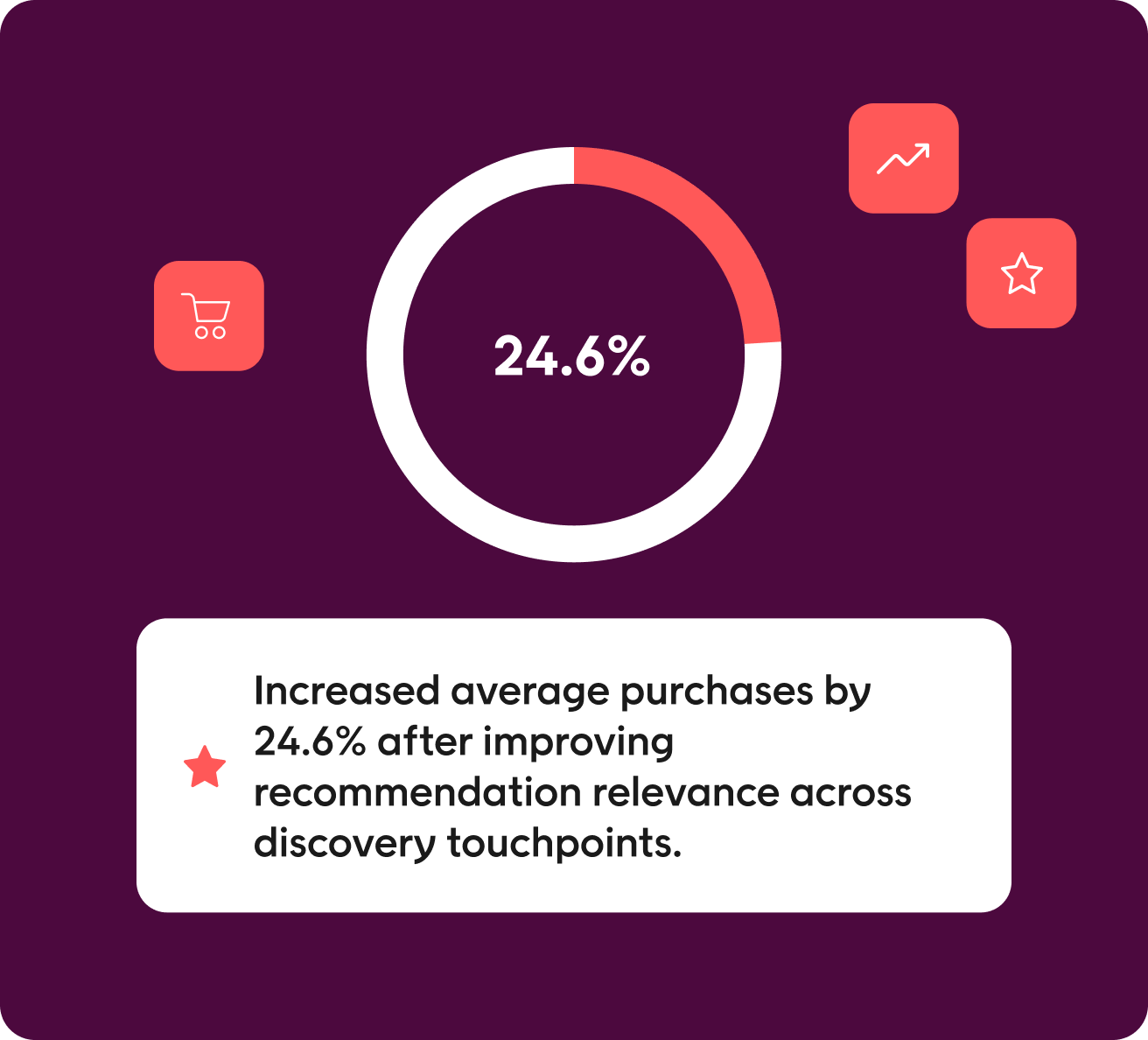
Retailers see the impact quickly. Samsøe Samsøe increased average purchases by 24.6% after improving recommendation relevance across discovery touchpoints. For many online businesses, this is one of the most reliable ways to boost AOV without changing pricing or relying on free gifts.
Voyado Engage: personalized offers and loyalty that support bigger baskets
Voyado adds customer context to every recommendation and incentive.
Instead of offering the same promotion to everyone, your team can tailor rewards based on loyalty tier, purchase history, and lifecycle stage. A strong customer loyalty program can offer free shipping at the right moment, unlock bundle pricing, or incentivize customers to increase basket size without reducing margin.
Why this matters for your teams
Incentives only work when they reflect how customers actually behave. When a customer loyalty program connects directly to recommendations and marketing campaigns, it becomes a consistent driver of larger purchases and brand loyalty.
Retailers like JACK & JONES increased average order value by 33% among loyalty members using personalized incentives tied to customer value. That kind of alignment helps generate more money from existing customers while supporting long-term business growth.
Retail-trained AI that understands context
Voyado’s AI is trained on real retail data. It understands margin, inventory, seasonality, and product lifecycles, so recommendations support both relevance and profitability.
Generic tools often optimize clicks. Retail-trained AI supports decisions that lift AOV across the full shopping experience and help online businesses apply smarter marketing campaigns and sales tactics without adding manual work.
Why this matters for your teams
Obs and Obs Bygg increased revenue from search by 4.5% after improving discovery logic through smarter merchandising. These outcomes reflect proven online merchandising strategies that connect discovery with commercial performance.
When Elevate and Engage work together, recommendations, incentives, and loyalty rewards reinforce each other across the customer journey. That helps online businesses boost AOV consistently instead of relying on isolated tactics.
If your team wants to move beyond flat AOV and blanket discounts, see how connected discovery can improve results with smarter AI search and product recommendations.
If your team wants to move beyond flat AOV and blanket discounts, book a demo to see how Voyado’s product discovery engine and customer engagement platform drive bigger, smarter baskets.
Make bigger baskets the result of better shopping experiences
Increasing average order value in e-commerce isn’t about adding more pop-ups or offering steeper discounts. It’s about making every recommendation, merchandising decision, and customer interaction support a bigger, smarter basket across your e-commerce store.
The retailers seeing the strongest results connect product intelligence, personalization, and loyalty instead of treating them as separate sales tactics. When cross-selling, bundling, and incentives reflect real customer behavior, teams lift AOV in ways that support customer satisfaction, total revenue, and long-term business growth.
If you’re deciding where to start, focus on three practical steps first:
- Improve how you cross-sell complementary products on product pages and in the cart
- Adjust your free shipping threshold based on how your average customer spends
- Connect your customer loyalty program to recommendations so rewards encourage larger purchases
You won’t need a full rebuild of your business model. But together, they help online businesses like yours increase average order value more consistently and create stronger momentum across the customer journey.
FAQs
What is average order value in e-commerce?
Average order value (AOV) is the average dollar amount a customer spends per transaction in your e-commerce store. You calculate average order value by dividing total revenue by the number of orders.
What is a good average order value for e-commerce?
A good average order value depends on your category, pricing strategy, and customer segments. The goal isn’t a fixed number. It’s steady AOV growth that improves profit margins without hurting customer satisfaction.
How do product recommendations increase AOV?
Relevant product recommendations help cross-sell complementary products and suggest higher priced alternatives. This encourages customers to add items naturally during the shopping journey.
What is the difference between AOV improvement through discounts vs. relevance?
Discounts increase basket size short term but reduce margins. Relevance increases order value by showing better product matches, bundles, and upgrades that customers actually want.
How does loyalty help increase average order value?
A customer loyalty program can reward higher basket sizes with bonus points, tier benefits, or exclusive pricing. These incentives motivate customers to spend more per order and return more often.
Why does generic AI struggle with AOV improvement?
Generic AI usually optimizes clicks instead of basket value. It lacks retail context like margin, inventory, and product affinity, so recommendations don’t consistently increase order value.
How does Voyado help increase average order value?
Voyado connects product discovery, recommendations, personalization, and loyalty in one retail-focused platform. This helps teams boost AOV with relevant cross-selling, smarter merchandising, and targeted incentives across the customer journey.