TL;DR
AI sales agents in e-commerce shift guided selling from static product pages and basic recommendation widgets to intent-driven experiences that help shoppers choose, compare, bundle, and complete purchases. This lifts conversion rates and average order value.
The best platforms combine product intelligence, customer data, and onsite or conversational selling to actively guide decisions, not just answer questions or reduce customer support tickets.
This shortlist focuses on tools built for product discovery, recommendations, and purchase facilitation across the e-commerce journey.
Voyado stands out because its product discovery engine, Elevate, and Agentic CX Suite connect retail-trained AI with catalog intelligence and customer data to make recommendations match intent and drive stronger conversion and AOV.
What AI sales agents in e-commerce actually do
An AI sales agent in e-commerce helps shoppers choose products and move toward purchase without friction. It uses customer behavior, product context, and real-time data to recommend options, compare alternatives, and support decisions inside the online store.
This category is different from outbound automation tools. It supports guided selling during shopping, not prospecting. Many teams exploring agentic AI in retail are now focusing on systems that engage customers directly while they browse and evaluate products.
These AI agents improve the customer experience by helping shoppers make decisions faster and complete purchases with confidence. That leads to stronger conversion rates and higher average order value.
AI sales agent vs. recommendation engine vs. chatbot vs. static merchandising
| Feature | Static merchandising | Recommendation engine | Chatbot | AI sales agent |
| Core role | Show products by rules | Suggest products from data | Answer customer queries | Guide product decisions and purchases |
| How it works | Manual setup | Behavior-based logic | Responds to customer inquiries | Uses intent signals and structured data |
| Use of intent/context | None | Limited | Basic | Strong |
| Ability to guide decisions | No | Partial | Limited | High |
| Impact on conversion and AOV | Low | Medium | Low | Highest |
| Best use case | Campaign exposure | Discovery support | Customer support | Guided selling across the purchase journey |
Recommendation engines improve discovery, but they don’t guide decisions on their own. Systems built around intent-aware product recommendations help e-commerce teams deliver more relevant shopping experiences and increase sales.
Why guided selling matters more in 2026
Catalog size keeps growing, and customers search longer before deciding what to buy.
Guided selling brings the role of a store associate into e-commerce. It supports customer interactions, narrows options, and delivers personalized messages that help shoppers make informed decisions.
For e-commerce businesses, this means stronger conversion rates, higher basket size, and more shoppers who complete purchases instead of leaving mid-journey.
How we evaluated these AI sales agents
Not every AI sales agent e-commerce platform supports real guided selling. Use this checklist to compare tools based on what actually helps e-commerce businesses engage customers, increase sales, and improve conversion rates inside the online store.
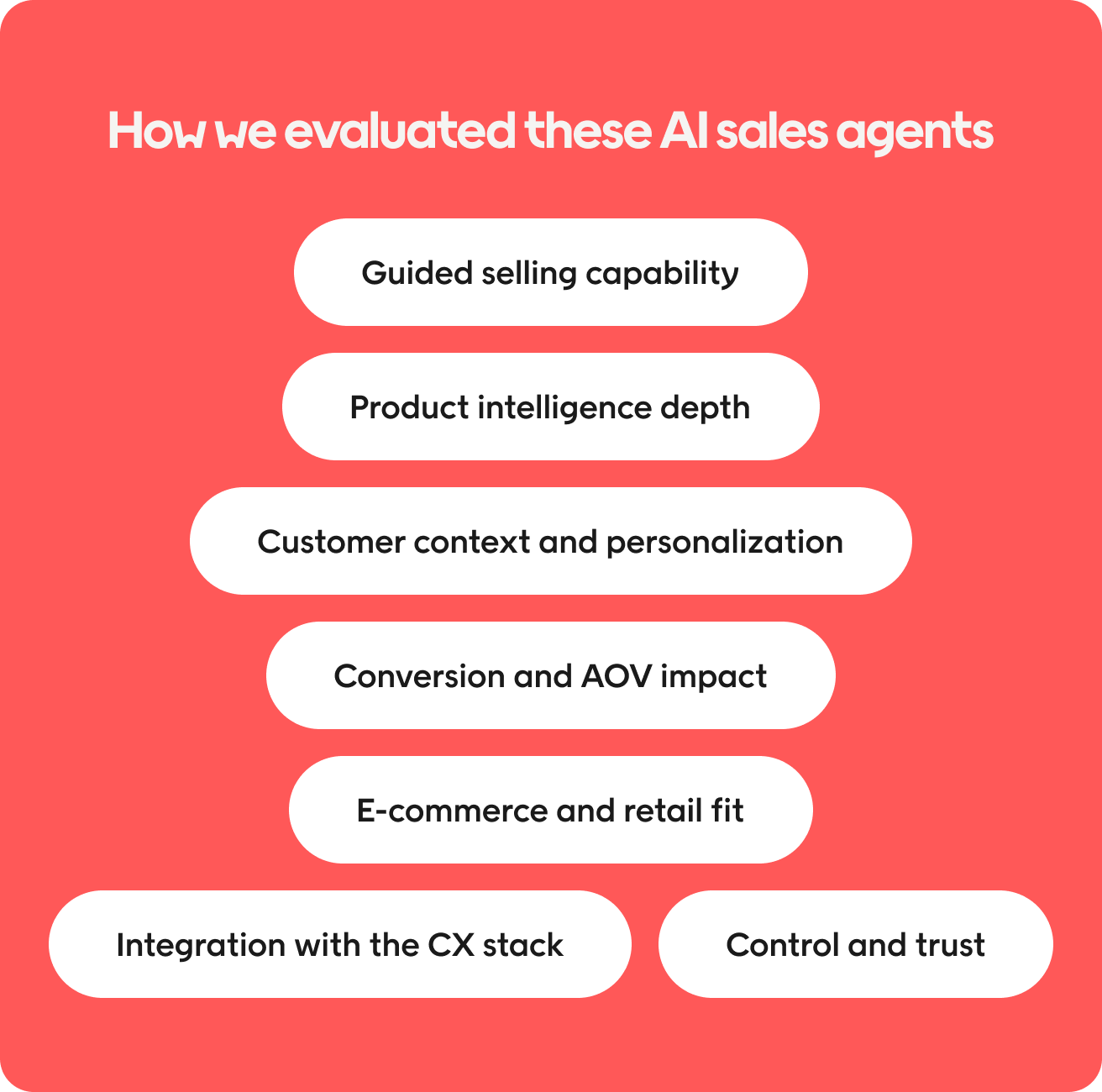
Guided selling capability
Does the platform actively guide shoppers toward the right product?
Look for systems that:
- Ask questions to understand intent
- Compare alternatives clearly
- Suggest bundles or upgrades
- Help shoppers complete purchases faster
Strong guided selling AI e-commerce platforms behave more like shopping assistants than static recommendation widgets.
Product intelligence depth
Does the platform understand your catalog in detail?
Check whether it uses:
- Product attributes and categories
- Compatibility logic
- Pricing context
- Inventory management signals
Without deep product intelligence, AI systems can’t deliver tailored shopping experiences across complex e-commerce catalogs.
Customer context and personalization
Can the platform adapt to each shopper?
Strong AI sales agents for e-commerce use customer data, purchase history, and customer behavior signals to personalize recommendations for different customer segments.
This helps deliver personalized recommendations that reflect real intent instead of generic suggestions. See how this connects to broader trends in agentic AI in customer experience.
Conversion and AOV impact
Does the platform improve measurable outcomes?
Prioritize tools designed to:
- Increase conversion rates
- Grow average order value
- Support repeat purchases
- Help more shoppers complete purchases
Some platforms improve engagement but don’t improve sales growth.
E-commerce and retail fit
Was the platform built for real shopping journeys?
Look for solutions proven with:
- E-commerce brands
- Online retailers
- Complex product catalogs
- Multiple sales channels
Many AI sales assistant e-commerce tools focus mainly on customer support instead of guided selling.
Integration with the CX stack
Does the platform connect with your existing systems?
Strong tools integrate with merchandising, loyalty programs, and e-commerce AI capabilities across the tech stack. This helps teams streamline operations and maintain consistent customer engagement across touchpoints. You can explore how this works inside a modern customer loyalty platform.
Control and trust
Can your team stay in control?
Check whether the platform supports:
- Brand voice alignment
- Escalation from AI agents to human agents
- Human oversight when needed
- Safe handling of customer inquiries at high volume
This balance makes agentic selling e-commerce practical for teams that want automation without losing control of the customer experience.
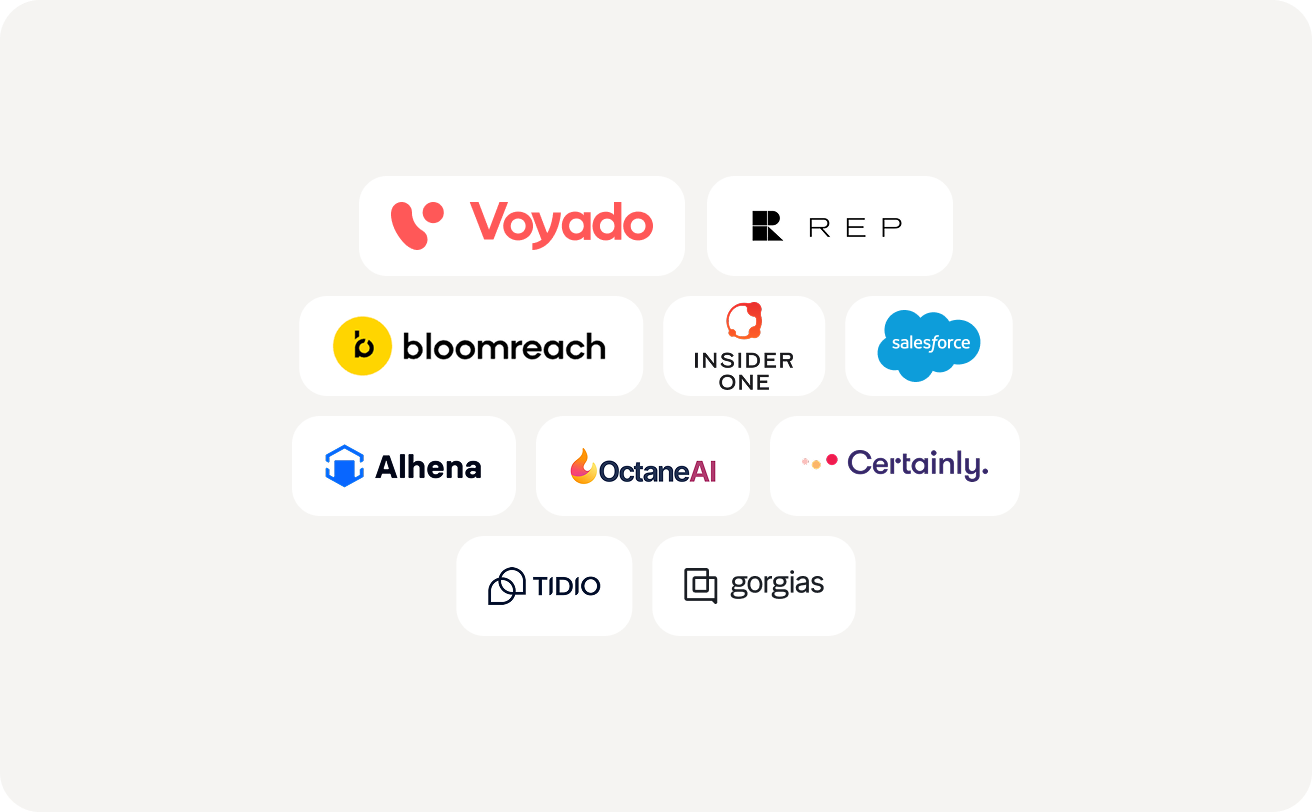
The 10 best AI sales agents in e-commerce for guided selling
#1 Voyado Elevate – Best for retail-native product discovery and recommendation intelligence that powers guided selling

Best for
Retailers that want product intelligence and customer data working together behind guided selling across merchandising, loyalty, and customer engagement.
Why it’s here
Voyado is built for retail product discovery. It improves relevance across site search, categories, and personalized recommendations so shoppers find the right products faster.
It works as the intelligence layer behind guided selling by understanding shopper intent and aligning recommendations with margin goals, campaigns, and inventory.
Combined with unified customer profiles across channels, Voyado strengthens AI agent e-commerce conversion with consistent personalization across the full customer experience.
Standouts
- Retail-native product discovery through personalized product discovery
- Agentic merchandising adjusts product visibility based on shopper intent and commercial priorities
- Unified customer data across online, in-store, email, app, and loyalty supports connected personalization
- Ranking logic reflects margin goals, campaigns, and inventory levels
- Supports e-commerce AI strategies that increase customer engagement and repeat purchases
Watch-outs/limitations
- Not a standalone conversational sales widget. It works as the intelligence layer that strengthens guided selling across the experience
- Best suited to e-commerce brands and omnichannel retailers rather than generic B2B tools
Ideal retailer profile
Mid-market to enterprise omnichannel retailers in fashion, beauty, home, and specialty retail that want guided selling powered by real product intelligence and unified customer data.
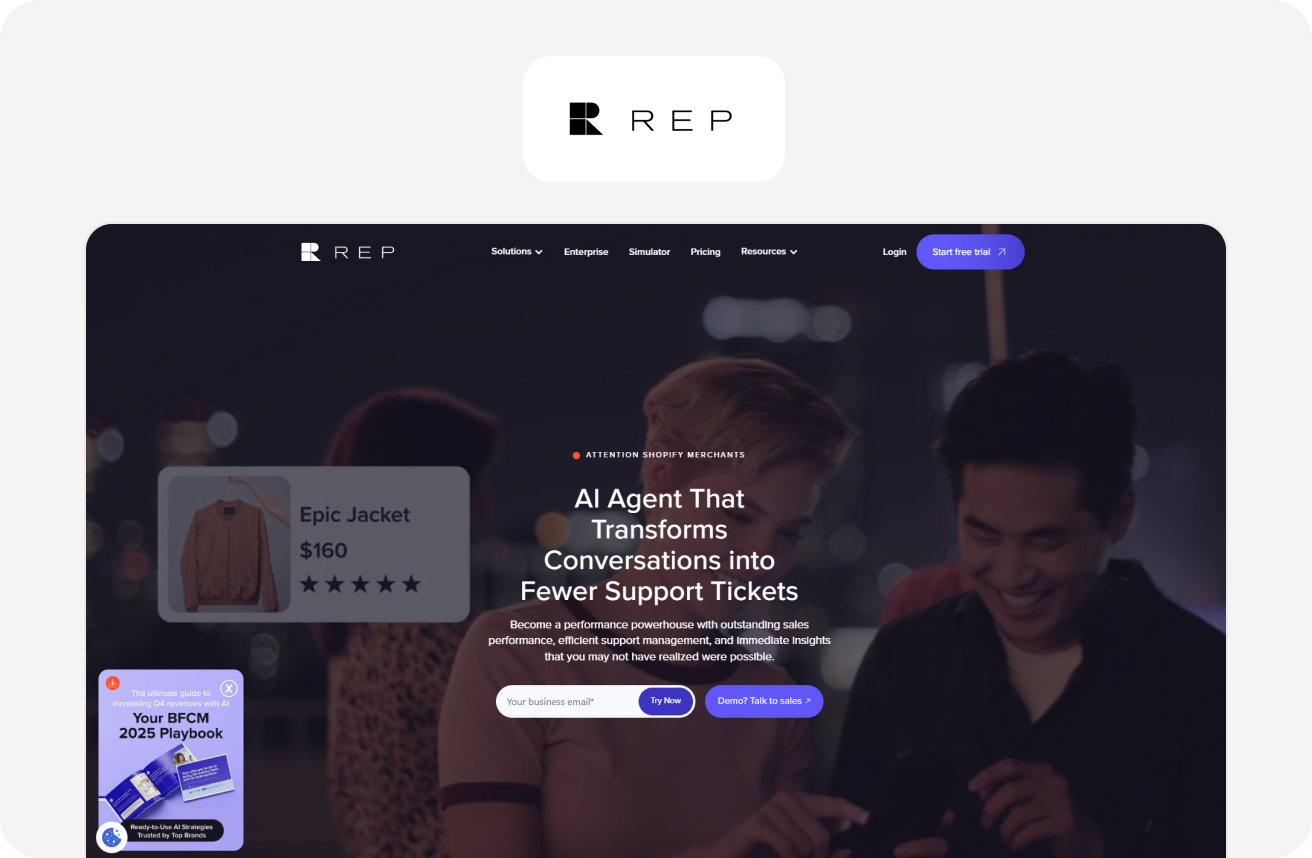
#2 Rep AI – Best for behavioral AI-driven conversational guided selling on Shopify
Best for
Shopify brands that want a proactive AI sales concierge that spots hesitation, starts the conversation, and helps shoppers choose faster.
Why it’s here
Rep AI is built for Shopify and positions itself as an AI concierge for shopping and support. It uses behavioral triggers, conversational guidance, and product recommendations to engage customers before they bounce, which makes it one of the more focused AI shopping assistants on this list.
For brands exploring agentic AI in retail, Rep AI is a strong example of how AI agents can drive sales inside the online store instead of waiting for customer inquiries.
Standouts
- Proactive conversations based on shopper behavior and hesitation signals
- Shopify-native setup with product, order, and policy context
- Handles both guided selling and customer support in one flow
Watch-outs/limitations
- Best fit for Shopify, not broader retail stacks
- More chat-led than merchandising-led
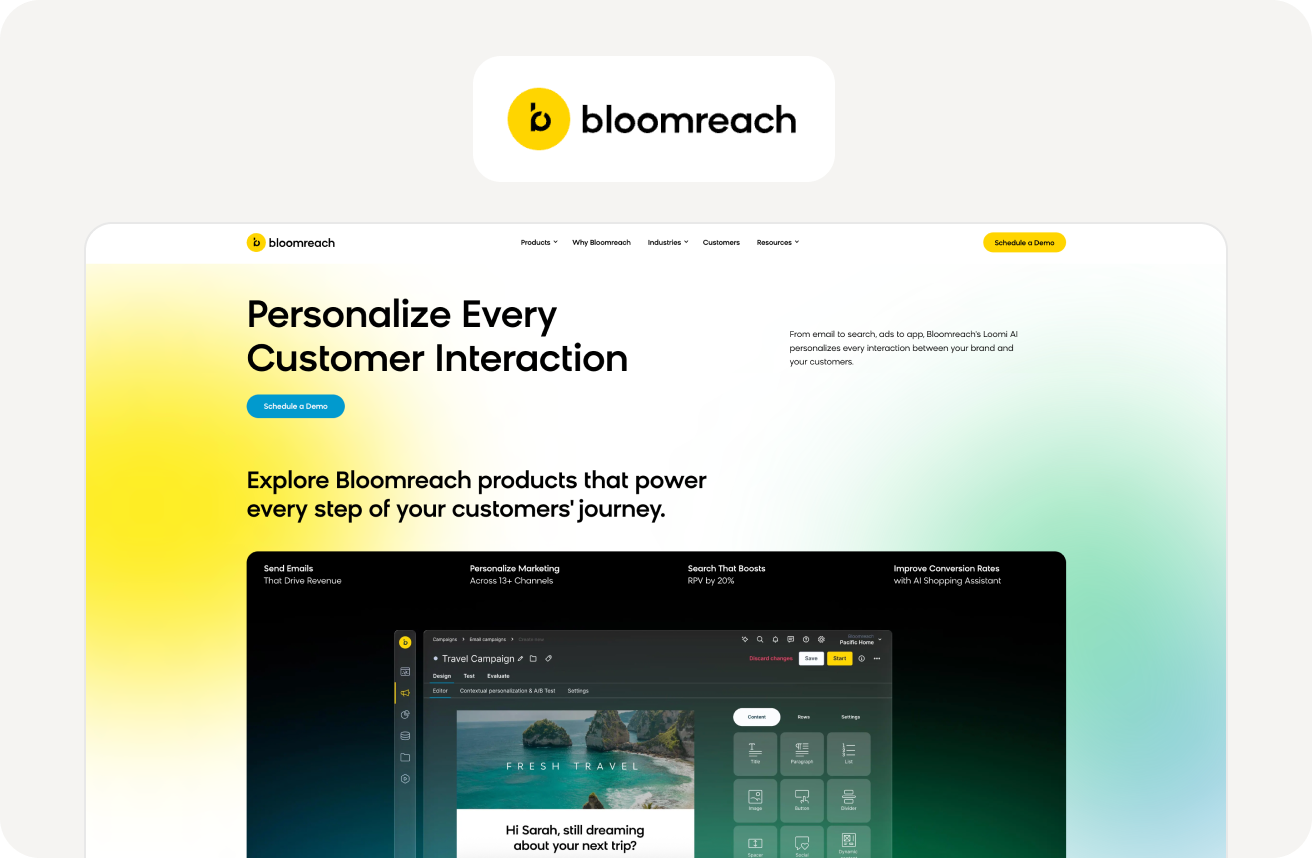
#3 Bloomreach – Best for search-led product discovery and AI-driven merchandising that supports guided selling
Best for
Enterprise e-commerce teams that want AI-powered search, recommendations, and content personalization working together to guide product decisions.
Why it’s here
Bloomreach is strongest when guided selling starts with discovery, not chat. Its platform combines AI-powered site search, merchandising, and personalized recommendations, which helps e-commerce businesses deliver personalized experiences across large catalogs.
That makes it a solid fit for teams that want ecommerce AI tied to customer behavior, inventory management, and product discovery.
Standouts
- Strong site search and merchandising in one system
- Built for large catalogs and high-volume traffic
- Supports personalized recommendations across browse and search journeys
Watch-outs/limitations
- Less conversational than other tools here
- Better fit for larger teams with more technical skills
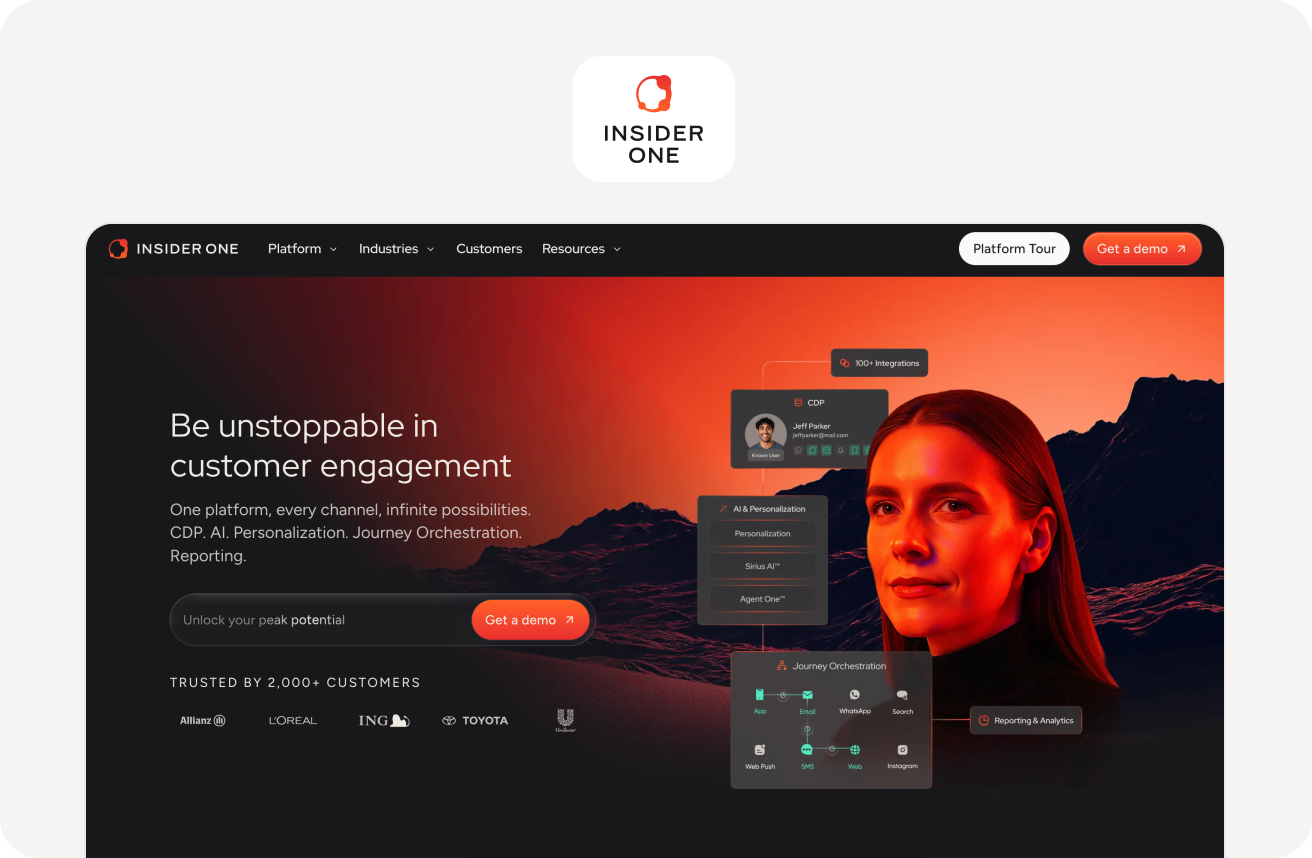
#4 Insider One – Best for CDP-powered conversational shopping agents with guided selling
Best for
Enterprise retailers that want a unified CDP and conversational AI agent that combines shopping guidance with cross-channel personalization.
Why it’s here
Insider One combines customer data, journey orchestration, and shopping guidance in one platform. Its Shopping Agent is designed to recommend products, respond to customer requests, and use signals like discounts, past purchases, and real-time data to guide decisions.
That gives businesses like yours a broader e-commerce AI setup that can support customer engagement, repeat purchases, and more consistent customer interactions across channels.
Standouts
- Shopping Agent uses customer context and product signals together
- Strong fit for cross-channel personalization and guided selling
- Combines AI agents with a broader customer platform
Watch-outs/limitations
- Broader than guided selling alone, which may be more than some teams need
- Best fit for enterprise retailers with mature data handling practices
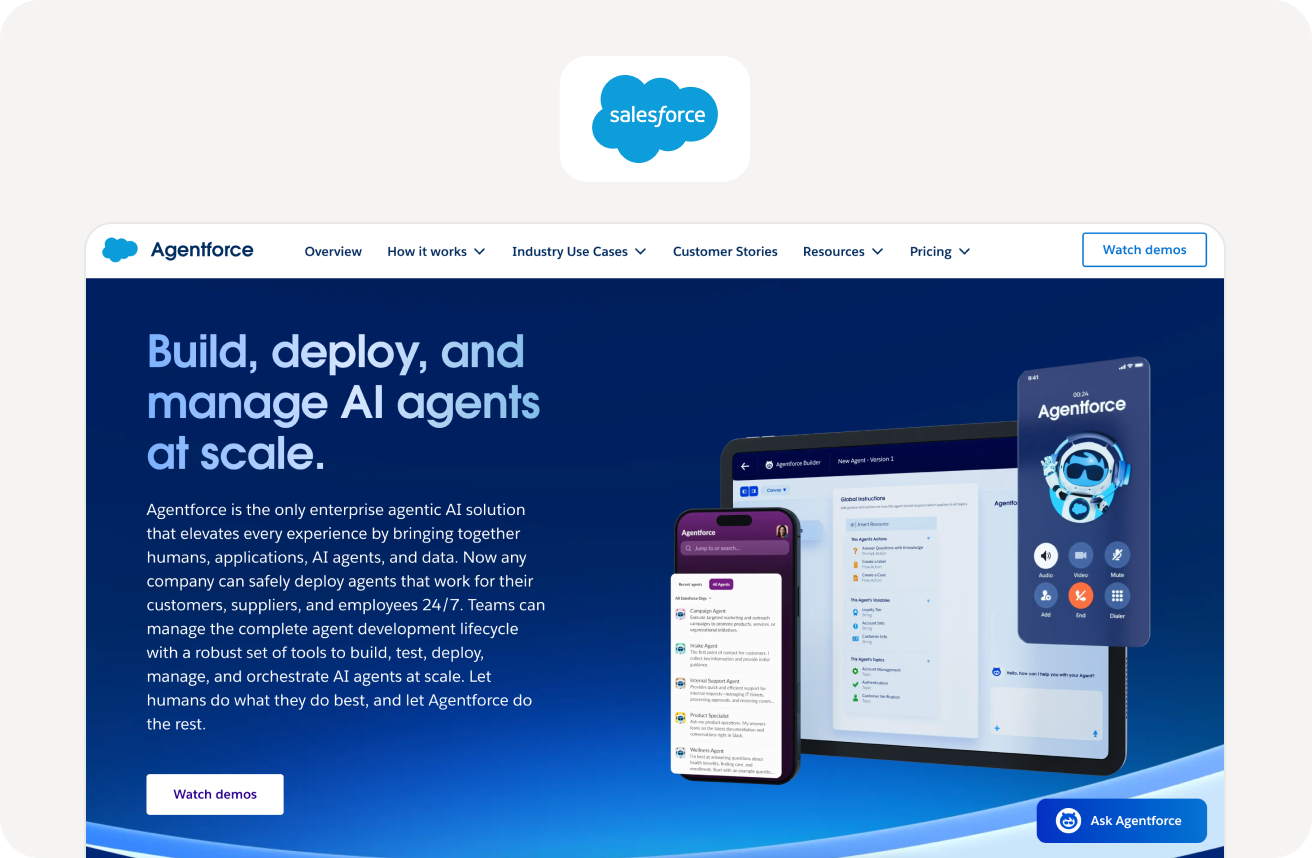
#5 Salesforce Agentforce – Best for guided selling within large Salesforce Commerce ecosystems
Best for
Enterprise retailers deeply invested in Salesforce Commerce Cloud that want autonomous agents handling product guidance, order actions, and shopping facilitation.
Why it’s here
Salesforce Agentforce brings guided shopping into the wider Salesforce commerce stack. Salesforce positions it around generative AI, product guidance, and commerce actions, with support for search refinement, order help, and shopping facilitation inside the same environment.
It’s a serious option for retailers that want autonomous AI agents and AI automation tied to existing systems instead of adding another silo.
Standouts
- Guided shopping built into Salesforce Commerce
- Handles product guidance and some order-related actions
- Strong fit for large commerce ecosystems and complex workflows
Watch-outs/limitations
- Best value if you already use Salesforce Commerce
- Heavier rollout than lighter e-commerce tools
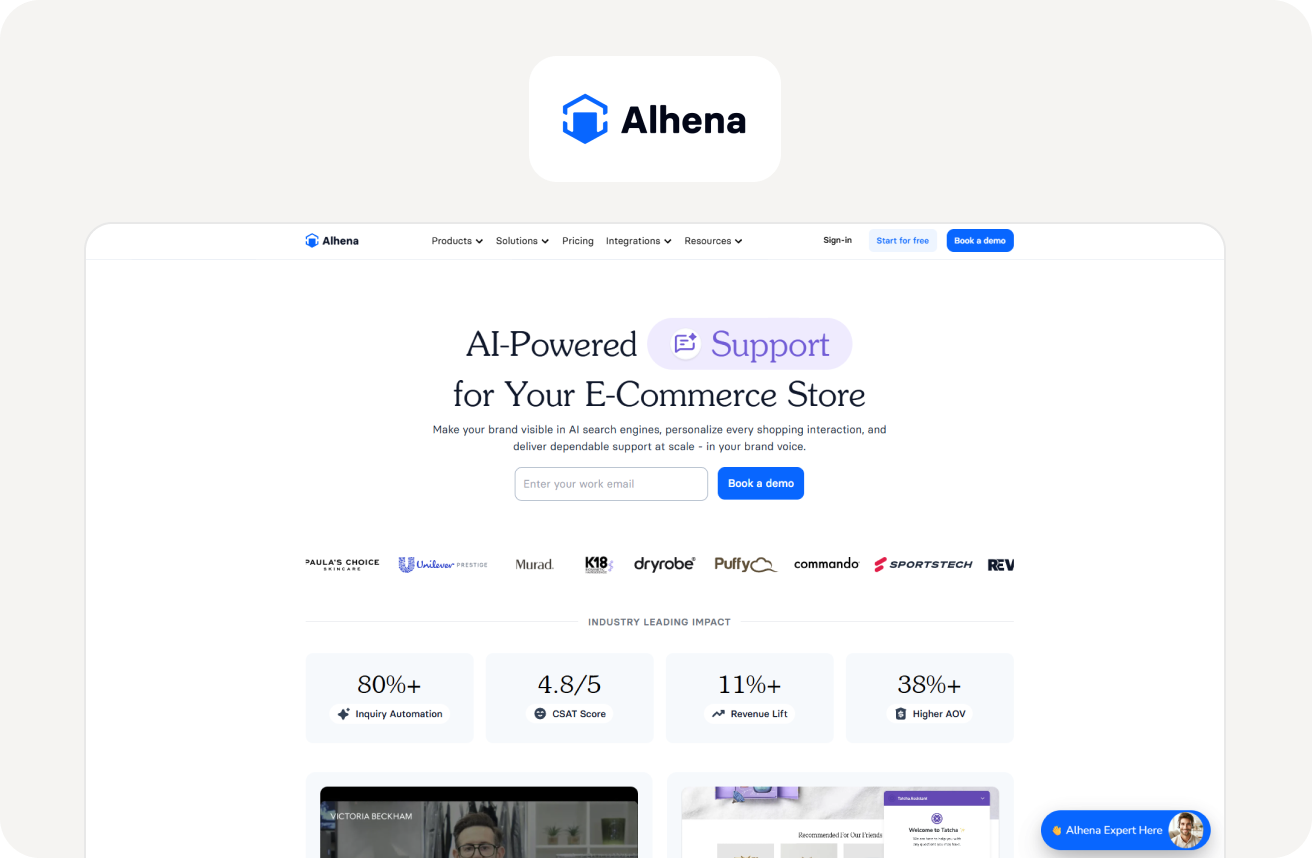
#6 Alhena AI – Best for all-in-one conversational discovery with conversion nudges
Best for
E-commerce brands that want a combined conversational search, guided discovery, and conversion optimization agent in a single platform.
Why it’s here
Alhena AI is built around conversational product discovery for online retail. It lets shoppers describe what they want in natural language, then returns matched products, upsells, and buying guidance in the same flow.
That makes it a good fit for e-commerce brands that want artificial intelligence focused on shopping experiences, customer satisfaction, and more sales.
Standouts
- Conversational discovery built for product matching
- Helps shoppers compare options inside the same flow
- Good fit for brands that want one tool for discovery and nudges
Watch-outs/limitations
- Lighter on merchandising depth than search-led tools
- May need another layer for broader CX orchestration
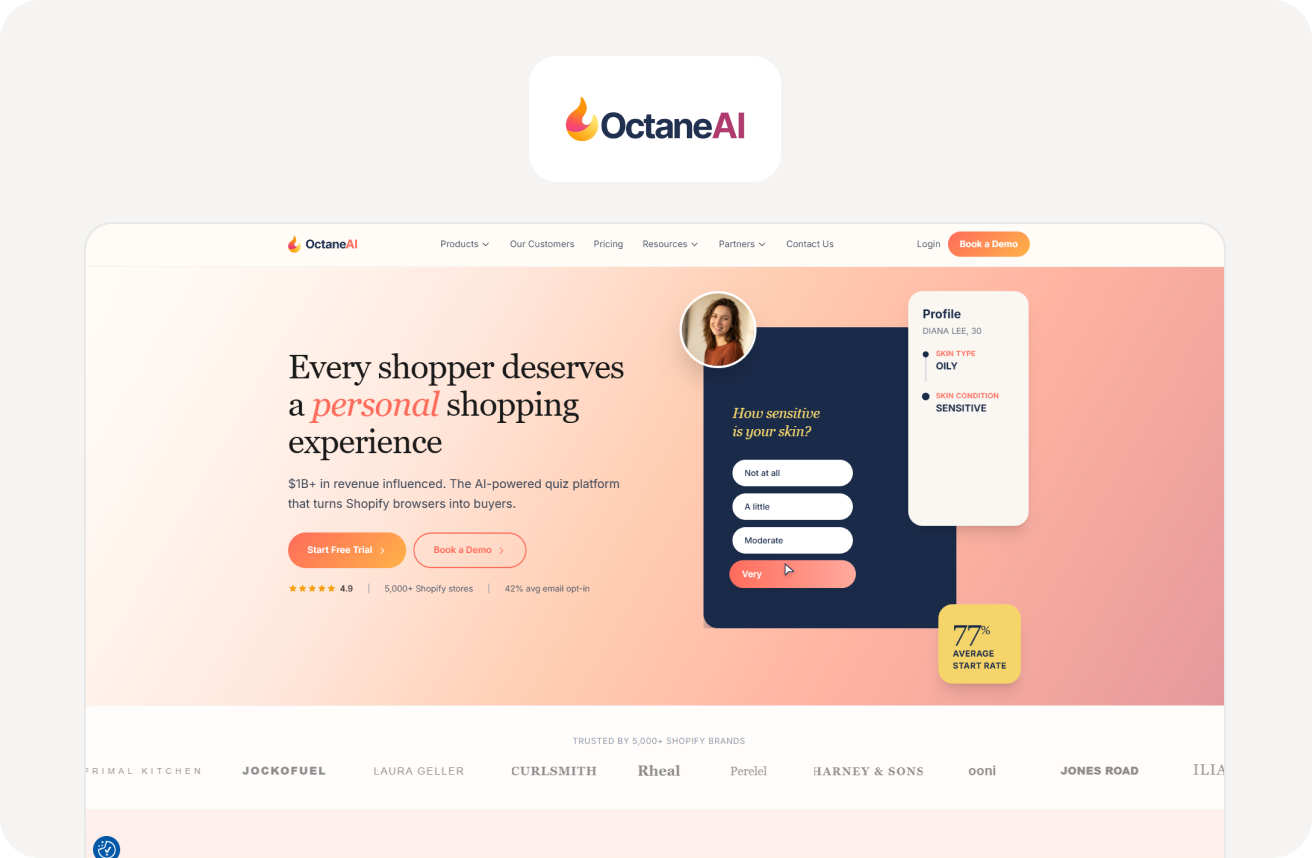
#7 Octane AI – Best for quiz-based guided selling and product matching
Best for
Shopify brands in beauty, wellness, and lifestyle categories that want interactive product quizzes to match shoppers to the right product and increase purchase confidence.
Why it’s here
Octane AI uses quizzes instead of open chat, which makes guided selling more structured. That works especially well when the customer asks for help narrowing products like skincare, supplements, or running shoes.
For Shopify brands, it’s a practical way to deliver personalized messages, support repeat purchases, and build brand loyalty without relying on human agents for every interaction.
Standouts
- Quiz-based matching is easy for shoppers to follow
- Strong fit for beauty, wellness, and lifestyle brands
- Helps collect preference data for future personalization
Watch-outs/limitations
- Less flexible than open conversation
- Best for Shopify-led brands, not broad omnichannel retail
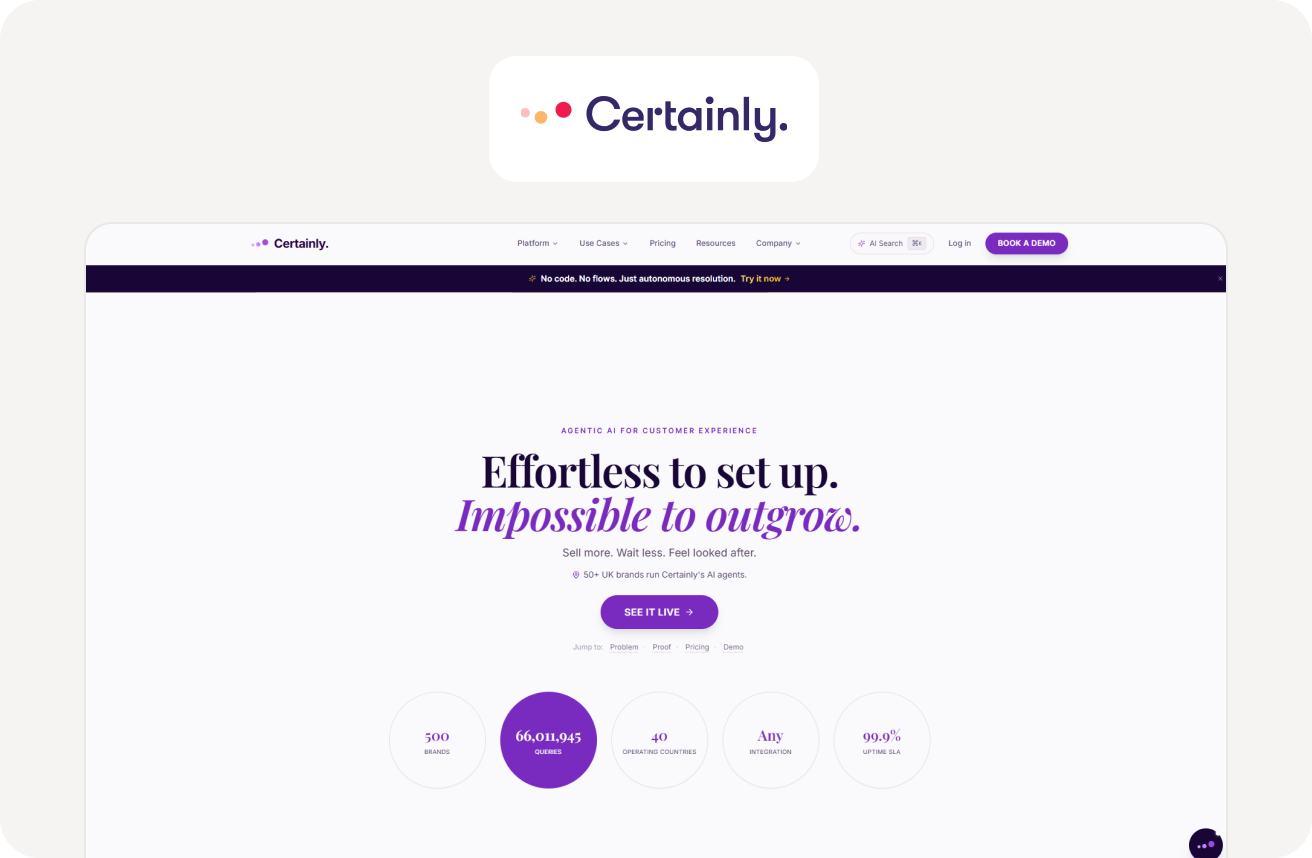
#8 Certainly – Best for conversational commerce with guided product discovery
Best for
Mid-market e-commerce brands that want a conversational AI platform focused on product discovery and guided selling through automated conversations.
Why it’s here
Certainly is built around conversational commerce for retail and e-commerce. Its retail offer includes product recommendations, sizing help, and automated conversations that can support both discovery and customer support.
It’s a good fit for brands that want AI agents that handle customer queries with human-like interactions while still helping drive sales.
Standouts
- Clear retail focus with guided product discovery
- Supports product recommendations inside conversations
- Useful for both pre-sale guidance and support tickets
Watch-outs/limitations
- Less focused on search and merchandising depth
- May need other tools for loyalty or lifecycle use cases
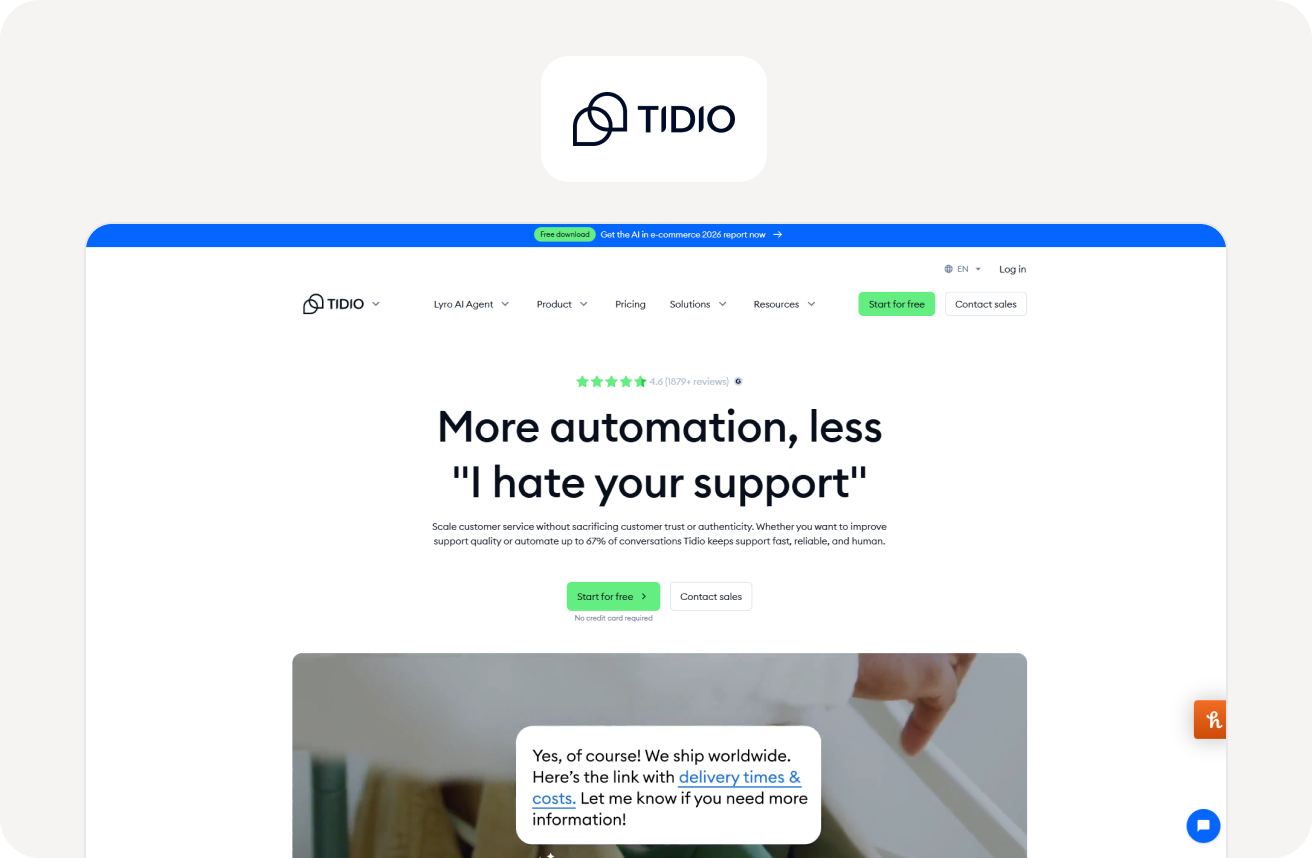
#9 Tidio (Lyro AI) – Best for SMB e-commerce guided selling with fast deployment
Best for
Small to mid-size e-commerce stores that need a quick-to-deploy AI agent handling pre-sales questions, product guidance, and cart recovery.
Why it’s here
Tidio Lyro starts from support but now covers more pre-sale guidance. Tidio says Lyro can answer product questions, ask follow-up questions, show product cards, and recommend products, which helps smaller e-commerce businesses handle high-volume customer interactions without heavy setup.
It’s a practical choice for teams that want operational efficiency, lower ticket volume, and a faster path to guided selling.
Standouts
- Fast deployment for smaller teams
- Handles product guidance and support in one place
- Good fit for stores that need help with high volume inquiries
Watch-outs / limitations
- Still more support-led than discovery-led
- Advanced retailers may outgrow it as needs become more complex
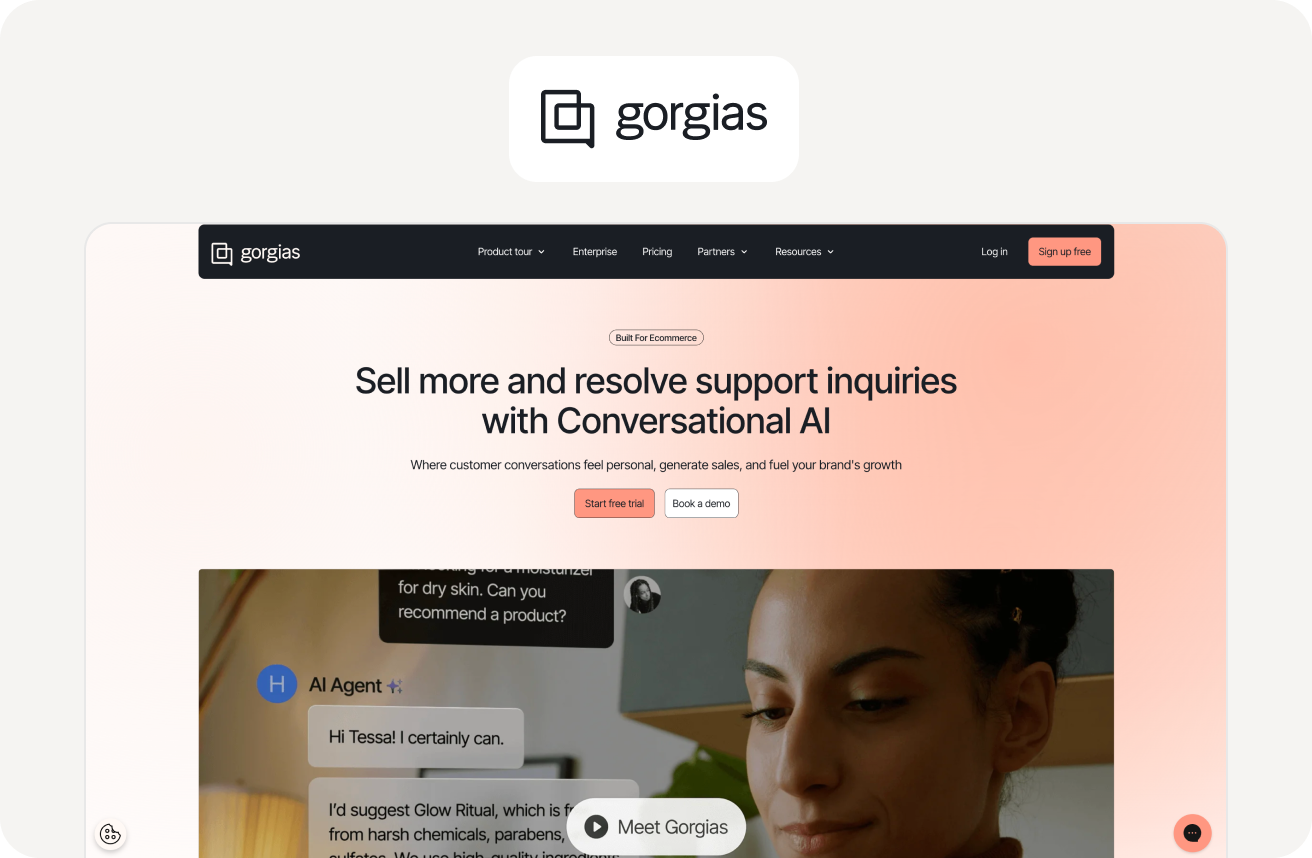
#10 Gorgias – Best for extending support conversations into sales-assist moments
Best for
DTC and Shopify brands with strong support operations that want to use AI to turn service interactions into guided selling and upsell opportunities.
Why it’s here
Gorgias sits close to support, but its AI agent now covers both service and sales-assist use cases. Gorgias says it can recommend products, support shopping assistant flows, and work across channels while keeping brand voice in mind, which makes it useful for brands that already treat support as part of revenue.
If your team is also looking at agentic AI for marketing or evaluating the best e-commerce AI agents, Gorgias is one of the clearest examples of support conversations turning into guided selling.
Standouts
- Extends customer support into sales-assist moments
- Supports product recommendations inside service conversations
- Strong fit for Shopify and DTC workflows
Watch-outs/limitations
- More support-first than discovery-first
- Best results come when service is already treated as a sales channel
With the right AI sales agent, you help your shoppers choose faster, feel more confident, and buy more without making your team work harder.
Where AI sales agents create the most value in the e-commerce journey
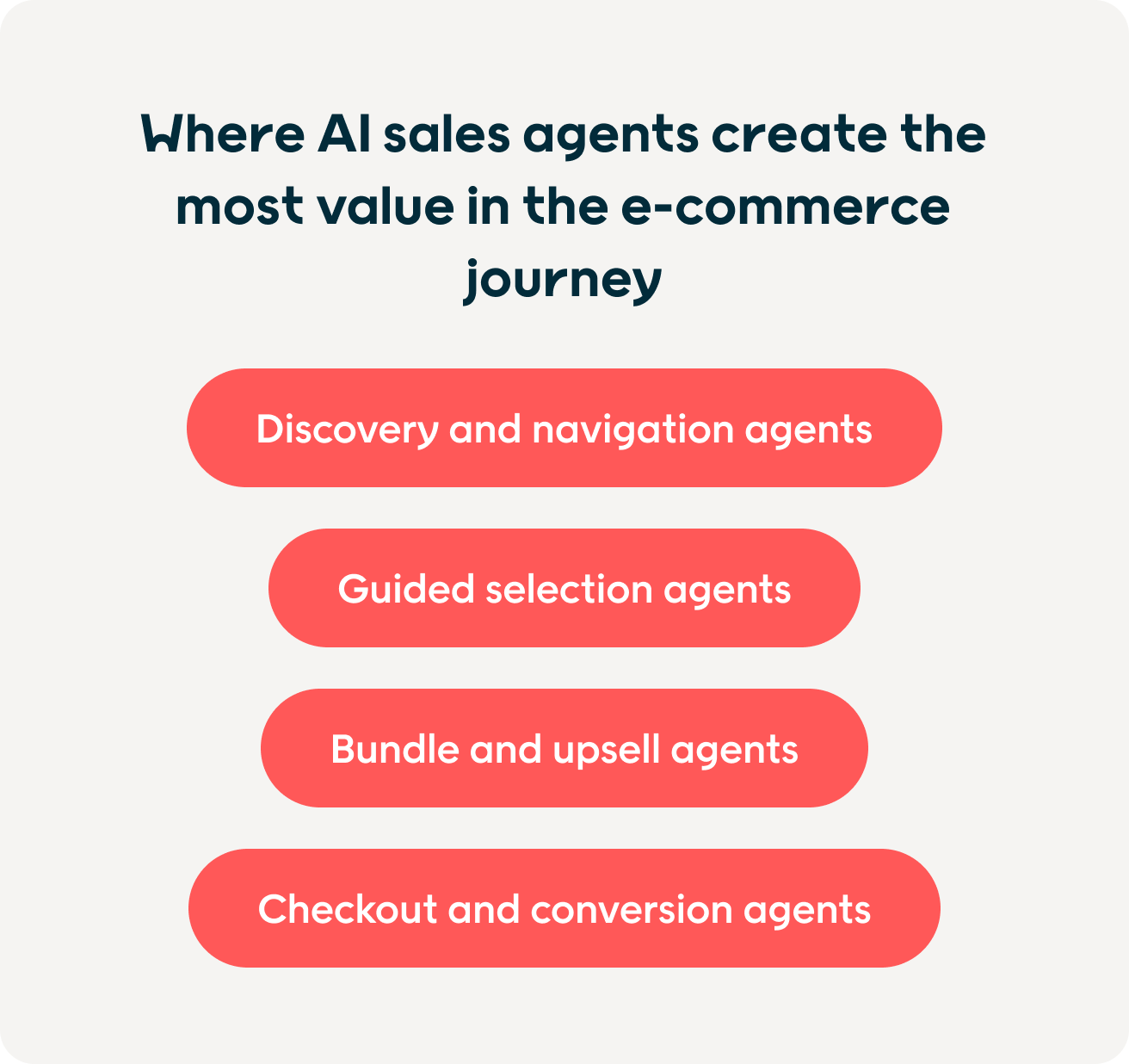
Discovery and navigation agents
These AI agents help shoppers find products faster through intelligent search, personalized recommendations, and category guidance. This improves customer experience early by adapting to customer behavior and using natural language processing to guide customers’ search results in real time.
How they help your team
- Reduce friction in large catalogs
- Improve customer satisfaction earlier in the journey
- Support AI inventory management using inventory levels and structured data
Guided selection agents
These AI agents act like digital sales associates. They respond to customer questions, compare options, and adapt suggestions for different customer segments using external data and product attributes.
How they help your team
- Help shoppers make informed decisions faster
- Reduce reliance on human agents for product guidance
- Support tailored shopping experiences across customer segments
Bundle and upsell agents
These AI agents recommend complementary items and bundles that increase average order value and sales velocity. They use artificial intelligence and sentiment analysis to surface combinations that feel relevant and natural.
How they help your team
- Drive sales without adding manual merchandising work
- Increase customer satisfaction with better-fit suggestions
- Support repeat purchases and long-term brand loyalty
Checkout and conversion agents
These AI agents detect hesitation, answer last-minute customer queries, and help shoppers complete purchases during high-volume moments. Connected to customer data and autonomous systems, they protect conversion rates when decisions are most fragile.
How they help your team
- Reduce abandoned carts across sales channels
- Increase sales without adding pressure to customer support
- Improve operational efficiency during peak traffic periods
Together, these AI agents support the full journey from discovery to checkout so your team can guide more shoppers, increase conversion rates, and drive more sales without adding manual work.
What e-commerce teams should evaluate before choosing a platform
| What to evaluate | What to look for |
| Product intelligence | The platform should understand attributes, compatibility, inventory levels, margin logic, and supplier lead times. Strong product intelligence helps AI agents perform tasks that support real buying decisions, not generic suggestions. |
| Customer data for personalized selling | Look for e-commerce AI that connects customer profiles, loyalty signals, and behavior data so AI systems can adapt guidance without constant human intervention. This helps e-commerce brands build customer trust through relevant recommendations. |
| Measurable impact on conversion and AOV | Prioritize platforms designed to increase conversion rates, average order value, and repeat purchases. The right AI agents should solve complex problems tied to revenue, not just engagement metrics. |
| Retail-specific context | Many generative AI tools miss retail details like fit logic, campaigns, and availability. E-commerce businesses need systems trained to handle these complex processes inside real shopping journeys. |
| Connection to your CX and merchandising stack | Guided selling works best when connected to search, merchandising, loyalty, and marketing automation. Strong platforms support e-commerce brands without requiring a massive budget or rebuilding existing workflows. |
Choose a platform that understands your products, your shoppers, and your goals so your AI agents can guide decisions, solve complex problems, and drive measurable results across the e-commerce journey.
How Voyado powers smarter guided selling for e-commerce
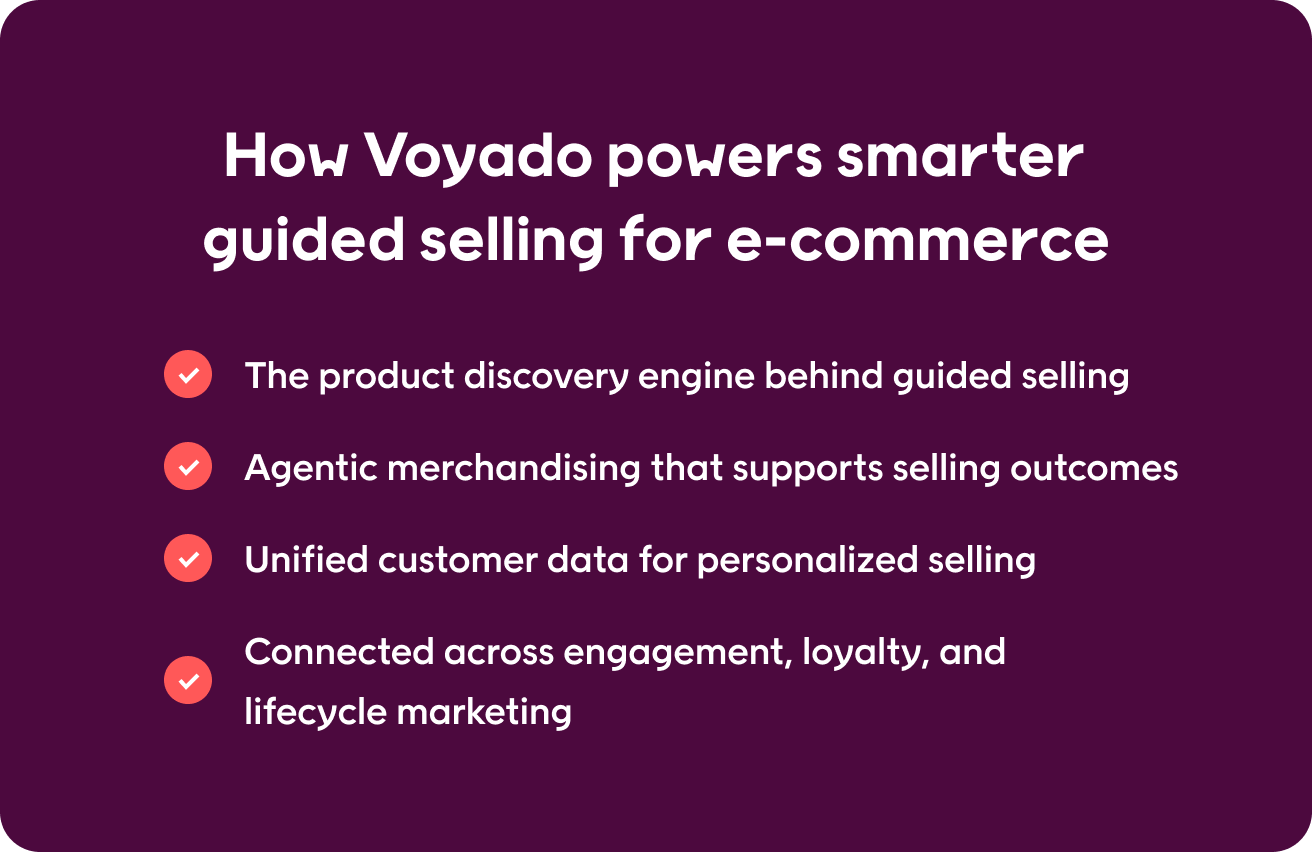
The product discovery engine behind guided selling
Shoppers buy faster when results match what they’re actually looking for.
Voyado improves relevance across search, category pages, and product recommendations so the right products appear earlier in the journey. That helps AI agents support informed decisions, increase conversion rates, and lift average order value without adding friction to the experience. This is the role of a strong product discovery engine.
Agentic merchandising that supports selling outcomes
Guided selling starts before a conversation even begins.
Voyado’s merchandising adjusts product visibility based on shopper intent, campaigns, margin priorities, and inventory levels. That means the products customers see first are already aligned with both relevance and business goals.
Unified customer data for personalized selling
Good guidance depends on context.
Voyado connects behavior, purchases, and loyalty signals into one profile through its customer loyalty platform. This helps AI agents respond to who the shopper is, not just what they click.
Connected across engagement, loyalty, and lifecycle marketing
Guided selling shouldn’t stop at checkout.
Voyado connects discovery with lifecycle messaging and loyalty so teams can support repeat purchases, increase customer satisfaction, and grow long-term value from every interaction.
If your team wants stronger discovery, smarter recommendations, and better conversion from the same foundation, book a demo to see how Voyado Elevate and the Agentic CX Suite support guided selling.
Final take: What this means for your team
AI sales agents are improving fast, but results don’t come from conversation alone. The biggest gains happen when AI agents are connected to product intelligence, customer data, and systems built for real e-commerce journeys. That’s what helps e-commerce businesses increase conversion rates, improve customer satisfaction, and drive more sales in ways shoppers actually notice.
Guided selling works best when discovery, recommendations, and customer context support each other. Teams that start with strong AI foundations for e-commerce can solve complex problems earlier in the journey and build customer trust with every interaction.
FAQs
What is an AI sales agent in e-commerce?
An AI sales agent in e-commerce helps shoppers choose products and complete purchases. It uses product data, customer behavior, and intent signals to recommend items, compare options, and reduce friction during the buying process.
How is an AI sales agent different from a recommendation engine?
A recommendation engine suggests products based on patterns or behavior. An AI sales agent guides decisions in real time by asking questions, adapting suggestions, and helping shoppers move toward purchase.
What is guided selling in e-commerce?
Guided selling helps shoppers narrow options and choose the right product faster. It uses product attributes, context, and customer signals to support informed decisions across discovery, comparison, and checkout.
Can AI sales agents actually improve AOV?
Yes. AI agents increase average order value by recommending bundles, upgrades, and complementary products that match shopper intent instead of showing generic add-ons.
What makes guided selling effective?
Strong product intelligence, accurate customer data, and relevance to intent. When recommendations reflect what shoppers actually want, conversion rates and customer satisfaction improve.
What does Voyado have to do with AI sales agents?
Voyado provides the product discovery and customer data foundation that guided selling depends on. Its platform improves search relevance, recommendations, and merchandising so AI agents can make better decisions.
How should retailers evaluate AI sales agents for e-commerce?
Focus on product intelligence, personalization depth, integration with existing systems, and measurable impact on conversion rates and average order value. Tools should support real retail workflows, not just customer support automation.
About Author