
TL;DR
- 95% of European retailers are experimenting with AI in marketing and e-commerce — but only 5% report clear, scalable ROI, according to Voyado and Retail Economics research surveying 300 retail leaders.
- The gap is structural, not technological. Most retailers have access to the same tools. What separates leaders is how they integrate data, build skills, and govern AI across functions.
- Four maturity stages define the landscape: Exploration (9%), Pilot scaling (15%), Operational (45%), and Embedded strategy (26%) — yet reaching operational status does not guarantee returns.
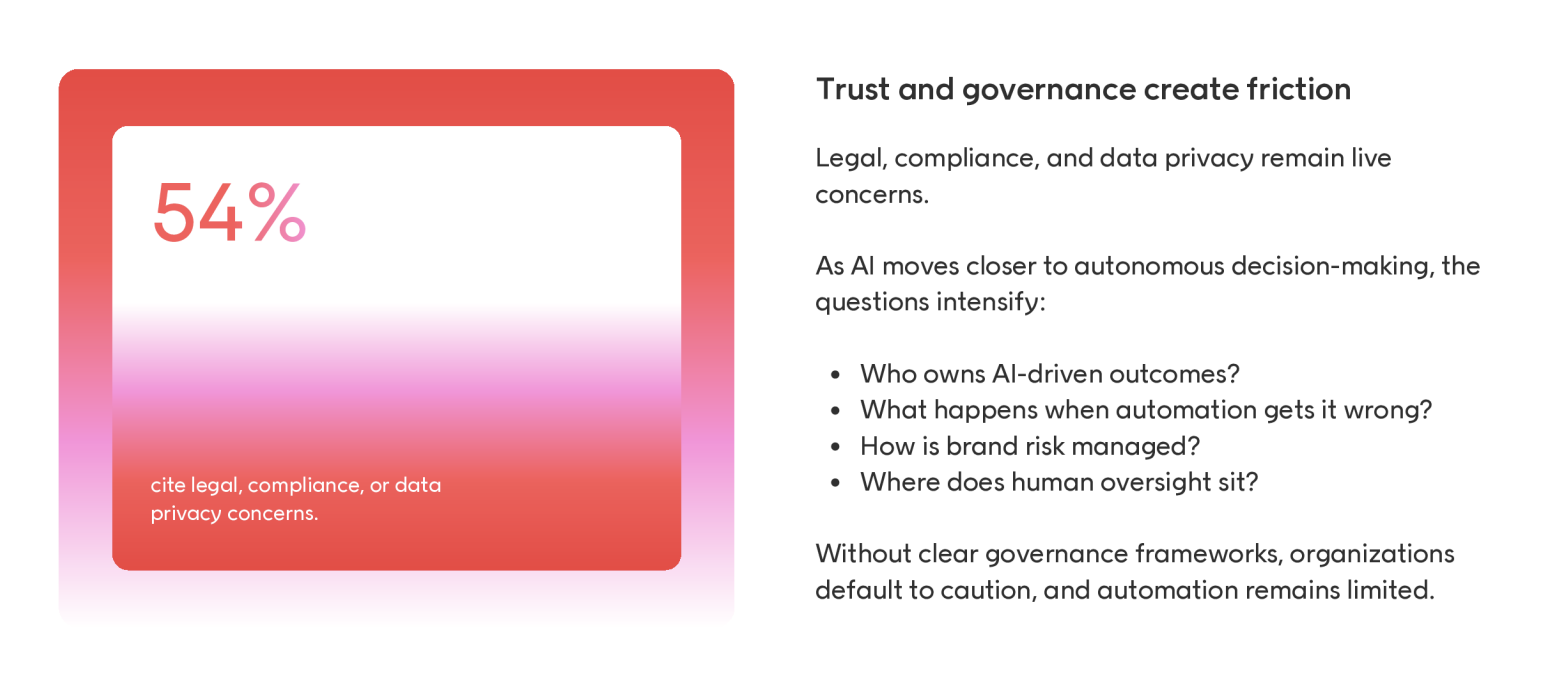
- Two barriers dominate: skills gaps (58%) and cultural resistance (57%), with compliance concerns (54%) compounding both.
- Advanced retailers use nearly twice as many data sources as their mid-stage peers, giving their AI models richer context for every decision.
- A practical self-assessment framework can help you diagnose where your organization stalls and what to fix first.

The AI adoption paradox in retail
You have probably already invested in AI. Your team may have launched product recommendation engines, automated email campaigns, or tested agentic AI tools for marketing. You are not alone — Voyado’s State of AI in Retail report found that 95% of European retailers have experimented with AI in marketing and e-commerce.
Yet only 5% of those retailers report clear, scalable ROI from their AI investments.
That isn’t a technology problem. The tools exist, the budget is allocated, and the ambition is genuine — yet the report identifies where the breakdown actually happens.
Where most retailers actually stand
The report, co-produced with Retail Economics and based on a survey of 300 marketing and e-commerce leaders across the UK, DACH, Scandinavia, and Benelux, identifies four stages of AI maturity:
| Stage | Description | % of retailers |
| Exploration | Testing AI in isolated use cases, no clear roadmap | 9% |
| Pilot scaling | Running pilots, beginning to connect AI to workflows | 15% |
| Operational | AI embedded in day-to-day marketing operations | 45% |
| Embedded strategy | AI integrated into commercial planning and decision-making | 26% |
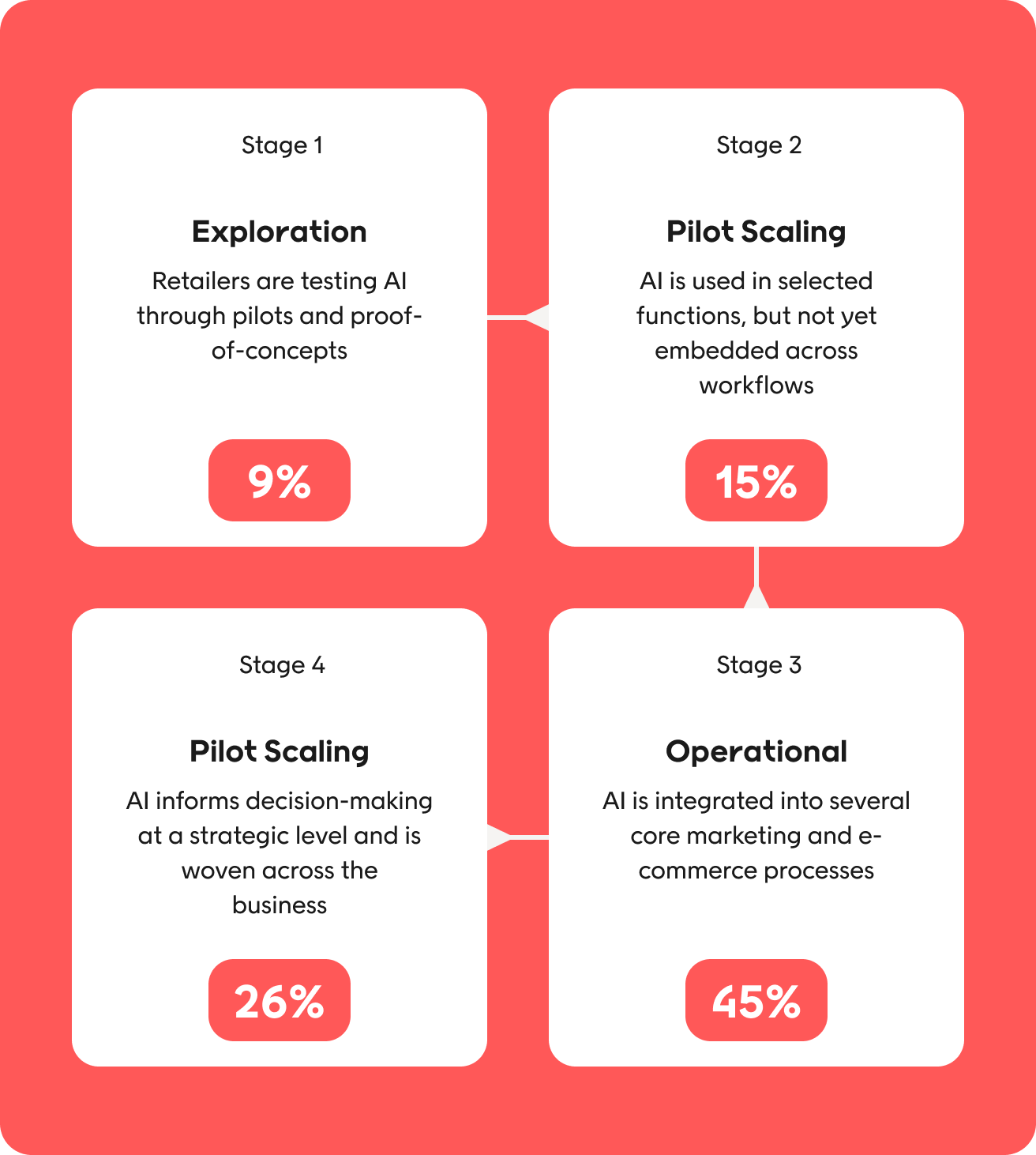
Nearly half of all retailers sit at the “Operational” stage. They have AI running — but it isn’t transforming their business. The jump from operational to embedded is where most organizations stall, and it is where the ROI gap lives.
As Felix Kruth, Chief Product Officer at Voyado, puts it: “Retailers are under pressure to demonstrate AI progress. But visible innovation is rarely where long-term advantages are built.”
Why operational AI does not equal ROI
Getting AI into production is a milestone. But production alone does not create compounding returns. The reasons come down to structural gaps that compound at scale:
Fragmented data limits what AI can learn. If your recommendation engine only sees browse behavior but not loyalty tier, purchase history, or in-store interactions, its predictions stay shallow. Unified shopper profiles are the foundation. Advanced retailers in the report use nearly twice as many data sources as mid-stage peers — giving their models a richer, more accurate view of each customer.
Disconnected use cases create diminishing returns. An AI-powered email subject line optimizer and an AI-driven product recommendation engine might both perform well in isolation. But if they don’t share data or coordinate timing, you end up with overlapping messages and conflicting offers. The value of AI compounds when systems talk to each other.
No governance means no learning. Without clear ownership of AI outputs, measurement frameworks, and feedback loops, your team cannot distinguish what works from what does not. Every campaign becomes a one-off experiment rather than a step in a learning system.
The three structural barriers
The report identifies five barriers to AI scale, but three dominate:
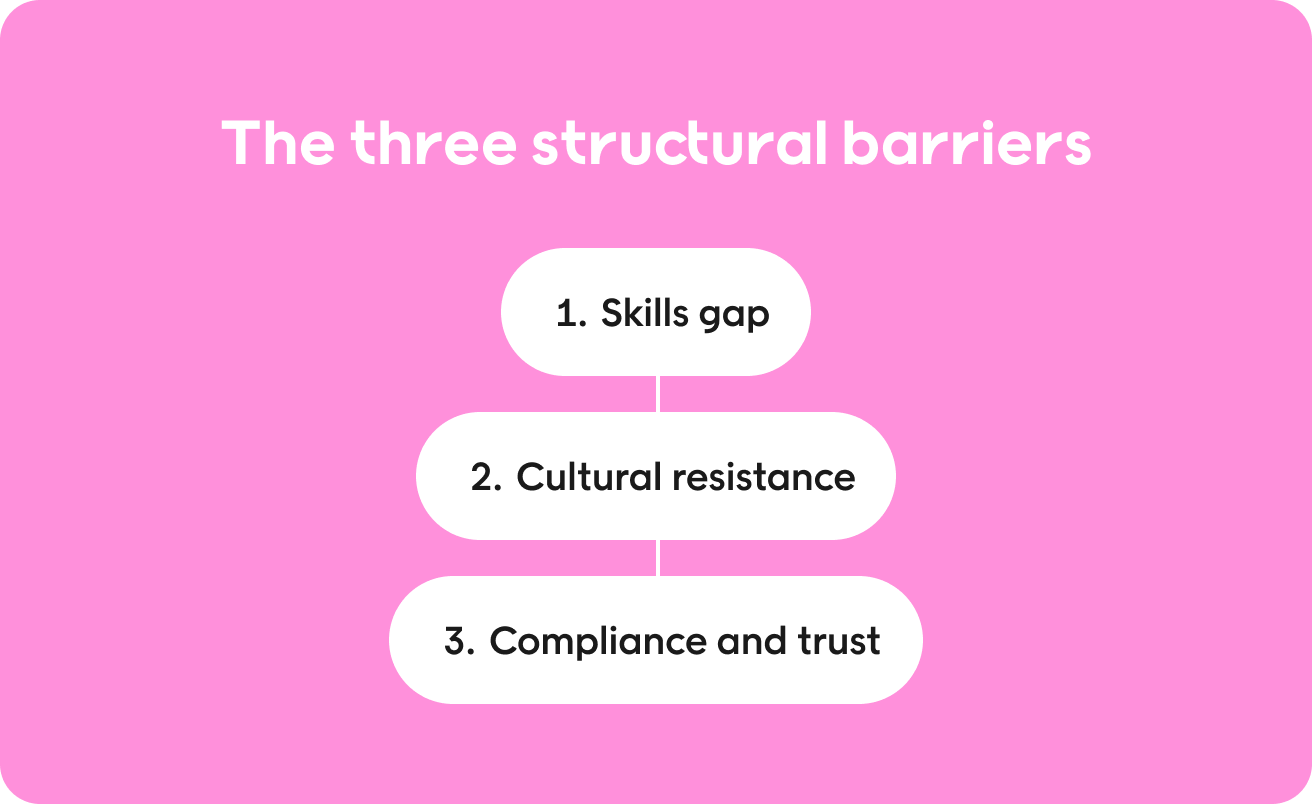
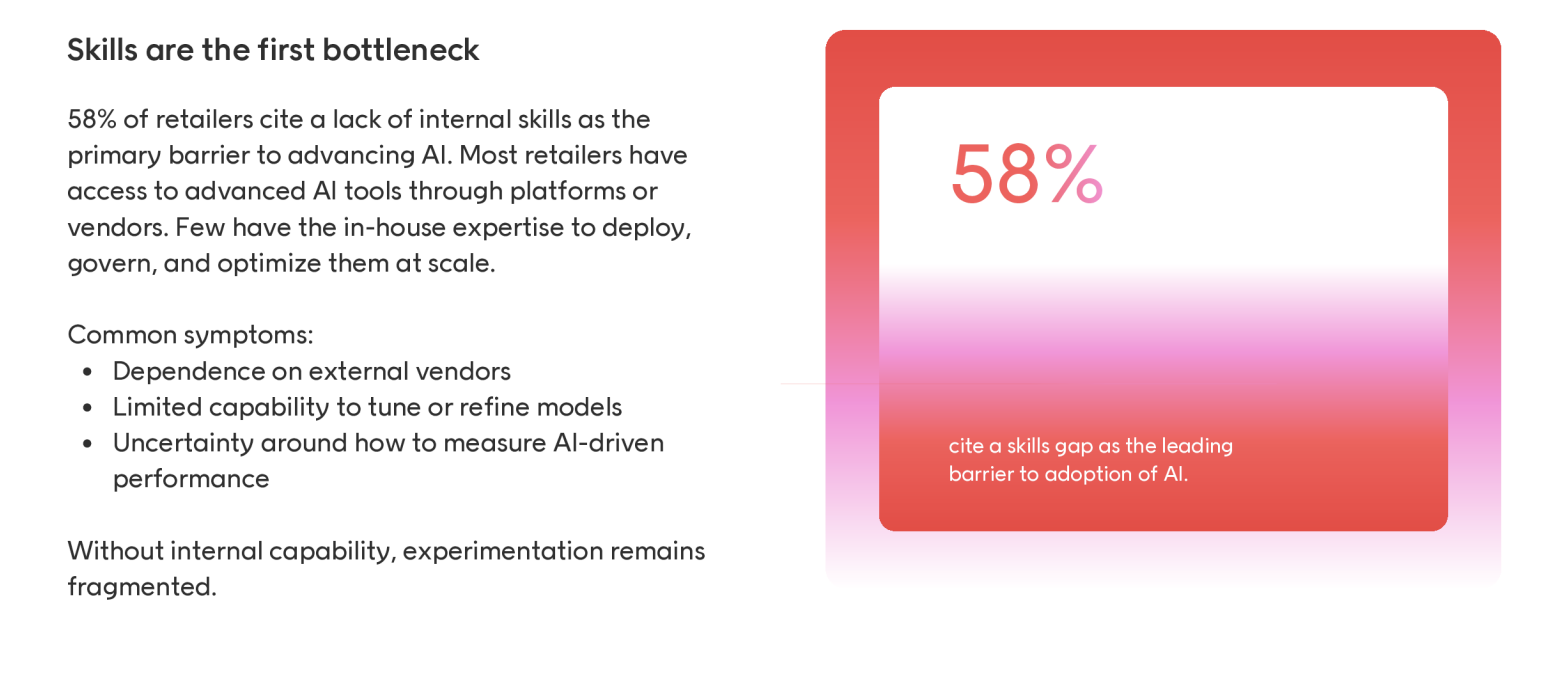
1. Skills gap (58%). More than half of retailers cite a lack of internal expertise as their primary barrier. This isn’t just about hiring data scientists — it is about equipping marketing and CRM teams to work alongside AI tools, interpret outputs, and make better decisions faster.
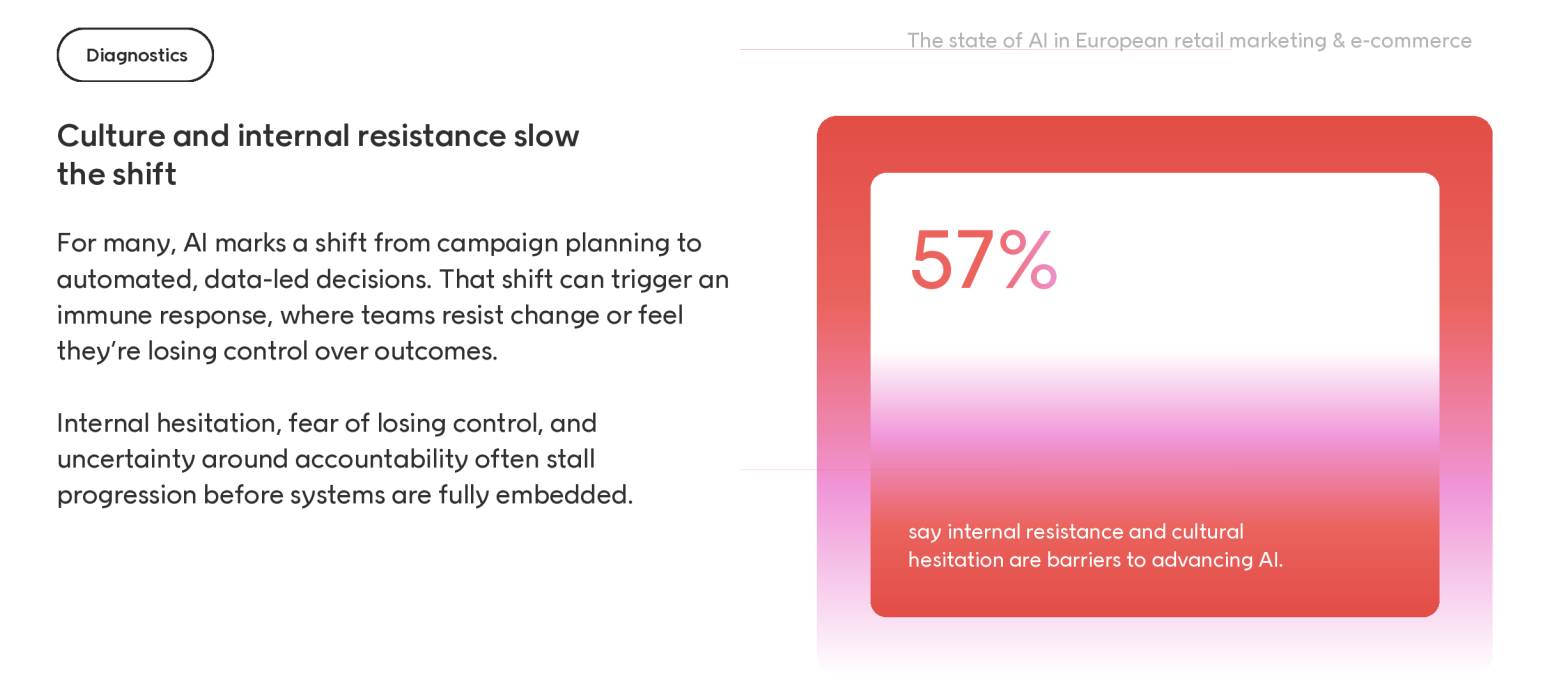
2. Cultural resistance (57%). Internal hesitation — from leadership skepticism to team-level reluctance to change established workflows — blocks adoption even when the technology is ready. AI adoption is a change management challenge as much as a technical one.
3. Compliance and trust (54%). Data privacy regulations, lack of trust in AI-generated decisions, and unclear accountability frameworks make teams cautious. When 53% of retailers say they lack trust in AI decisions, rollout slows to a crawl.
These barriers are interconnected. Without skills, trust erodes — and without trust, organizations never build the governance frameworks that make data integration possible.
A self-assessment framework: where does your AI stall?
Use this diagnostic to identify your organization’s primary bottleneck:
1. Data breadth
- How many data sources feed your AI models? (CRM, POS, browse behavior, loyalty, advertising, inventory)
- Are those sources unified into a single customer view, or siloed by channel?
- Can your AI access real-time signals, or does it rely on batch data?
If you scored low here: Your AI is making decisions with incomplete information. Start by mapping every customer data source and identifying which are connected and which are not.
2. Organizational capability
- Does your marketing team understand how to interpret AI outputs?
- Do you have clear ownership of AI-driven campaigns and their outcomes?
- Is there a feedback loop between AI recommendations and campaign performance?
If you scored low here: Invest in upskilling before scaling. A team that cannot evaluate AI outputs will not trust them — and will not use them consistently.
3. Integration depth
- Is AI embedded in your planning process, or bolted onto existing workflows?
- Do your AI tools share data and coordinate across channels?
- Can you measure the incremental impact of AI on revenue, retention, and lifetime value?
If you scored low here: You have operational AI but not strategic AI. The next step is connecting your AI tools to each other and to your commercial decision-making process.
What the top 5% do differently
The retailers achieving scalable ROI share three structural patterns:
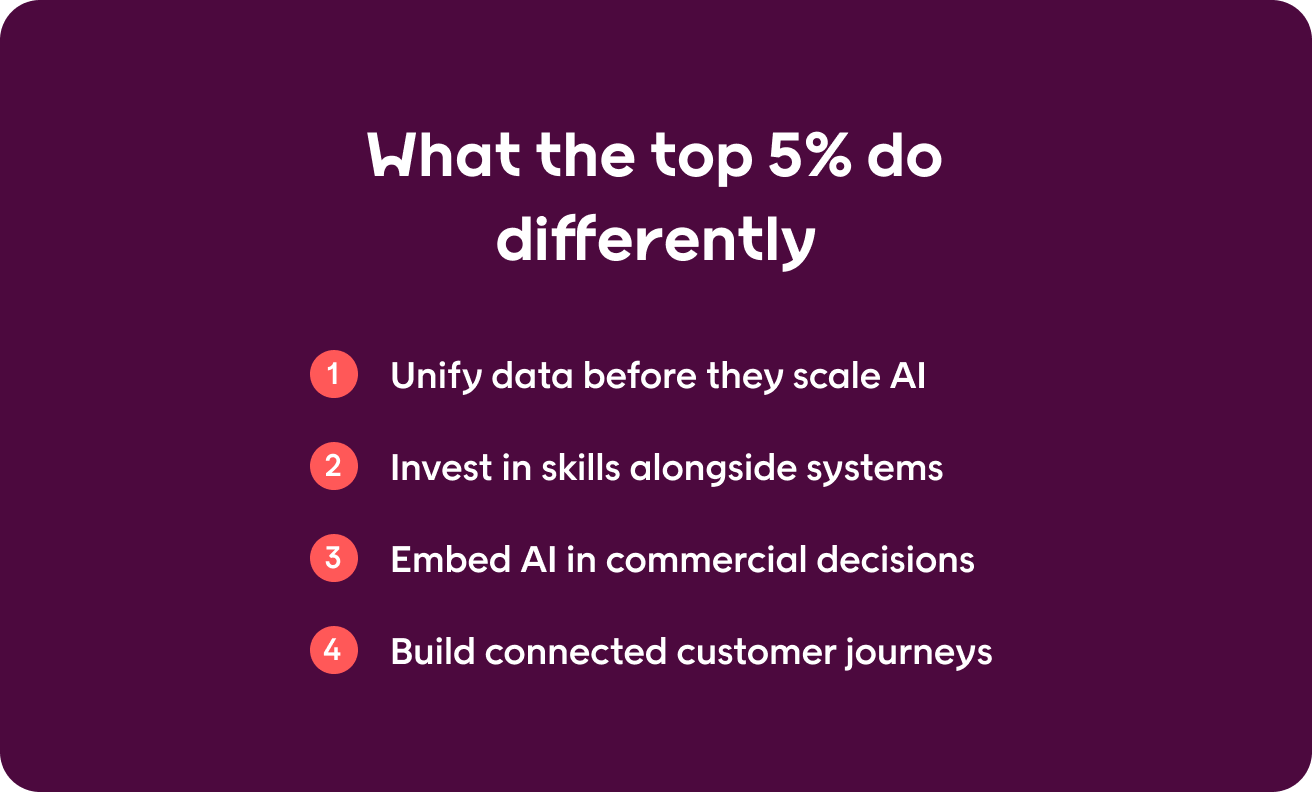
- They unify data before they scale AI. Customer, product, and performance data flow into a single platform, giving every AI model the same rich context.
- They invest in skills alongside systems. Technology rollout is paired with training, clear ownership, and cross-functional coordination.
- They embed AI in commercial decisions. AI is not a marketing tool — it informs pricing, assortment, inventory, and loyalty strategy.
- They build connected customer journeys that coordinate touchpoints rather than operating channels in silos.
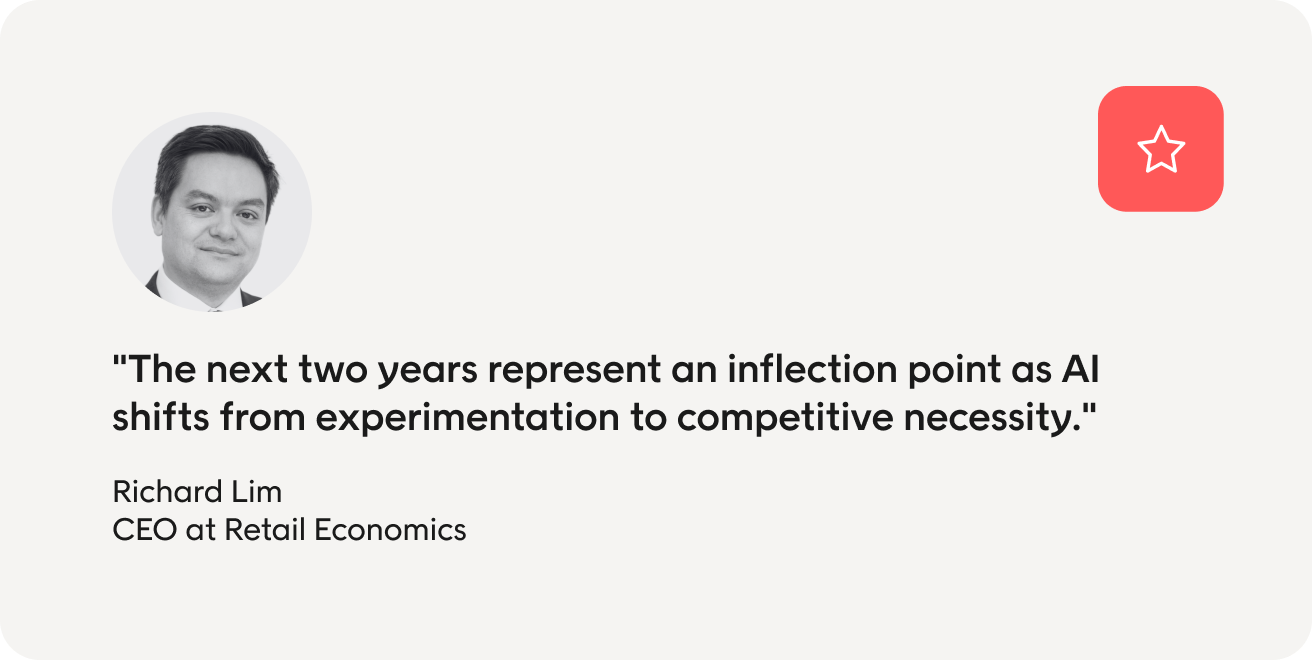
Richard Lim, CEO at Retail Economics, frames it this way: “The next two years represent an inflection point as AI shifts from experimentation to competitive necessity.”
What to do next
The gap between 95% and 5% isn’t about access to AI. It is about how you integrate AI into decisions and build the organizational capability to govern it. If you are in the operational stage — and statistically, you probably are — the path forward isn’t more tools. It is better foundations.
Start with one question: can your AI see your full customer picture? If the answer is no, that is your first move.
Frequently asked questions
What is the ROI of AI in retail?
Only 5% of European retailers report clear, scalable ROI from AI, according to Voyado and Retail Economics research. The gap is driven by structural issues — fragmented data, skills shortages, and lack of governance — rather than technology limitations.
Why do most retailers fail to get ROI from AI?
Most retailers operate AI in isolated use cases without unified data, cross-functional governance, or feedback loops. The report found that 58% cite skills gaps, 57% cite cultural resistance, and 54% cite compliance concerns as primary barriers.
What percentage of retailers are using AI?
95% of European retailers have experimented with AI in marketing and e-commerce. 45% have reached operational status, but only about 5% have achieved embedded, scalable AI with measurable returns.
How can retailers scale AI beyond experimentation?
Start by unifying customer data across channels and investing in team capability with clear ownership. Then embed AI into commercial decision-making rather than treating it as a campaign-level tool.
About Author