TL;DR — what you need to know
- Every retail media network needs two foundational ad formats: Sponsored Product Ads (SPA) and Sponsored Brand Ads (SBA).
- SPAs elevate already-listed products into reserved positions within search results, category pages, and carousels — performance-focused and contextually relevant.
- SBAs promote a brand’s identity alongside a curated product selection through banner-like placements — stronger creative flexibility but more oversight required.
- Ad density matters. Start conservative, measure the impact on engagement, and scale gradually. Uncontrolled banner proliferation leads to lower trust, banner blindness, and brand dilution.
- All sponsored content must be clearly labelled — for legal compliance, shopper trust, and long-term network credibility.
- Use SPAs as your self-service workhorse and SBAs as managed, premium inventory.

The two formats every retail media network needs
If you are building a retail media network, you do not need to start with a complex catalogue of ad products. Two formats — Sponsored Product Ads and Sponsored Brand Ads — cover the majority of on-site retail media use cases and give your brand partners both performance and brand-building options.
Understanding how each format works, where it sits on the page, and when to deploy it is critical for scaling your programme without degrading the shopping experience. This guide covers the mechanics of each format, a side-by-side comparison, placement strategies, and the design governance principles that protect your site’s integrity as ad inventory grows.
Sponsored product ads: performance at the point of decision
What they are
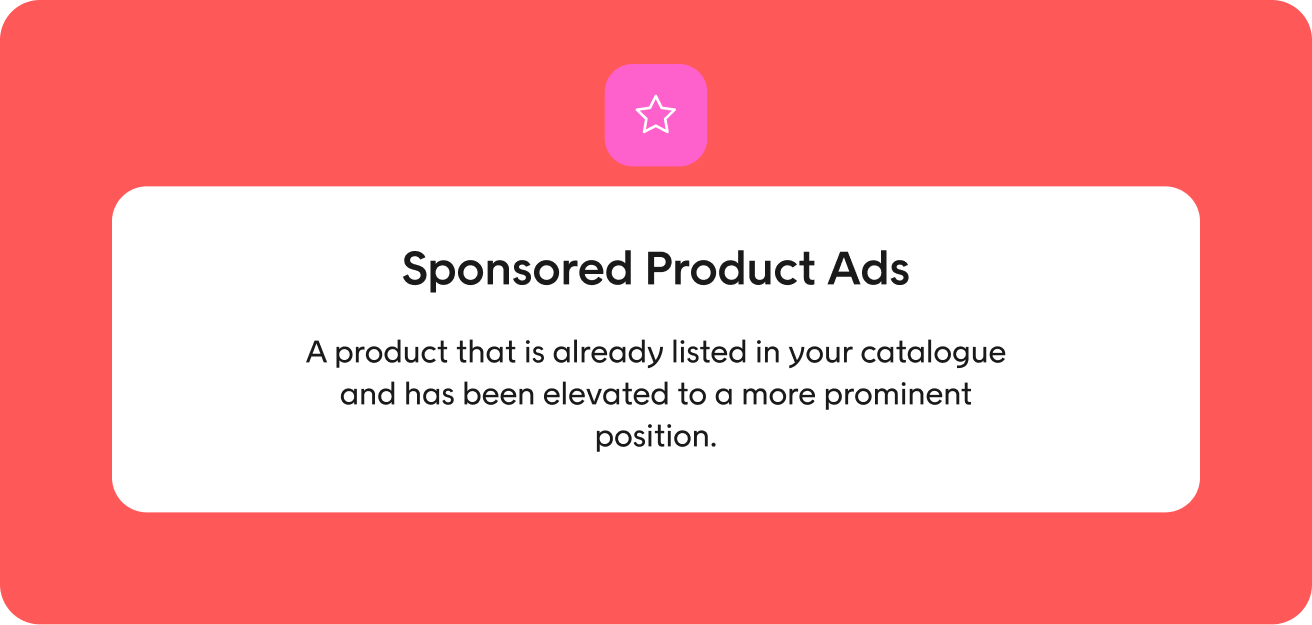
Sponsored Product Ads take a product that is already listed in your catalogue and elevate it to a more prominent position — a reserved slot at the top of a search result, a highlighted tile in a category grid, or a position within a standalone carousel module.
The product is already listed in your catalogue — the brand partner has simply paid for priority visibility, nothing more.
Example: A grocery retailer running Sponsored Product Ads reserves the first and fourth positions in its category search results for sponsored placements. A cereal brand bids on the “breakfast” category, and its product — already stocked and listed — appears in the top slot when a shopper searches for breakfast items.
Where they appear
- Primary product listings — integrated directly into search results and category pages, appearing alongside organic results
- Carousel units — standalone modules that can be positioned anywhere on a page (homepage, category landing, product detail pages)
Why they work
SPAs are the most natural ad format in retail media because they match shopper intent. A customer browsing “running shoes” sees a sponsored running shoe — not a banner for an unrelated brand. That contextual relevance drives higher click-through rates and conversion rates than traditional display advertising.
For advertisers, SPAs deliver measurable, performance-focused outcomes: clicks, conversions, ROAS. For you as the retailer, they monetise existing page real estate without disrupting the shopping experience.
Operational note
Because SPAs draw from your existing product catalogue and follow standard listing formats, they are well-suited to self-service. Brand partners can set bids, choose products, and launch campaigns through a supplier portal with minimal oversight from your team.
Sponsored brand ads: identity and storytelling above the fold
What they are
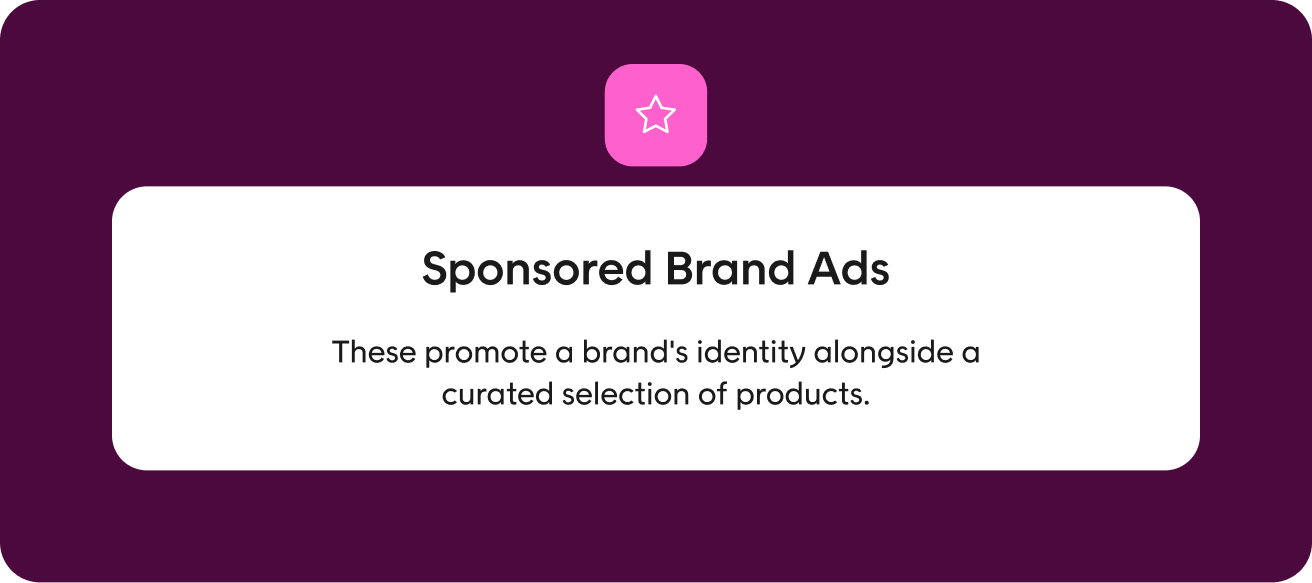
Sponsored Brand Ads promote a brand’s identity alongside a curated selection of products. Think of them as banner-like units that combine a brand logo, messaging, and a hand-picked product set into a single, high-visibility placement.
Where they appear
- Homepage modules — prime real estate for brand awareness and seasonal campaigns
- Category headers — banner placements at the top of category pages, capturing shoppers as they enter a browsing journey
- Search top banners — prominent placements above search results, connecting brand messaging with high-intent queries
Why they work
SBAs give advertisers creative flexibility that SPAs cannot. A brand partner can tell a story — launch a new product line, promote a seasonal campaign, or reinforce brand positioning — in a format that goes beyond a single product tile.
For you as the retailer, SBAs unlock premium pricing. They occupy high-visibility positions, support richer creative, and command higher CPMs than standard product placements.
Operational note
SBAs require more oversight than SPAs. The creative is more complex (imagery, copy, layout), and poorly executed brand ads can degrade the visual quality of your site. Most mature retail media networks keep SBAs as managed inventory — your team reviews creative, approves placements, and ensures alignment with your site’s design standards — even after moving SPAs to self-service.
Key differences at a glance
| Dimension | Sponsored Product Ads | Sponsored Brand Ads |
| Format | Elevated product listing | Banner-like brand unit |
| Creative | Uses existing product data (image, title, price) | Custom creative: logo, messaging, curated products |
| Placement | Search results, category grids, carousels | Homepage, category headers, search banners |
| Primary goal | Performance (clicks, conversions, ROAS) | Brand awareness + performance |
| Operational model | Self-service ready | Typically managed (creative review required) |
| Oversight needed | Low — products are already in your catalogue | High — creative quality and design consistency |
| Pricing | Standard CPM/CPC | Premium CPM |
Ad density and design governance: protect the experience
The temptation is to fill every available pixel with sponsored content. Resist it. Uncontrolled ad density creates three problems:
- Lower engagement and trust. Shoppers recognise when a page is designed to sell to them rather than help them. Banner blindness is real — and once it sets in, your ad inventory loses value.
- Poorer click-through rates. More ads per page does not mean more clicks. It usually means lower CTRs per placement, which erodes advertiser confidence.
- Brand dilution. Your retail media network is built on top of your brand. If sponsored content overwhelms organic content, your site stops feeling like a shopping destination and starts feeling like an ad marketplace.
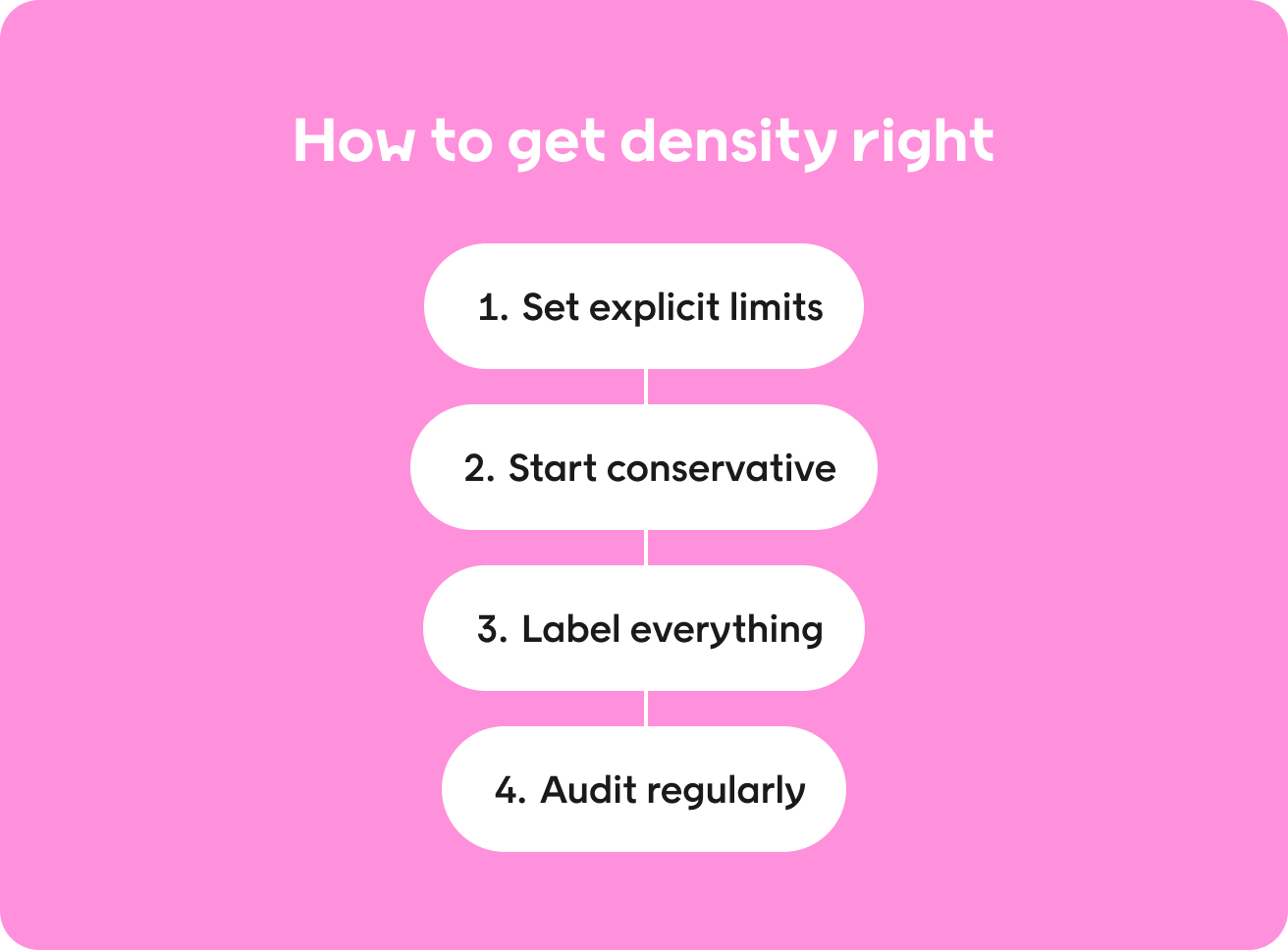
How to get density right
- Set explicit limits — define the maximum number of sponsored placements per page, per category, and per search result
- Start conservative — launch with lower density, measure the impact on engagement and conversion, then adjust
- Label everything — every sponsored placement must be clearly marked. This is a legal requirement in most jurisdictions and a trust signal for shoppers
- Audit regularly — review how your pages look with ads enabled. If the experience feels cluttered to you, it feels cluttered to your customers
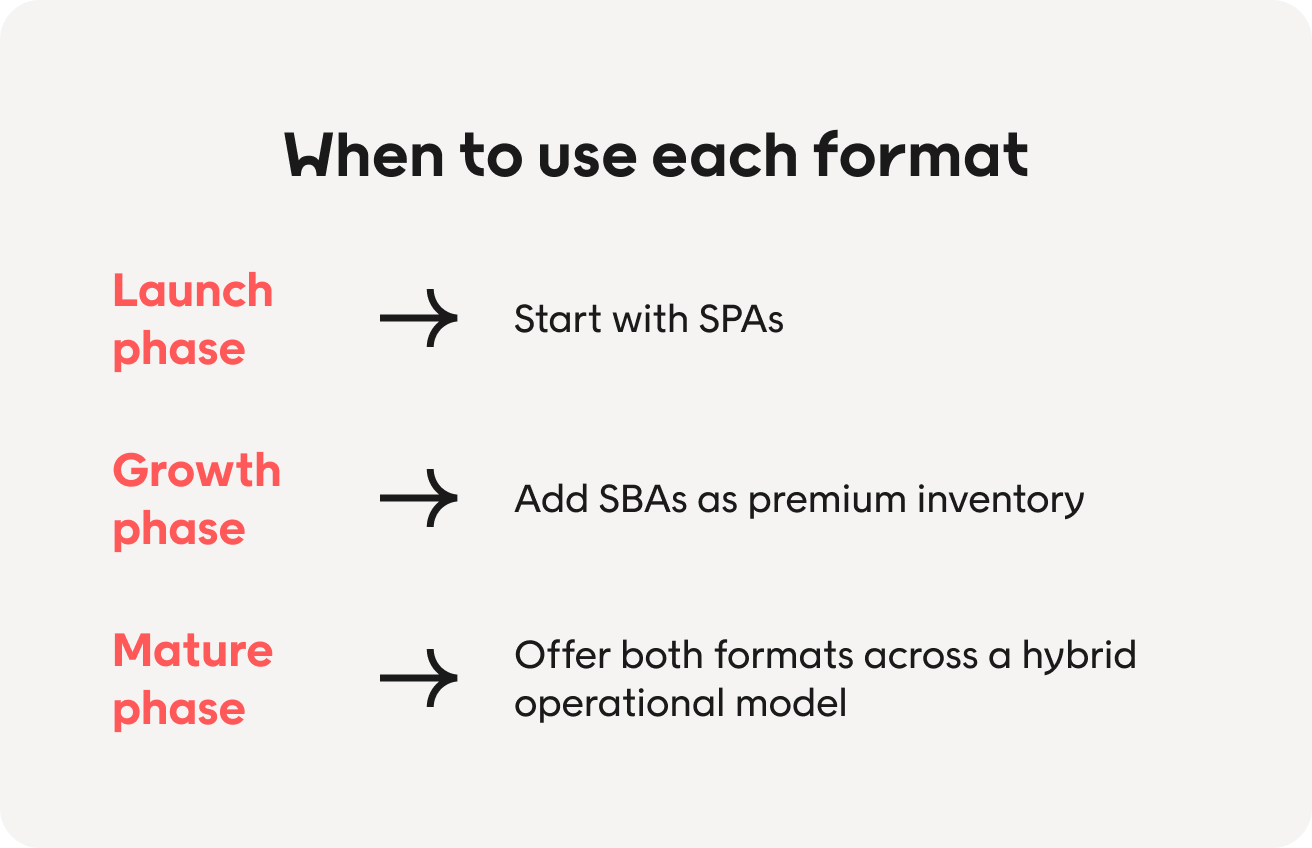
When to use each format
Your format strategy should evolve with your network’s maturity:
Launch phase: Start with SPAs. They are easier to implement, require less creative oversight, and deliver immediate performance data that proves value to early advertiser partners.
Growth phase: Add SBAs as premium inventory once you have the operational capacity to manage creative review. Use SBAs to attract larger brand budgets and differentiate your network from competitors.
Mature phase: Offer both formats across a hybrid operational model — self-service SPAs for the long tail and managed SBAs for top-tier partners. Use SBA performance data to develop additional premium formats (e.g., video, interactive modules) as your network scales.
If your retail media platform integrates directly with your product discovery and search infrastructure — as Voyado Retail Media does — you can serve contextually relevant SPAs and SBAs without bolting on a separate ad tech layer.
Conclusion
Sponsored Product Ads and Sponsored Brand Ads are not competing formats — they are complementary. SPAs drive performance at the point of decision. SBAs build brand awareness above the fold. Together, they give your brand partners a complete advertising toolkit and give you a revenue stream that scales with your traffic.
The key is governance. Control ad density, maintain design standards, label all sponsored content, and keep the shopper experience at the centre of every decision. Your retail media network is only as valuable as the trust shoppers place in your site.
FAQs
What are sponsored product ads in retail media?
Sponsored Product Ads elevate an existing product listing to a more prominent position in search results, category pages, or carousel modules. The product is already in the retailer’s catalogue — the brand partner pays for priority placement. They are performance-focused, contextually relevant, and well-suited to self-service campaign management.
What are sponsored brand ads?
Sponsored Brand Ads are banner-like placements that promote a brand’s identity alongside a curated product selection. They appear on homepages, category headers, and search banners. SBAs offer stronger creative flexibility — brand logos, custom messaging, product sets — and typically command premium CPMs in a retail media network.
What is the difference between sponsored products and sponsored brands?
Sponsored Product Ads boost individual product listings within organic results — performance-focused and low-maintenance. Sponsored Brand Ads are richer creative units that promote brand identity across high-visibility placements — better for awareness campaigns but requiring creative oversight. Most networks offer both: SPAs as self-service, SBAs as managed premium inventory.
How many sponsored ads should you show on a page?
There is no universal number — it depends on your page layout, category, and traffic patterns. Start conservative (one to two sponsored placements per page), measure the impact on engagement and conversion, and increase only when data supports it. The goal is monetisation without degrading the shopper experience.
How do you prevent banner blindness in retail media?
Keep ad density low, ensure sponsored placements are contextually relevant to what the shopper is browsing, and maintain visual consistency with your organic listings. Label all ads clearly — transparency builds trust. Rotate creative regularly and monitor click-through rates to catch fatigue early.
About Author