TL;DR
- Conversational commerce platforms can create more personalized, guided customer journeys and lead to increased conversions.
- But capabilities vary from tool to tool, and they take different forms, from external messaging platforms or apps to AI shopping assistants built into your own website.
- This guide is for retailers who want to take advantage of this technology but aren’t sure which tools are out there, or which conversational commerce strategy fits their brand.
- Voyado brings conversation to product discovery, with natural-language site search today and the Discovery Agent in pilot. Both run on the same product data and merchandising rules as the rest of your storefront.
Choosing a conversational commerce platform can be confusing because vendors use the same label to describe quite different tools. Some are built to handle customer support, while others focus on marketing messages or helping shoppers find products.
The risk is choosing a tool that handles shoppers’ questions well but has little effect on what they buy. That’s a problem many retailers are still working through. According to our research with Retail Economics, 95% of retailers in Europe are experimenting with AI, but only 5% are seeing clear, scalable ROI.
This guide looks at how to tell these platforms apart, with eight questions to use when comparing vendors. From there, you can narrow 10 platforms down to a shortlist, then price and pilot your top picks to choose the right conversational commerce platform with confidence.
What is a conversational commerce platform?
Conversational commerce lets shoppers chat in their own words as they browse and buy, and get immediate answers from AI or human agents. The way shoppers chat takes different forms, often through chat windows on your site or messaging apps.
Conversational commerce covers different use cases, including:
- Product questions and guided selling. The AI asks what the shopper needs, then suggests matching products from your catalog and compares the options side by side. Shoppers get instant support at any time without waiting for your team to log on.
- Size and fit advice. The shopper shares their usual size or how they like a fit, and the AI recommends a size based on the product’s fit data. Better fit advice at this stage means fewer returns later.
- Order and returns help. The AI checks order status and starts returns on its own. It passes harder cases to a human agent with the full conversation attached.
- Bringing shoppers back. Text messages and messaging apps follow up on abandoned carts and back-in-stock products. What a shopper said in chat should shape those follow-ups, so the conversation keeps going after the chat window closes.
Few platforms cover the entire customer journey on their own, so before you compare vendors, think about the biggest pain point you want conversational commerce to solve. That could be shoppers leaving after a search, high numbers of wrong-size returns, or cart abandonment. Then choose the use case that tackles it.
8 questions to ask before you shortlist a conversational commerce platform
Conversational commerce platforms differ most in the data their AI can see and the rules it follows. Ask vendors these questions so you know exactly what you’re getting.
Does it check stock and sizes before recommending a product?
Product-level stock information isn’t enough if you sell items in multiple sizes and colors. The AI needs to know whether the specific variant is available, or it could recommend a jacket that’s sold out in the shopper’s size and hurt the customer experience.
Stock updates matter, too: if the platform only syncs your catalogue once a day, its recommendations could be based on outdated information.
Can your merchandisers change what the AI recommends?
Your merchandising team might already use boost and bury rules or campaign priorities to control which products appear in search results and category pages.
These controls should extend to AI recommendations, too, so you can keep product suggestions aligned with your merchandising strategy. If you sell in multiple markets, you’ll also want the flexibility to set different rules for each storefront.
Voyado combines algorithmic recommendations with merchandising controls, giving teams a way to influence which products shoppers see.
What happens when your product data is thin?
AI recommendations are only as useful as the product information behind them. If a dress has no fabric attribute, for example, the platform might struggle to answer a shopper asking whether it’s made from cotton.
Some platforms can enrich incomplete product data using other sources, while others may simply be unable to answer. Voyado addresses this through Product AI, which enriches product attributes using structured knowledge graphs.
Does it know who’s a loyalty member, and who opted out?
Personalised recommendations might depend on purchase history, loyalty membership and other customer preferences or information like the size they usually buy.
The important thing is knowing which data the AI can access and how it handles consent. A shopper who has opted out of marketing, for example, shouldn’t receive promotional offers in chat or follow-up marketing messages based on their conversation.
Can a shopper move from chat to SMS without starting over?
A shopper might start asking questions about a coat on your website, then continue the conversation over SMS or WhatsApp. Ideally, the platform carries the history from customer interactions across channels, so the shopper doesn’t have to repeat their questions or explain what they want again.
Check which channels are supported natively and which depend on third-party integrations, as this can affect how smoothly the experience works.
Does the agent see the whole conversation at handover?
Some shoppers still need human help during the purchasing process, particularly when they’re buying something expensive or complicated. When the AI hands over to a support agent, they should have enough context to pick up where the conversation left off.
That might mean access to the full transcript or a useful summary, along with the products discussed and the shopper’s cart. It’s also worth checking which helpdesk platforms the vendor integrates with, so you know whether it will work with your existing support setup.
How will you measure whether it’s working?
A high number of conversations doesn’t necessarily mean the platform is helping shoppers buy. You’ll want to see whether it improves add-to-cart rate, conversion and average order value (AOV), as well as whether better product guidance reduces returns.
Vendor results are more useful when they come from controlled tests against a baseline. Ideally, you should be able to run the same kind of experiment on your own store before committing.
What does rollout look like in each market?
Launching in one market is different from rolling out across several storefronts, each with its own product data and merchandising rules. You should be able to introduce the platform market by market and give the right teams control over how the AI behaves in their region.
Also consider how it fits with your existing e-commerce setup. Some platforms might require you to replace your current site search or recommendation tools, while others can work alongside them.
Once you know which use case you’re solving for and what a platform needs to do to give shoppers a seamless customer experience, you’re ready to compare your options.
Conversational commerce solutions compared
Start with the table to see which conversational commerce companies match the use case you picked, then read the full profiles for a more comprehensive look at their conversational features.
| Platform | Conversational tool | Main use case | Checks stock before recommending? | Where shoppers chat |
| Voyado | Natural-language site search; Discovery Agent (pilot) | Product guidance | Yes, by size and color (in search) | Site search, full-screen chat view on your website (pilot) |
| Dialog | AI shopping agent | Product guidance | Not stated | Site search, product pages, AI assistants like ChatGPT |
| Gorgias | AI Agent and Shopping Assistant | Support and product guidance | Yes, by product only | Website chat, email, SMS, WhatsApp, Instagram, Messenger |
| Kindly | AI Support Agent | Support | Yes | Website chat, mobile app, voice, WhatsApp, Messenger |
| Fin | Fin for Ecommerce (Shopify only) | Support and product guidance | Yes, by size and color | Website chat, email, voice, SMS, WhatsApp, Instagram, Messenger |
| Insider One | Shopping Agent | Product guidance and support | Yes, including size | Website chat, WhatsApp, Instagram |
| Attentive | Concierge | Product guidance and support | Not stated | SMS |
| Bloomreach | Loomi Shopping Agent | Product guidance | Yes, from catalog updates | Website chat |
| Athos Commerce (formerly Klevu) | Conversational Assistant | Product guidance | Yes, from catalog updates | Website chat, mobile app |
| Algolia | Agent Studio (you build the assistant) | Product guidance | Yes, if your developers set it up | Website chat, site search, AI assistants like ChatGPT |
Each profile explains the vendor’s conversational commerce approach and the trade-offs to check before you buy. We based them on each vendor’s own website and documentation. Voyado is our own platform.
1. Voyado
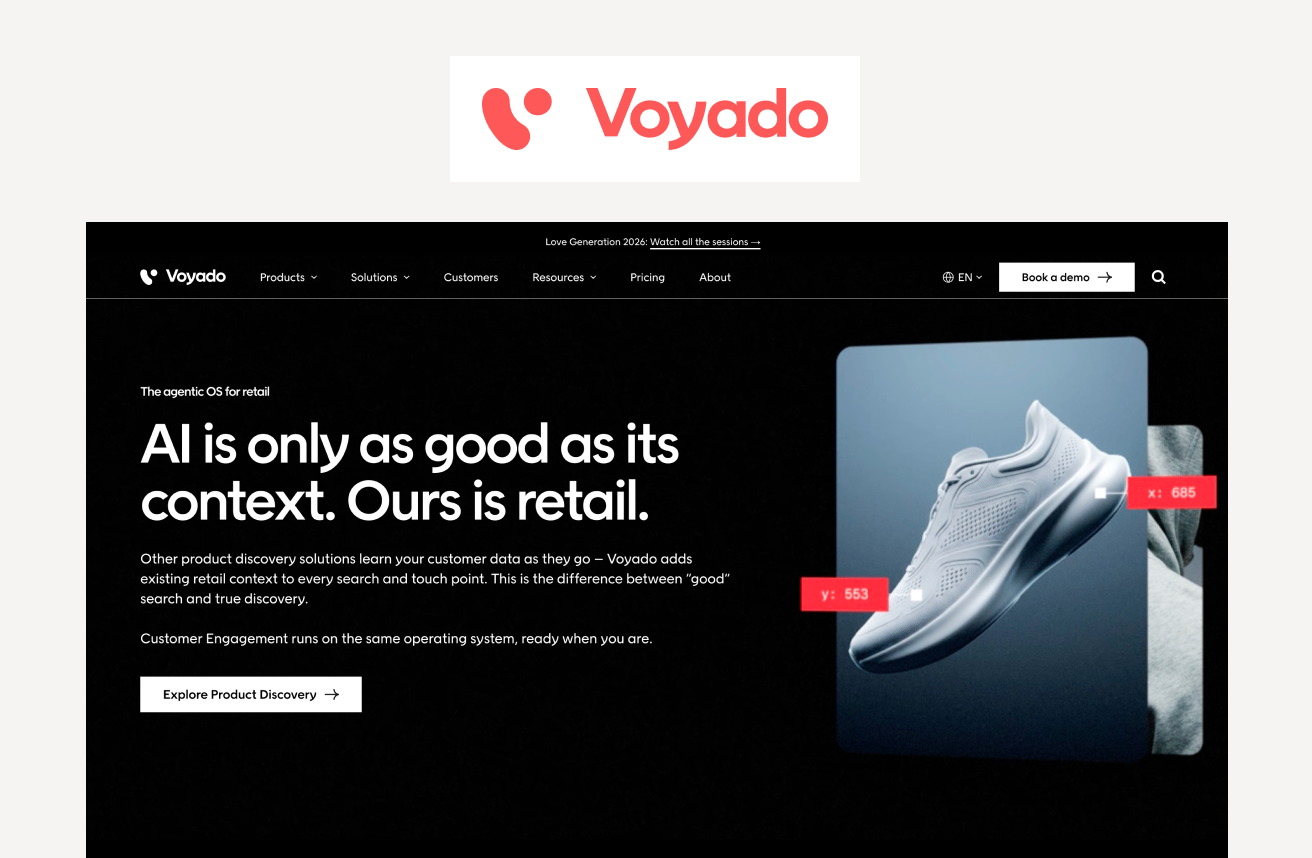
Voyado Product Discovery is a search and merchandising engine built for retail. Voyado uses natural language processing so shoppers can search in their own words, like “something smart but comfortable for the office,” and get products that match what they mean. Its multilingual knowledge graph means shoppers can search in English even when your catalog is in Swedish.
Voyado is now piloting the Discovery Agent, a full-screen conversational shopping experience on your website. Shoppers describe what they need, the agent groups products into topics they can browse, and they can refine within a topic without starting over, enabling businesses to create more personalized customer experiences.
H&M uses Voyado to power search across its 80+ markets. Ranking draws on signals like stock availability, add-to-bag behavior, and revenue performance, and H&M has cut zero-hit searches by 50% and exits by 30%. H&M is now exploring conversational commerce with Voyado, so shoppers can describe what they want in natural language.
- Best for: Omnichannel retailers who want conversation built on the same product data and merchandising rules as their search.
- Strengths: Search results account for stock by size and color, down to individual stores. Ranking adapts automatically to the goal you set for each market, and merchandisers can step in to boost or pin products.
- Trade-offs: The Discovery Agent is in pilot, with limited places and a waiting list, and your team integrates it through an API. Voyado suits retailers who are ready to connect their product and customer data.
2. Dialog
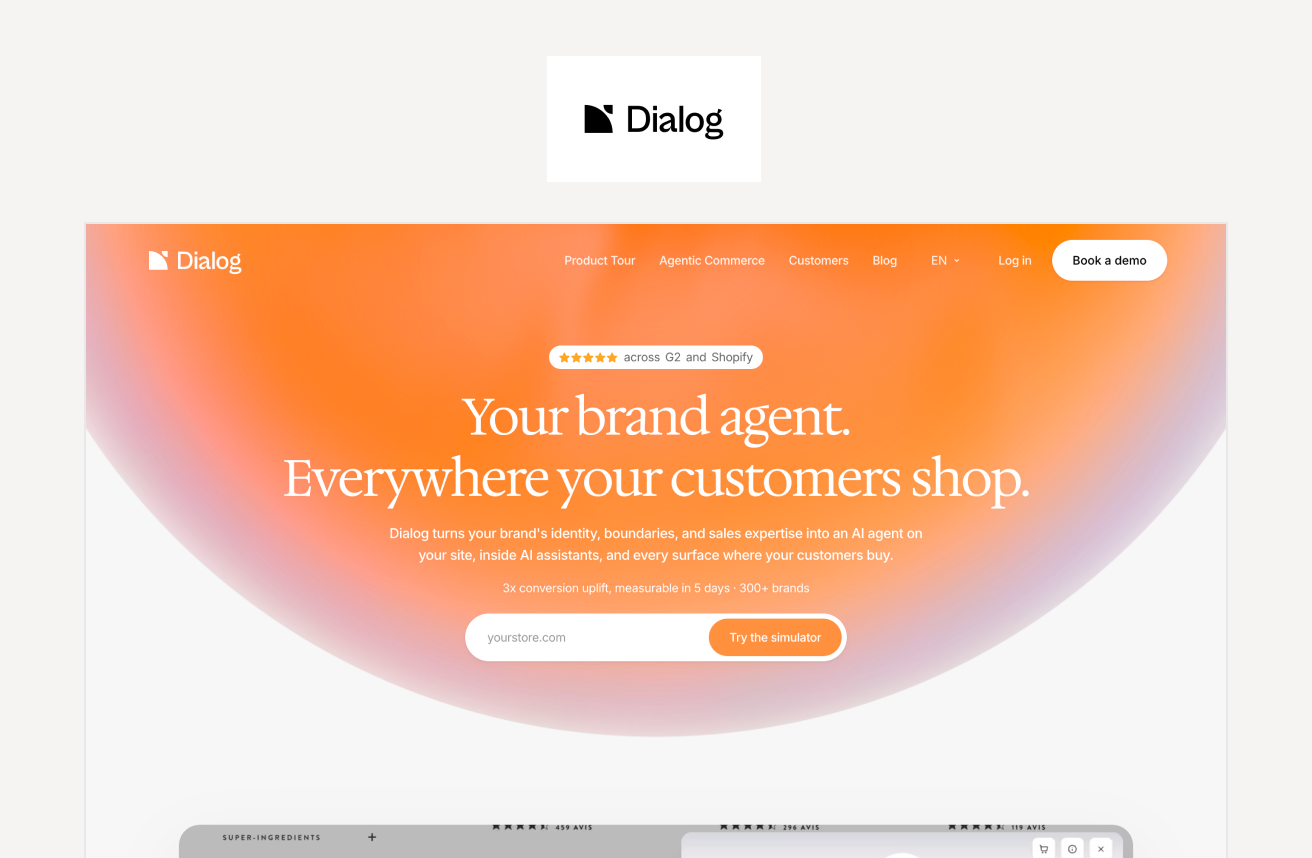
Dialog is a Paris-based AI shopping agent for e-commerce brands. It works as a personal shopping assistant on your site. Shoppers answer a few questions or upload a photo, and Dialog suggests matching products. On product pages, it answers questions about fit and the differences between products. Dialog can also act as the product source when shoppers ask AI assistants like ChatGPT and Gemini.
- Best for: Brands with high-consideration catalogs, like beauty or luggage, that want guided selling on product pages.
- Strengths: It follows up by email and SMS through tools like Klaviyo, using what the shopper said in chat. A 14-day free trial runs on your real catalog and traffic.
- Trade-offs: Dialog has no helpdesk, so order tracking and returns stay with your support tool. Its site doesn’t say whether the AI checks stock before recommending.
3. Gorgias
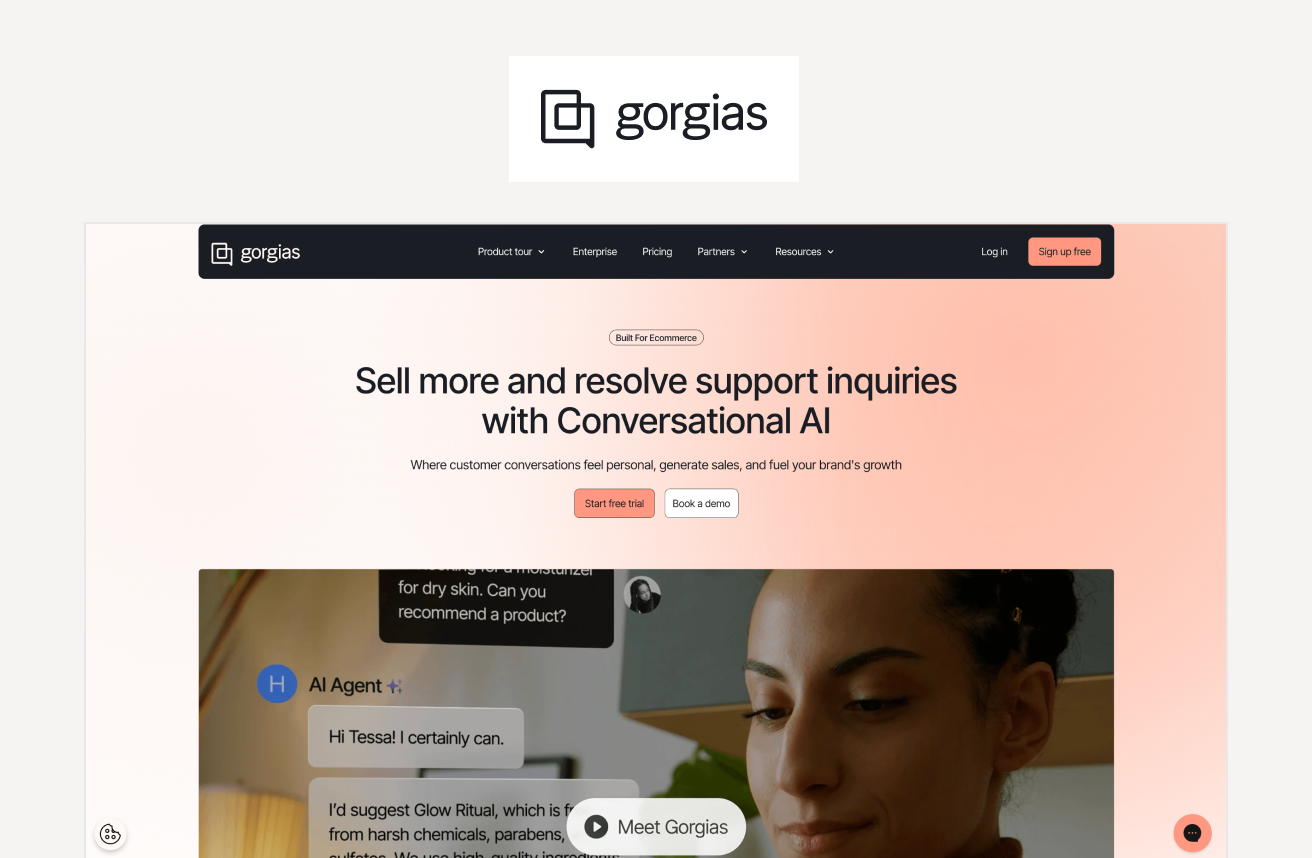
Gorgias is an e-commerce helpdesk with a built-in AI Agent. The AI Agent answers customer inquiries like order tracking and returns across web chat, email, SMS, and social media platforms. In its Shopping Assistant role, it recommends products in chat, answers product questions, and can offer a discount to shoppers who hesitate.
- Best for: Shopify retailers who want post-purchase support and product recommendations from one AI agent and one inbox.
- Strengths: Every conversation shows the shopper’s Shopify order data, and the AI hands over to your agents with context. Merchandisers can promote or exclude products by tag, vendor, or collection.
- Trade-offs: Shopping Assistant only works with Shopify and recommends at product level, so it can’t tell which sizes are left.
4. Kindly
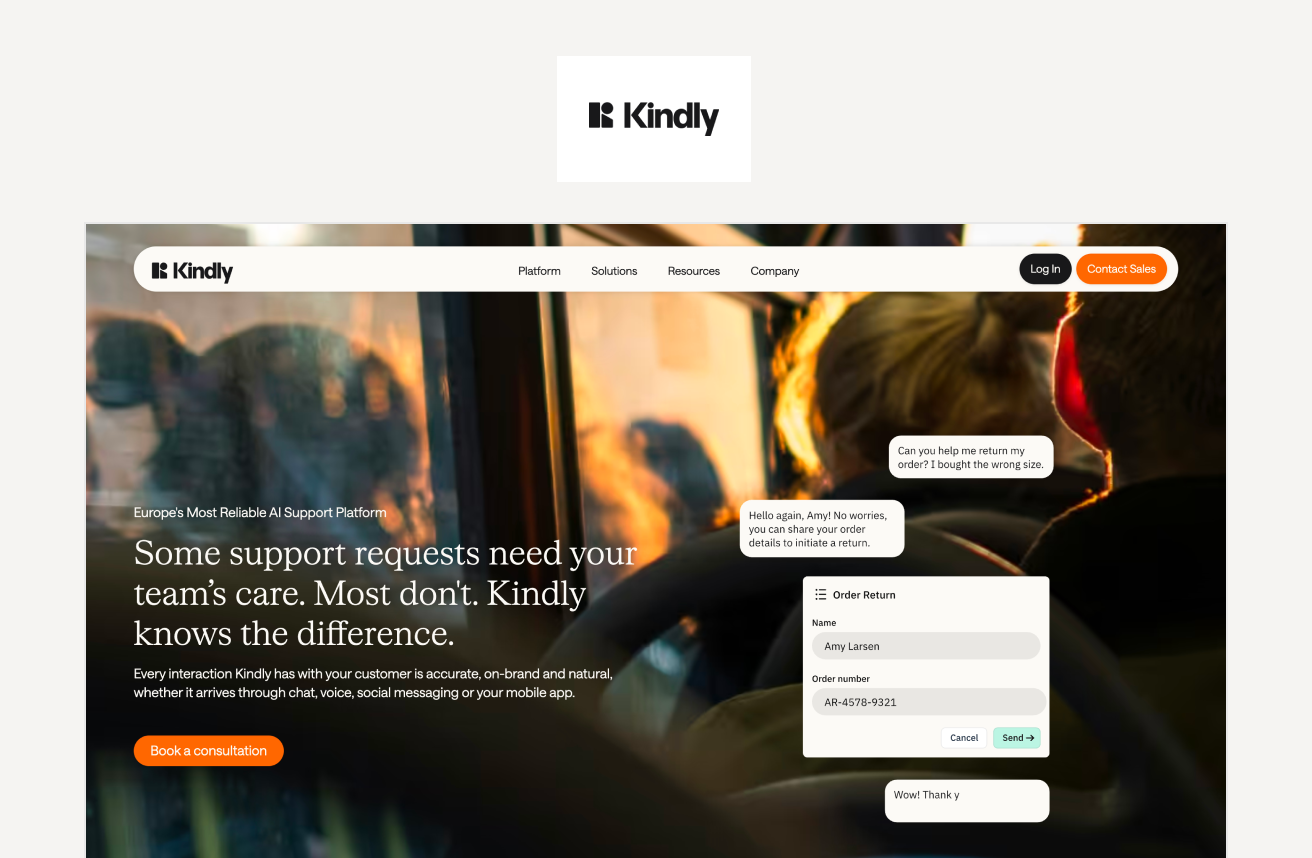
Kindly is an Oslo-based AI support platform. Its AI Support Agent answers questions about order tracking, returns, sizing, and stock across web chat, voice, and messaging channels like WhatsApp and Facebook Messenger. It pulls live order status from your business systems and can start proactive chats with shoppers.
- Best for: European retailers who want to automate customer inquiries before they add guided selling.
- Strengths: It hands over to a human with the full conversation attached, through plugins for helpdesks like Zendesk. Answers come only from the sources you connect, and data stays in EU data centers.
- Trade-offs: Merchandisers can’t control which products it recommends, and its site doesn’t mention variants or loyalty status.
5. Fin
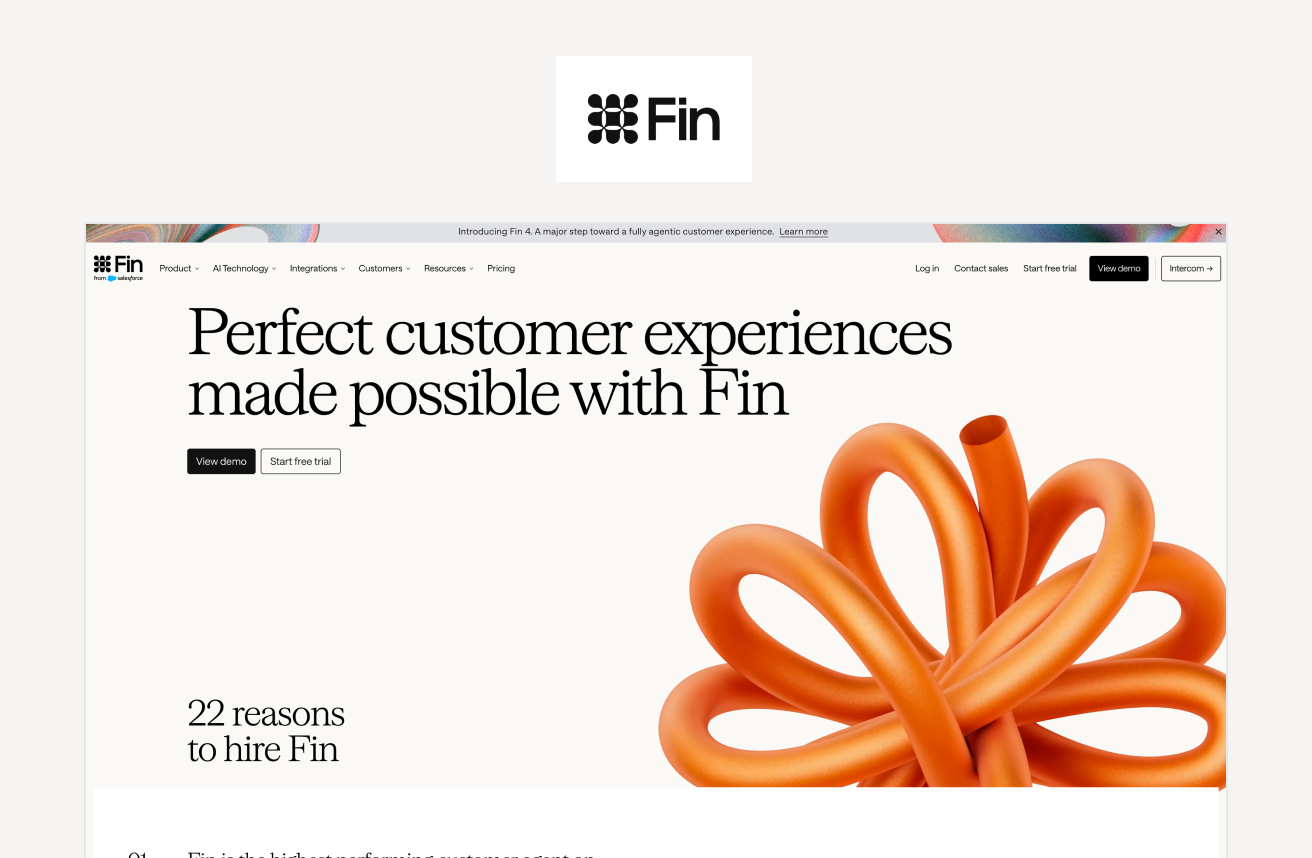
Fin is Intercom’s AI agent, and Fin for Ecommerce is the version built for Shopify stores. It answers questions while customers shop, recommends products, and handles returns and order updates in the same conversation. Stock and variant data sync from your Shopify catalog, so it only recommends what’s available.
- Best for: Shopify retailers who want real-time customer support and product recommendations from one AI agent.
- Strengths: It runs across multiple channels and passes full context to your agents at handover, so customers don’t repeat themselves. You pay per resolved conversation.
- Trade-offs: Fin for Ecommerce only works with Shopify. Merchandising control is limited to filtering which collections or tags Fin can recommend.
6. Insider One
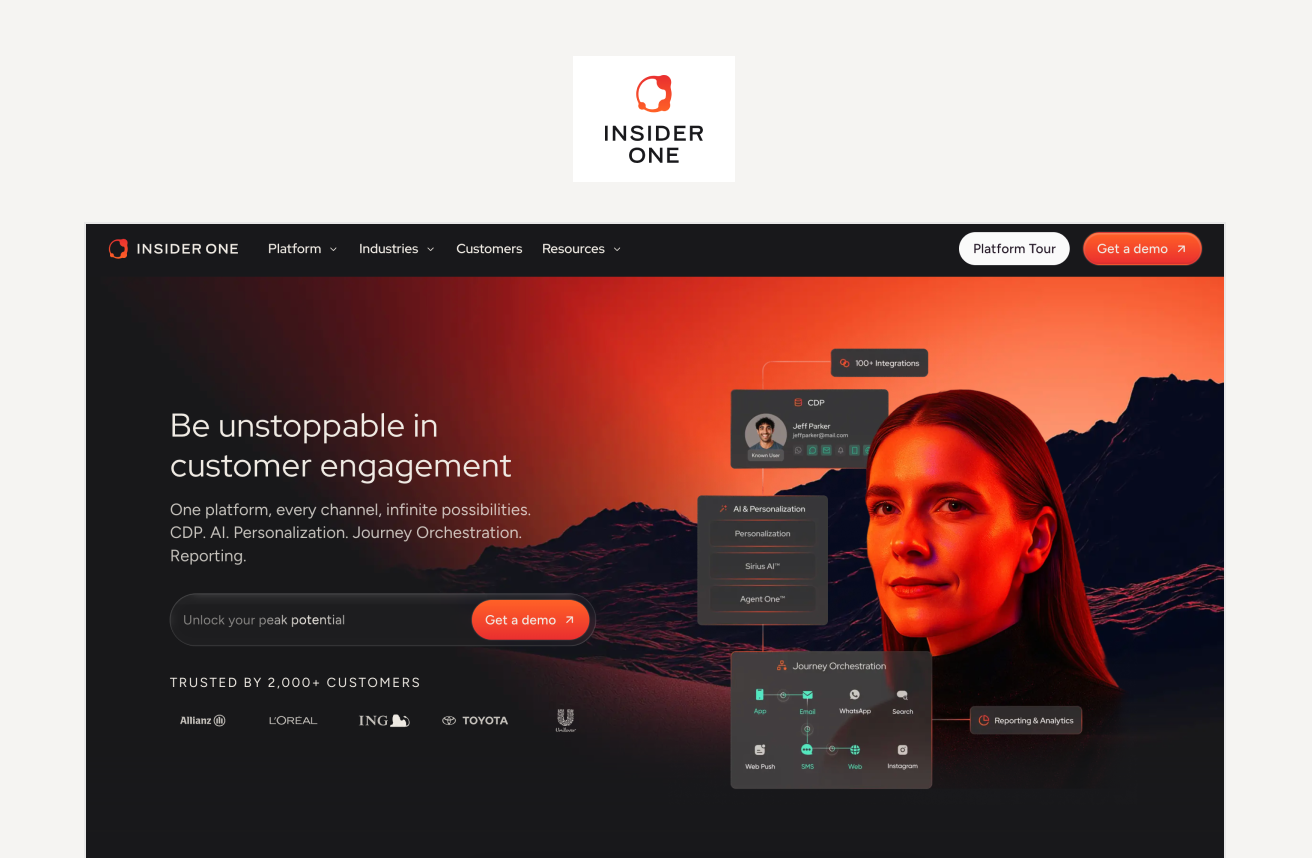
Insider One is a customer engagement platform, and its Shopping Agent is one of the AI agents in the Agent One suite. The Shopping Agent recommends products using browsing behavior and real-time inventory data, and answers size availability questions on product pages. It also handles order tracking and returns through API integrations, on web chat and messaging apps.
- Best for: Large online retailers who want their shopping agent to share customer profiles with their campaigns.
- Strengths: The agent draws on live customer data from Insider One’s customer data platform for personalized experiences and conversations. It also suggests tappable follow-up questions about the product a shopper is viewing.
- Trade-offs: The Shopping Agent comes as part of Insider One’s wider suite, and pricing isn’t public.
7. Attentive
Attentive is an SMS and email marketing platform. Its conversational AI, Concierge, answers buying and support questions over text, working alongside live agents. Concierge uses purchase history and browsing behavior to decide when to recommend or cross-sell products.
- Best for: Retailers with a large SMS list who want two-way text conversations to drive repeat purchases.
- Strengths: Built-in consent tools include double opt-in and opt-out detection. Complex questions route to your in-house team.
- Trade-offs: Concierge works over SMS, so it doesn’t guide shoppers on your website. Its site doesn’t say whether Concierge checks stock.
8. Bloomreach
Bloomreach is a search and marketing platform for e-commerce. Its conversational AI, Loomi Shopping Agent, asks clarifying questions and runs several searches behind the scenes to handle requests like “a navy wool coat under £350.” It remembers returning shoppers and picks up where the last chat left off.
- Best for: Retailers already on Bloomreach search who want the agent to follow the same merchandising rules.
- Strengths: Your merchandising rules apply when the agent searches your catalog, and it won’t surface out-of-stock products. It can personalize answers using customer segments like loyalty tier.
- Trade-offs: Stock comes from catalog updates, which the docs recommend running daily. Human handover runs through Zendesk only.
9. Athos Commerce (formerly Klevu)
Klevu is now part of Athos Commerce, a product discovery company. Its Conversational Assistant trains on your catalog and web content and builds side-by-side product comparisons on request. It also answers shipping and returns questions, and saves conversations so shoppers can continue later.
- Best for: Retailers who want a shopping assistant on top of Athos search and merchandising.
- Strengths: AI Feed Enrichment fills in missing product attributes from your existing catalog data. Recommendations draw on shopper behavior and purchase history.
- Trade-offs: Its site doesn’t say whether merchandising rules apply to the assistant, or describe a human handover.
10. Algolia
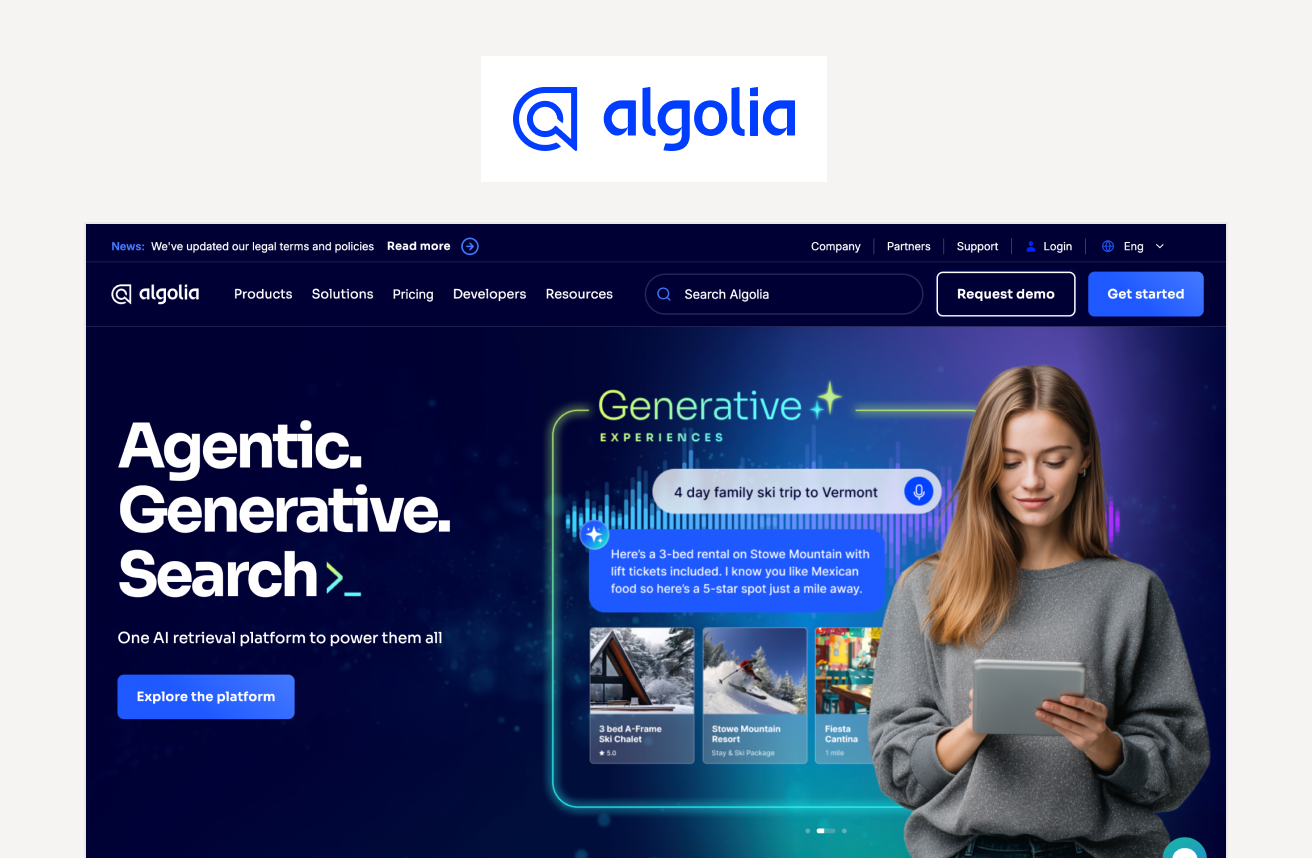
Algolia is a search platform, and Agent Studio is its toolkit for building AI agents on top of Algolia search. Developers use templates to build shopping assistants and guided discovery flows. Algolia’s MCP server also lets AI assistants like ChatGPT search your catalog.
- Best for: Retailers with in-house developers who want to build their own assistant on Algolia search.
- Strengths: Agents follow your business rules and merchandising priorities, and developers can filter out-of-stock products from every search.
- Trade-offs: You build and maintain the experience yourself, and Algolia doesn’t document a human handover.
How to run a pilot that proves ROI before you implement conversational commerce
Ideally, you should be able to run a pilot project with your shortlisted tools to give you hard evidence of the benefits of conversational commerce. Here’s how it might look in practice.

- Set a baseline. Record your current conversion rate and AOV for the pages or channel the tool will cover.
- Pick one use case and one metric. Being specific makes it easier to tell whether the platform is delivering value. For example, a shopping assistant on product pages should lift conversion rates.
- Split your traffic. Show the tool to some of your visitors and keep the rest as a control group.
- Run it for four to six weeks outside peak season. That gives you enough data to trust, and staying clear of promotional times like Black Week keeps one-off spikes out of your results.
- Compare the two groups. Weigh the difference against what the platform would cost at your own volumes, including peak season.
Voyado gives Discovery Agent pilot customers a dashboard that tracks clicks, add-to-cart, purchases, and conversion rate, so you can see where the conversation affects buying. In Voyado’s own results, agentic discovery has shown 2x add-to-cart rates and 50% higher engagement.
Bring conversation to your product discovery with Voyado
Conversational commerce pays off when the AI recommends available products to shoppers, in their size, in line with your merchandising priorities. Voyado builds conversation on that foundation.
Voyado Product Discovery already lets shoppers search in their own words, with results that account for stock and follow your merchandising rules. The Discovery Agent, now in pilot, turns that into a full conversation on your website.
Start with a product discovery audit to see where shoppers drop off today, or find out more about agentic discovery.
FAQs
What’s the difference between conversational commerce and live chat?
Live chat connects shoppers with a human agent in a chat window on your site. Conversational commerce adds AI-powered agents that can reply to many customers simultaneously, across your site, chat apps, and SMS. They give instant responses at every stage of the customer journey, from product questions to post-purchase support.
How do you measure ROI from a conversational commerce platform?
Run a controlled pilot. Show the tool to part of your traffic and compare conversion rate, add-to-cart rate, and AOV against a control group. For support use cases, track resolution time and customer satisfaction scores. Conversational data also gives you valuable insights into what shoppers ask for.
Can a conversational commerce platform reduce returns?
It can help. When the AI knows your size data and which sizes are in stock, it can give personalized responses to fit questions before a shopper buys. Fewer wrong-size purchases mean fewer returns. Ask vendors whether their AI checks stock at the size level before it recommends a product.
Do you need to replace your existing site search?
Not always. Some conversational commerce tools run alongside your current search, while others need their own search engine underneath. Voyado designed the Discovery Agent to work with your existing search, recommendations, and merchandising, so you can test it without rebuilding the online shopping experience shoppers already know.
How does conversational commerce work with ChatGPT and other AI assistants?
Shoppers now ask AI assistants for product advice before they visit your site. Some vendors feed your product information to those assistants. Voyado MCP works on the retailer side: your team connects Voyado data to Claude or ChatGPT and asks questions about customers and campaigns, with access following existing Voyado permissions.
Are conversational commerce chatbots the same as AI shopping assistants?
Not quite. Many conversational commerce chatbots follow set scripts, which work well for simple questions like order tracking. AI shopping assistants understand natural language and draw on your product catalog. That lets them ask follow-up questions and steer customers toward products that match what they asked for.
Can conversational commerce improve customer loyalty?
It can, when conversations connect to your customer data. An AI that knows a shopper’s loyalty status and past purchases can make more relevant recommendations, and what a shopper asks in chat can shape future interactions by email or SMS. Voyado Customer Engagement shares loyalty segments with Voyado Product Discovery to shape the promotions shoppers see.