TL;DR
AI agent retail chatbots now do more than answer customer questions. They guide the shopping journey, help shoppers find products, and support decisions across the buying process.
The strongest tools connect conversations with customer data, product availability, and personalized product suggestions. This helps your team improve customer satisfaction and drive sales, not just handle support tickets.
This shortlist focuses on platforms built for the retail industry. These retail chatbot solutions support product discovery, customer engagement, and post-purchase support across your online store and physical stores.
Voyado stands out because its Agentic CX Suite connects product discovery, loyalty, and customer data in one place. That makes it easier for your teams to power real shopping assistant experiences with an AI agent retail chatbot.
What AI agent retail chatbots actually do (and what they don’t)
An AI agent retail chatbot is not just a support tool that answers customer queries. It’s a shopping assistant that uses customer data, product availability, and behavior signals to guide the shopping journey in real time.
Traditional retail chatbot tools react after something goes wrong. They handle order tracking, store hours, or basic customer support tasks.
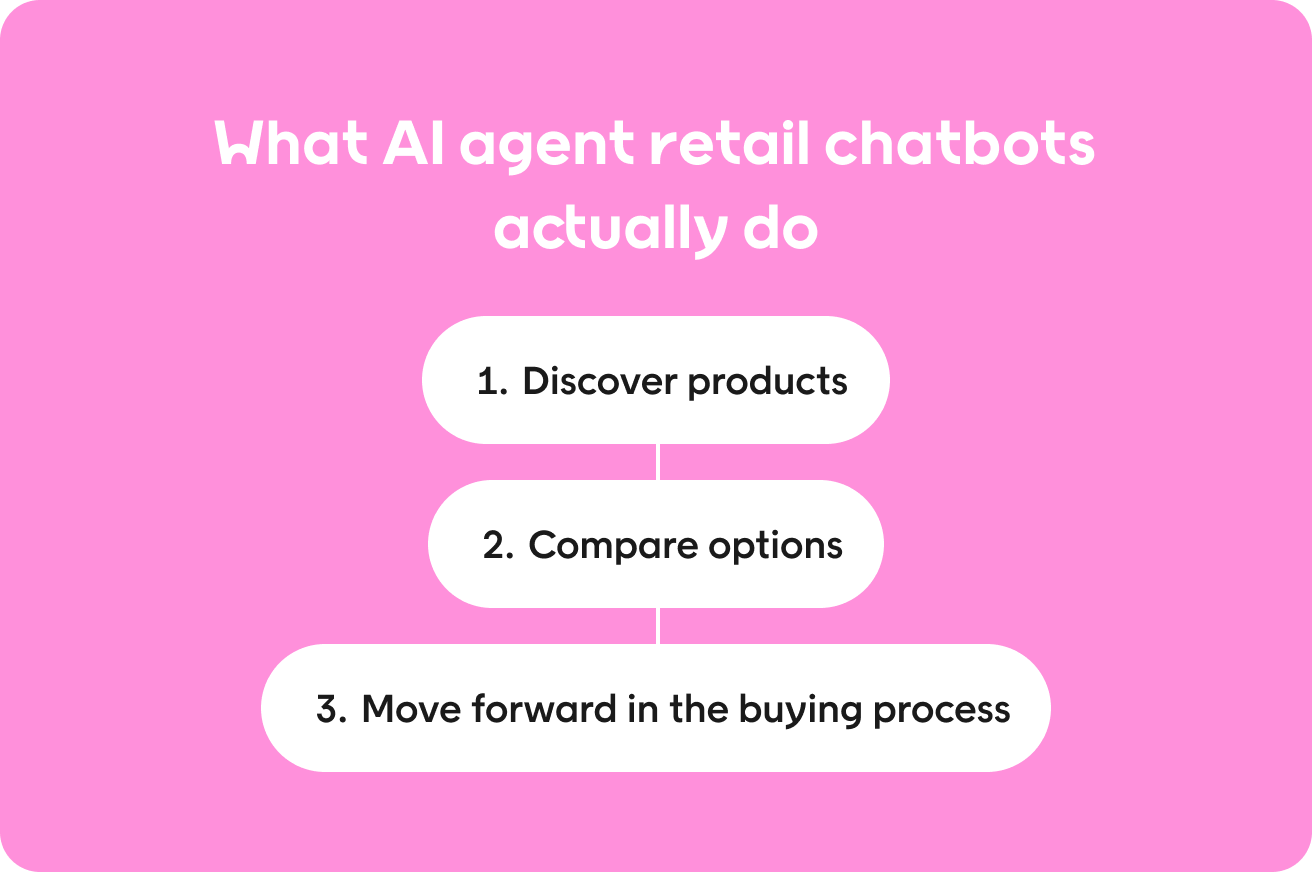
An AI agent chatbot retail solution helps shoppers:
- discover products,
- compare options,
- and move forward in the buying process.
It connects conversations to product recommendations and intent, rather than stopping at answers.
This shift matters because modern AI agents support decisions before checkout, not just after problems appear. That’s the difference between simple automation and true agentic AI in retail powered by connected discovery experiences like product recommendations.
AI agent chatbot vs. traditional chatbot vs. generative AI chat
The most significant difference between these three is whether the chatbot only answers questions or helps shoppers move forward in the shopping journey.
Here’s how the three main types compare:
| Feature | Traditional chatbot | Generative AI chatbot | AI agent retail chatbot |
| Core role | Handles simple customer support tasks | Generates conversational answers | Guides shoppers through discovery and purchase |
| How it works | Scripted flows and predefined replies | Prompt-based responses using artificial intelligence | Observes intent and selects the next best action |
| Ability to act | Cannot complete tasks beyond routing or replies | Responds but does not act across systems | Can complete tasks across the shopping journey |
| Use of product and customer data | Minimal or none | Limited context from prompts | Uses customer data, product availability, and purchase history |
| Adaptability | Fixed logic | Flexible language but limited decisions | Adapts to shopper behavior and outcomes |
| Best retail use case | Order tracking, store hours, and ticket deflection | Content-style customer questions | Guided selling, cart recovery, personalized product suggestions, and conversion support |
A traditional retail chatbot AI tool focuses on answering customer inquiries.
A generative AI chatbot improves conversations but still depends on prompts instead of retail context.
An agentic chatbot e-commerce solution, however, works differently. It acts as an AI shopping assistant retail teams can use to support decisions inside the online store and across physical stores.
It also connects conversations with inventory management, customer preferences, and personalized recommendations so your teams can improve customer satisfaction while driving sales.
If you’re exploring, you can start by reviewing the best AI agents in retail and practical use cases for e-commerce AI agents that support real retail AI chatbot shopping experiences.
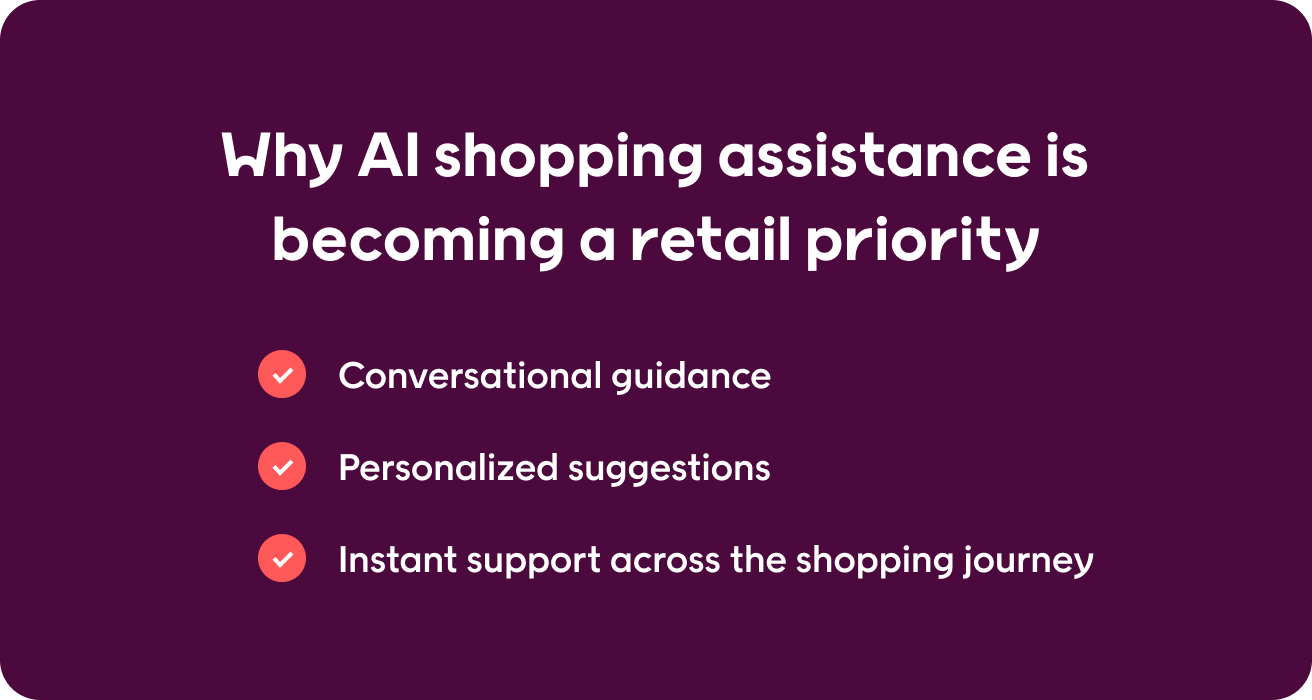
Why AI shopping assistance is becoming a retail priority
Shoppers don’t want to browse alone anymore. They expect help while they’re deciding what to buy.
- Conversational guidance instead of only search bars and filters
- Personalized suggestions based on customer behavior and past interactions
- Instant support across the shopping journey, not just after checkout
A modern AI agent for retail shopping moves chat from ticket handling to conversion support inside the buying process.
Here, an AI chatbot for retail becomes more than automation when it can observe intent, leverage customer data, and act during product discovery rather than waiting for customer questions.
Chat supports decisions and creates personalized shopping experiences that improve customer satisfaction and drive revenue.
How we evaluated these AI agent retail chatbots
Here’s the checklist we used to review every AI chatbot for retail platforms in this list. It’s the same framework your team can use to compare options and choose the right fit for your retail business.
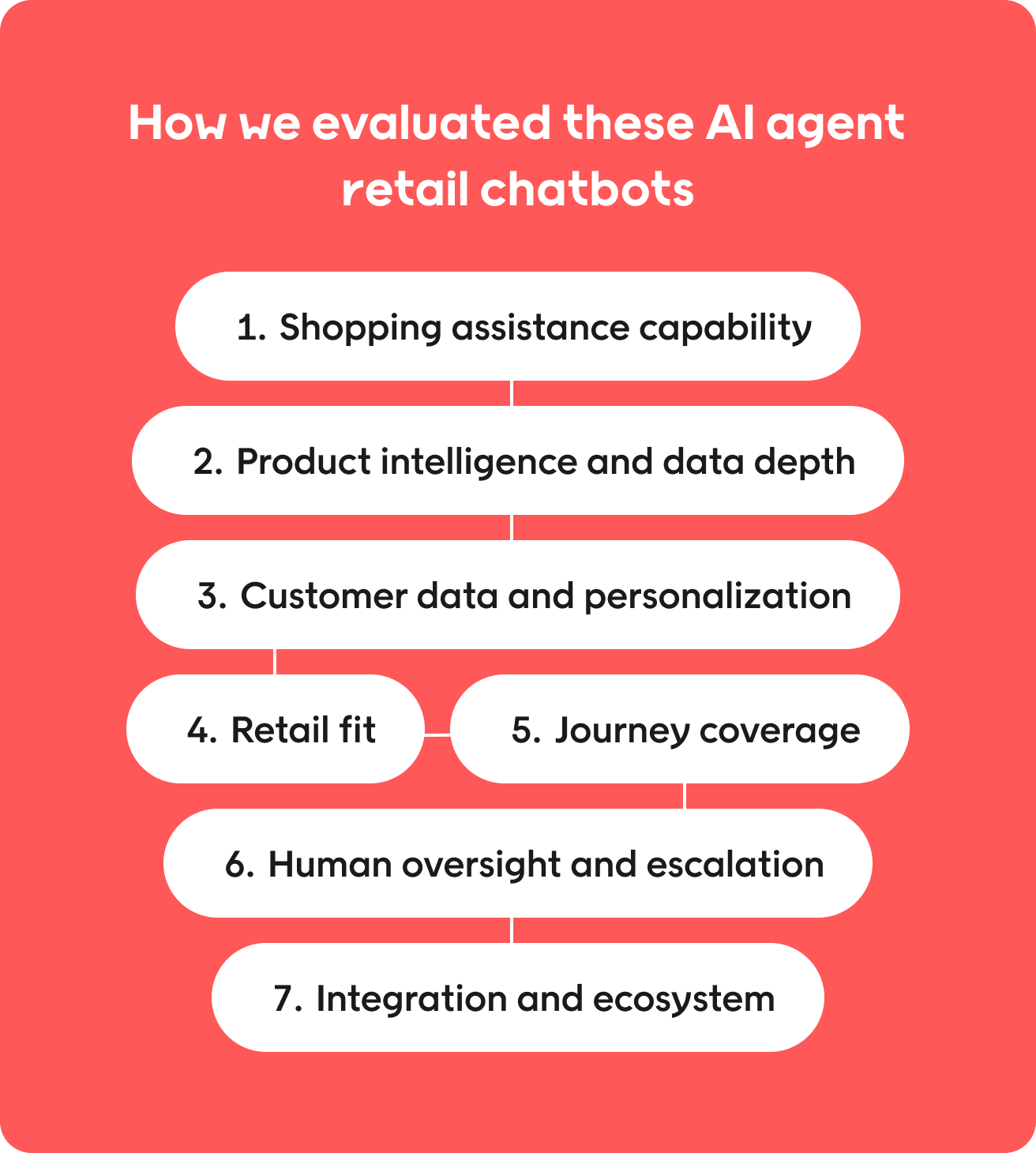
Shopping assistance capability
A strong AI agent for retail shopping should help shoppers progress through the shopping process. It should support discovery, comparisons, and decisions, not just answer customer questions.
The best tools act like a real shopping assistant. They engage customers with personalized suggestions and support the full buying process across your online store, mobile apps, and social media platforms.
Product intelligence and data depth
A useful agentic AI retail chatbot connects directly to catalog data, pricing, and product availability. Without product intelligence, retail bots cannot deliver relevant guidance or improve operational efficiency.
Platforms that integrate with systems like Voyado’s product discovery engine and site search can support accurate support, inventory visibility, and better product exposure.
Customer data and personalization
The most effective retail chatbot examples use customer data, past interactions, and purchase history to personalize conversations. This helps improve customer satisfaction and increase repeat purchases.
Look for platforms that connect with CRM systems and loyalty tools like a customer loyalty platform so your teams can support personalized shopping experiences across the customer journey.
Retail fit
Many tools claim to be AI-powered retail solutions but are built for generic customer service agents. Retail brands need platforms designed for the retail sector with proven support for merchandising, customer behavior insights, and retail operations.
If a tool cannot support real retail chatbot development use cases, it will struggle to engage customers or reduce support costs in practice.
Journey coverage
A strong retail bot solution supports the full shopping journey. That includes discovery, cart recovery, instant support, and post-purchase support.
It should also help improve customer service while driving average order values and supporting marketing efforts across social media platforms like Facebook Messenger.
Human oversight and escalation
Your teams still need control. The right retail bots allow escalation to human agents when needed and help customer service agents deliver instant responses with brand-safe guardrails.
This improves customer experience while keeping exceptional customer service consistent across channels and international customers.
Integration and ecosystem
The best platforms do not operate in isolation. They connect discovery, loyalty, and engagement, so retailers connect conversations with real action.
That’s why we prioritized tools aligned with strategies for agentic AI in customer service and agentic AI for marketing that support AI-powered retail customer engagement across the retail industry.
The 10 best AI agent retail chatbots for shopping assistance
Most retail chatbots still answer questions. The tools below help shoppers choose what to buy.
These platforms support discovery, guidance, and conversion across the shopping journey. They connect conversations with product data and customer context so chat becomes part of how you drive sales.
#1 Voyado – Best for powering retail-native shopping assistance with product discovery and customer intelligence

Best for
Retailers that want shopping assistance powered by product intelligence, customer data, and agentic decisioning connected to loyalty and lifecycle marketing.
Why it’s #1
Voyado is not a chatbot widget. It provides the intelligence layer that an AI-powered tool needs to support real shopping assistance.
Voyado’s product discovery and merchandising solution improves discovery, relevance, and recommendations behind conversational interfaces, helping your teams deliver instant answers that reflect user intent and product context.
When it comes to Voyado’s customer engagement solution, it connects profiles across channels so conversations reflect customer needs, past interactions, and loyalty signals. This strengthens retail customer engagement across the shopping journey.
Its agentic capabilities help teams understand user intent and act using retail-trained logic. This supports conversational shopping powered by transforming your e-commerce with AI search and product recommendations.
Standouts
- Product discovery and merchandising intelligence that support personalized suggestions and instant answers
- Unified customer data across channels for stronger customer interactions
- Agentic AI framework designed to observe behavior and act on user intent
- Loyalty and lifecycle connections that invite customers back and increase repeat purchases
- Built specifically for fashion, beauty, home, and specialty retail
Watch-outs/limitations
- Not a standalone chatbot interface
- Requires pairing with a conversational layer that understands natural language
- Strongest impact when connected across retail systems
Ideal retailer profile
Mid-market to enterprise retailers that want shopping assistance powered by real product intelligence.
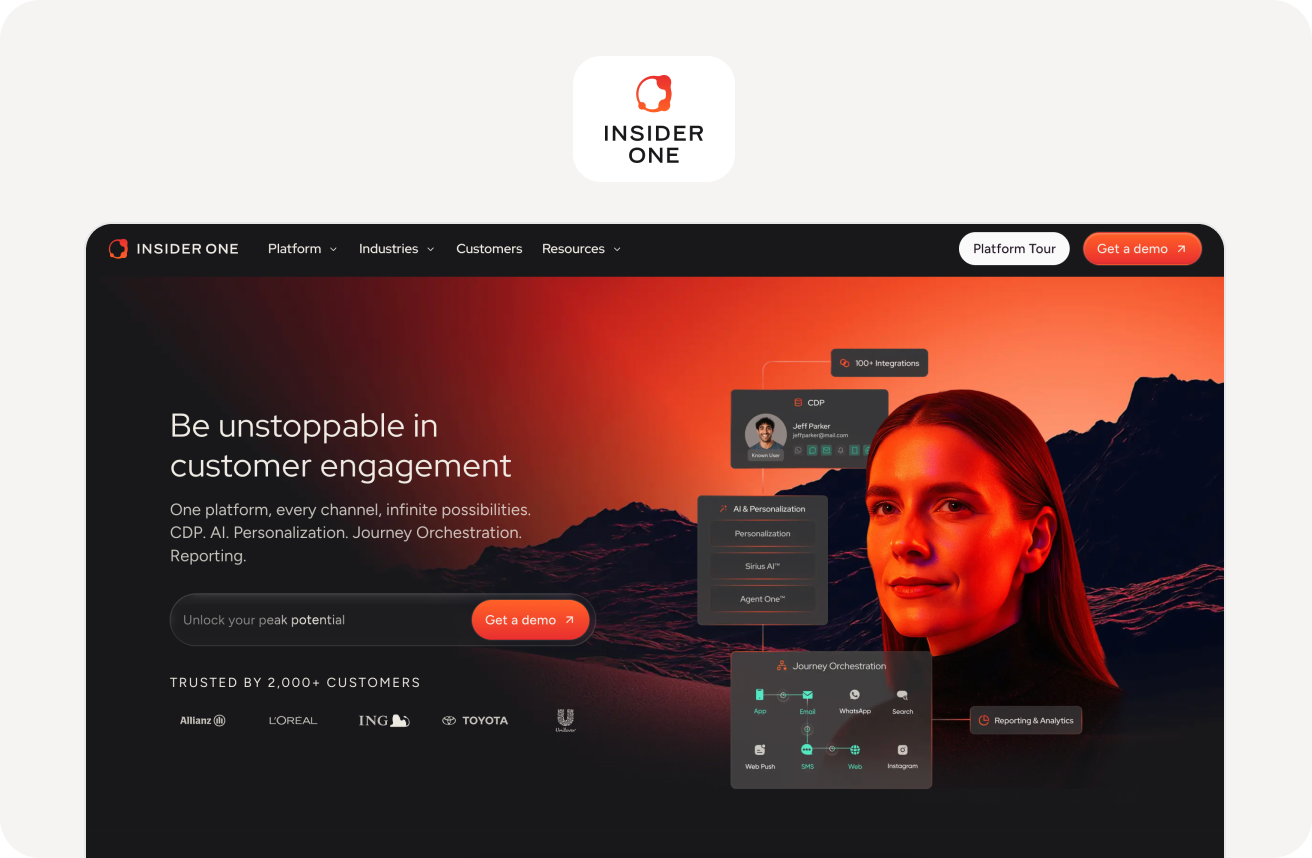
#2 Insider One – Best for CDP-powered conversational shopping agents
Best for
Enterprise retailers that want an integrated CDP and conversational AI shopping agent across web, app, and messaging channels.
Why it’s here
Insider One combines a customer data platform with conversational automation across web, mobile apps, and messaging channels. Retail teams can use behavioral signals and unified profiles to support guided discovery and personalized interactions earlier in the journey.
Standouts
- Unified customer profiles that support cross-channel customer engagement
- Conversational journeys across web, app, and messaging environments
- Personalization based on behavioral signals and campaign triggers
Watch-outs/limitations
- Product discovery depth depends on external merchandising tools
- Setup effort can be higher for teams new to CDP-driven orchestration
Ideal retailer profile
Enterprise retailers in the retail sector that want to connect conversational journeys with customer data and lifecycle orchestration.
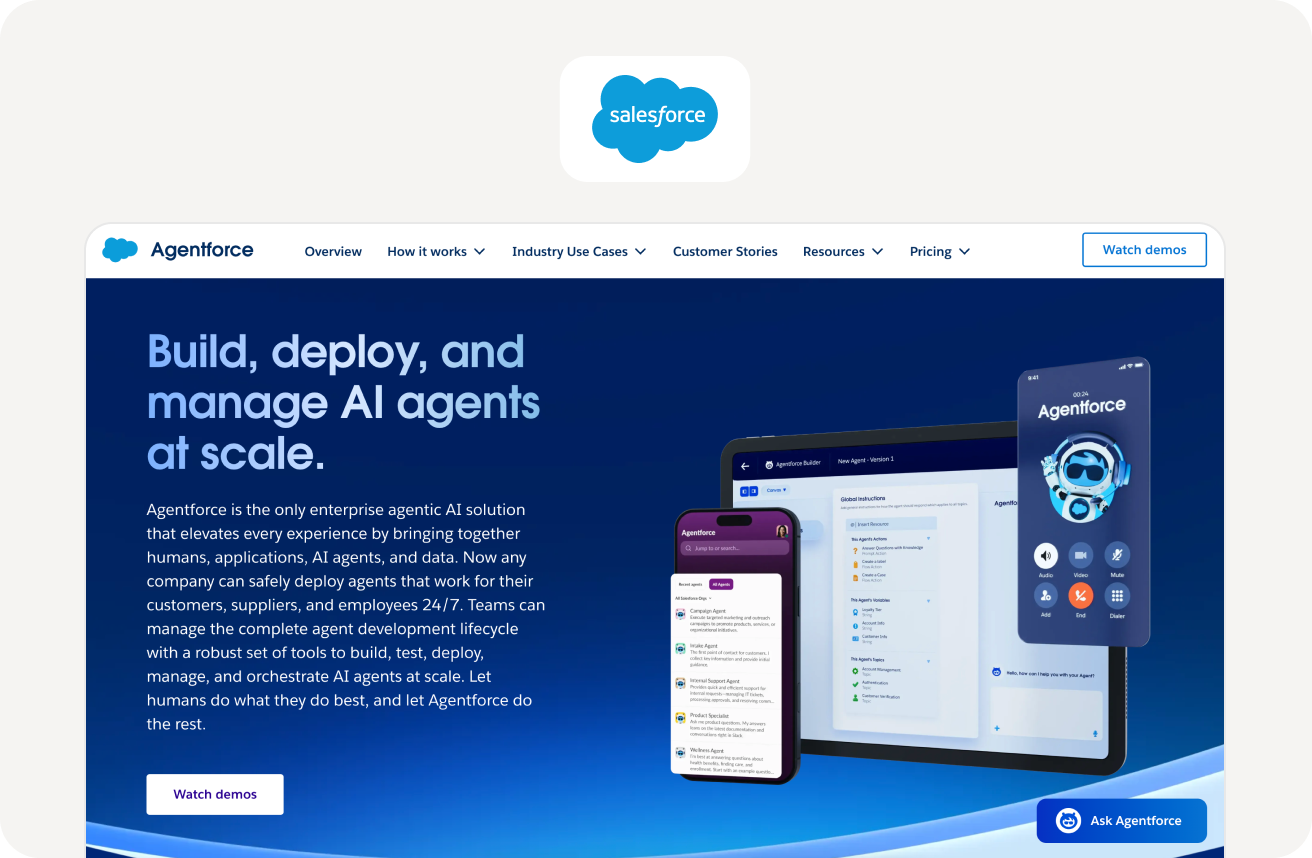
#3 Salesforce Agentforce – Best for large Salesforce-centric enterprises
Best for
Enterprise retailers already invested in Salesforce Commerce Cloud and Service Cloud who want autonomous agents for order management, returns, and shopping guidance.
Why it’s here
Salesforce Agentforce extends automation across service and commerce workflows using shared CRM and Commerce Cloud data. Retailers can handle order questions, returns, and account actions inside existing Salesforce environments without introducing a separate conversational stack.
Standouts
- Native integration with Commerce Cloud and Service Cloud
- Automation support for service teams and customer queries
- Shared data foundation across commerce and support workflows
Watch-outs/limitations
- Requires deep Salesforce platform adoption
- Less focused on merchandising-led discovery experiences
Ideal retailer profile
Large retailers with mature service operations that want to improve customer service while extending automation into guided assistance.
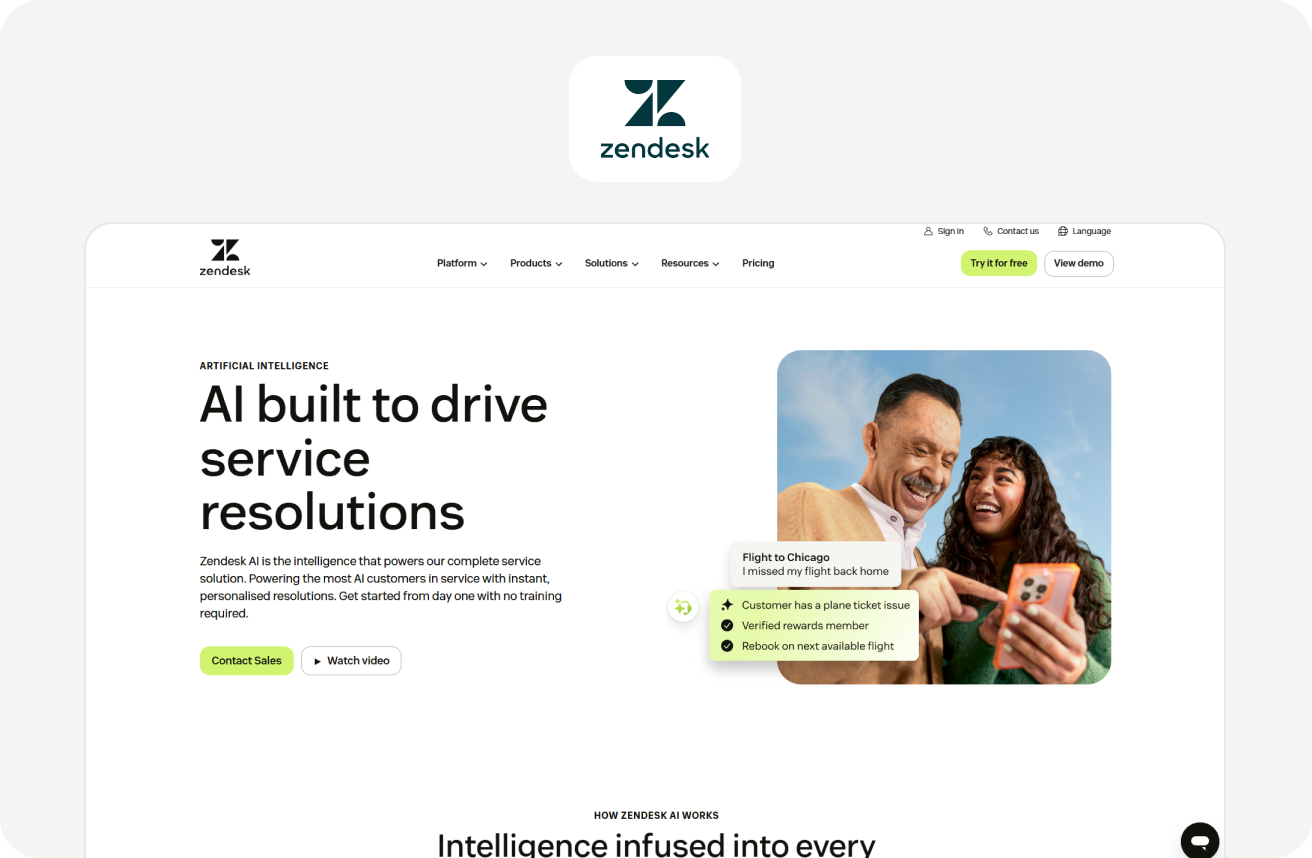
#4 Zendesk AI Agents – Best for scaling support into sales-assist conversations
Best for
Retailers with strong existing support operations looking to extend AI chat from service into guided selling and pre-purchase assistance.
Why it’s here
Zendesk AI Agents help retailers extend support automation into earlier stages of the customer journey. Teams can resolve common requests and route complex cases to human agents while gradually introducing pre-purchase assistance.
Standouts
- Automation support for high-volume customer queries
- Built-in escalation paths to human agents
- Cross-channel messaging coverage for support teams
Watch-outs/limitations
- Limited product discovery intelligence compared to merchandising platforms
- Requires integrations for deeper conversational commerce workflows
Ideal retailer profile
Retailers with established service teams that want to extend automation into pre-purchase conversations while maintaining strong customer satisfaction.
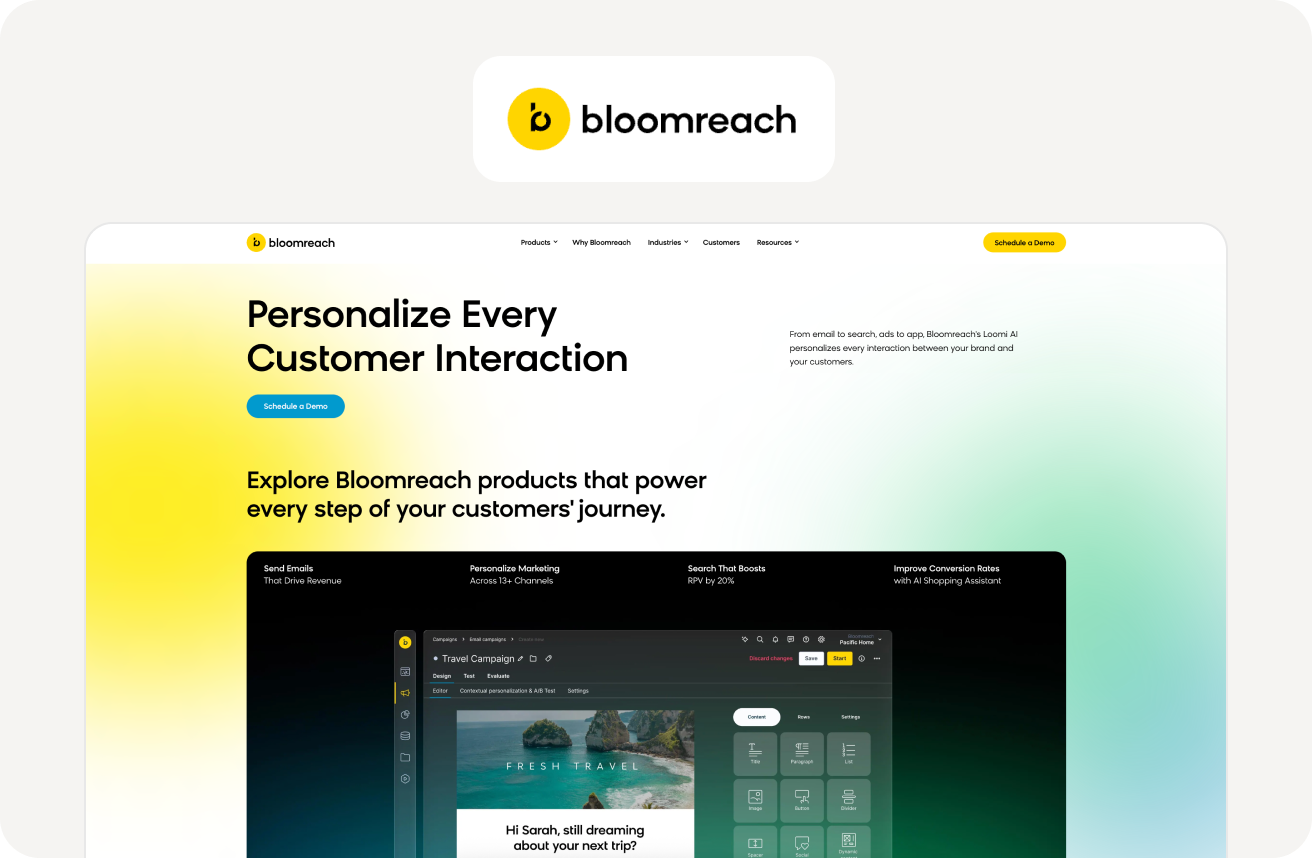
#5 Bloomreach – Best for search-led conversational product discovery
Best for
E-commerce teams that want AI-powered conversational search and discovery tied to product data and merchandising.
Why it’s here
Bloomreach Discovery connects conversational search with catalog intelligence and merchandising signals. Retailers can guide product exploration using behavioral context and relevance optimization directly inside the browsing experience.
Standouts
- Conversational search powered by natural language processing
- Catalog-aware recommendations that reflect shopper intent
- Merchandising controls designed for the retail sector
Watch-outs/limitations
- Requires external tools for lifecycle orchestration and loyalty
- Less focused on service automation compared to support-first platforms
Ideal retailer profile
E-commerce teams in the retail industry that want stronger discovery performance and measurable customer engagement through search-led guidance.
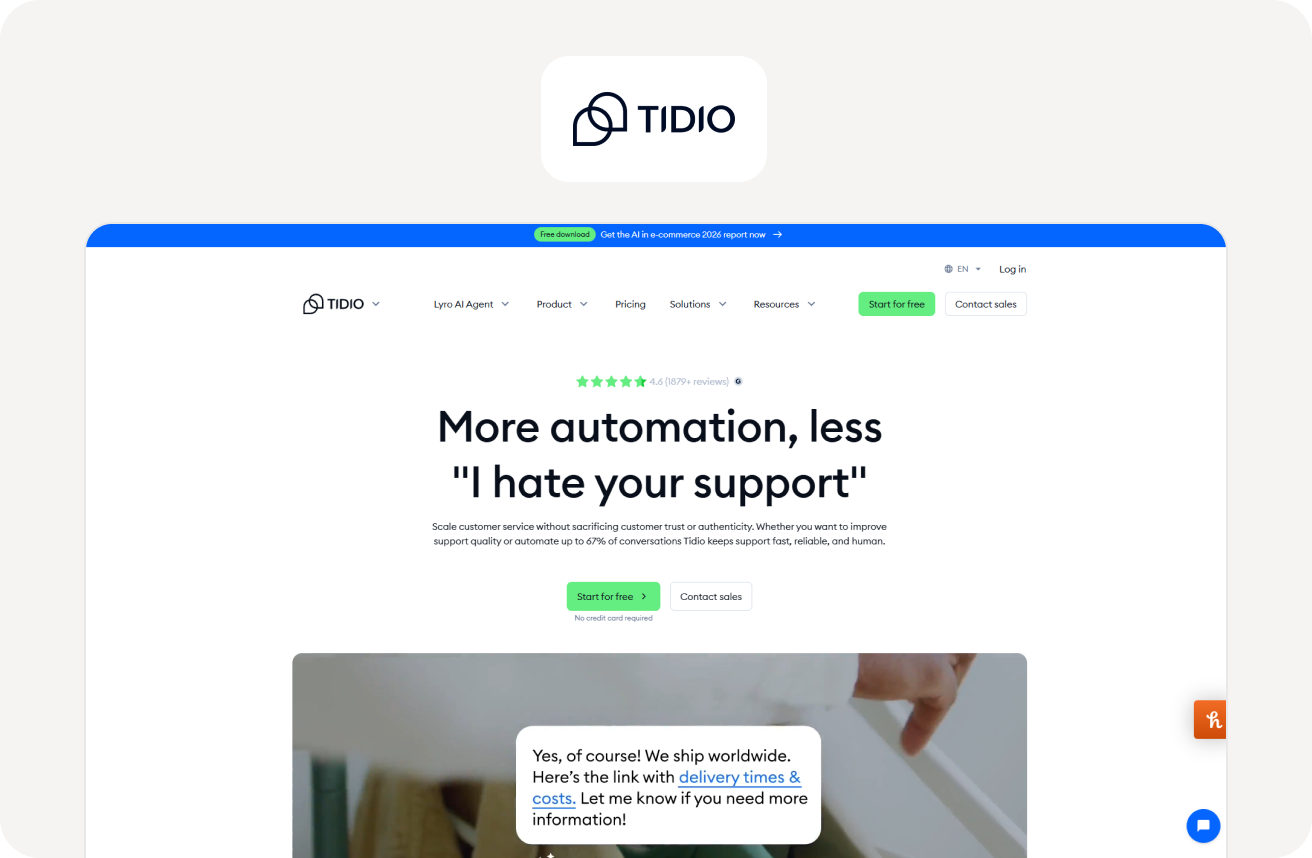
#6 Tidio – Best for SMB e-commerce chatbot with shopping features
Best for
Small to mid-size e-commerce stores, especially Shopify merchants, that need an easy-to-deploy AI chatbot with product suggestions and cart recovery.
Why it’s here
Tidio combines live chat and automation in a setup designed for smaller e-commerce teams. Retailers can answer common questions, suggest products, and recover abandoned carts without complex implementation.
Standouts
- Fast setup with Shopify and major e-commerce platforms
- Built-in cart recovery and product suggestion workflows
- Shared inbox that supports collaboration with support teams
Watch-outs/limitations
- Limited merchandising intelligence compared to enterprise platforms
- Personalization depends on integrations rather than native profiles
Ideal retailer profile
Growing e-commerce brands that want a lightweight chatbot with conversion support but minimal setup effort.
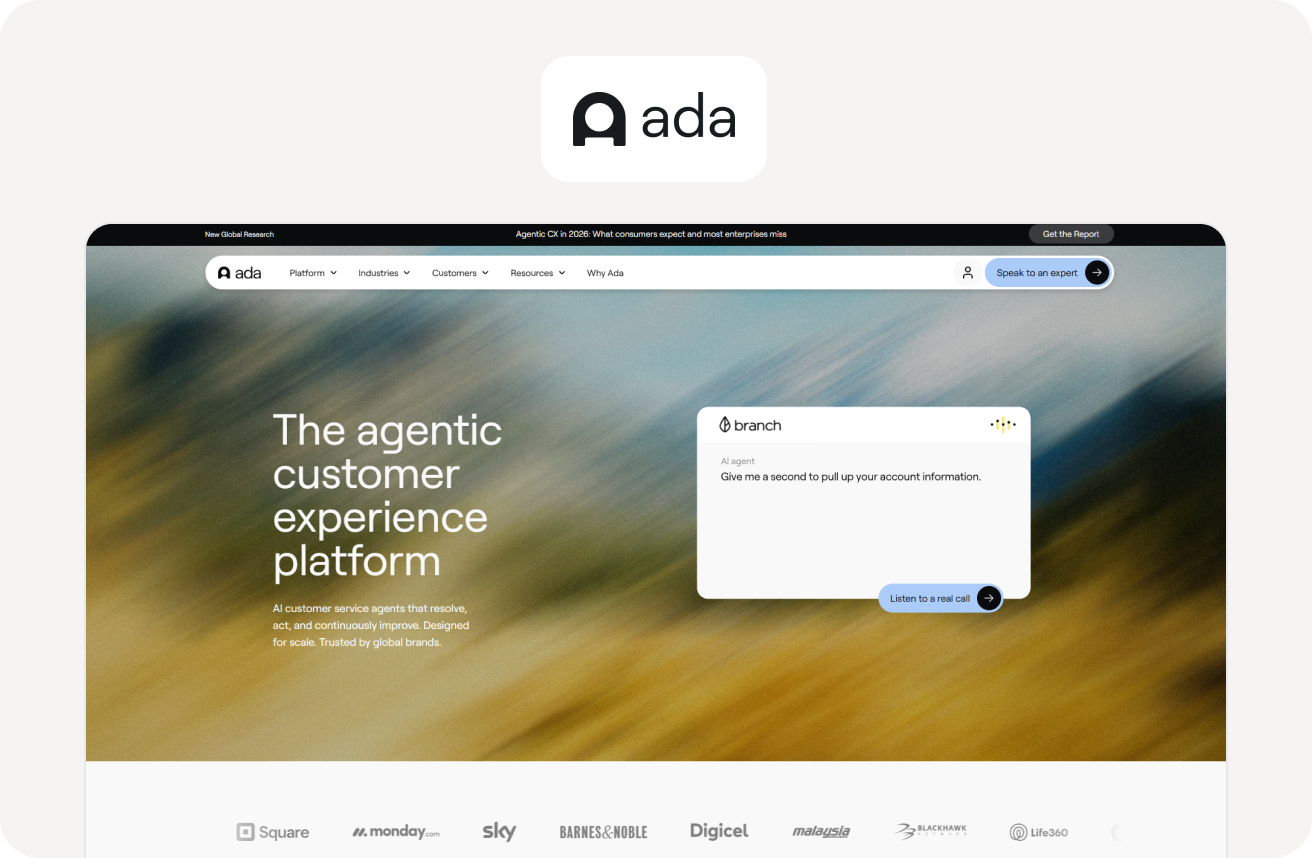
#7 Ada – Best for AI-first customer service with commerce extensions
Best for
Retailers that want high-resolution AI customer service with emerging capabilities in proactive shopping guidance and order actions.
Why it’s here
Ada focuses on automating high-volume service conversations with strong intent recognition and workflow control. Retailers can manage returns, delivery questions, and account actions while expanding toward guided shopping support.
Standouts
- Strong automation for high-volume service conversations
- Flexible workflow control for order and account actions
- Escalation paths that support collaboration with human agents
Watch-outs/limitations
- Discovery and merchandising support remains limited
- Requires integrations for deeper product-level guidance
Ideal retailer profile
Retailers with mature service environments that want to expand automation toward proactive shopping conversations over time.
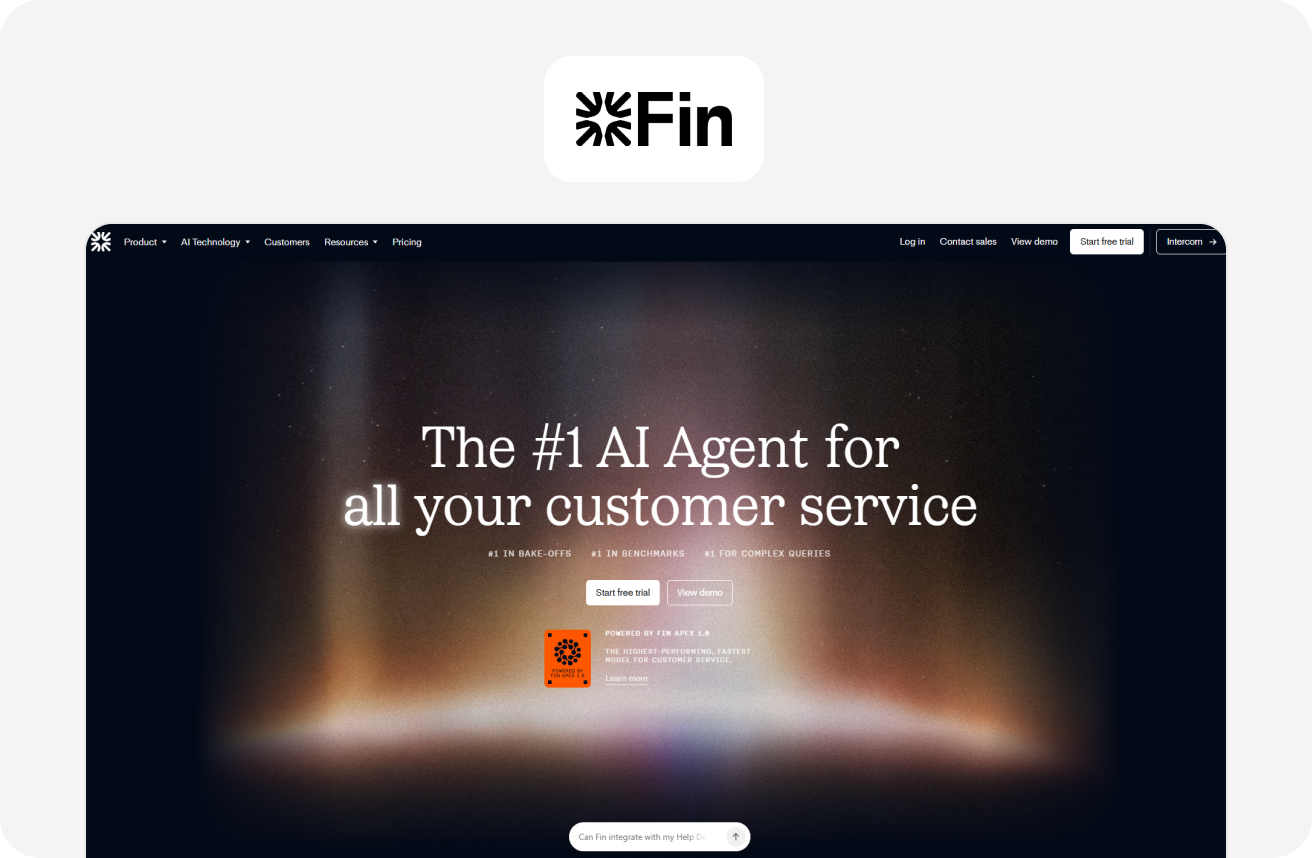
#8 Intercom Fin – Best for combining support automation with product-aware conversations
Best for
Digital-first brands and DTC retailers that want AI chat for both support and light shopping guidance in a modern messaging-first interface.
Why it’s here
Intercom Fin automates responses across help centers, chat, and in-app messaging. Retailers can support pre-purchase questions alongside account and delivery requests within a single messaging interface.
Standouts
- Messaging-first interface across web and app environments
- Unified workspace for support and pre-purchase conversations
- Knowledge-base-driven automation for fast rollout
Watch-outs/limitations
- Limited native merchandising intelligence
- Requires integrations for deeper personalization or recommendations
Ideal retailer profile
DTC brands that prioritize messaging support and want to add conversational guidance without introducing new discovery platforms.
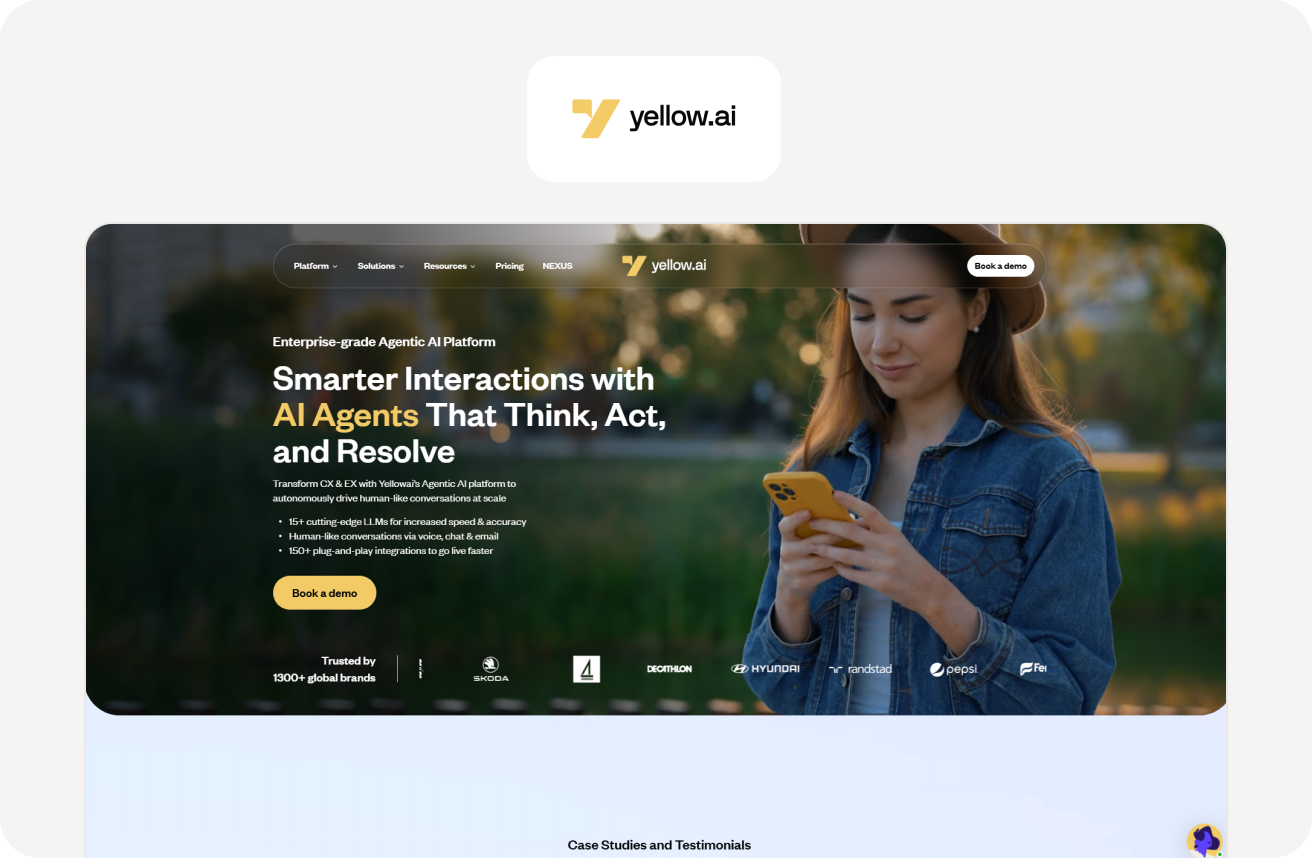
#9 Yellow.ai – Best for enterprise omnichannel chatbot deployment
Best for
Large-scale retailers that need multilingual, omnichannel AI chatbots across web, app, WhatsApp, and voice with enterprise-grade analytics.
Why it’s here
Yellow.ai supports large conversational deployments across web, app, messaging, and voice channels. Retailers can manage multilingual interactions at scale while keeping automation consistent across markets.
Standouts
- Omnichannel coverage across chat, voice, and messaging apps
- Multilingual automation for global environments
- Enterprise analytics and workflow orchestration tools
Watch-outs/limitations
- Requires configuration effort for discovery-led use cases
- Product guidance depends on integrations
Ideal retailer profile
Enterprise retailers operating across regions that need centralized conversational automation at scale.
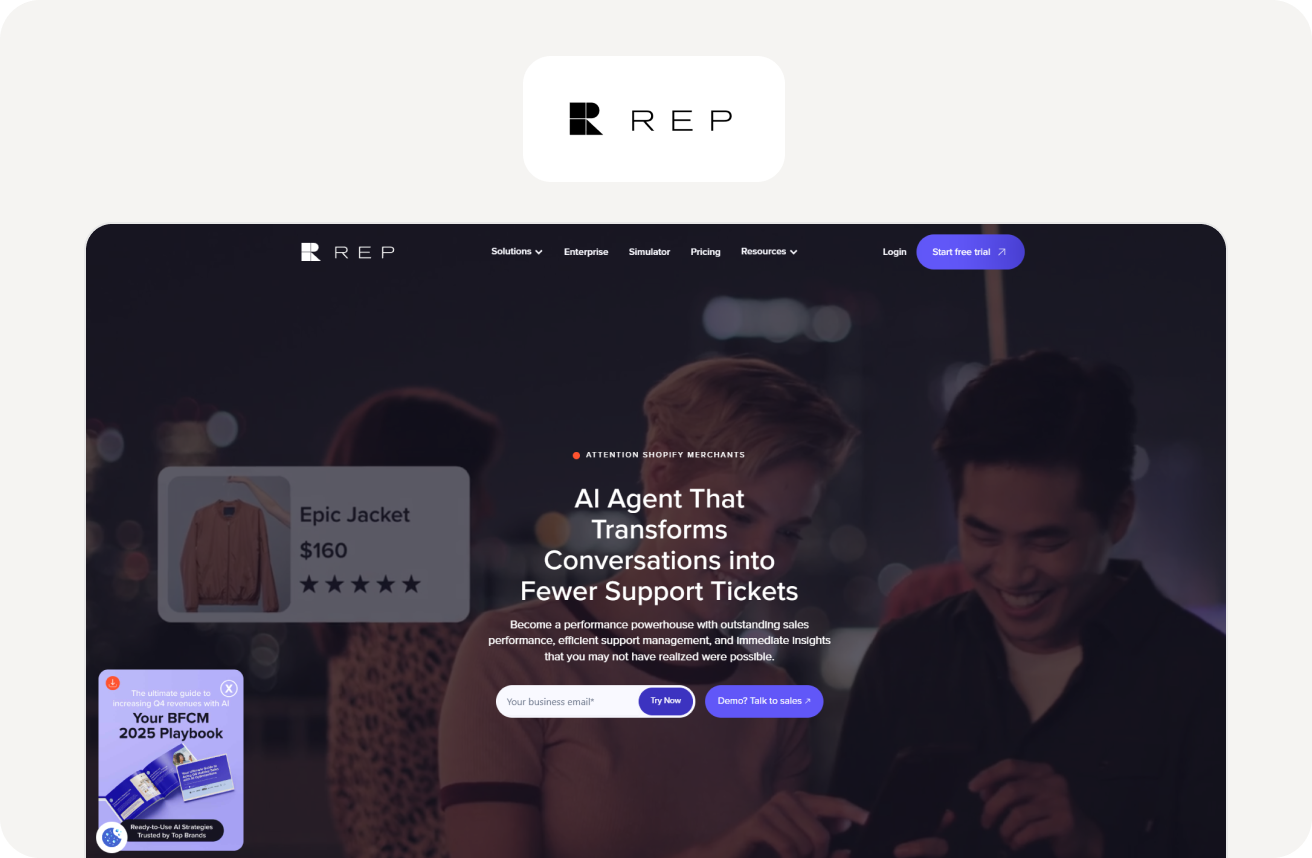
#10 Rep AI – Best for proactive behavioral engagement on Shopify
Best for
Shopify-native brands that want an AI shopping concierge that proactively engages visitors based on browsing behavior to reduce abandonment and guide purchase.
Why it’s here
Rep AI focuses on behavior-triggered engagement during browsing sessions. It helps retailers suggest products and support shoppers before they leave the site, especially in Shopify environments.
Standouts
- Behavior-triggered engagement during browsing sessions
- Shopify-native setup with fast deployment
- Product guidance designed to reduce abandonment
Watch-outs/limitations
- Limited coverage outside Shopify ecosystems
- Less suited for complex omnichannel environments
Ideal retailer profile
Shopify brands that want proactive engagement during browsing without adding heavy infrastructure.
What separates AI shopping assistants from support chatbots
The most valuable retail chatbots help shoppers discover products, decide faster, and return more often.
Here are the four types of agents to look for:
| Agent type | What they help shoppers do | What they need to work well | Where they create value |
| Product discovery agents | Find relevant products through conversation instead of filters | Structured catalog data and product attributes that help understand user intent | Faster discovery and better product matching |
| Guided selling agents | Compare options, suggest bundles, and answer customer needs during selection | Access to inventory, pricing, and customer context | Higher confidence and stronger conversion |
| Cart and checkout agents | Answer last-minute questions and recover abandoned carts | Real-time signals and customer data | Fewer drop-offs before purchase |
| Post-purchase and loyalty agents | Share updates, guide returns, and support repeat purchases | Order history and loyalty signals | Stronger retention and long-term value |
Product discovery agents
These agents help shoppers navigate large assortments using conversation. They rely on catalog structure and natural language processing to understand user intent and surface relevant products.
Tools like Voyado support this by connecting discovery with merchandising logic and shopper behavior.
Guided selling agents
Guided selling agents ask questions and suggest options based on customer needs. They work best when connected to inventory and customer context.
This allows them to deliver instant suggestions during the decision stage.
Cart and checkout agents
These agents support shoppers when hesitation appears. They answer questions and help reduce abandonment with timely guidance.
Connection to customer data improves how each interaction responds to user intent.
Post-purchase and loyalty agents
These agents handle updates, returns guidance, and replenishment reminders. They also support loyalty engagement across the lifecycle.
This is where shopping assistance and customer support overlap most clearly.
What retail teams should look for before choosing a platform
Before you choose a platform, check what sits behind the chat interface. The strongest tools connect conversations to product data, customer context, and real retail workflows.
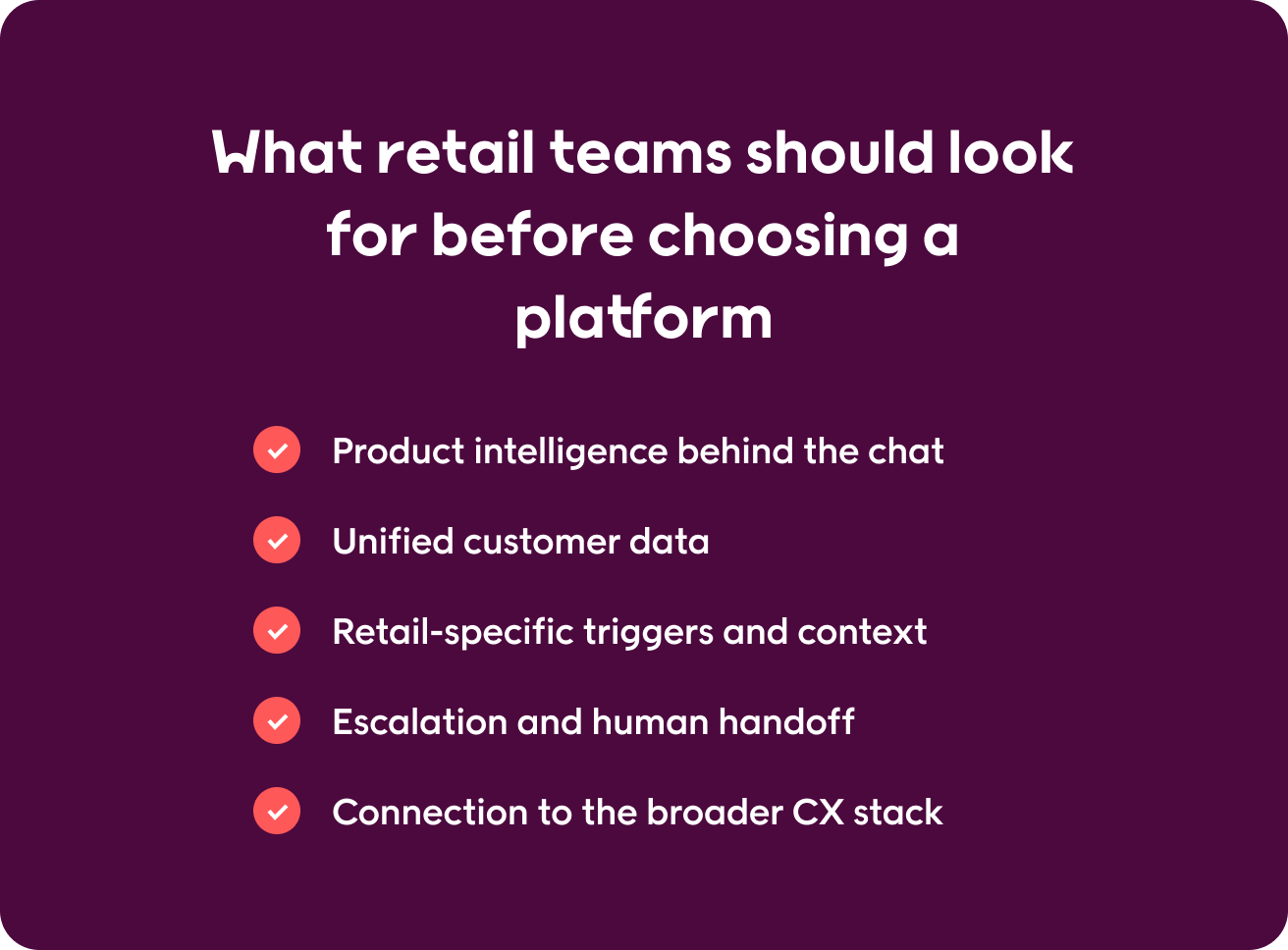
Product intelligence behind the chat
Without strong catalog structure, search relevance, and recommendation logic, a chatbot gives generic answers. Platforms connected to systems like Voyado’s product discovery engine support discovery that reflects real inventory and shopper intent.
Unified customer data
Shopping assistance improves when the system knows who the shopper is.
Look for platforms that use loyalty status, purchase history, and browsing signals. When chat connects to customer engagement data, conversations become more relevant and timely across the journey.
Retail-specific triggers and context
Retail conversations depend on context.
The platform should support size and fit guidance, product availability, campaign timing, loyalty rewards, and back-in-stock alerts. Generic chatbot builders rarely support these retail workflows well.
Escalation and human handoff
Not every interaction should stay automated.
Complex questions and high-value decisions should be routed to human agents, with context included. This keeps guidance accurate and protects the experience.
Connection to the broader CX stack
Chat should connect to the rest of your tools.
The best platforms integrate loyalty, messaging, and merchandising systems so teams can deliver consistent guidance across channels.
How Voyado powers smarter shopping assistance for retailers
Voyado is not a chatbot. It is the retail intelligence layer that makes shopping assistants useful across the customer journey.
The product discovery engine behind shopping assistance
Voyado Elevate powers search relevance, product recommendations, and catalog intelligence behind the chat interface. Without strong product discovery, guidance stays generic.
Voyado supports:
- Relevant product suggestions based on shopper intent
- Smarter site search results
- Merchandising logic aligned with business goals
This is the foundation behind effective shopping assistance.
Unified customer data for personalized conversations
Voyado connects customer profiles across online, in-store, email, app, and loyalty. Conversations reflect who the shopper is and where they are in their lifecycle.
This allows teams to personalize interactions using:
- Purchase history
- Loyalty status
- Browsing behavior
- Preferred categories
Personalization becomes consistent across channels, not limited to one conversation.
Agentic AI trained on retail data
Voyado’s agentic AI follows an observe, decide, act, and learn framework trained on real retail signals. It helps teams automate decisions throughout the customer journey while maintaining human oversight.
This keeps guidance relevant and aligned with merchandising strategy instead of relying on generic language models.
Connected across engagement, loyalty, and merchandising
Voyado connects shopping assistance with loyalty programs, lifecycle marketing, and merchandising workflows. The experience stays consistent when shoppers move between channels.
If your team is exploring how to move chatbots beyond support into real shopping assistance, book a demo to see how Voyado’s product discovery engine and customer engagement platform support that shift.
Final take
The tools that work best for retail are not standalone chat widgets. They are connected to product discovery, customer data, and retail decision logic behind the conversation.
Retailers that pair conversational interfaces with product intelligence and customer engagement systems support stronger guidance across the shopping journey. That is what turns chat from support automation into real shopping assistance.
Don’t think of this as replacing human teams. It’s about helping shoppers choose faster using product and customer context.
Next steps
- Review where chat supports product discovery today and where it stops
- Check whether conversations use customer profiles, loyalty signals, and catalog data
- Evaluate whether your platform can support shopping assistance across channels, not just customer support
If your team wants chat to guide shoppers, not just answer them, this is the moment to rethink what sits behind your conversational layer.
Talk to us today to find out how you can start.
FAQs
What is an AI agent retail chatbot?
An AI agent retail chatbot helps shoppers discover products, compare options, and make decisions during the shopping journey. It uses product data, customer profiles, and behavior signals to guide actions instead of only answering customer queries.
How are AI agent chatbots different from traditional retail chatbots?
Traditional retail chatbot tools answer FAQs like order status or store hours. An AI agent retail chatbot supports product discovery, personalized suggestions, and cart decisions using customer context and catalog intelligence.
Can AI chatbots actually help shoppers find products?
Yes. When connected to product data and search relevance systems, they surface personalized suggestions and guide shoppers through large assortments faster than filters alone.
Do AI agent retail chatbots replace human customer service teams?
No. They handle routine questions and early-stage guidance. Human agents support complex, sensitive, or high-value interactions where judgment is required.
What makes shopping assistance different from support chatbots?
Support chatbots respond after a problem appears. Shopping assistants guide decisions before purchase by using customer data, product availability, and intent signals.
What does Voyado have to do with retail chatbots?
Voyado is not a chatbot interface. It provides the product discovery engine, unified customer data, and retail-trained AI that make conversational shopping assistance effective.
How should retailers evaluate AI chatbots for shopping assistance?
Look for platforms that connect chat to product discovery, customer data, and real-time context across the shopping journey. The most effective solutions support personalized suggestions, inventory awareness, and escalation to human agents when needed.
About Author