TL;DR
Most marketing automation still relies on static campaigns and predefined rules. Next-best-action marketing software uses AI, customer data, and real-time context to decide the right message, channel, or offer for each customer at a given moment.
The best platforms help retail marketing teams improve customer engagement, customer lifetime value, and customer experience across multiple channels.
For retailers, Voyado stands out by combining retail-trained AI, loyalty, omnichannel engagement, and unified customer data in one platform to power adaptive next-best-action marketing.
What next-best-action marketing software actually does
Next-best-action marketing software helps your team decide what to do for a customer right now.
That could mean sending an SMS, holding back an email, recommending a product, triggering a loyalty reward, or waiting for a better moment entirely.
Instead of pushing every customer through the same flow, the software looks at customer behavior, customer context, past behavior, and real-time data to decide the best move at that given moment.
For retailers trying to improve customer lifetime value, this matters a lot. Timing, channel, and relevance all affect whether customers engage or ignore you.
Next-best-action vs. static automation vs. personalization
| Static automation | Personalization | Next-best-action | |
| Core approach | Fixed workflows | Personalized content | AI-driven decisioning |
| How decisions are made | Predefined rules | Customer data | Real-time customer context and predictive models |
| Timing | Scheduled or trigger-based | Trigger-based | Changes continuously |
| Channel selection | Manual | Usually fixed | AI chooses the best channel |
| Adaptability | Low | Medium | High |
| Best for | Basic lifecycle campaigns | Better relevance | Stronger customer engagement and business outcomes |
Why next-best-action matters more for retail in 2026
Most retail marketing still depends on fixed journeys and predefined rules.
A customer enters a flow, gets the same emails, the same timing, and often the same offers as everyone else in that audience segment, even when their customer behavior says something completely different.
Static automation struggles with that. It relies on the same strategy and predefined journeys for everyone.
Next-best-action systems adapt as customer intent changes. They use interaction history, engagement patterns, and real-time context to decide the next best move across omnichannel experiences.
That’s also why more retailers are exploring agentic AI for marketing to move beyond traditional campaigns and toward adaptive customer engagement.
The 10 best next-best-action marketing software platforms
Not every next-best-action platform is built for retail. The tools below vary a lot in how they handle customer data, loyalty, AI decisioning, and omnichannel engagement.
#1 Voyado – Best for retail-native next-best-action marketing connected to loyalty and omnichannel engagement
Best for:
Omnichannel retailers that want next-best-action decisioning tied directly to loyalty, customer data, and customer engagement across multiple channels.
Why it’s here:
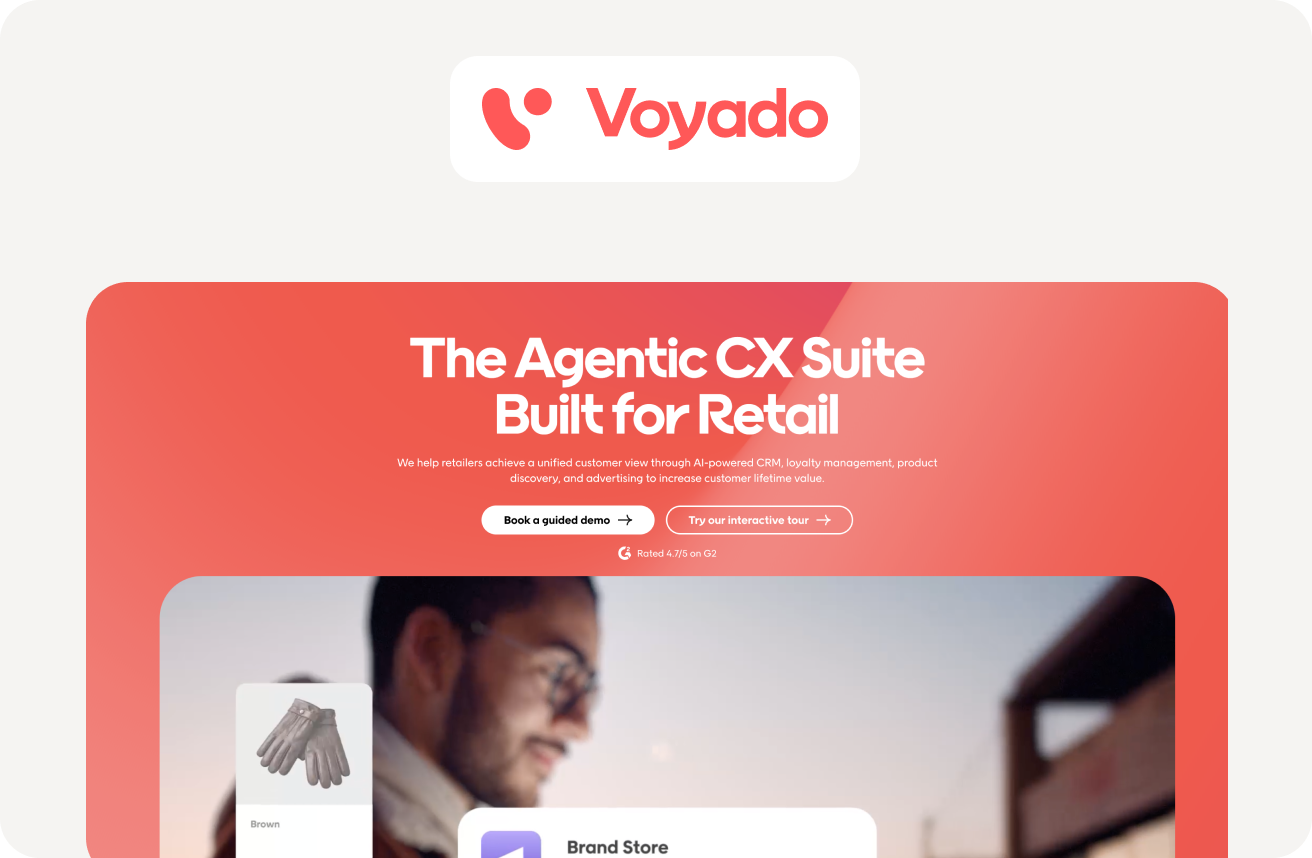
Unlike many NBA systems that add AI onto existing workflows, Voyado builds next-best-action marketing directly into the engagement platform retail teams already use daily.
Its retail-trained AI uses purchase history, customer interaction data, loyalty status, and real-time context to decide the next best action for each individual customer. That helps marketing teams improve customer satisfaction while avoiding over-messaging and generic campaigns.
Because Voyado includes a native customer loyalty platform, the platform can also factor in customer lifetime value, churn risk, reward eligibility, and customer lifecycle stage when making decisions.
The platform’s approach also aligns closely with the shift toward agentic AI in customer experience, where AI moves beyond predefined rules into adaptive real-time decisioning.
Standouts:
- Agentic marketing AI that decides the next best action for each specific customer
- Unified customer profiles across e-commerce, POS, loyalty, email, app, and onsite channels
- Native loyalty capabilities that help deliver targeted incentives and reduce customer churn
- Omnichannel orchestration across email, SMS, app push, and onsite engagement
- Retail-trained machine learning models built around changing customer behavior and customer intent
- Connected product discovery and engagement data for stronger conversion rates and cross-sell opportunities
Watch-outs:
- Built specifically for next-best-action retail use cases, not B2B workflows
- Works best for retailers already running active CRM and loyalty programs
- NBA capability is part of the wider CX suite rather than standalone NBA marketing software
Ideal retailer profile:
Mid-market to enterprise retailers that want next-best-action customer engagement connected to loyalty, merchandising, customer data, and omnichannel marketing in one system.
#2 Agentforce Marketing by Salesforce – Best for enterprise NBA within the Salesforce ecosystem
Best for:
Large retailers already using Salesforce across marketing, sales, service, and customer data.
Why it’s here:
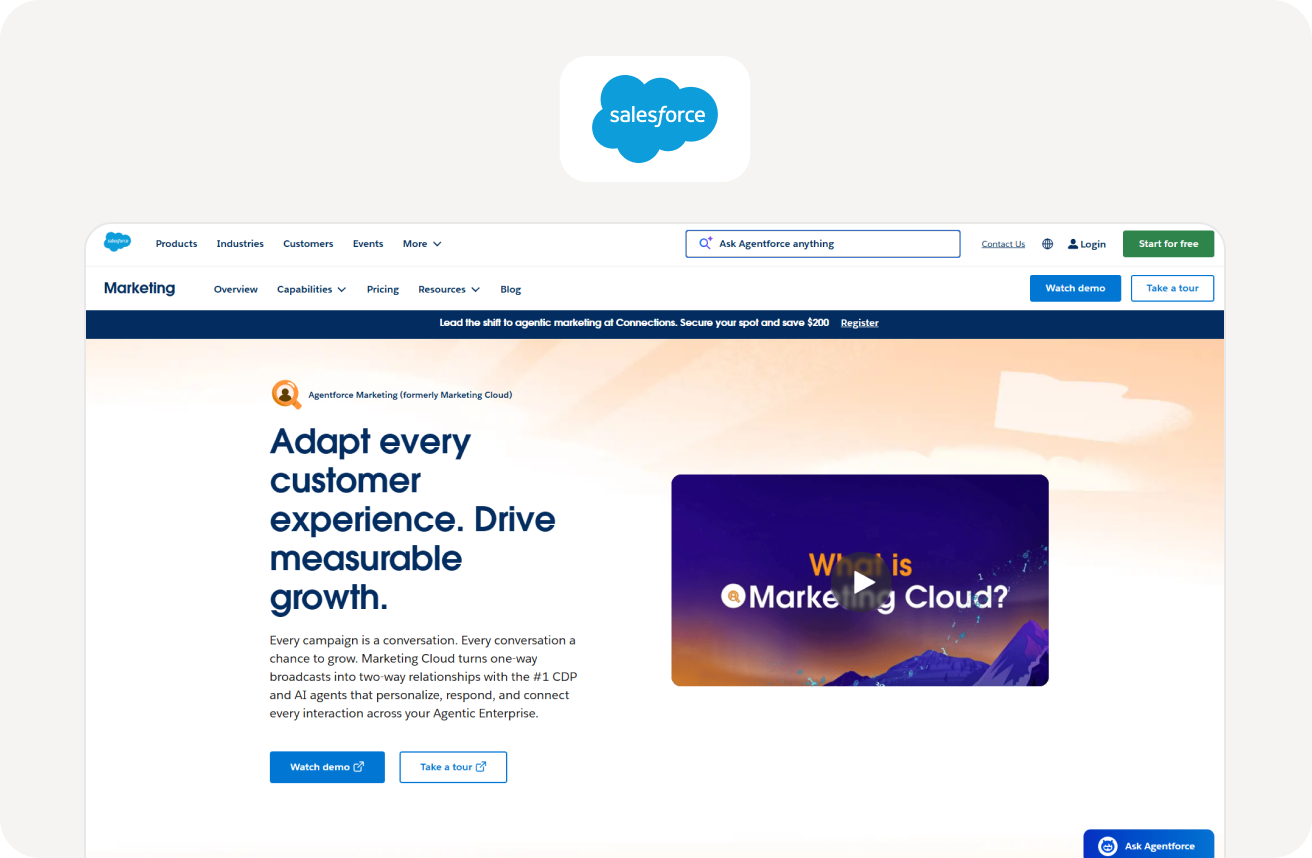
Agentforce Marketing is a strong fit for retailers already using Salesforce across marketing, service, and CRM. Its Einstein and Agentforce capabilities support AI-powered next-best-action recommendations, predictive models, and journey orchestration across multiple systems.
Standouts:
- Strong fit for Salesforce-heavy enterprise teams
- AI-powered decisioning across marketing, sales, and service
- Good enterprise governance and workflow flexibility
Watch-outs:
- Can become complex outside the Salesforce ecosystem
- Often needs technical support and strong data quality practices
- Retail-specific use cases may require more configuration
Ideal retailer profile:
Enterprise retailers already invested in Salesforce that want centralized NBA initiatives across customer engagement, service, and sales.
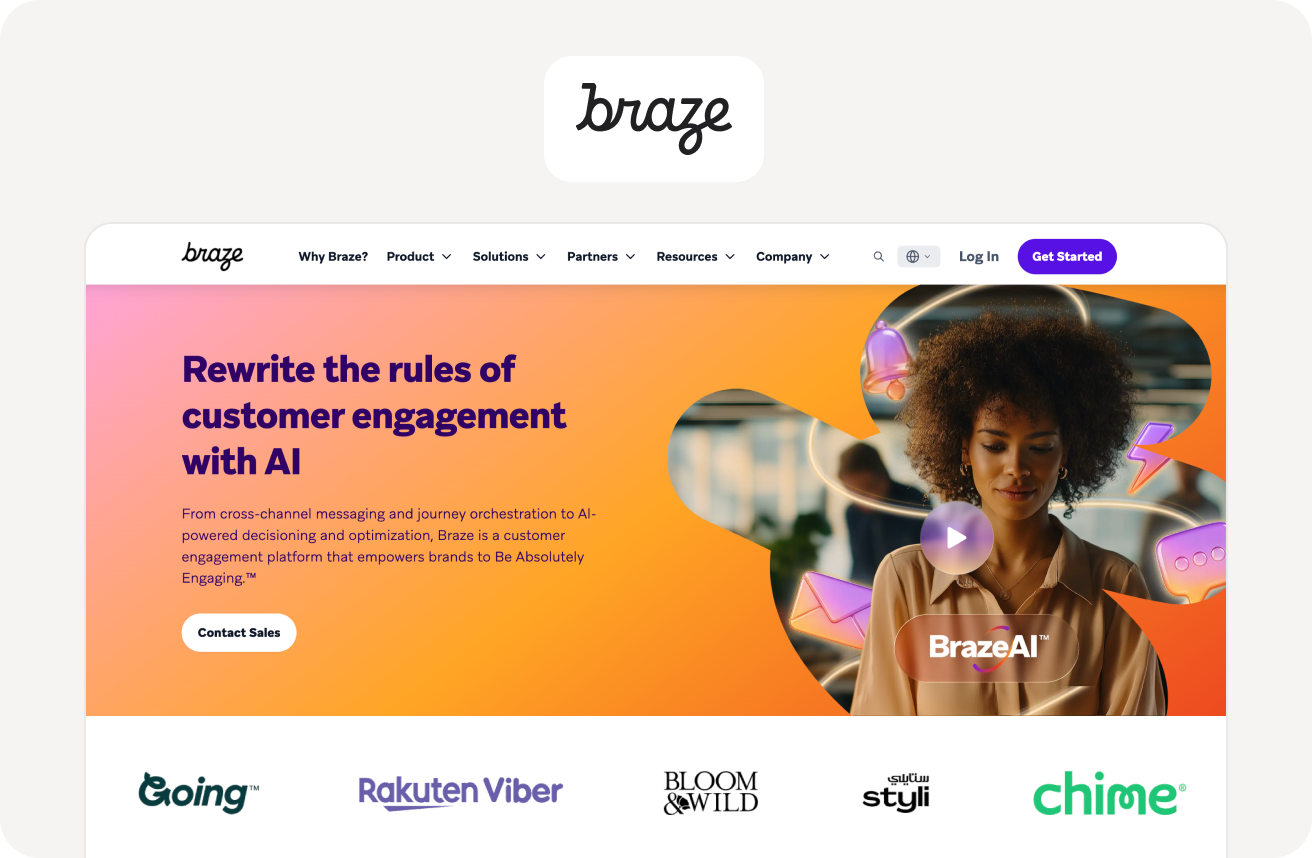
#3 Braze – Best for real-time cross-channel engagement with adaptive decisioning
Best for:
Digital-first retailers and DTC brands focused on fast, event-based engagement across mobile, email, web, and messaging.
Why it’s here:
Braze focuses heavily on real-time customer engagement across mobile, web, email, and messaging. Its AI capabilities help retailers adapt timing, messaging, and channels based on live customer behavior instead of fixed workflows. Its approach also aligns closely with agentic AI in digital customer engagement.
Standouts:
- Strong real-time engagement capabilities
- AI-powered message and channel optimization
- Excellent support for mobile-first customer journeys
Watch-outs:
- Less retail-native than loyalty-focused platforms
- Works best with strong event tracking and real time data
- May feel heavy for smaller commerce teams
Ideal retailer profile:
Digital-first retailers that want adaptive next-best-action customer engagement across app, web, email, and SMS.
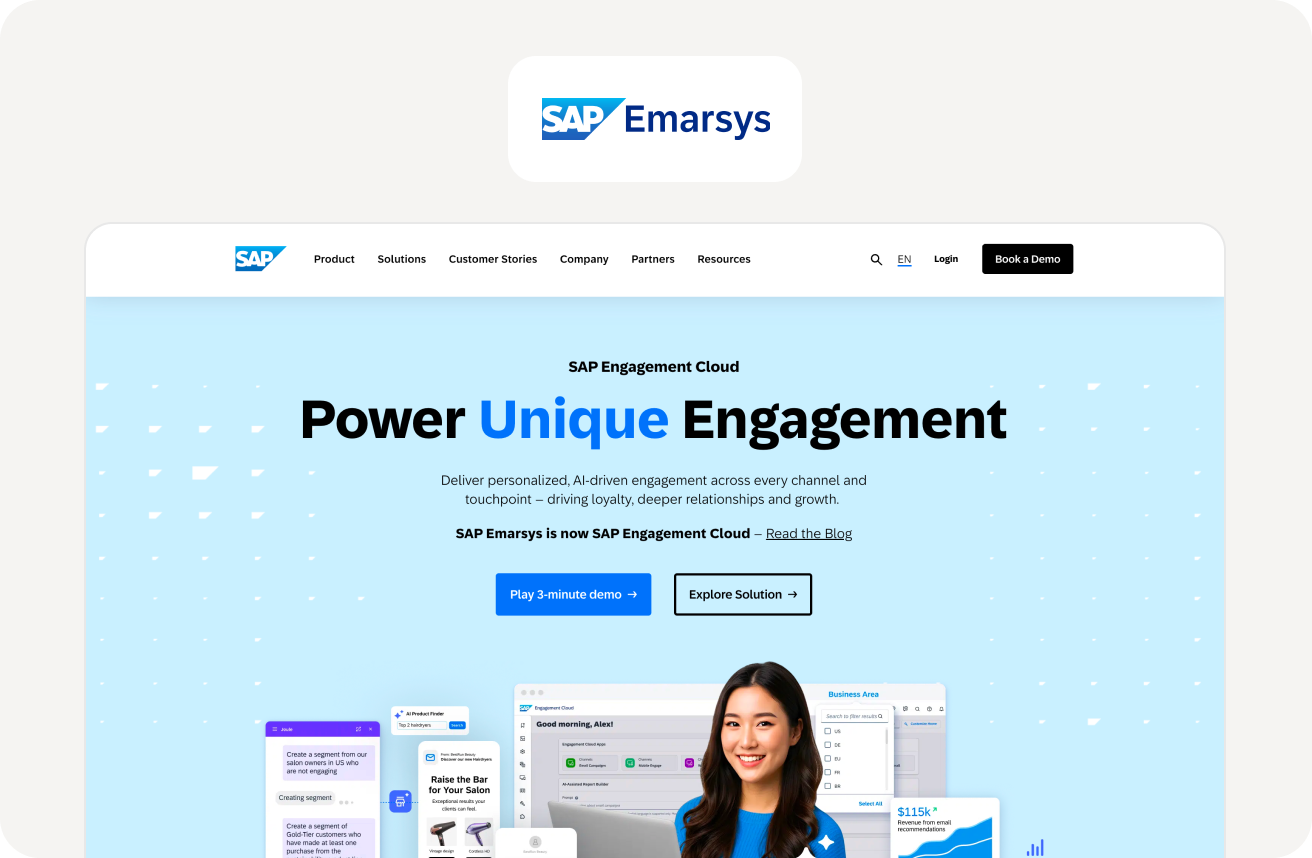
#4 SAP Engagement Cloud (formerly Emarsys) – Best for retail-oriented marketing automation with built-in NBA tactics
Best for:
Retailers that want ready-made lifecycle tactics with AI-guided optimization.
Why it’s here:
SAP Engagement Cloud is built around common retail marketing workflows like replenishment, browse abandonment, and loyalty engagement. Its AI capabilities help retailers react faster to customer intent and lifecycle signals while reducing manual campaign work.
Retailers already investing in customer retention strategies will likely find its lifecycle focus appealing.
Standouts:
- Pre-built retail marketing tactics
- Strong lifecycle automation capabilities
- AI-guided segmentation and personalization
Watch-outs:
- Less advanced for centralized NBA decisioning
- Some workflows still need manual setup
- Less connected to merchandising and product discovery
Ideal retailer profile:
Mid-market retailers that want practical next-best-action strategies built into daily retail marketing workflows.
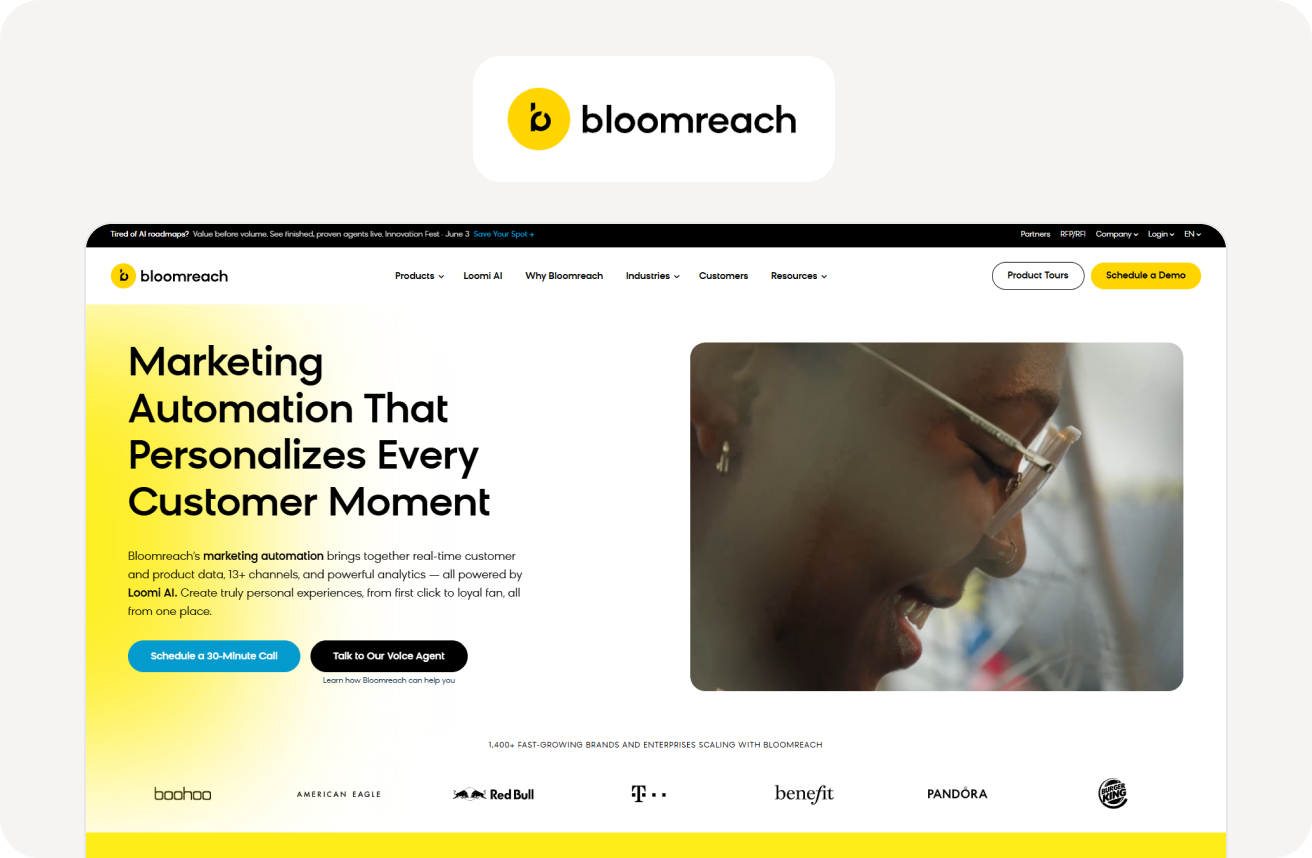
#5 Bloomreach Engagement – Best for combining product discovery intelligence with engagement decisioning
Best for:
E-commerce teams that want personalized engagement powered by product intelligence, search behavior, and real-time customer context.
Why it’s here:
Bloomreach combines customer engagement with product discovery, merchandising, and search behavior. Its Loomi AI capabilities use predictive analytics and customer behavior to shape recommendations and campaigns in real time.
Retailers already focused on personalization in retail will recognize the value of connecting engagement and product intelligence together.
Standouts:
- Strong product and search intelligence
- Real-time personalization capabilities
- Useful predictive models tied to product discovery
Watch-outs:
- Broader commerce platform may feel large for some teams
- Less loyalty-focused than Voyado
- NBA capabilities depend heavily on implementation quality
Ideal retailer profile:
E-commerce retailers that want next-best-action models shaped by browsing behavior, search activity, and product data.
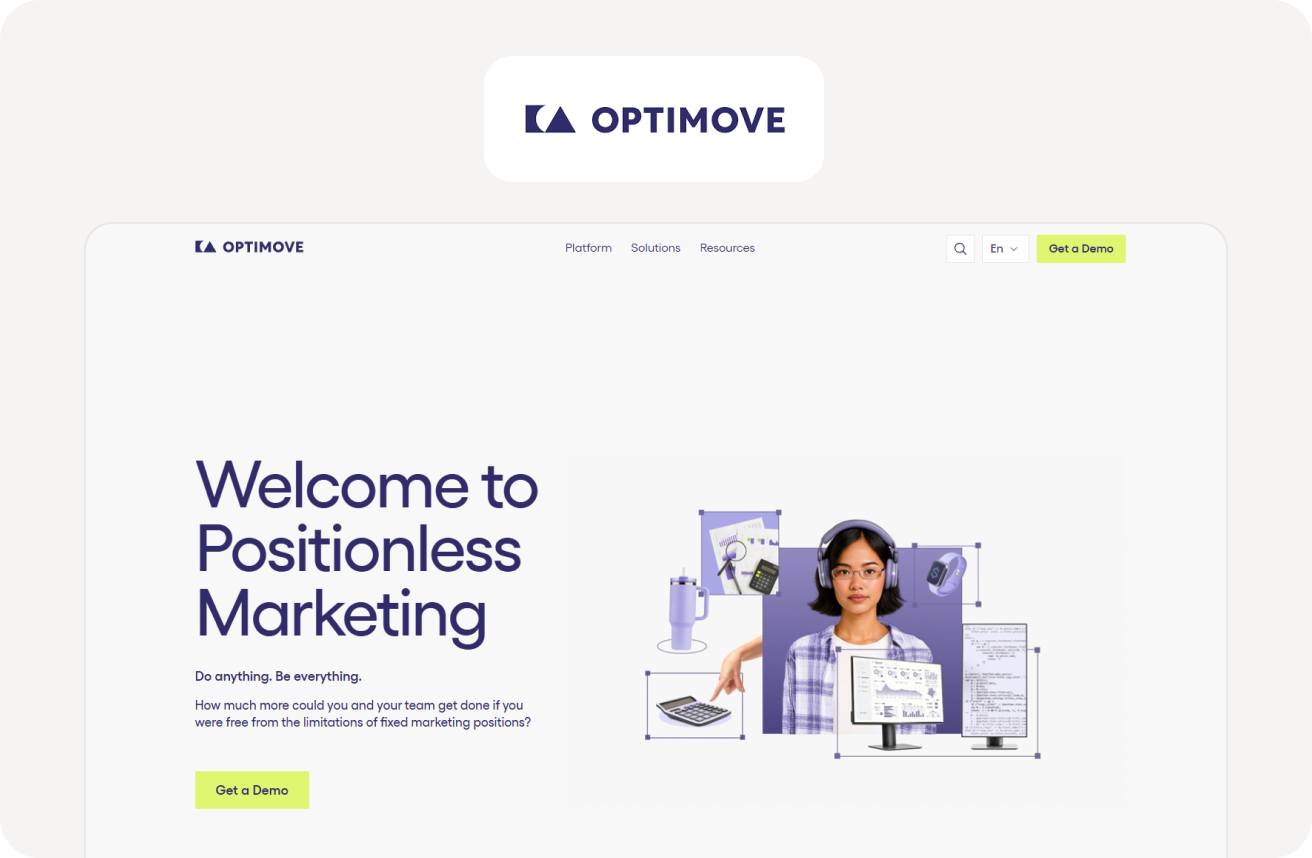
#6 Optimove – Best for lifecycle-driven next-best-action focused on retention and CLV
Best for:
Retention-focused retailers that want AI-powered customer lifecycle orchestration with predictive modeling built in.
Why it’s here:
Optimove is designed around retention marketing and customer lifetime growth. Its predictive models help retailers identify churn risk, customer value, and the next best action based on engagement history and past behavior.
Standouts:
- Strong retention and customer lifetime focus
- Useful predictive scores and churn analysis
- AI-driven lifecycle orchestration
Watch-outs:
- Less retail-native than Voyado or Emarsys
- Best suited for mature CRM teams
- Requires clear testing and measurement processes
Ideal retailer profile:
Retailers focused on retention, loyalty, and customer lifetime value optimization.
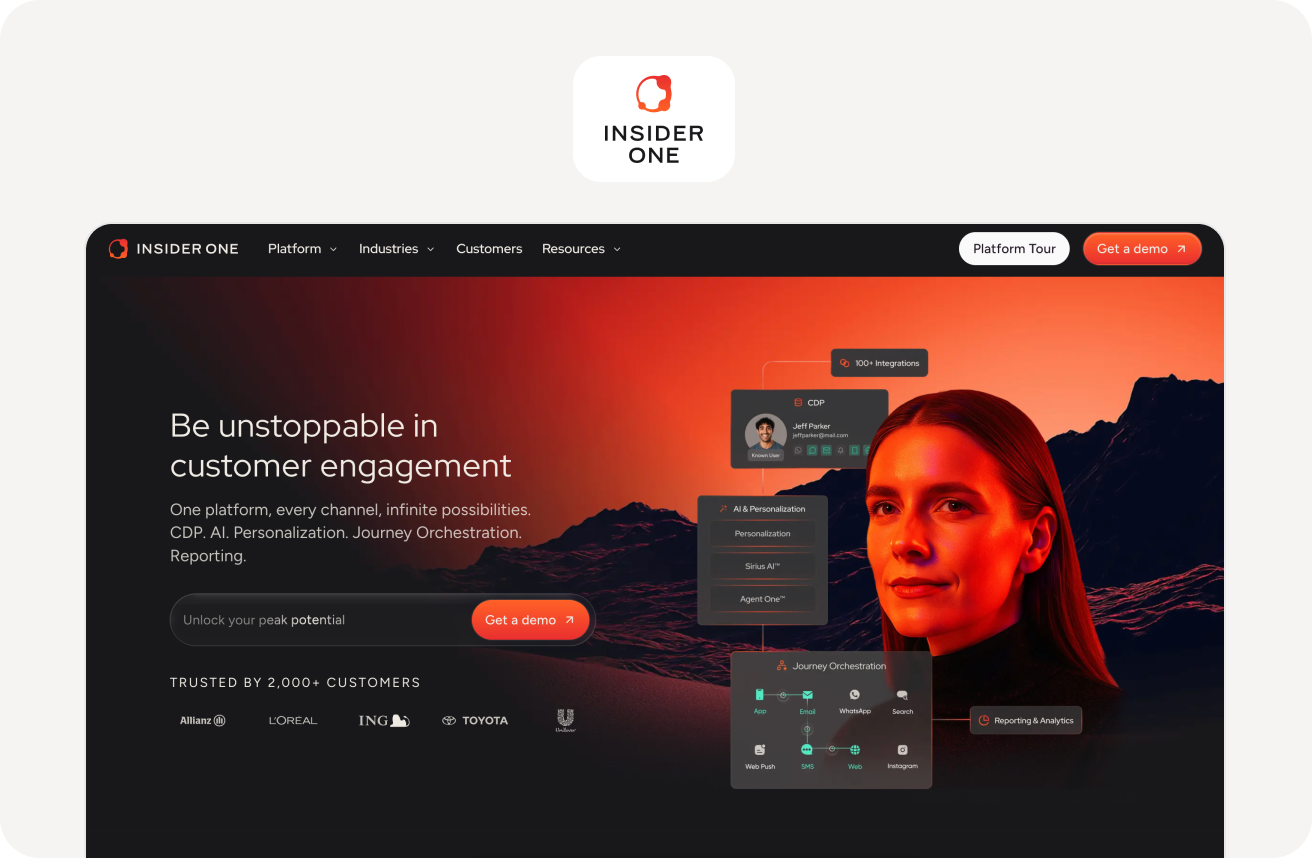
#7 Insider One – Best for AI-powered cross-channel journey orchestration at enterprise scale
Best for:
Enterprise retailers that want broad channel coverage with AI-driven journey orchestration.
Why it’s here:
Insider One combines personalization, customer data, and AI-powered orchestration across web, app, email, SMS, WhatsApp, and in-store channels. It is especially useful for retailers managing large-scale customer engagement across multiple markets.
Retailers exploring agentic AI for marketing will recognize a similar shift toward AI-guided orchestration.
Standouts:
- Wide cross-channel coverage
- Strong predictive segmentation tools
- Enterprise-scale orchestration capabilities
Watch-outs:
- Broad feature set can increase complexity
- Requires strong governance across teams
- Smaller retailers may not need the full platform
Ideal retailer profile:
Enterprise retailers managing large-scale customer journeys across many channels and markets.
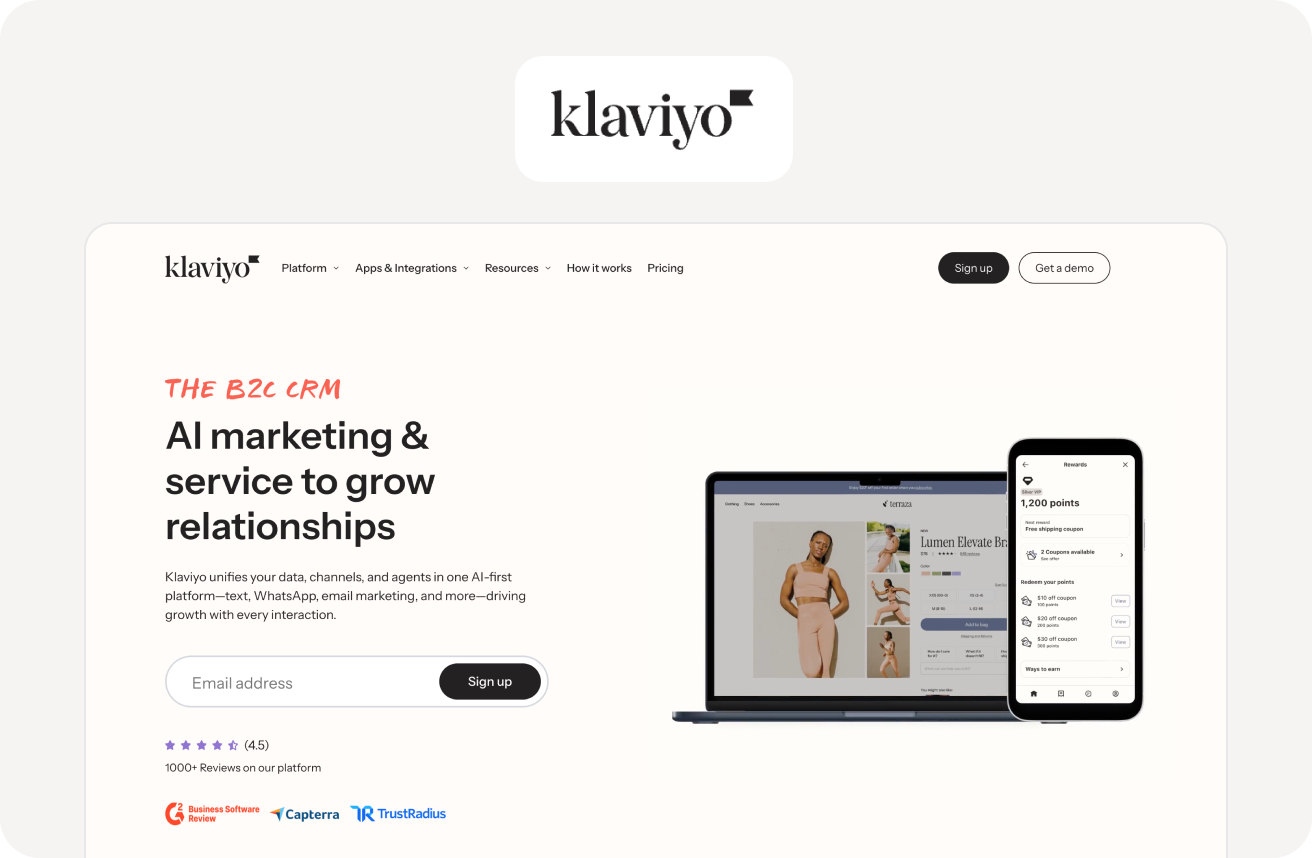
#8 Klaviyo – Best for e-commerce-native NBA with strong Shopify integration
Best for:
Shopify and e-commerce brands that want smarter email and SMS automation without enterprise complexity.
Why it’s here:
Klaviyo connects e-commerce customer data, purchase history, and messaging in a relatively simple way. Its predictive analytics and AI-powered optimization help brands improve targeting and customer engagement across email and SMS without heavy implementation complexity.
Standouts:
- Strong Shopify and e-commerce integrations
- Helpful predictive analytics features
- Easy-to-manage email and SMS automation
Watch-outs:
- Less suited to enterprise omnichannel retail
- Lighter NBA capabilities than centralized decision hubs
- Limited in-store and loyalty depth
Ideal retailer profile:
E-commerce brands that want practical next-best-action marketing tied to email, SMS, and commerce data.
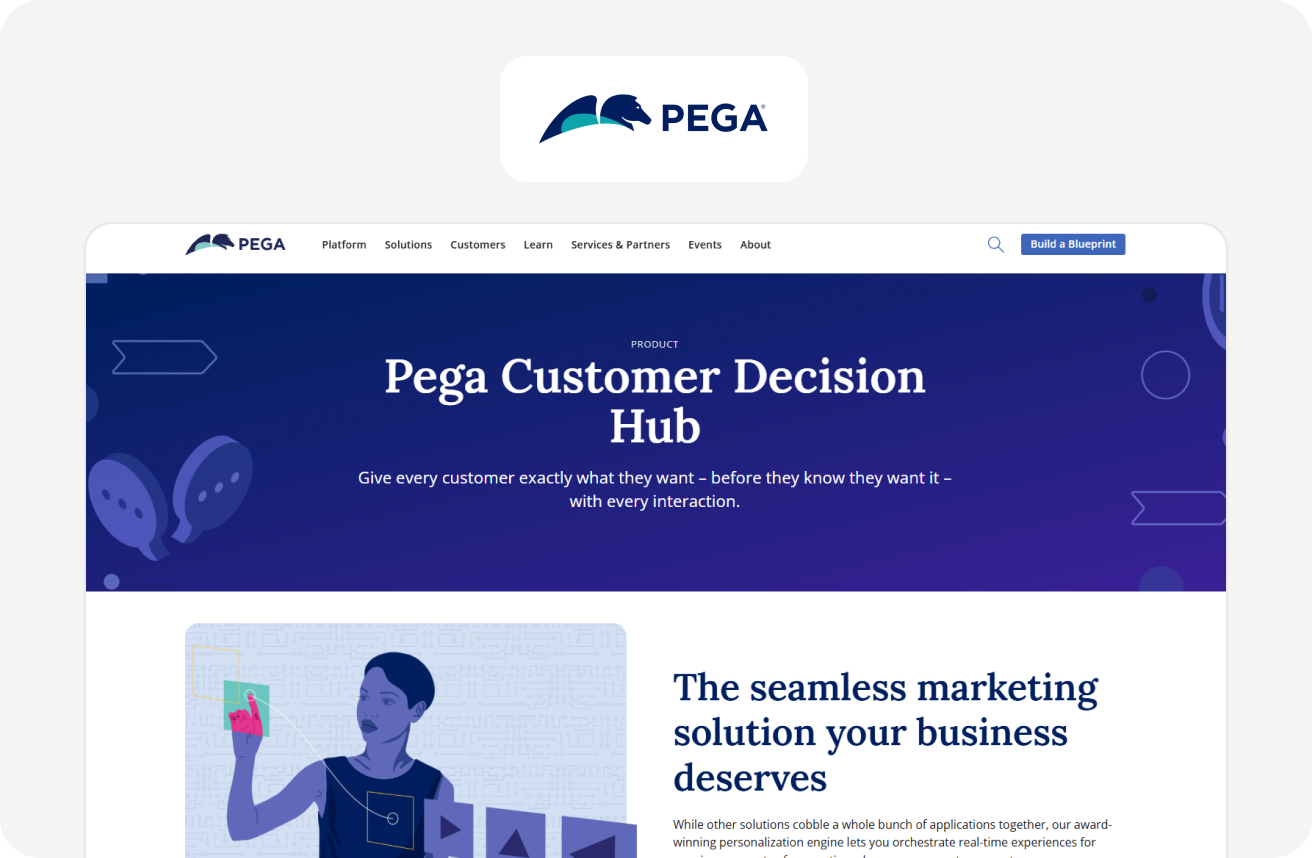
#9 Pega Customer Decision Hub – Best for enterprise-grade centralized decisioning
Best for:
Large enterprises that need centralized NBA decisioning across marketing, sales, and customer service.
Why it’s here:
Pega Customer Decision Hub is built around centralized real-time decisioning across marketing, service, and sales. It uses predictive analytics, business rules, historical data, and customer context to decide the optimal action for each customer interaction.
Standouts:
- Deep enterprise NBA decisioning
- Strong predictive analytics capabilities
- Centralized decision hub across teams
Watch-outs:
- Higher implementation complexity
- Less retail-native than specialist retail tools
- Needs strong governance and technical ownership
Ideal retailer profile:
Large retailers needing centralized next-best-action decisioning across marketing, service, and sales environments.
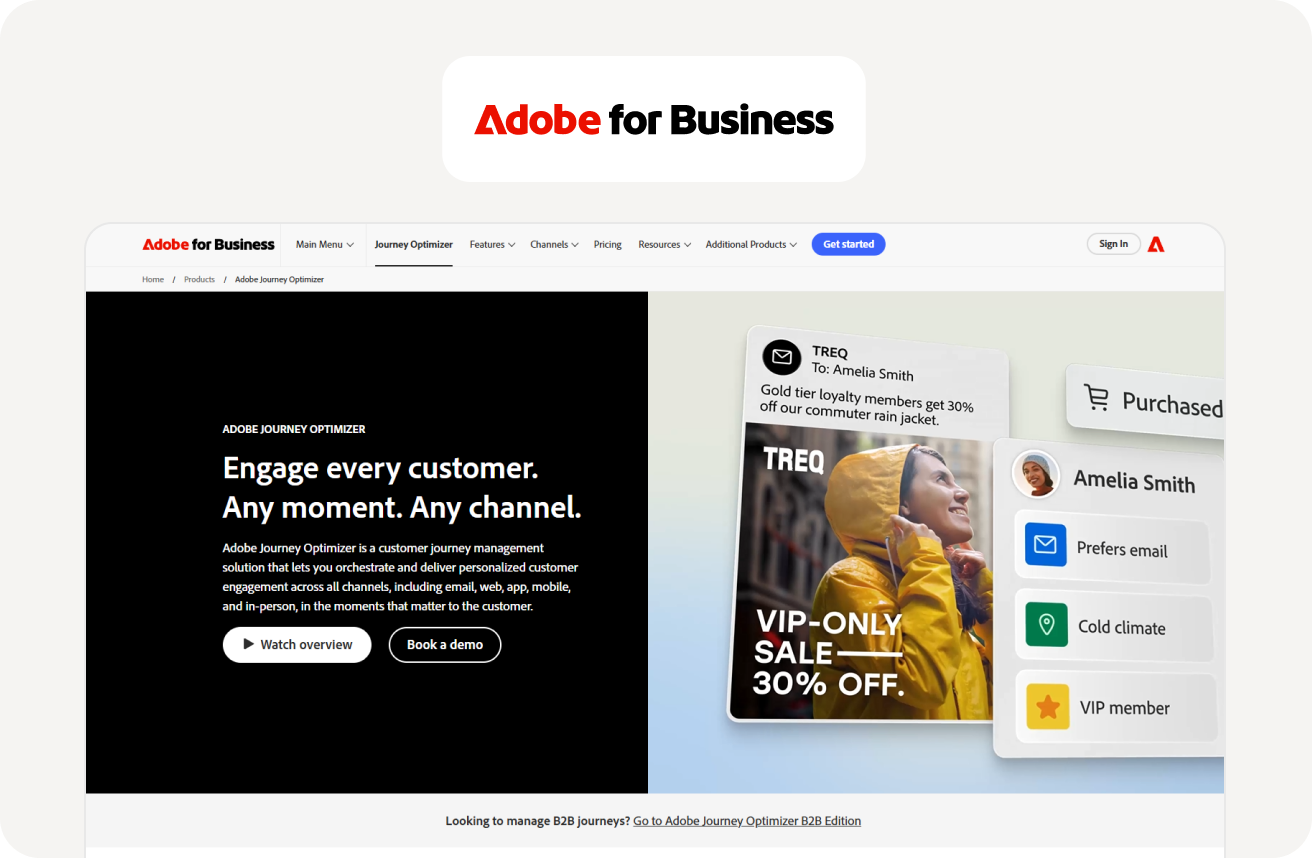
#10 Adobe Journey Optimizer – Best for real-time journey orchestration within the Adobe ecosystem
Best for:
Enterprise retailers using Adobe Experience Platform for customer profiles, content, and data orchestration.
Why it’s here:
Adobe Journey Optimizer helps retailers orchestrate customer journeys using real-time customer profiles and AI-powered decisioning. Its AI models can adjust offers, messaging, and experiences dynamically based on customer behavior and engagement context.
Standouts:
- Strong real-time journey orchestration
- AI-powered offer and experience decisioning
- Tight integration with Adobe Experience Platform
Watch-outs:
- Best suited for Adobe-centric organizations
- Setup can become technically complex
- Retail-specific workflows may need customization
Ideal retailer profile:
Enterprise retailers already using Adobe that want next-best-action customer engagement tied to real-time profiles and AI-powered journeys.
The right platform depends on how your retail teams manage customer data, loyalty, channels, and real-time decisioning, which is exactly what we’ll look at next.
How we evaluated these platforms
Not all next-best-action platforms work the same way, especially in retail.
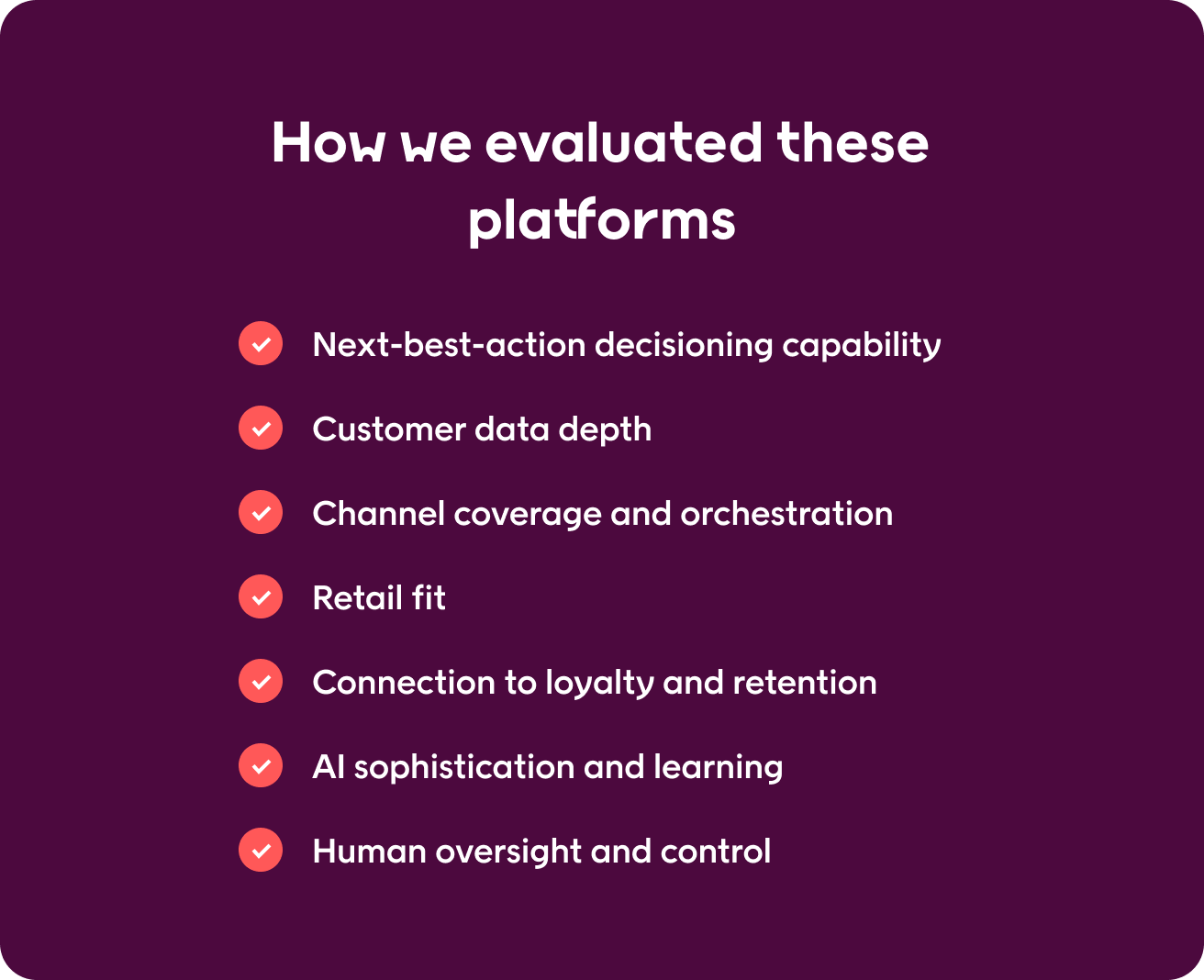
Next-best-action decisioning capability
We prioritized platforms that could decide the next best action in real time, not just automate predefined workflows.
The strongest tools could choose the channel, timing, content, and whether to send at all based on customer behavior and context.
Customer data depth
Good decisions depend on good customer data.
We looked for platforms that could combine purchase history, loyalty activity, browsing behavior, customer lifecycle stage, and CRM data instead of relying only on campaign engagement.
Channel coverage and orchestration
Retail customers move constantly across channels.
We prioritized platforms that could coordinate actions across email, SMS, app push, onsite, and stores while keeping customer interactions connected and relevant.
Retail fit
Retail-specific context matters.
We looked for platforms proven in retail environments with loyalty programs, seasonal behavior, replenishment cycles, and changing customer intent.
Connection to loyalty and retention
Some of the most valuable next-best-action strategies in retail revolve around loyalty and retention.
That includes churn prevention, reward nudges, VIP engagement, and personalized reminder campaigns tied to long-term customer value.
AI sophistication and learning
Strong next-best-action software should improve over time.
We prioritized platforms using machine learning and adaptive AI models instead of static scoring systems. That shift is also central to agentic AI in customer experience.
Human oversight and control
AI should support your teams, not replace them.
We looked for platforms that still gave marketing teams control over business rules, approvals, pacing, and brand guardrails.
Where next-best-action creates the most value in retail
The biggest value from next-best-action marketing comes from improving key retail moments tied to retention, loyalty, and revenue.
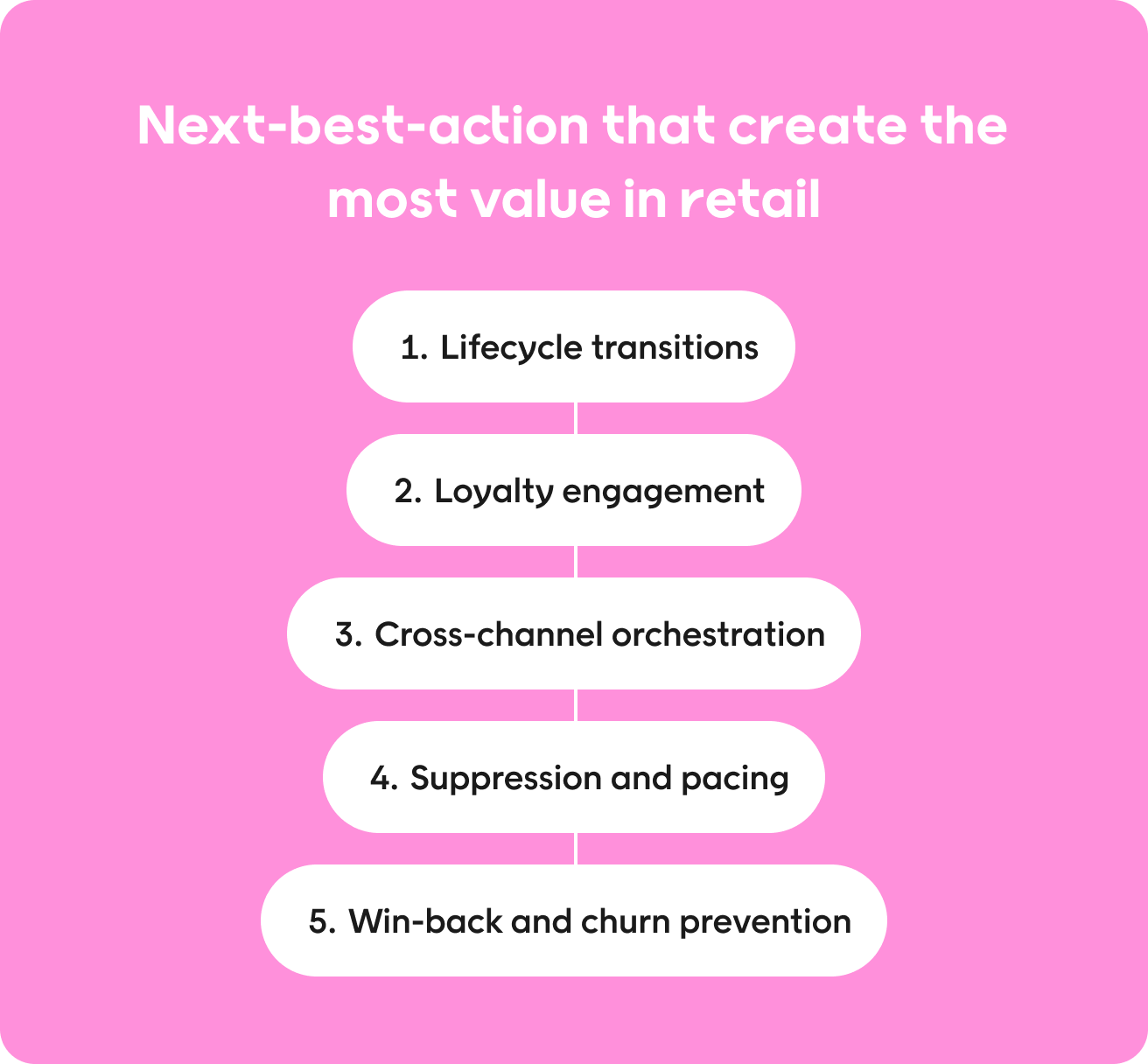
Lifecycle transitions
Why it matters: Customer value often changes fastest during transition moments.
Moving a customer from first purchase to second purchase, or stopping an active customer from disengaging, can have a major impact on customer lifetime value.
Business impact: Stronger retention without relying heavily on discounts.
Loyalty engagement
Why it matters: Loyalty data becomes much more valuable when it drives action in real time.
Next-best-action systems can turn rewards, tier progress, and loyalty activity into more timely and personalized engagement.
Business impact: Loyalty communication feels more relevant and less like batch marketing.
Cross-channel orchestration
Why it matters: The wrong channel can reduce engagement quickly.
Strong platforms use customer behavior and preferences to choose between email, SMS, app push, and onsite messaging instead of repeating the same message everywhere.
Business impact: Better engagement with less wasted outreach.
Suppression and pacing
Why it matters: Better timing often matters more than more campaigns.
Strong NBA systems can detect message fatigue and delay communication until engagement signals improve.
Business impact: Less fatigue and stronger long-term customer engagement.
Win-back and churn prevention
Why it matters: Early intervention creates more recovery opportunities.
Next-best-action systems can detect falling engagement and trigger loyalty rewards, offers, or personalized reminder campaigns before customer churn accelerates.
Business impact: Faster intervention and lower preventable churn.
The biggest gains usually come from small decision improvements repeated across thousands of customer interactions. That’s where next-best-action marketing starts creating real retail impact.
What retail teams should evaluate before choosing
The biggest differences between next-best-action platforms usually appear after implementation, not during the demo.
| What to evaluate | What strong NBA looks like | Warning signs |
| Decisioning capability | AI decides the next best action dynamically based on customer context and behavior | Mostly predefined workflows with limited real-time decisioning |
| Customer data depth | Uses purchase history, loyalty activity, in-store behavior, browsing, and real-time data | Relies mostly on email clicks and campaign engagement |
| Loyalty integration | Loyalty tiers, rewards, churn risk, and customer lifetime value directly shape decisions | Loyalty lives in a separate platform with weak integration |
| Channel orchestration | Chooses the right channel for the customer at the right moment | Uses the same message across every channel |
| Team control | Marketing teams can set business rules, pacing limits, approvals, and overrides | AI operates with little oversight or transparency |
| Measurement and reporting | Measures retention, repeat purchases, and long-term revenue impact | Focuses mostly on opens, clicks, and short-term engagement |
| Retail fit | Built for retail customer journeys, loyalty, and changing customer behavior | Generic automation adapted loosely for retail use cases |
The strongest platforms improve customer experience while still giving teams control over strategy, pacing, and brand decisions.
How Voyado powers next-best-action for retail engagement
Most retailers already have the data needed for next-best-action marketing.
The harder part is turning that data into actions your teams can actually use fast enough to improve the customer experience.
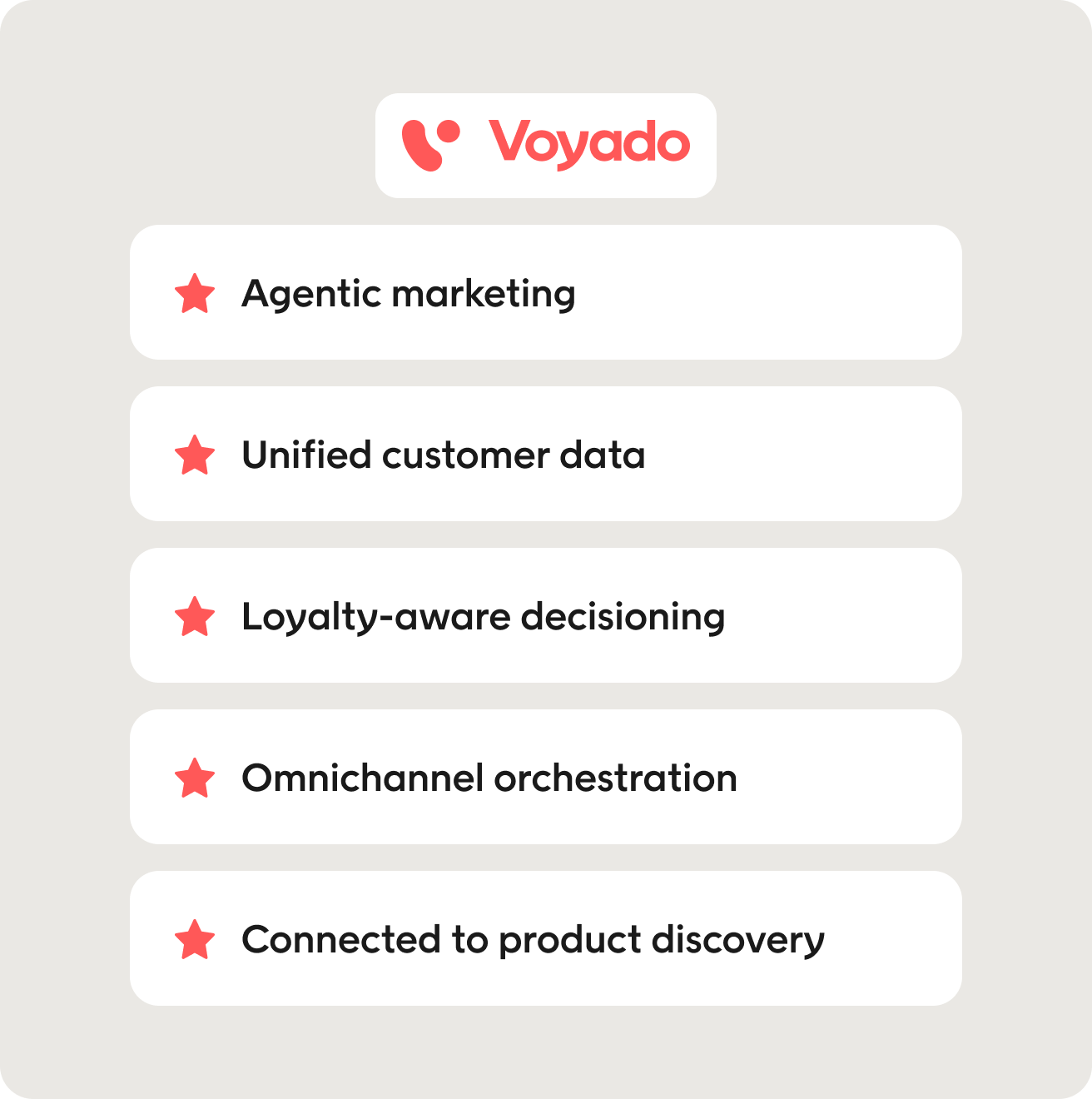
Agentic marketing: AI that decides and acts
Many CRM and marketing teams still spend hours adjusting workflows, fixing timing issues, and manually managing journeys.
Voyado’s agentic marketing capability helps your team automate decisions around timing, messaging, and channel selection based on live customer behavior and real-time context.
What that changes: Your marketing team spends less time maintaining workflows while your engagement feels more relevant and better timed.
Unified customer data for informed decisions
Disconnected customer data creates disconnected experiences.
Your customers browse products onsite, shop in-store, open emails, use loyalty rewards, and interact across multiple channels. When those signals stay fragmented, your communication quickly starts feeling repetitive or out of sync.
Voyado brings those signals together into unified customer profiles across e-commerce, POS, loyalty, email, app, and onsite experiences.
What that changes: Your business can respond to the full customer relationship instead of reacting to isolated channel activity.
Loyalty-aware decisioning
Most platforms treat loyalty as something separate from decision-making.
Voyado factors loyalty status, rewards, tier progress, and churn risk directly into next-best-action decisions automatically.
What that changes: Your loyalty communication arrives when it still feels useful, motivating, and connected to what your customers are actually doing.
Omnichannel orchestration
One of the biggest frustrations for customers is repeated communication across channels.
Your teams may send the same promotion through email, SMS, app push, and onsite messaging simply because each channel operates separately.
Voyado coordinates engagement across channels based on customer preferences and engagement patterns instead of duplicating outreach everywhere.
What that changes: Your customers experience smoother communication across channels instead of getting overwhelmed by overlapping campaigns.
Connected to product discovery
Your marketing and merchandising teams influence the same customer journey, even when they work separately.
Voyado connects engagement decisions with Elevate’s product discovery intelligence so recommendations, offers, search results, and campaigns all respond to the same customer signals.
What that changes: Your customers see products and offers that feel much more aligned with what they actually want to buy.
If your team wants to move beyond static campaigns and create more adaptive customer engagement powered by retail-trained AI, book a demo to see how Voyado’s Agentic CX Suite works in practice.
Final take
Most retail marketing still works like a calendar.
Campaigns get scheduled. Journeys get mapped. Customers get pushed through flows that were planned weeks earlier, even when their behavior changes completely.
Next-best-action marketing flips that model. Instead of asking, “What campaign are we sending next?”, your teams start asking, “What does this customer actually need right now?”
For retailers, that shift matters because loyalty, customer data, merchandising, and omnichannel engagement are all connected.
The platforms creating the most value in 2026 will be the ones that can see that full picture and act on it fast enough to keep every customer interaction relevant.
FAQs
What is next-best-action marketing software?
Next-best-action marketing software uses AI and customer data to decide the best action, channel, timing, or offer for each customer in real time.
How is next-best-action different from marketing automation?
Marketing automation follows predefined workflows. Next-best-action systems adapt decisions continuously based on customer behavior, context, and engagement signals.
Why does next-best-action matter more for retail?
Retail customers move across channels constantly and their behavior changes quickly. Next-best-action helps retailers respond with more relevant timing, messaging, and loyalty engagement.
What data does next-best-action need to work well?
The strongest systems use purchase history, loyalty activity, browsing behavior, customer lifecycle stage, CRM data, and real-time engagement signals together.
Can next-best-action replace my marketing team?
No. NBA systems help marketing teams make faster and smarter decisions, but teams still need control over strategy, brand rules, creative direction, and approvals.
How does Voyado handle next-best-action?
Voyado uses retail-trained AI, unified customer profiles, loyalty data, and omnichannel engagement signals to decide the next best action for each customer in real time.
How should I measure whether NBA software is working?
Look beyond opens and clicks. Strong indicators include higher retention, increased customer lifetime value, better repeat purchase rates, and stronger customer engagement over time.