AI adoption is high. The sale is still yours to earn. Read the AI Consumer Report 2026 →
Hero2 Hero2
AI Consumer Report 2026

AI is doing the research.
The sale is still up for grabs.

Our survey of 2000 consumers across Europe shows how AI is reshaping the path to purchase, and where retailers can win the sale.
Varm höstkväll framför Black Friday-skyltfönstret

Executive summary and key findings

AI is becoming an influential shopping adviser, but consumers’ reluctance to hand it purchasing control creates an opening for retailers. Our survey of 2000 consumers across Europe shows that AI helps shoppers research and compare products, while the retailer’s website remains a place to verify the details and make the final choice.

  • Just over half are not at all comfortable sharing card details with an AI assistant.
  • Nearly two-thirds would check the full price on the retailer’s site before buying an AI-recommended product.

Retailers can use that moment to earn confidence, help shoppers find a better fit and build a relationship beyond the transaction. The commercial opportunity extends from making the AI shortlist to becoming the retailer shoppers choose directly next time.

AI has become a significant shopping adviser

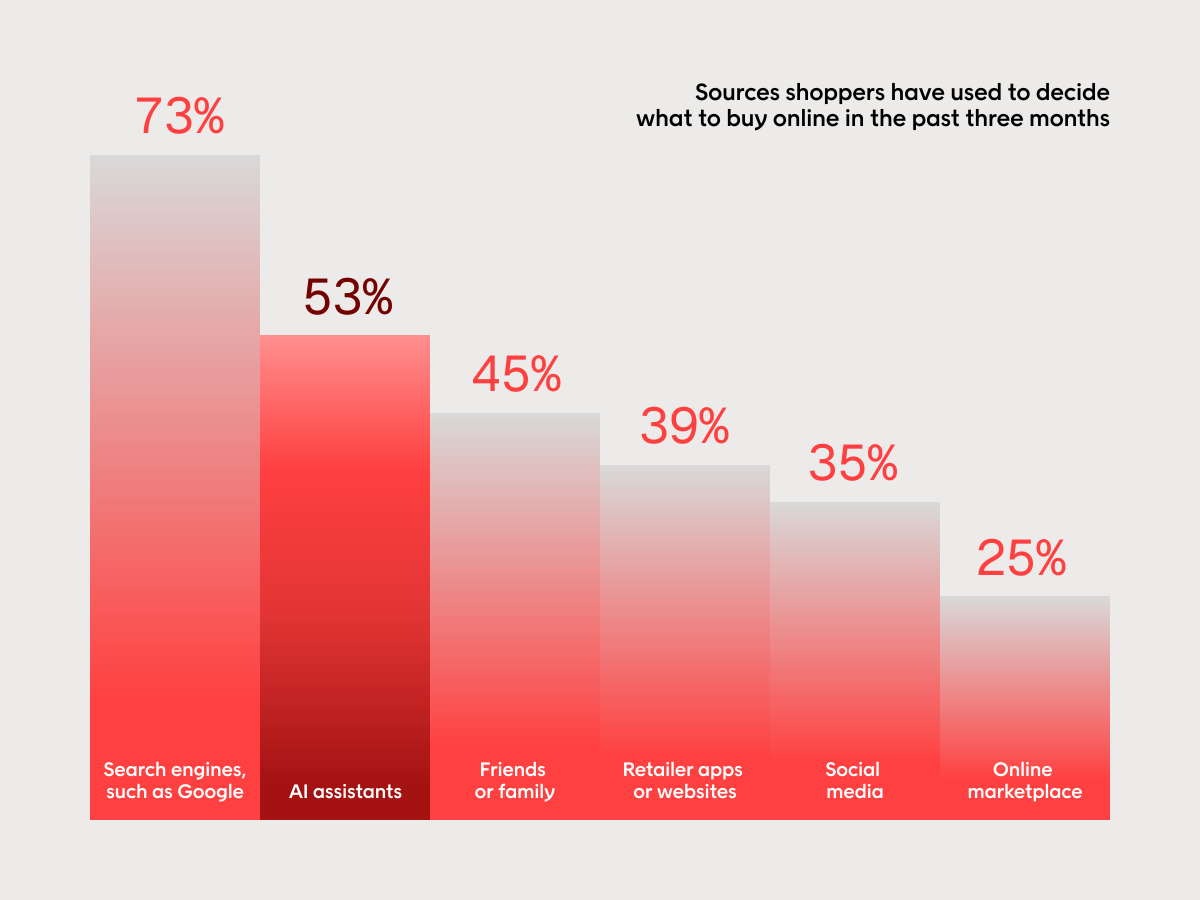
53% used AI assistants to decide what to buy online, ahead of friends or family (45%) and social media (35%).

Retailer websites still compete with AI as a place to start

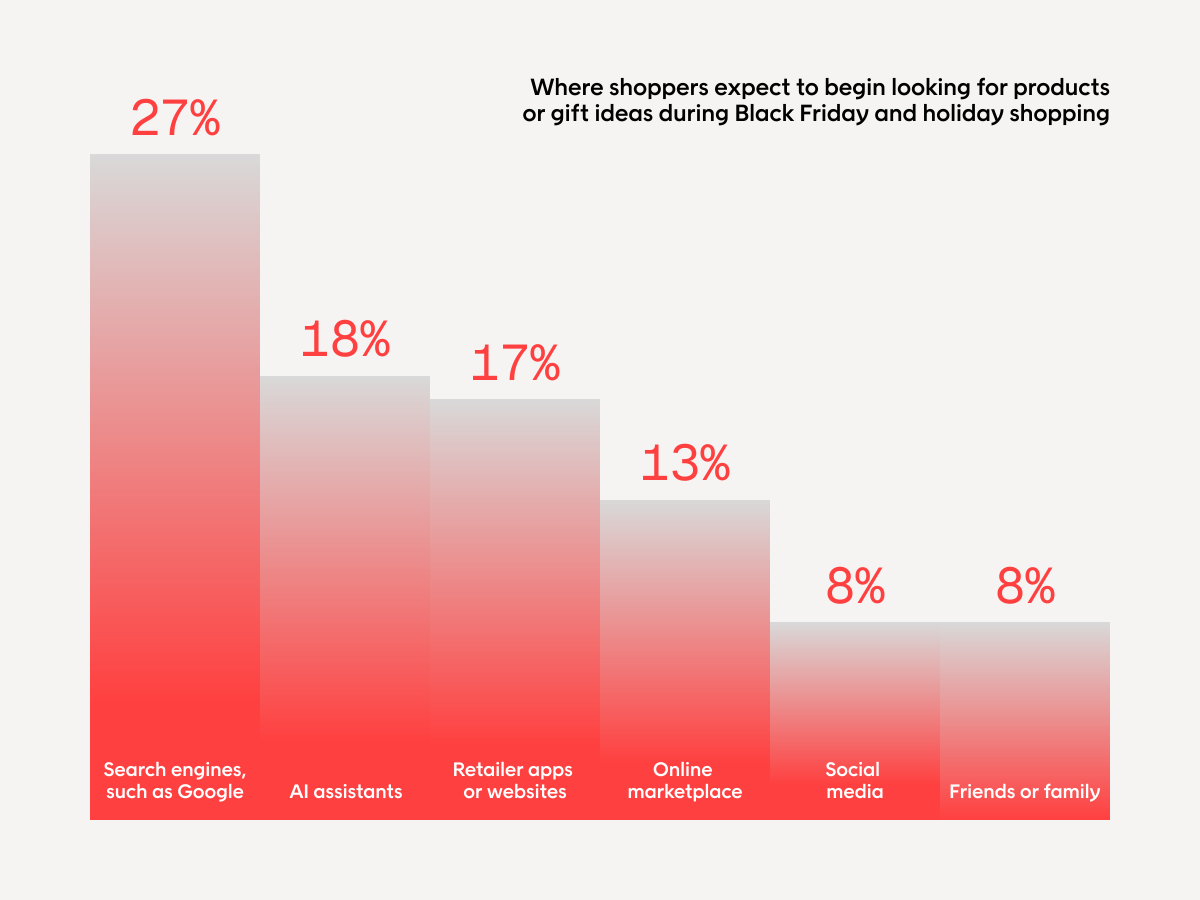
18% expect to start holiday shopping with AI, versus 17% with retailer websites or apps.

AI-assisted shoppers can arrive ready to buy

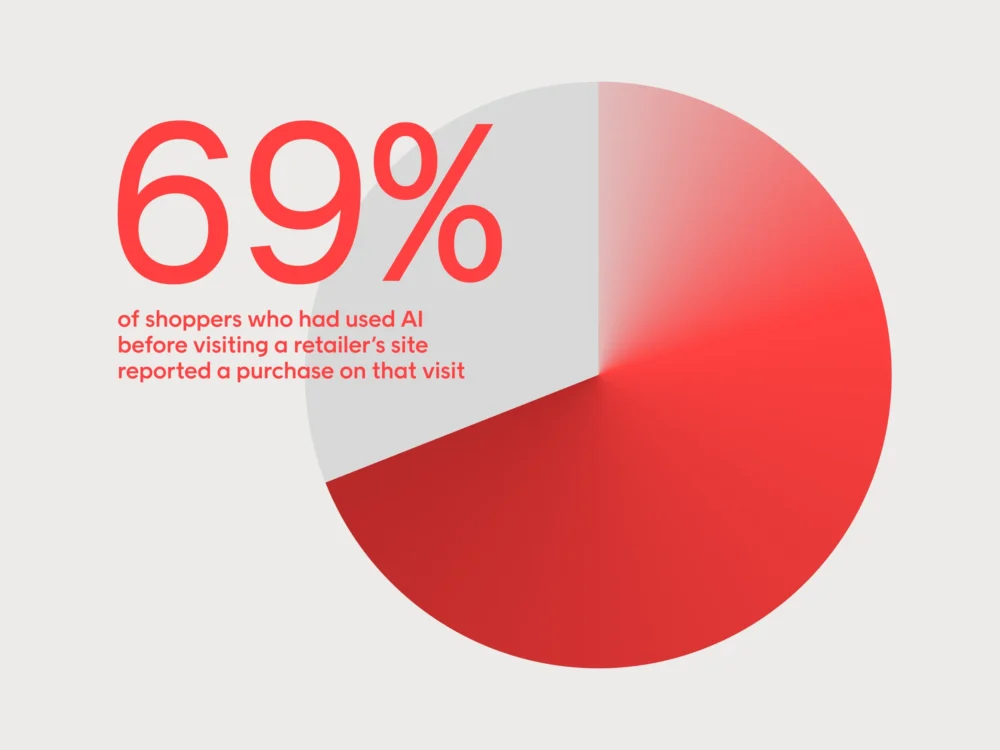
69% reported a purchase the last time they used AI to shop.

The product shoppers arrive for isn’t always what they buy

17% bought a different product than intended.

Shoppers take AI’s advice, but hold onto their wallets

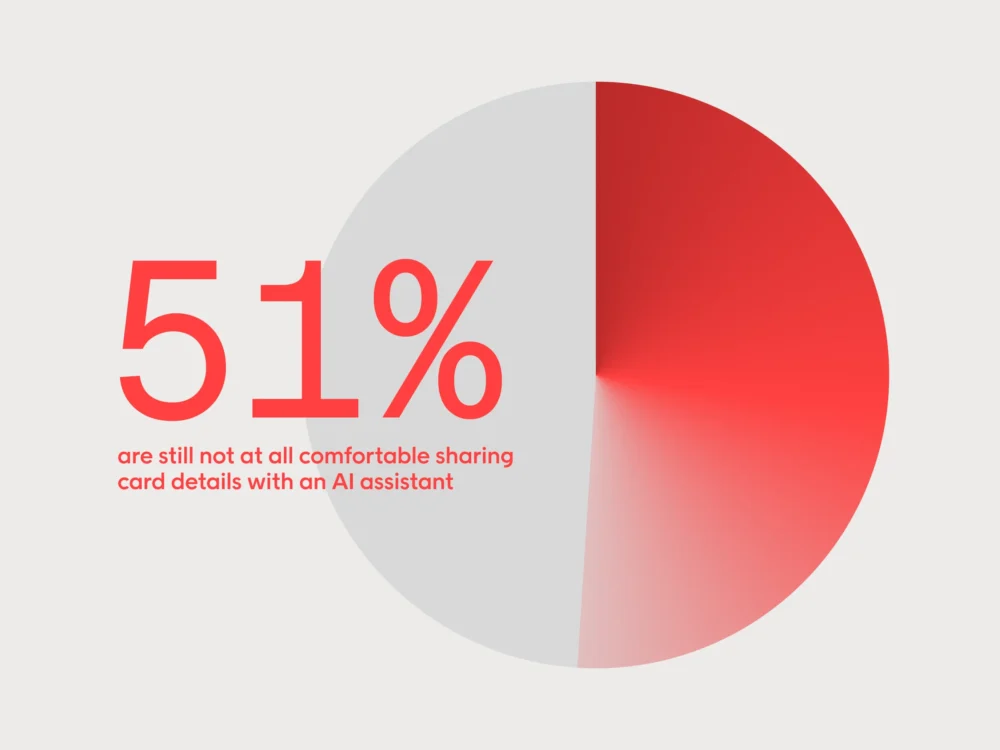
51% of consumers are not at all comfortable sharing credit card information with AI

Chart1
Section 1

AI has become a significant shopping adviser

AI is becoming the friendly adviser shoppers turn to when deciding what to buy. Among respondents asked which sources they had used to inform online purchase decisions in the previous three months, 53% selected AI assistants, ahead of friends or family at 45% and social media at 35%.

Chart2

Shoppers use AI to explore options

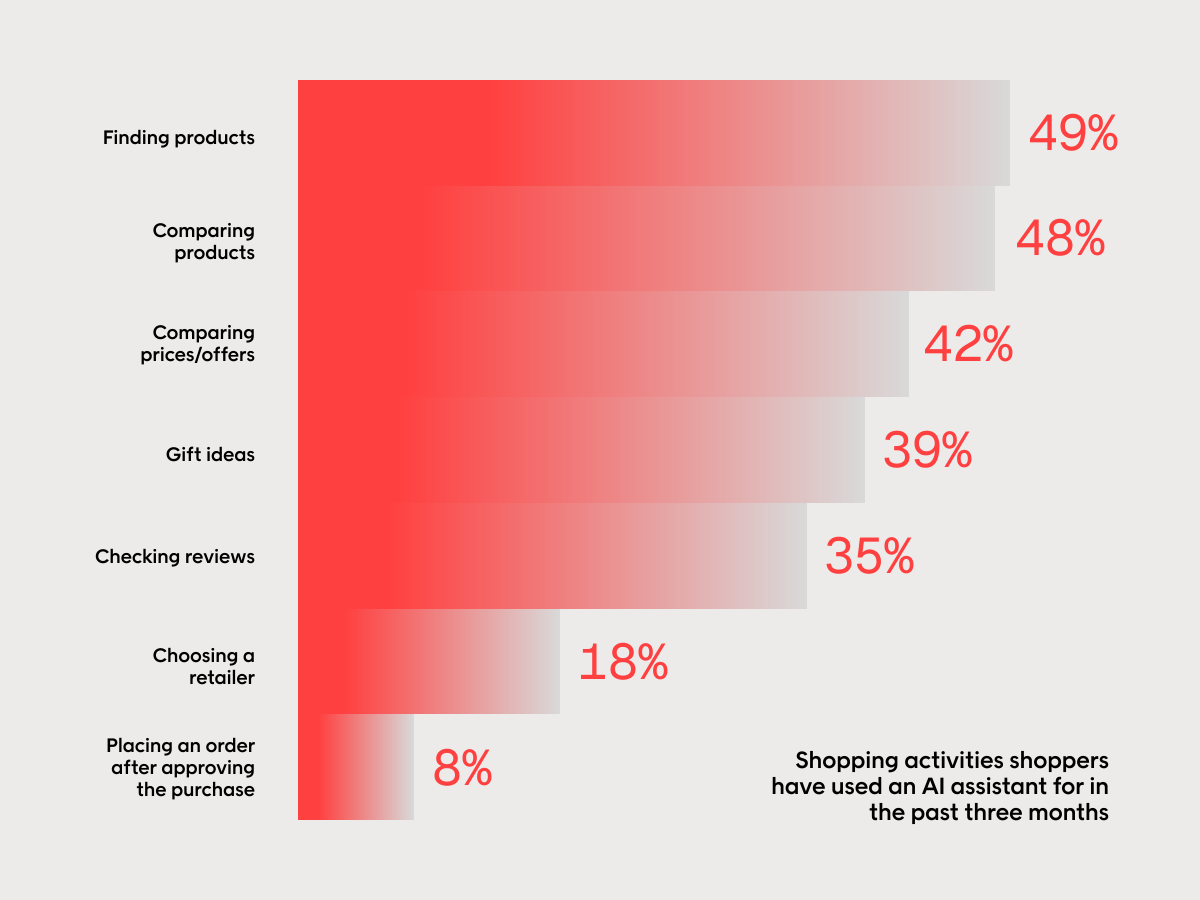
Retailers have another influential voice shaping whether their products make the shortlist. Shoppers are using AI to explore their options, with finding products and comparing products the most common reported shopping activities, at 49% and 48% respectively.

Pie1

Advice, yes. Card details, not yet.

Willingness to seek advice goes further than willingness to delegate the purchase. Just over half (51%) are not at all comfortable sharing credit card information with an AI assistant. AI can help shoppers decide what to consider, while leaving retailers an opportunity to earn the transaction.

The commercial opportunity extends beyond that first sale to growing customer lifetime value (CLV):

  • Once a shopper arrives, retailers can help them choose confidently and use what they learn about their needs to stay relevant afterward.
  • Useful recommendations, timely follow-ups, and meaningful loyalty benefits give customers reasons to return directly.
  • AI may make the introduction, but retailers have an opportunity to become the place shoppers choose to buy again.
Chart4
Section 2

Retailer websites still compete with AI as a place to start

AI is joining an established mix of shopping destinations. Search engines remain the leading expected starting point for Black Friday and holiday shopping at 27%. AI assistants and retailer websites or apps are roughly level in second place, at 18% and 17% respectively. Retailers need to compete for consideration on both fronts. They must earn a place on the shortlist shoppers build elsewhere while giving customers reasons to start directly on their website.

Chart6

Shoppers expect AI to answer price, gift and product questions, so retailers need to answer them on their own site

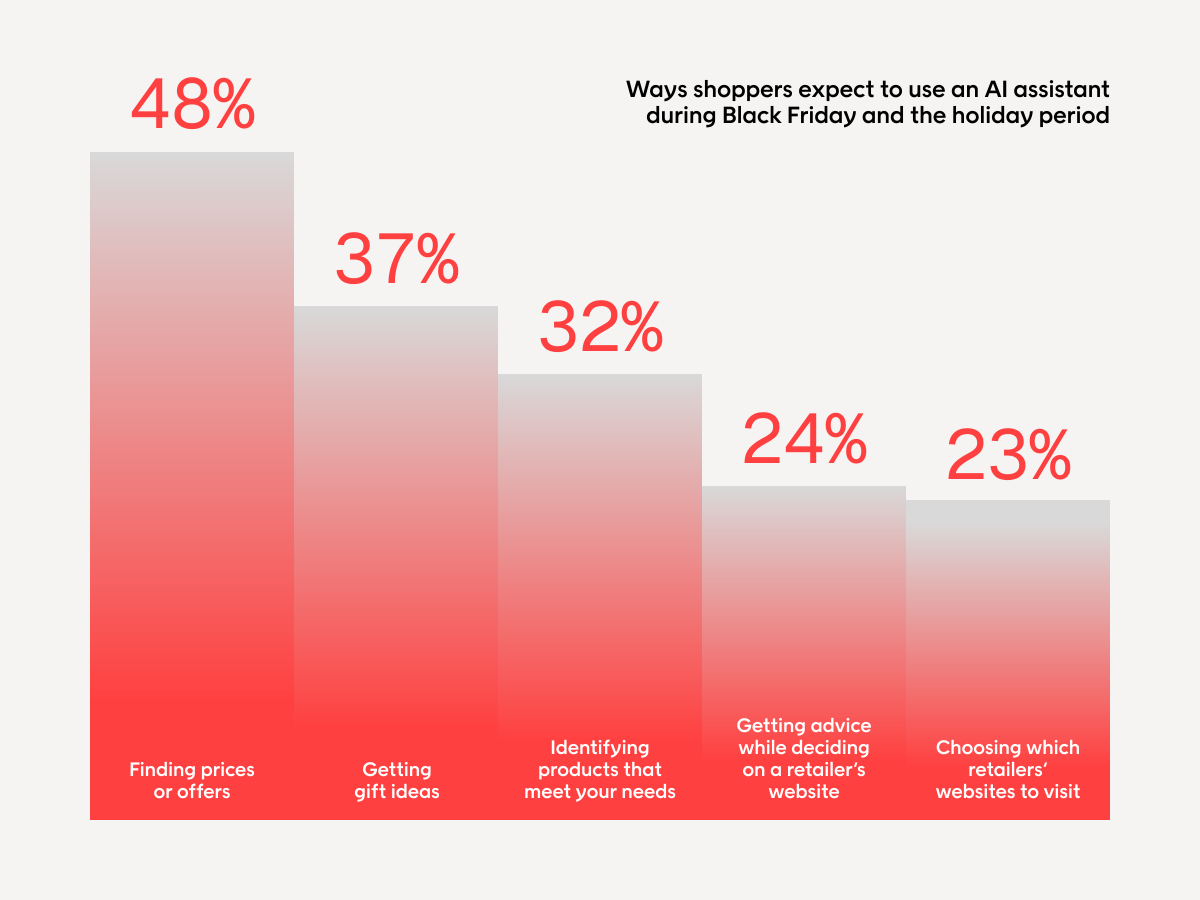
What shoppers expect to ask AI reveals how retailers can compete for that consideration. Finding prices or offers is the most selected holiday use at 48%, followed by getting gift ideas at 37% and identifying products that meet their needs at 32%. Shoppers are looking for both value and inspiration.

  • Product information needs to explain who an item suits and why.
  • Promotional information should make the price and offer conditions clear.
  • Relevant search, useful gift suggestions and easy-to-find offers can help shoppers explore the assortment directly.

By investing in a discovery experience that answers the questions shoppers would otherwise take elsewhere, retailers have an opportunity to become their starting point.

Chart8
Section 3

AI-assisted shoppers can arrive ready to buy

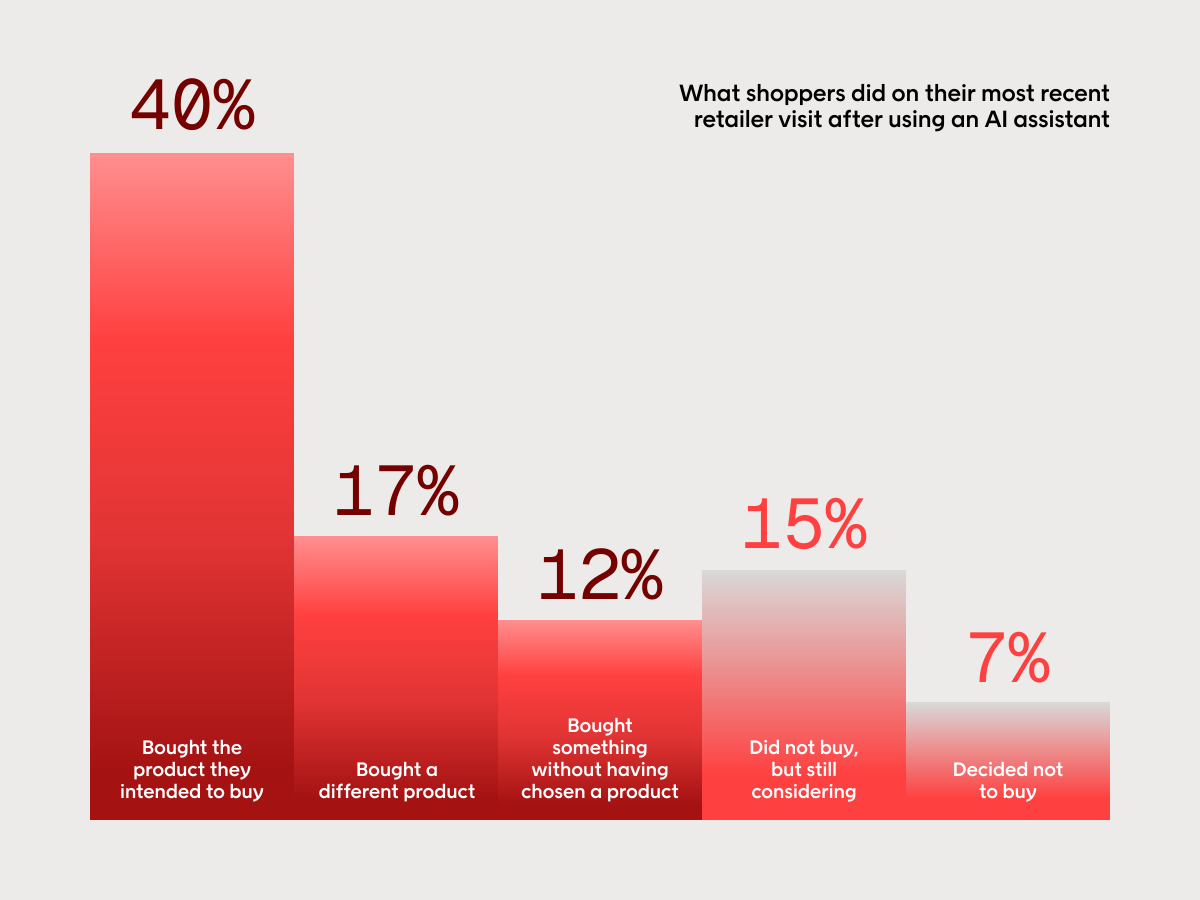
When asked about their most recent visit to a retailer’s website after using AI to help them shop, 40% of respondents said they bought the product they intended to buy. Another 17% bought a different product, while 12% arrived without a specific product in mind and bought something. A further 15% bought nothing on that occasion but were still considering a purchase.

  • These experiences suggest substantial purchase intent, although they do not provide a measured conversion rate for AI referrals.
  • Some shoppers arrive to confirm a choice. Others still need help deciding. Retailers need to support both.
Pie2

Continue the conversation on your site

Retailers have long served shoppers whose discovery began elsewhere. Conversational AI changes the experience those shoppers may arrive from. Someone who has explained their needs, budget and preferences to an AI assistant has already put effort into narrowing their options. The retailer’s website should help them continue exploring those needs.

  • Together, 69% of shoppers who used AI before visiting a retailer’s site reported a purchase.
  • A conversation that starts with AI should be able to continue with the retailer.
  • The commercial opportunity is to carry that initial research forward into a confident purchase.

Retailers need to bridge the gap between conversational discovery and onsite shopping by helping customers express what they need, refine their search and find products that meet their requirements.

Bank

“Retailers can take encouragement from these findings, but they still have work to do. A shopper may arrive with a recommendation and plenty of unanswered questions. Helping them resolve those questions, or find something better suited to them, is how you earn the purchase.”

– Bank Bergström, CEO at Nordic Nest Group

Chart10
Section 4

The product shoppers arrive for isn’t always what they buy

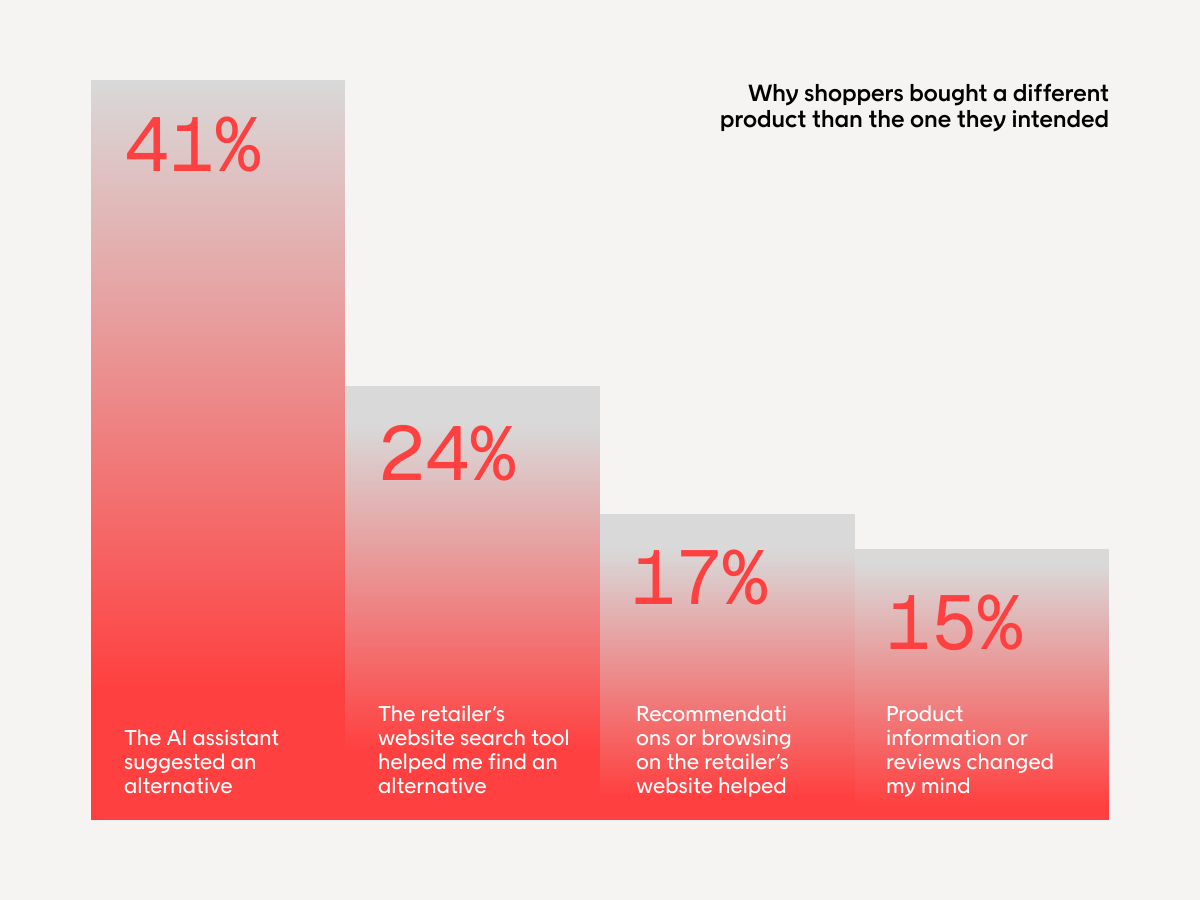
An AI recommendation leaves room for the retailer to influence the final choice. Of respondents asked about their most recent retailer-site visit after using AI to help them shop, 17% bought a different product from the one they intended to buy.

  • Among those who switched, 41% cited an alternative suggested by AI.
  • The retailer’s website also helped shape the decision: 24% credited its search tool, 17% onsite recommendations or browsing, and 15% product information or reviews.
Chart11

Help shoppers evaluate alternatives with confidence

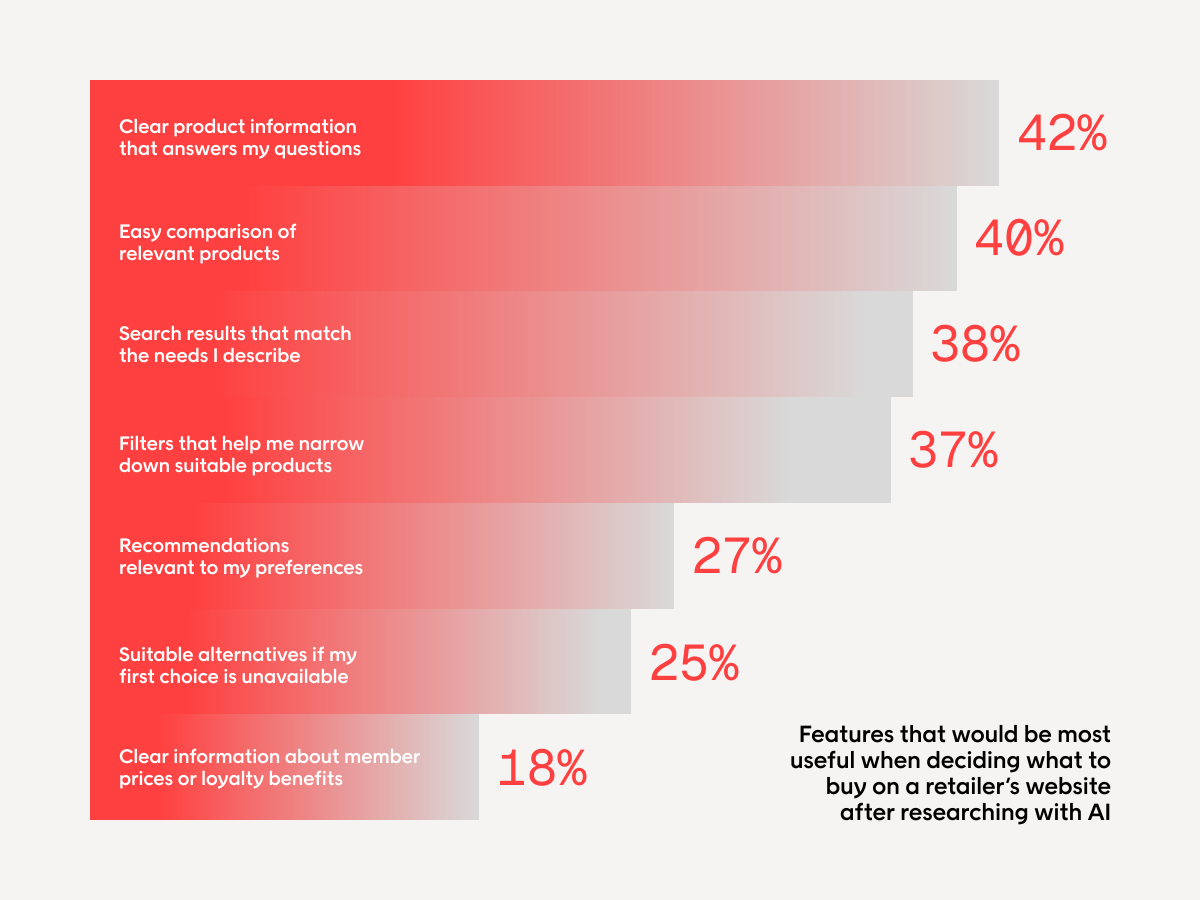
Retailers have an opportunity to help shoppers find alternatives that better suit their needs. What matters is how easily shoppers can evaluate those options. Asked which onsite features would help them decide what to buy after researching with AI, respondents most often selected clear product information at 42%, followed by easy comparison at 40%. Search results matching the needs they describe and filters that narrow down suitable options followed at 38% and 37%.

These findings give retailers a practical direction. Help shoppers understand the differences between products, narrow the assortment around their requirements and find a suitable alternative when the first choice falls short. A shopper may arrive with a recommendation, but the experience on the retailer’s website can still shape what goes into the basket.

ellie

“A shopper arriving with a product in mind is still worth helping to explore. If the first option falls short, the next suitable product should be easy to find. That’s an opportunity for retailers to demonstrate how well they understand what the customer needs.”

– Ellie Lansley, Ecommerce Trading Manager, French Connection

Pie1
Section 5

Shoppers take AI’s advice, but hold onto their wallets

Payment information draws an even firmer boundary. Half of respondents, 51%, are not at all comfortable sharing credit card details with an AI assistant. For retailers, that hesitation creates an opening to earn the transaction and build a direct relationship with the customer.


Chart13

Shoppers check the full bill before buying

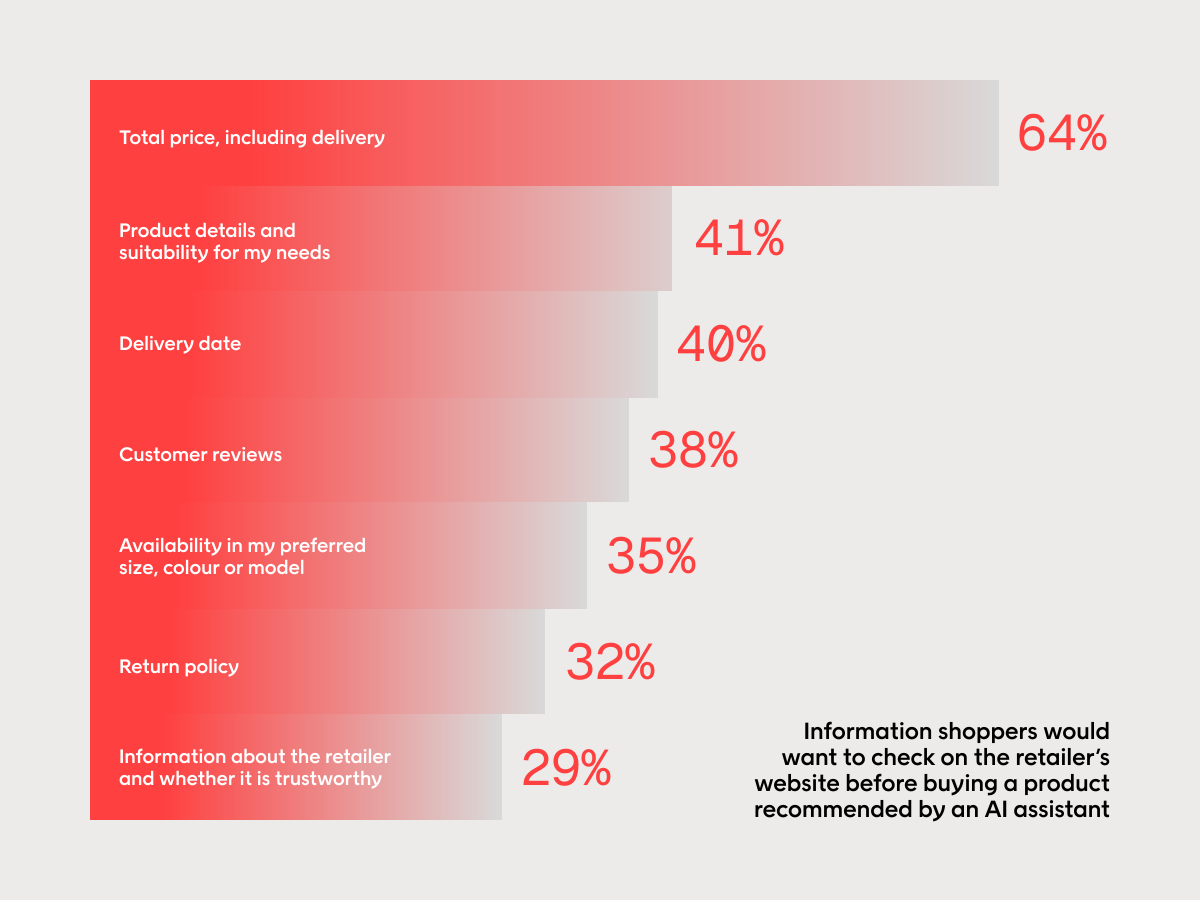
Shoppers also want to verify the recommendation before committing. Asked what they would check on the retailer’s website before buying an AI-recommended product, 64% selected the total price including delivery. Product details and suitability followed at 41%, and delivery date at 40%.

AI may recommend the product, but shoppers still want the retailer to confirm the bill. Their reasons for checking could include missing delivery charges, a price that has changed or uncertainty about the recommendation. Whatever prompts the check, the retailer has a valuable moment to resolve doubts and help the shopper decide.

Consumer hesitation becomes a commercial advantage when the retailer helps resolve it. Make the full cost clear, give shoppers the information they need to judge suitability and show when the product will arrive. The opportunity is to make the customer confident enough to buy.


gavin

“AI can put one of our rain jackets on someone’s shortlist, but a cyclist still wants to know: will it keep me dry, and which size fits over what I wear? That’s where we win the sale, with clear product information and honest reviews from other riders. And the relationship really starts after checkout, with useful advice on wearing and caring for the product.”

– Gavin Appel, E-commerce Manager, AGU

Conclusion

The next visit is the real prize

Shoppers’ hesitation to hand AI purchasing control gives retailers an opening. What retailers do with it will matter more than the hesitation itself. AI can help consumers decide what to consider, while the retailer still has an opportunity to shape the purchase and earn a lasting customer relationship. As AI takes a greater role in discovery, retailers should prepare to turn those introductions into relationships they can sustain. AI may help someone find a product today. The retailer’s opportunity is to become their first choice tomorrow.

Get found in AI

That requires attention to the whole journey. Accurate, accessible product information helps shoppers evaluate products during external discovery. Retailers need to make sure what AI tells shoppers about their products is correct and complete, because that is where the decision starts.

Win the visit

Once they arrive, relevant search, suitable alternatives and clear prices help them choose confidently. Retailers need to bridge the gap between the advice shoppers receive elsewhere and the experience they find on the website.

Earn the repeat

The longer-term opportunity is to grow CLV. What a customer buys and the preferences they share can help retailers stay useful after checkout through relevant advice, timely replenishment reminders and meaningful loyalty benefits. Each interaction should give the customer a reason to return directly.