TL;DR
A retail customer experience platform connects store, e-commerce, loyalty, and engagement data so your team can create more relevant customer experiences across every channel.
Use the eight capabilities in this guide to narrow 15 platforms down to three or four strong options. If you manage CRM, customer loyalty, or CX for an omnichannel retailer, focus on unified profiles, native loyalty, AI, activation, POS integration, multi-market support, governance, and measurement.
Choosing the right retail customer experience platform shapes how well your team can connect customer data, loyalty, and activation across store and online experiences.
Voyado’s Retail Radar, based on 440 million transactions, found that 73% of market revenue came from customers engaged with loyalty and retention communications.
The right platform helps you act on that data faster, personalize in real time, and close the loop with customers who provide feedback. The wrong setup leaves you with manual syncs, delayed data, and fragmented touchpoints.
This guide compares 15 platforms using eight practical criteria, so you can build a shortlist that fits your retail business.
Evaluation framework: 8 key components of a retail customer experience platform
The right platform should make everyday work easier while improving customer satisfaction, loyalty, and long-term retail success.
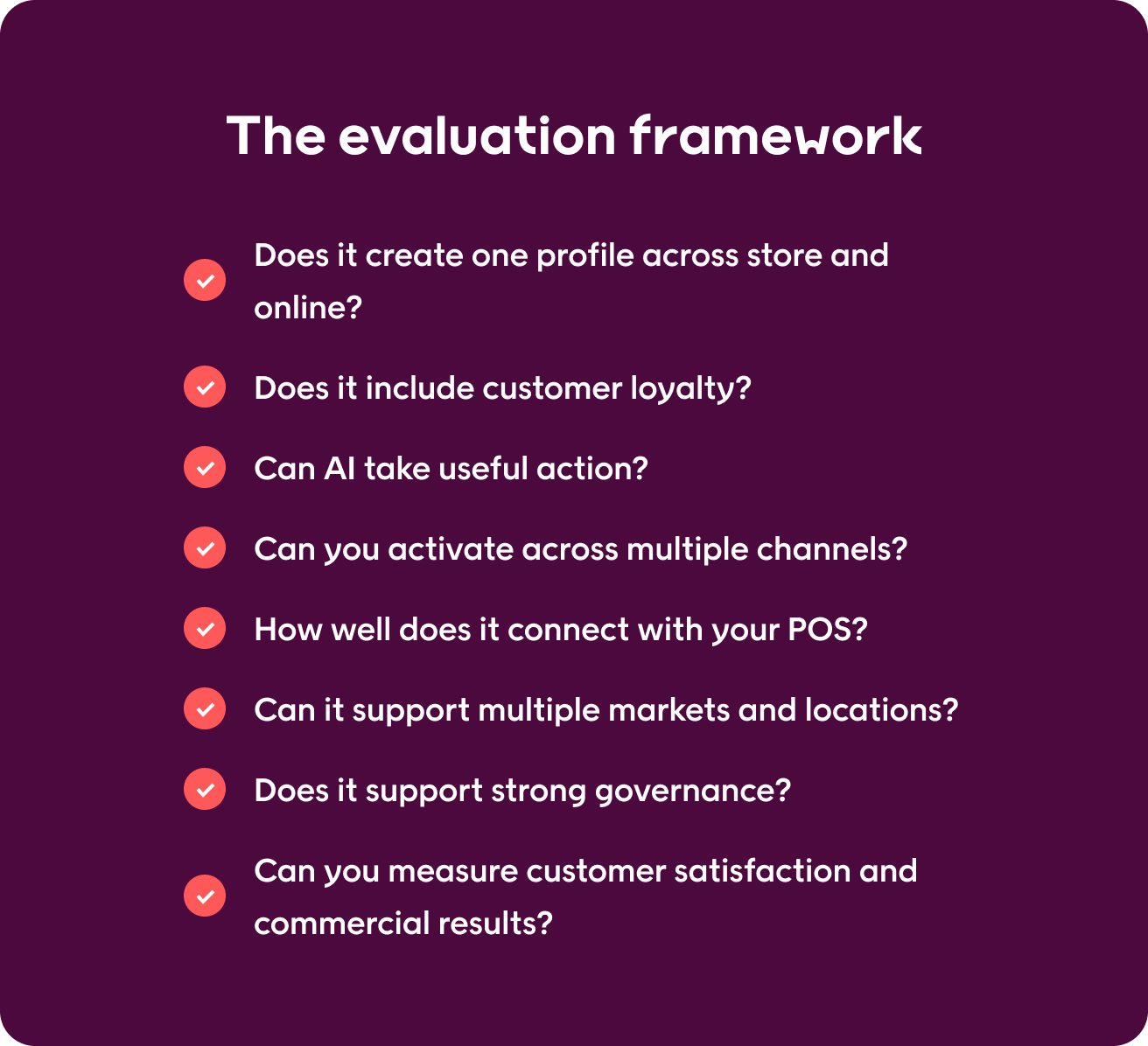
1. Does it create one profile across store and online?
Look for a platform that connects POS transactions, e-commerce activity, purchase history, loyalty status, and interactions in one profile.
Unified customer data helps you understand what customers need across digital and physical touchpoints. It also means online shopping and physical stores no longer look like separate customer journeys.
The retail experience is the sum of every touchpoint a customer has with your brand. Customers expect those interactions to connect smoothly as they move between online and offline channels.
2. Does it include customer loyalty?
Check whether points, tiers, rewards, and triggers are native or depend on another system.
A built-in customer loyalty platform can make it easier to recognize loyal customers and use loyalty activity in personalized experiences. Your team spends less time moving information between digital tools.
3. Can AI take useful action?
AI should do more than produce predictive insights for your team to review.
Look for tools that can build segments, optimize journeys, detect meaningful trends, and recommend or take approved actions. Some platforms also use machine learning or natural language processing to simplify complex tasks.
If AI is part of your shortlist, understanding agentic AI in customer experience will help you ask vendors what their AI can actually do.
4. Can you activate across multiple channels?
Customers expect a connected retail experience across email, SMS, websites, apps, service, and stores.
Check whether one profile can support experiences across multiple channels. This matters for cart reminders, personalized follow-ups, buy online, pick up in-store (BOPIS), and loyalty rewards.
5. How well does it connect with your POS?
Your platform should recognize what happens in physical stores, not only what happens online.
Fast POS integration gives marketing teams, service teams, and sales associates a more complete view of customer behavior. That can help them deliver exceptional service based on recent purchases, preferences, and loyalty activity.
6. Can it support multiple markets and locations?
Retail businesses operating across several countries need more than translation.
Check support for local consent, currencies, permissions, reporting, and each customer’s preferred language. Local teams should have enough freedom to work without creating separate business processes for every market.
7. Does it support strong governance?
More automation makes governance more important.
Look for consent controls, retention policies, role-based permissions, approval workflows, and clear data collection rules. This helps your business stay in control while using customer information for personalization.
8. Can you measure customer satisfaction and commercial results?
Your reporting should go beyond opens and clicks.
Look for CLV, repeat purchases, retention, conversion rates, revenue attribution, and loyalty performance. Customer feedback such as NPS and CSAT can also help track customer sentiment and overall satisfaction.
Happy customers are also more likely to recommend a retailer, return, and contribute to long-term revenue growth.
These eight questions give you a practical way to compare retail customer experience solutions without getting lost in feature lists.
Feature comparison table: retail customer experience platforms at a glance
Use this table to spot which platforms meet your core requirements before you look more closely at the trade-offs.
| Platform | Unified retail profile | Native loyalty | Agentic AI | Omnichannel activation |
| Voyado | ✓ Native | ✓ Native | ✓ Native | ✓ Native |
| Salesforce Retail Cloud | ✓ Native | ✓ Native | ✓ Native | ✓ Native |
| Adobe Experience Platform | ✓ Native | Via integration | ✓ Native | ✓ Native |
| SAP Engagement Cloud | ✓/integrated | Via integration | Partial | ✓ Native |
| Bloomreach | ✓ Native | Via integration | ✓ Native | ✓ Native |
| Ometria | ✓ Native | Via integration | ✓ Native | ✓ Native |
| Optimove | ✓ Native | Partial | ✓ Native | ✓ Native |
| Braze | ✓ Native | Via integration | ✓ Native | ✓ Native |
| Insider One | ✓ Native | Via integration | ✓ Native | ✓ Native |
| Oracle Unity Data Platform | ✓ Native | Via integration | Partial | Via integration |
| Klaviyo | ✓ Native | Partial/integrated | ✓ Native | ✓ Native |
| Yotpo | Partial | ✓ Native | Partial | Partial |
| Antavo | ✓ Native | ✓ Native | ✓ Native | Via integration |
| Qualtrics | Partial | Via integration | ✓ Native | Partial |
| Medallia | Partial | Via integration | Partial | Partial |
“Via integration” isn’t automatically a drawback. It means you need to understand what another system adds and how much work your team will need to manage it.
15 retail customer experience platforms compared
Each platform approaches retail customer experience differently. Use this comparison to narrow your shortlist based on the capabilities your business needs most.
1. Voyado
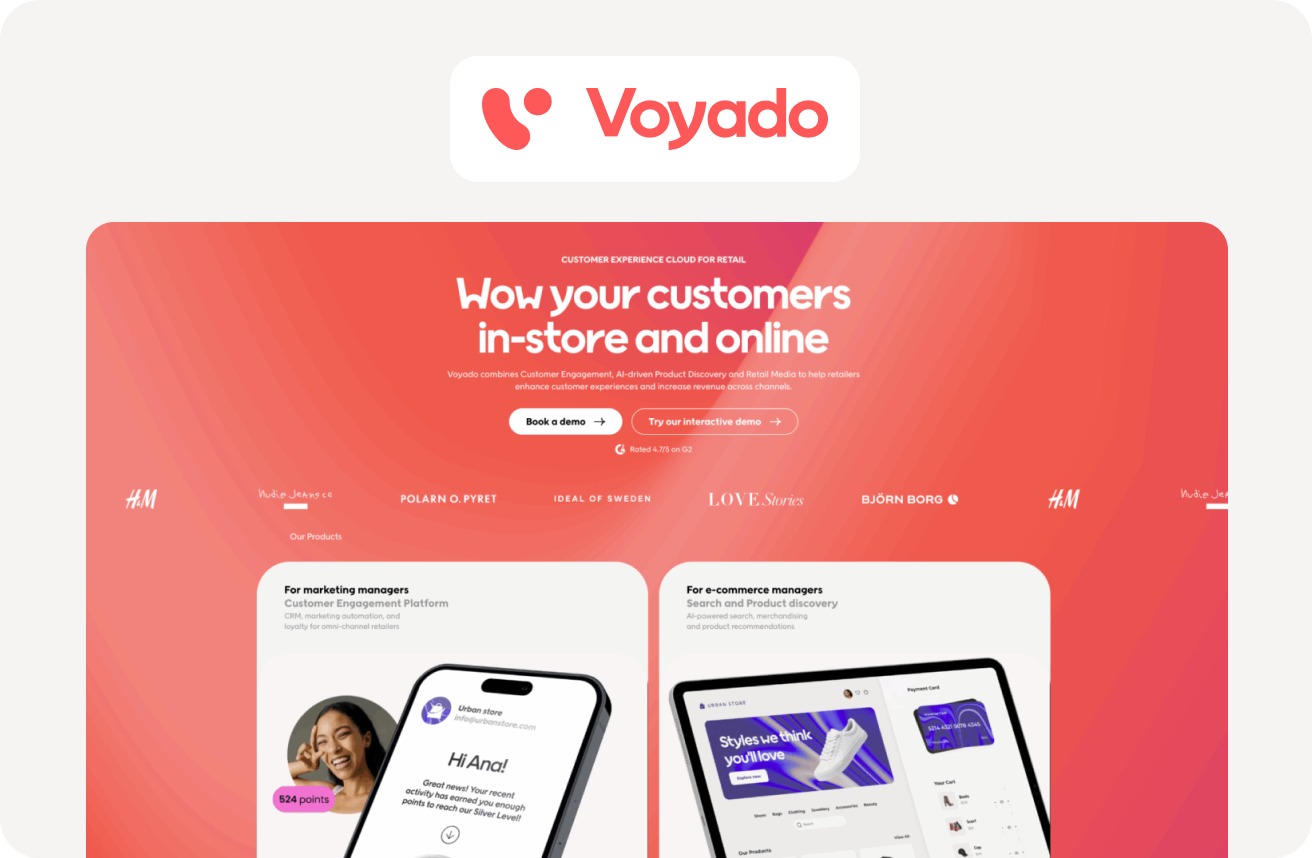
Voyado is built for omnichannel retail. It combines unified customer profiles, native loyalty, marketing automation, and personalization in one platform.
Its retail-specific approach means customer behavior, purchase history, loyalty activity, and campaign engagement can work together without relying on separate systems. Voyado also includes retail-trained AI to help teams automate campaign work and use customer information more effectively.
This makes it useful when you want loyalty to influence personalization across digital and physical retail experiences.
Best fit: Mid-market and enterprise omnichannel retailers that want customer profiles, native loyalty, and activation closely connected.
Trade-off: Its retail specialization makes it less relevant for businesses outside retail and e-commerce.
Pricing: Voyado uses a fixed platform fee plus usage-based pricing, depending on the products and volumes included.
2. Salesforce Retail Cloud
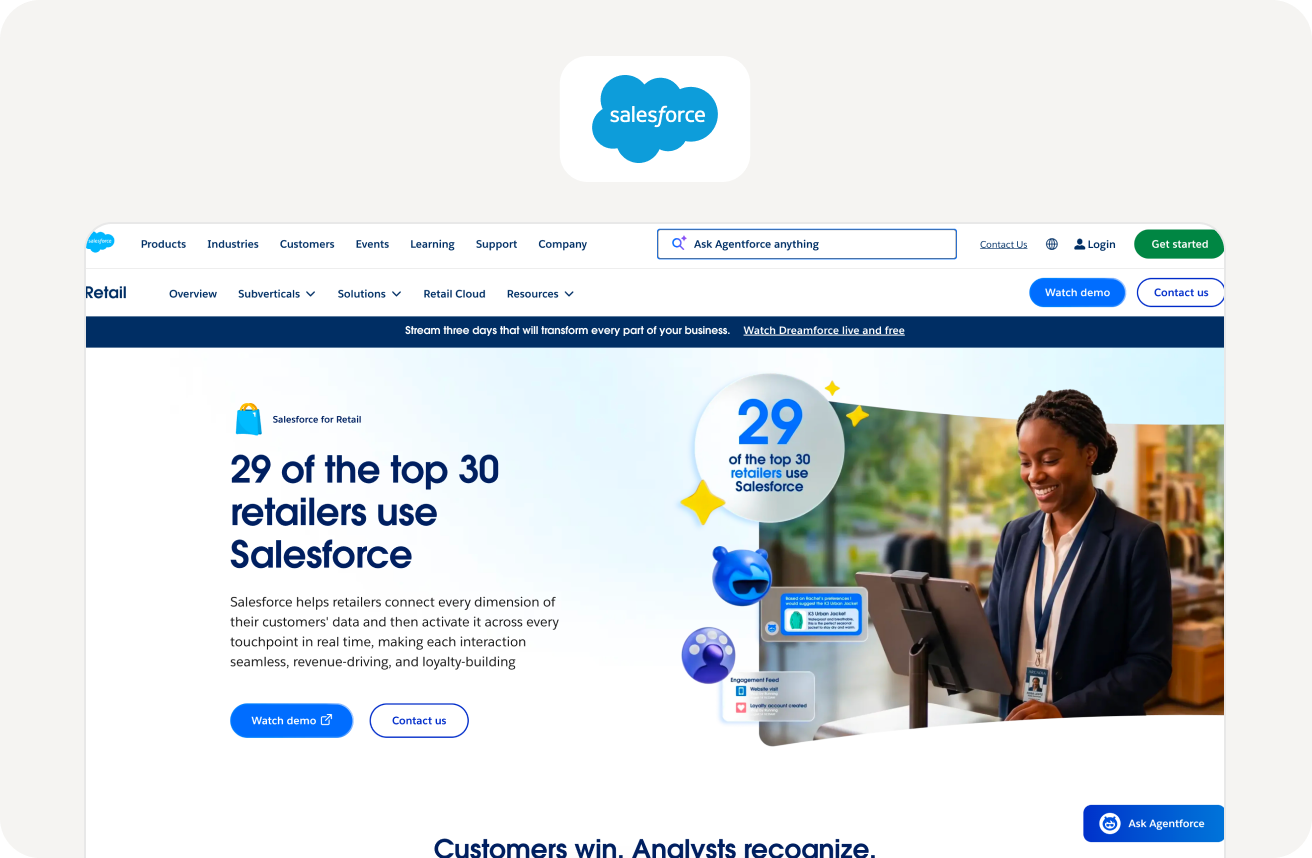
Salesforce Retail Cloud brings together retail data, commerce, service, loyalty, POS, marketing, and AI across the Salesforce ecosystem.
Its breadth suits complex retail businesses that want connected customer and store operations. It can also support AI-led service and shopping experiences, including conversational AI.
That can appeal to teams already using Salesforce CRM, commerce, service, or marketing products.
Best fit: Large retailers already using Salesforce or planning a broad enterprise setup.
Trade-off: The range of Salesforce products can mean more configuration and implementation work than a focused platform. You may also need several products to cover the full customer experience.
Pricing: Depends on the Salesforce products and services included.
3. Adobe Experience Platform
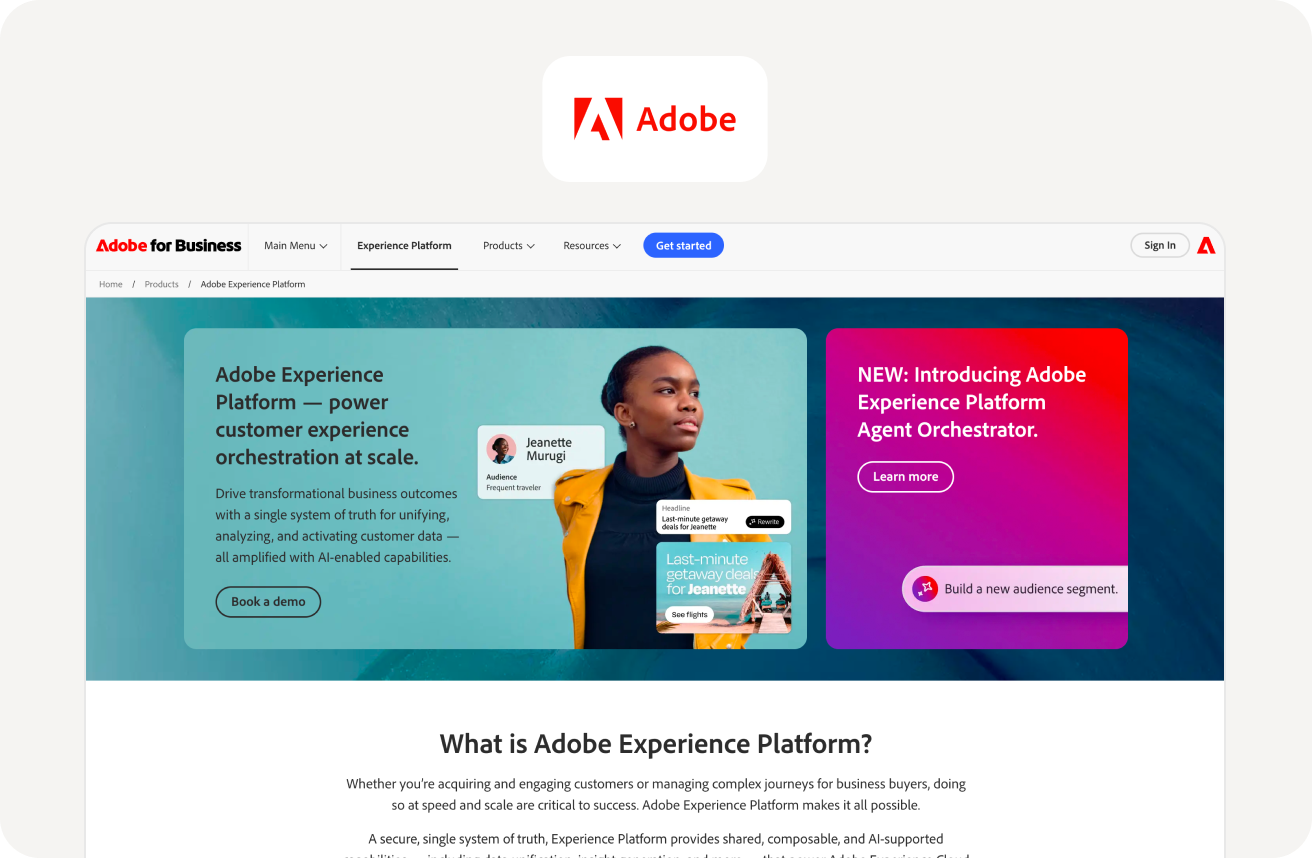
Adobe Experience Platform creates real-time profiles for segmentation, personalization, analysis, and activation across Adobe products.
It works well for retailers already relying heavily on Adobe and needing a strong, cross-channel data foundation.
Retailers can connect profiles to analytics, journey orchestration, content, and personalization to deliver complex digital customer experiences at scale.
Best fit: Enterprise retailers with mature digital and data teams, especially those already invested in Adobe.
Trade-off: Retail-specific loyalty and some physical touchpoints may depend on other Adobe products or integrations.
Pricing: Custom enterprise pricing.
4. SAP Engagement Cloud
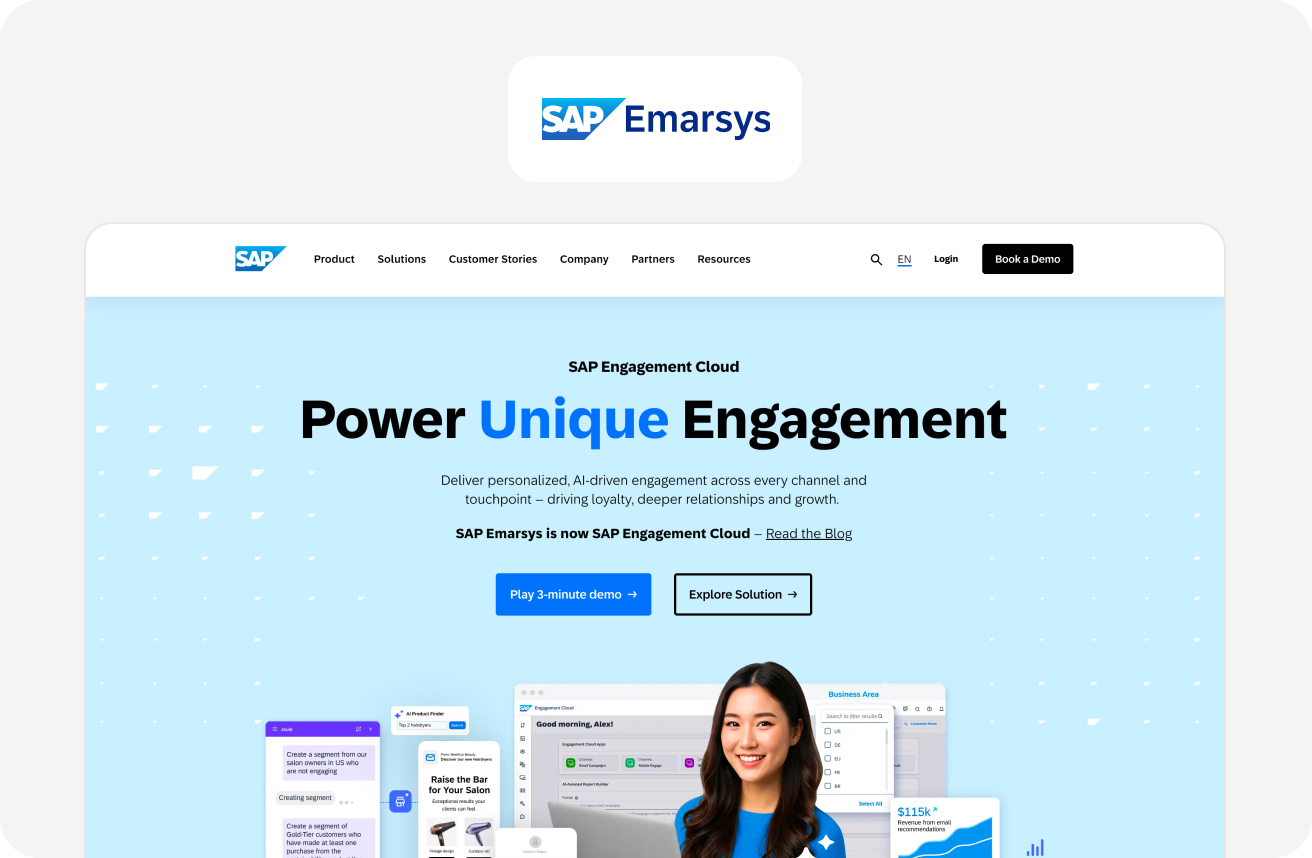
SAP Engagement Cloud, formerly SAP Emarsys, supports personalized interactions across email, mobile, SMS, web, and other channels.
It combines automation, segmentation, analytics, and enterprise controls, while other SAP products support additional data and loyalty needs.
For existing SAP customers, customer engagement can sit alongside commerce and other enterprise systems instead of becoming another disconnected part of the stack.
Best fit: Large, multi-market retailers, especially existing SAP customers.
Trade-off: Some key components sit elsewhere in the SAP ecosystem, so buyers should check which capabilities require additional products or integrations.
Pricing: Price upon request.
5. Bloomreach
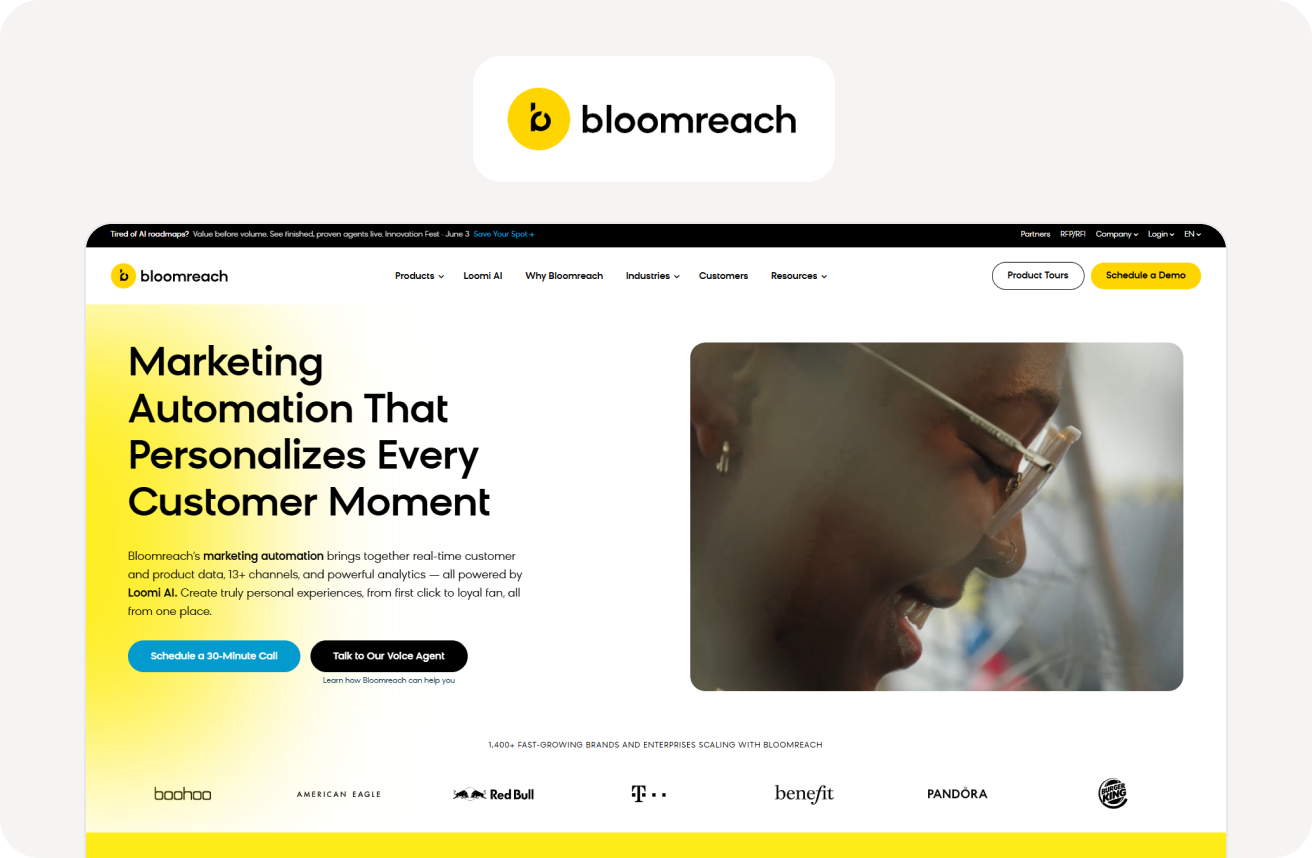
Bloomreach combines customer and product information with automation and AI-powered personalization.
Its strength is connecting behavioral, transactional, and product signals to personalized digital customer experiences. This makes it useful for retailers focused on marketing personalization and product discovery.
Best fit: Retail and e-commerce teams focused on digital personalization, recommendations, and product discovery.
Trade-off: Native loyalty isn’t a core part of the platform, so complex loyalty programs may require another tool.
Pricing: Custom annual pricing based on products and usage.
6. Ometria
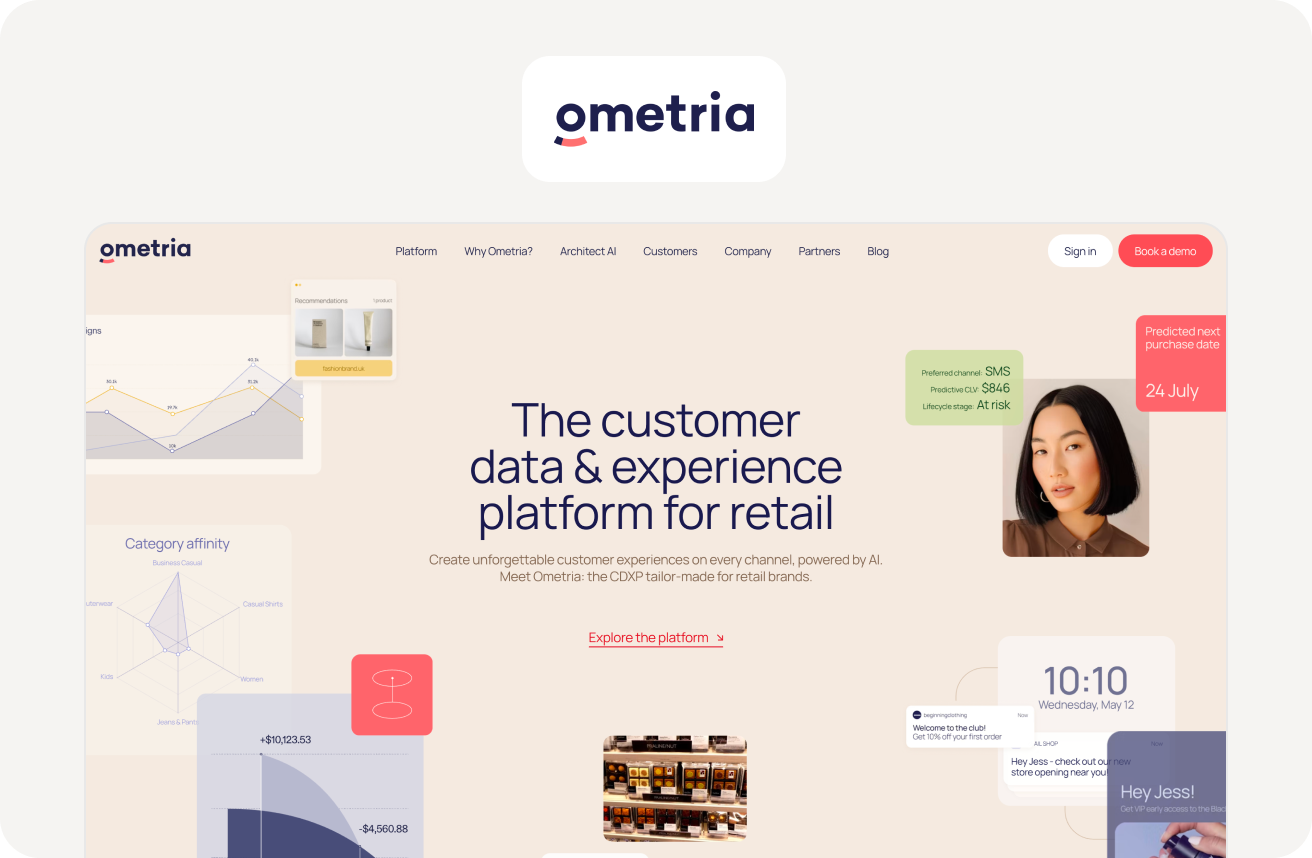
Ometria is a customer experience management platform built for retail.
It connects e-commerce, POS, loyalty, app, and support information for segmentation, campaigns, and cross-channel personalization. Its AI also helps retail marketing teams automate work.
Ometria is designed around behaviors such as purchases, product affinity, lifecycle stages, and repeat buying.
Best fit: Retailers looking for retail-specific profiles, segmentation, and marketing activation.
Trade-off: Loyalty information can feed Ometria, but loyalty management may remain in another system.
Pricing: Public list pricing isn’t provided.
7. Optimove
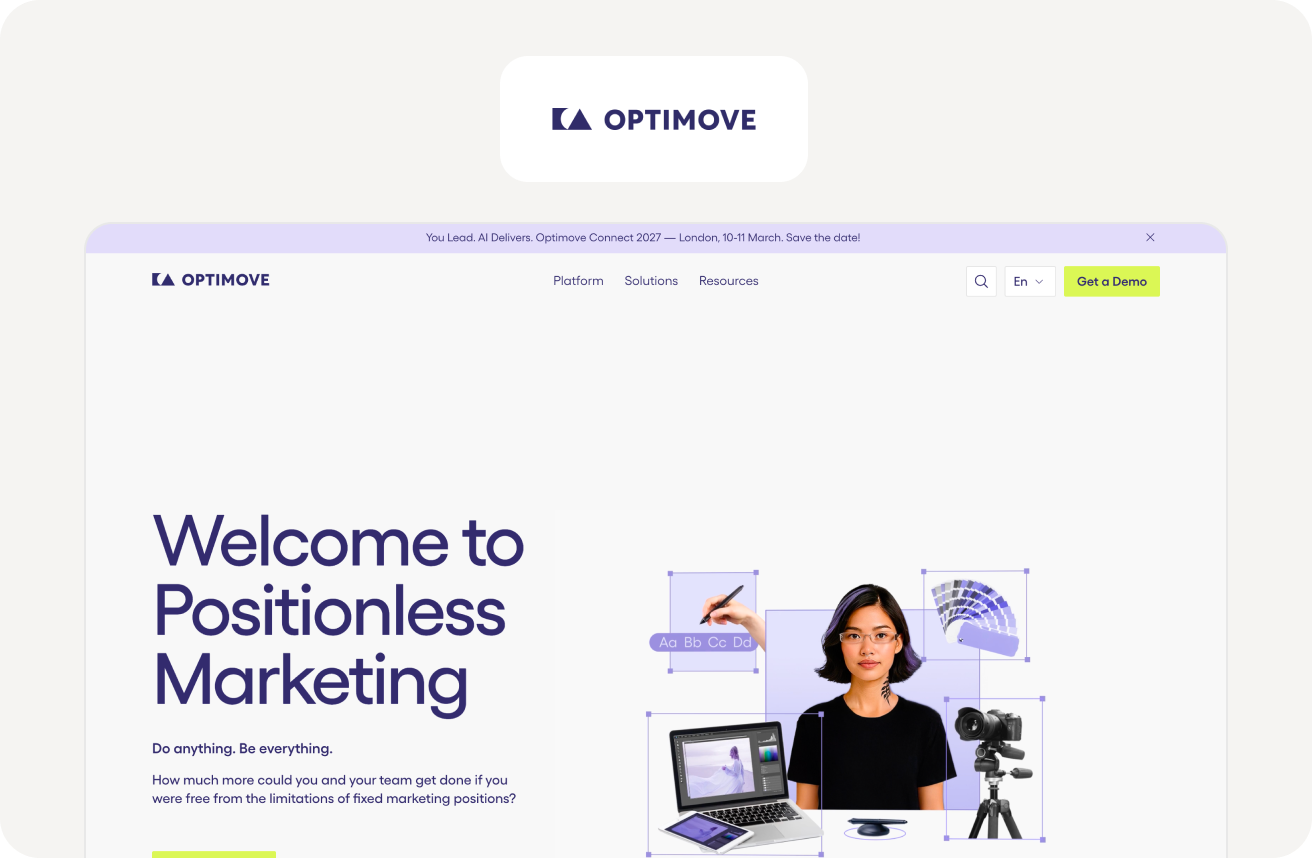
Optimove combines transactional, behavioral, predictive, POS, and e-commerce information to personalize communication.
Predictive analytics help teams identify customer needs and choose relevant messages, offers, or actions. This supports more targeted retention and next-best-action decisions.
It can be especially useful for teams with enough customer history to benefit from predictive modeling rather than relying only on fixed segments.
Best fit: Retailers with large datasets and advanced personalization, retention, and predictive analytics needs.
Trade-off: Complex loyalty requirements may still depend on another system.
Pricing: Public list pricing isn’t provided.
8. Braze
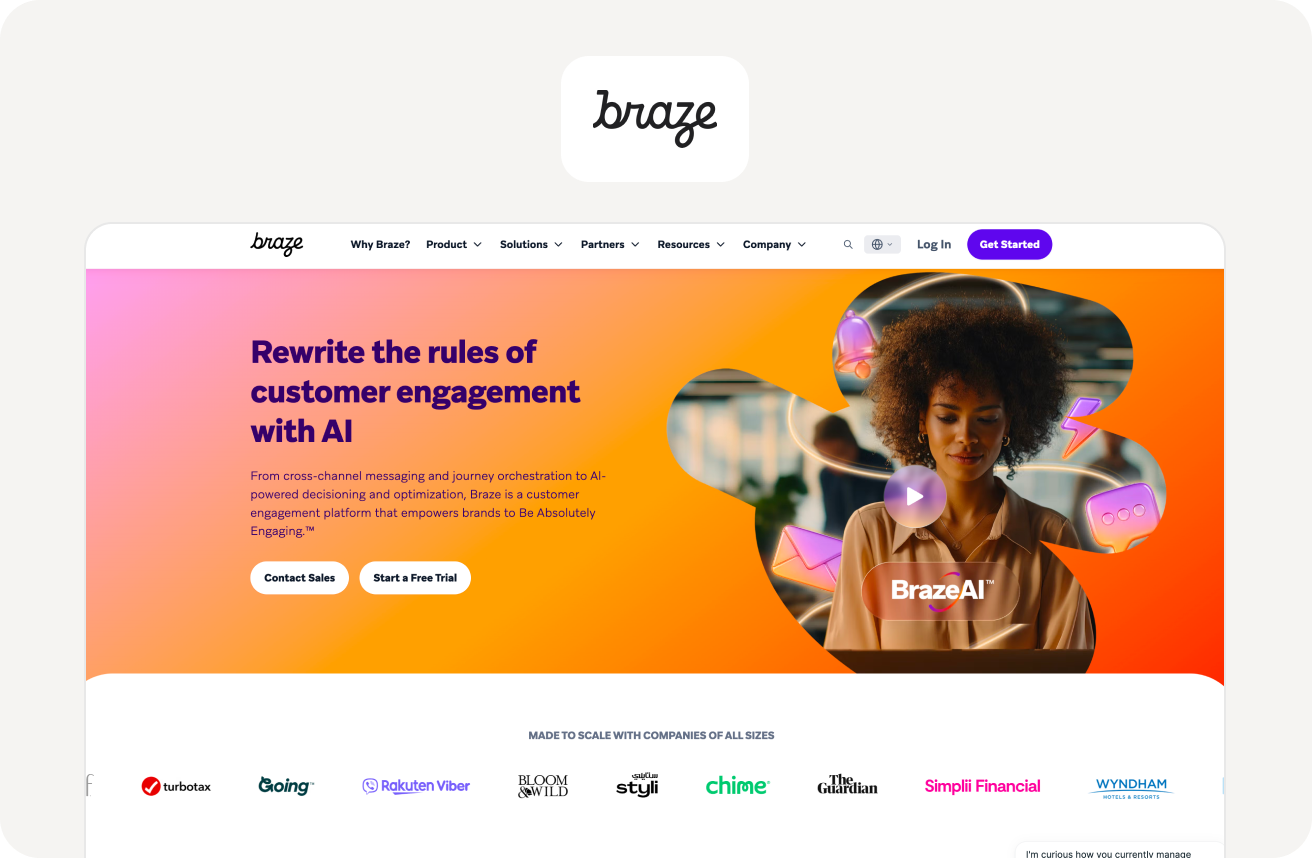
Braze focuses on real-time cross-channel communication across email, SMS, push, WhatsApp, apps, and other digital channels.
It can react quickly to behavior for experiences such as cart recovery, post-purchase communication, and timely product messages.
Best fit: Retailers with strong mobile, app, and digital engagement needs.
Trade-off: Native loyalty and some in-store capabilities sit outside the core platform.
Pricing: Platform editions are available, with pricing based on the required setup.
9. Insider One
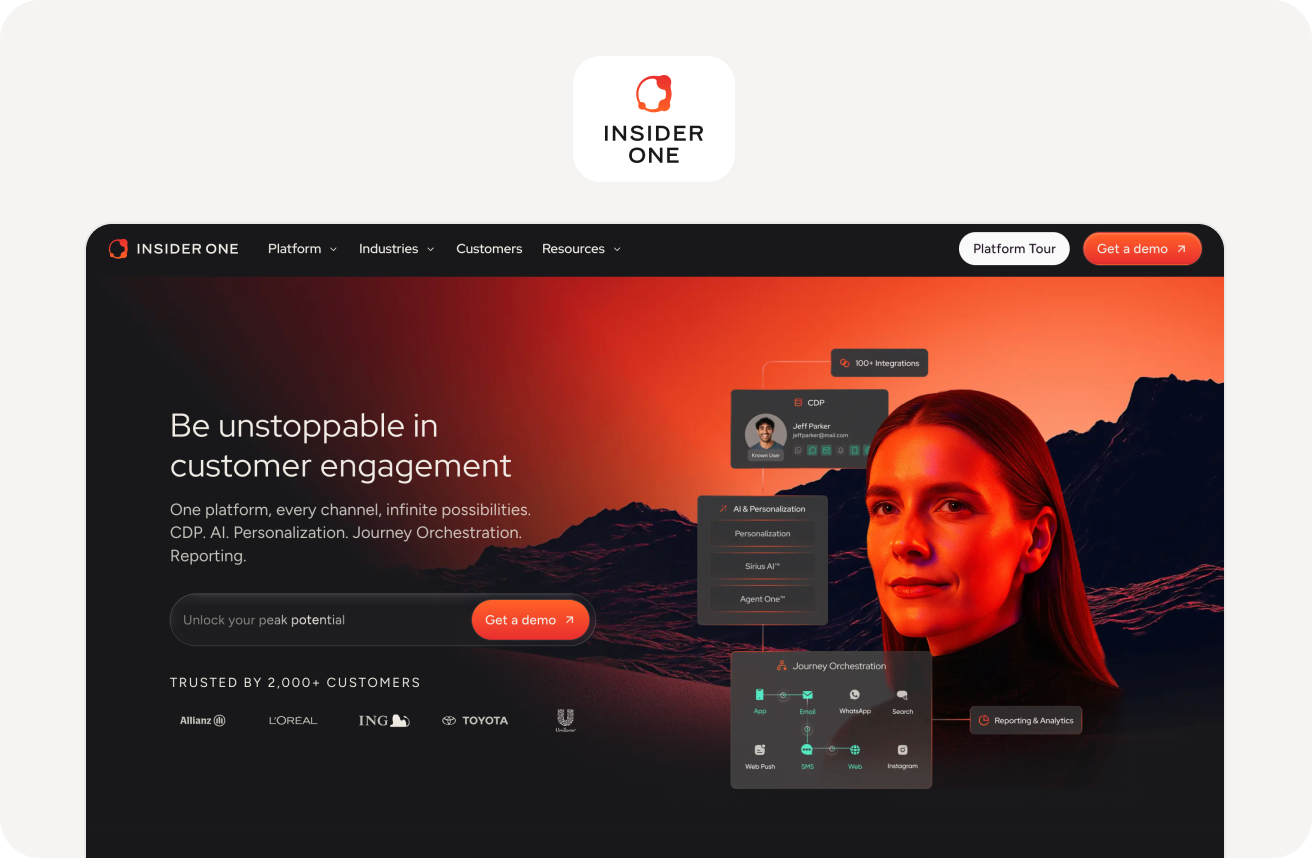
Insider One combines profiles, journey orchestration, personalization, and AI across digital channels.
Its 2026 acquisition of Bluecore adds more retail customer and product intelligence, strengthening its fit for personalized messaging and product experiences.
Best fit: Enterprise retailers focused on digital personalization, product recommendations, and cross-channel journeys.
Trade-off: Check how deeply your POS and existing loyalty technology can connect if stores are central to your retail experience.
Pricing: Public list pricing isn’t provided.
10. Oracle Unity Data Platform
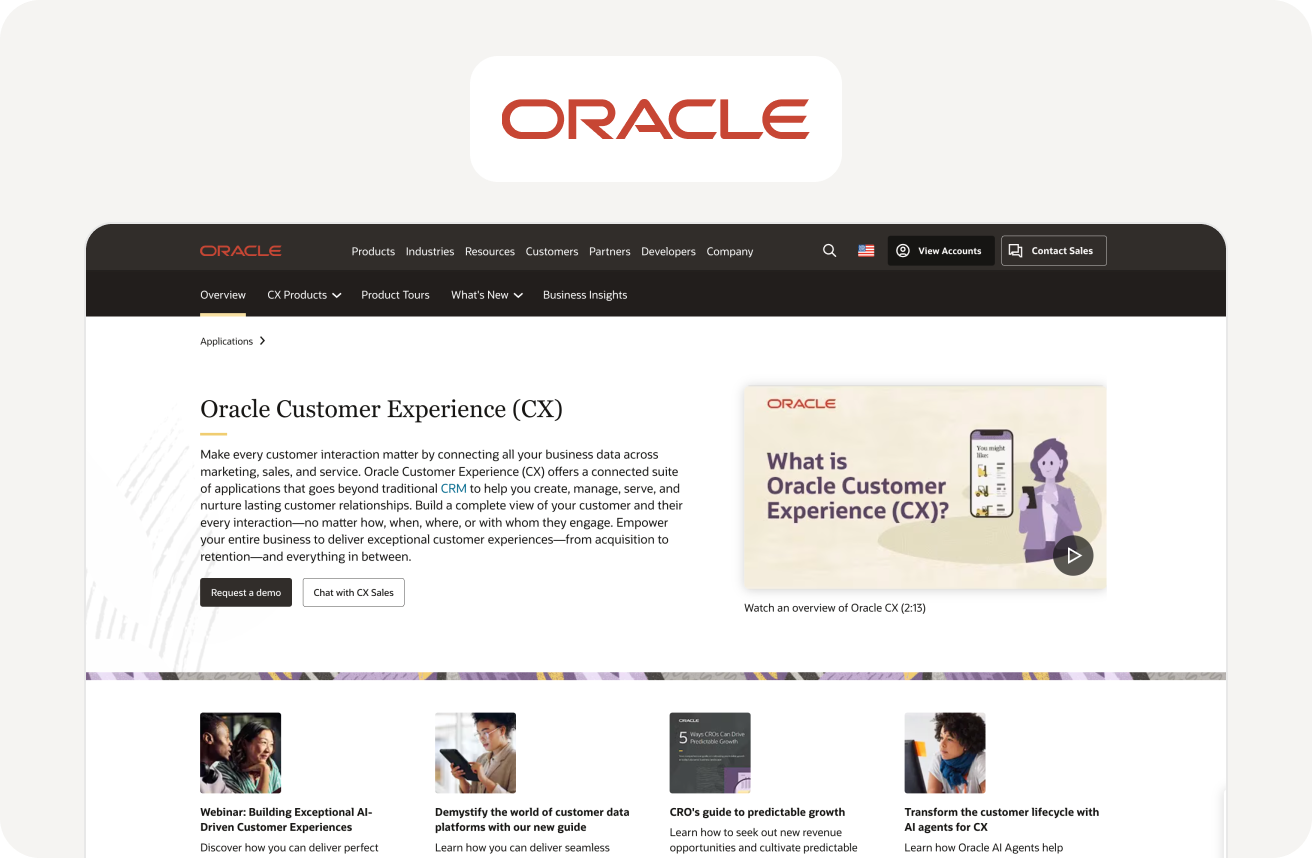
Oracle Unity Data Platform creates unified customer profiles from information held across an enterprise.
It supports identity resolution, segmentation, governance, and activation across the Oracle ecosystem. Its value is strongest when fragmented customer information limits personalization and consistent customer experiences.
Best fit: Large retail businesses with complex data environments and existing Oracle technology.
Trade-off: Unity is primarily a data foundation. You may need other tools for loyalty, messaging, and direct activation.
Pricing: Custom enterprise pricing.
11. Klaviyo
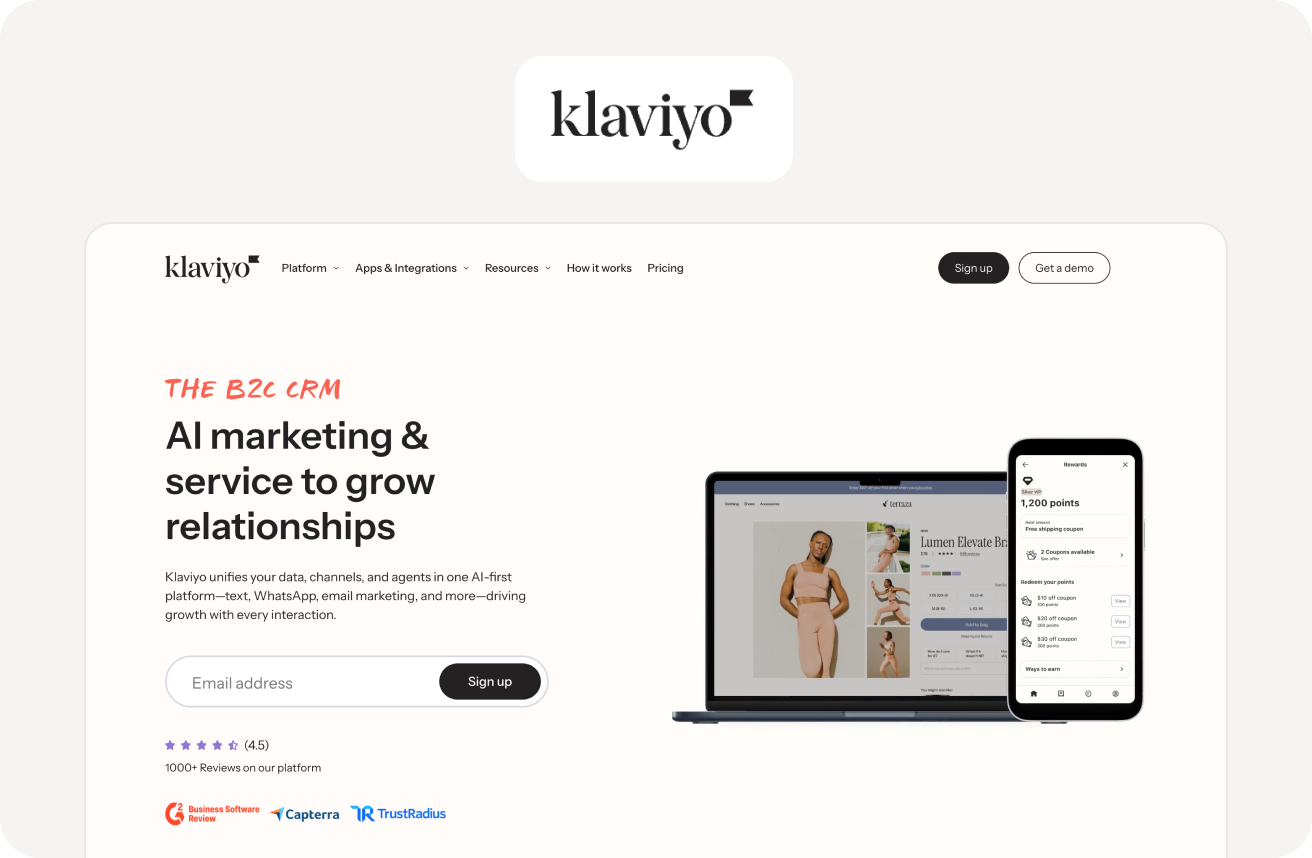
Klaviyo combines profiles with email, SMS, mobile messaging, analytics, automation, and service tools.
Its service features include helpdesk support and case management, helping support teams work with more useful customer context.
Best fit: E-commerce-led and growing omnichannel retailers that want accessible marketing, automation, and service tools.
Trade-off: Complex enterprise loyalty and in-store requirements may require additional technology.
Pricing: A free plan is available, with paid pricing based on profiles, messaging, and selected products.
12. Yotpo
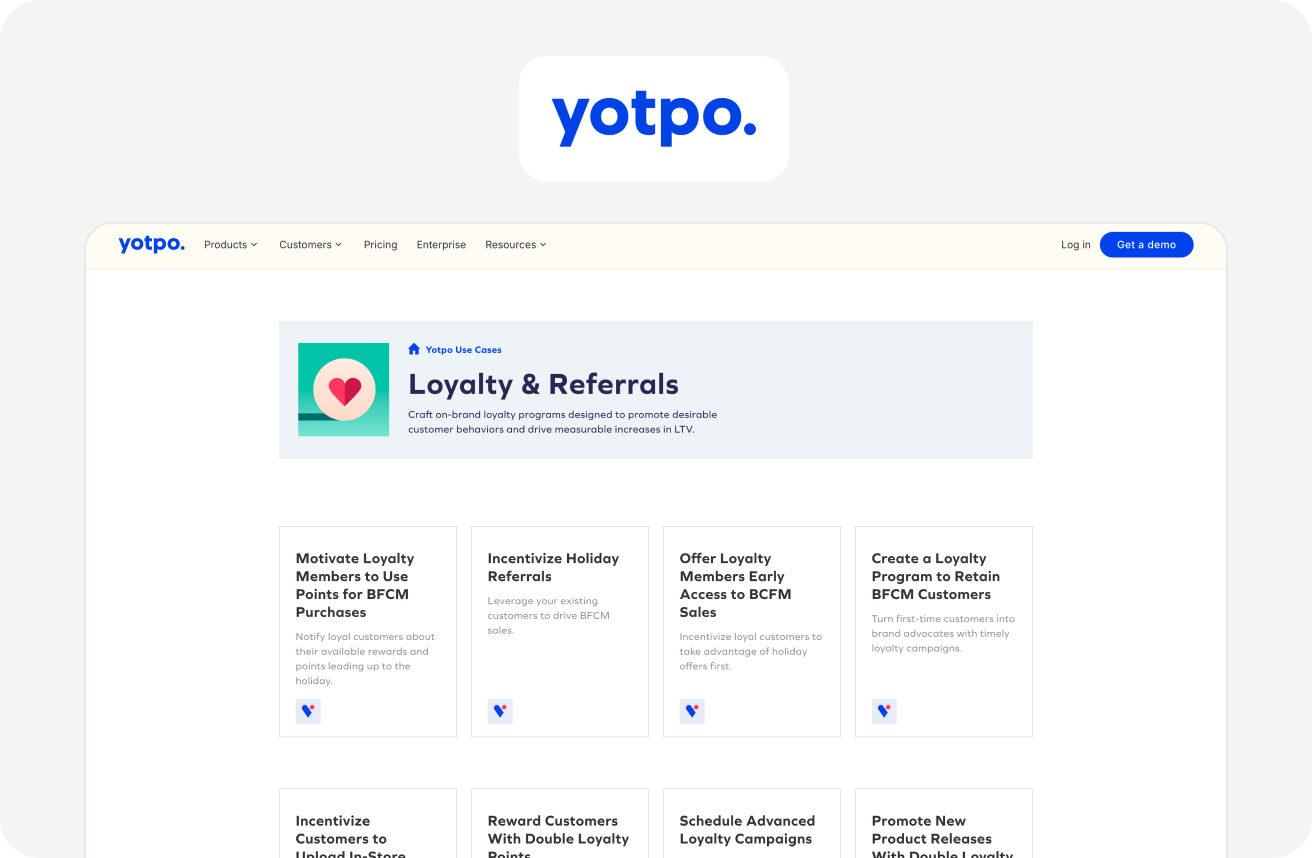
Yotpo is strongest in loyalty and retention.
Its tools cover points, rewards, referrals, VIP tiers, and in-store earning and redemption through supported POS integrations.
Best fit: Retailers that want loyalty at the center of their retention strategy.
Trade-off: Broader journey orchestration, customer profiles, and marketing activation usually depend on integrations.
Pricing: A free loyalty plan is available. Pro starts at $199 per month, while higher tiers use custom pricing.
13. Antavo
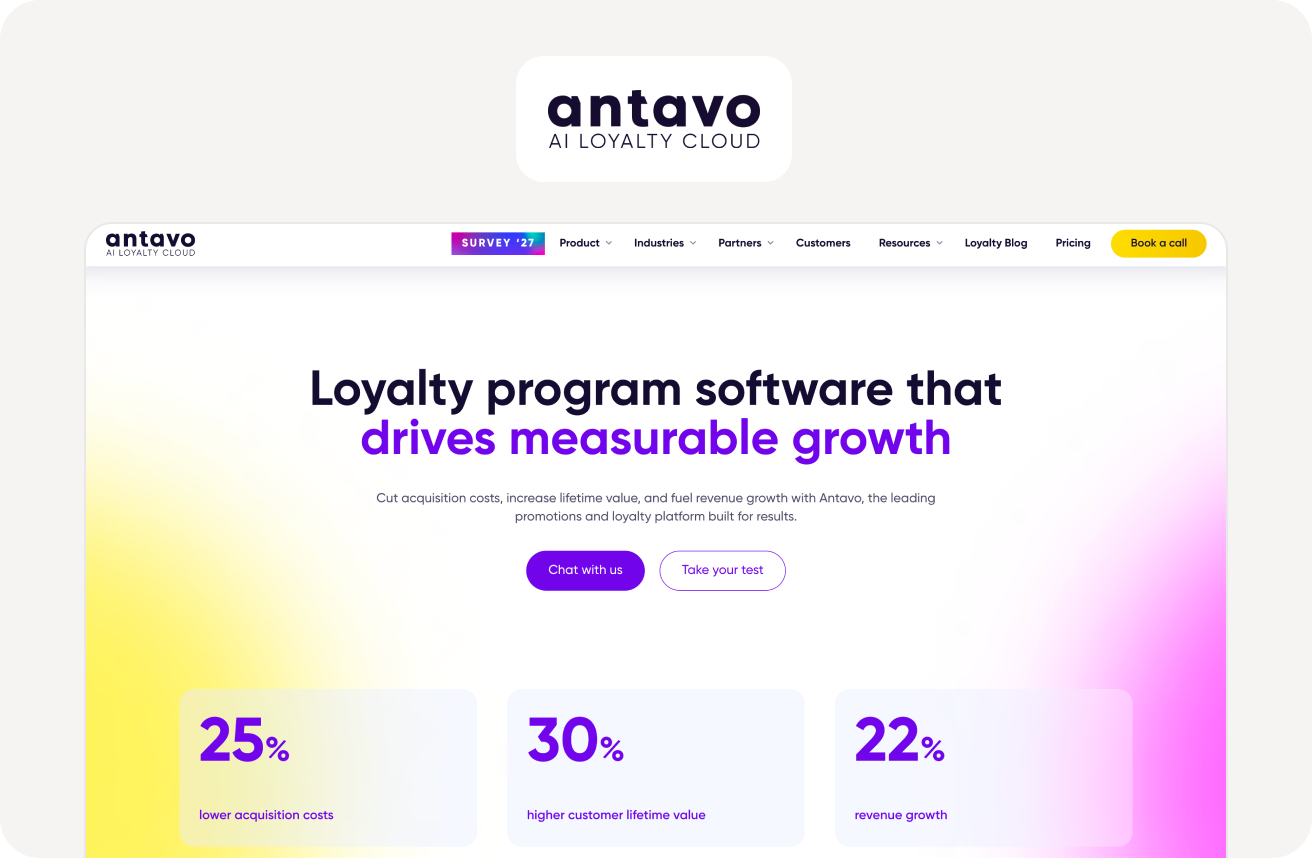
Antavo is an enterprise loyalty platform for sophisticated programs across physical and digital retail touchpoints.
It supports tiers, points, rewards, challenges, and other mechanics designed to build stronger customer relationships.
Best fit: Global retailers where advanced customer loyalty and flexible program design are the main priorities.
Trade-off: Antavo focuses on loyalty rather than replacing the full engagement stack.
Pricing: Public list pricing isn’t provided.
14. Qualtrics
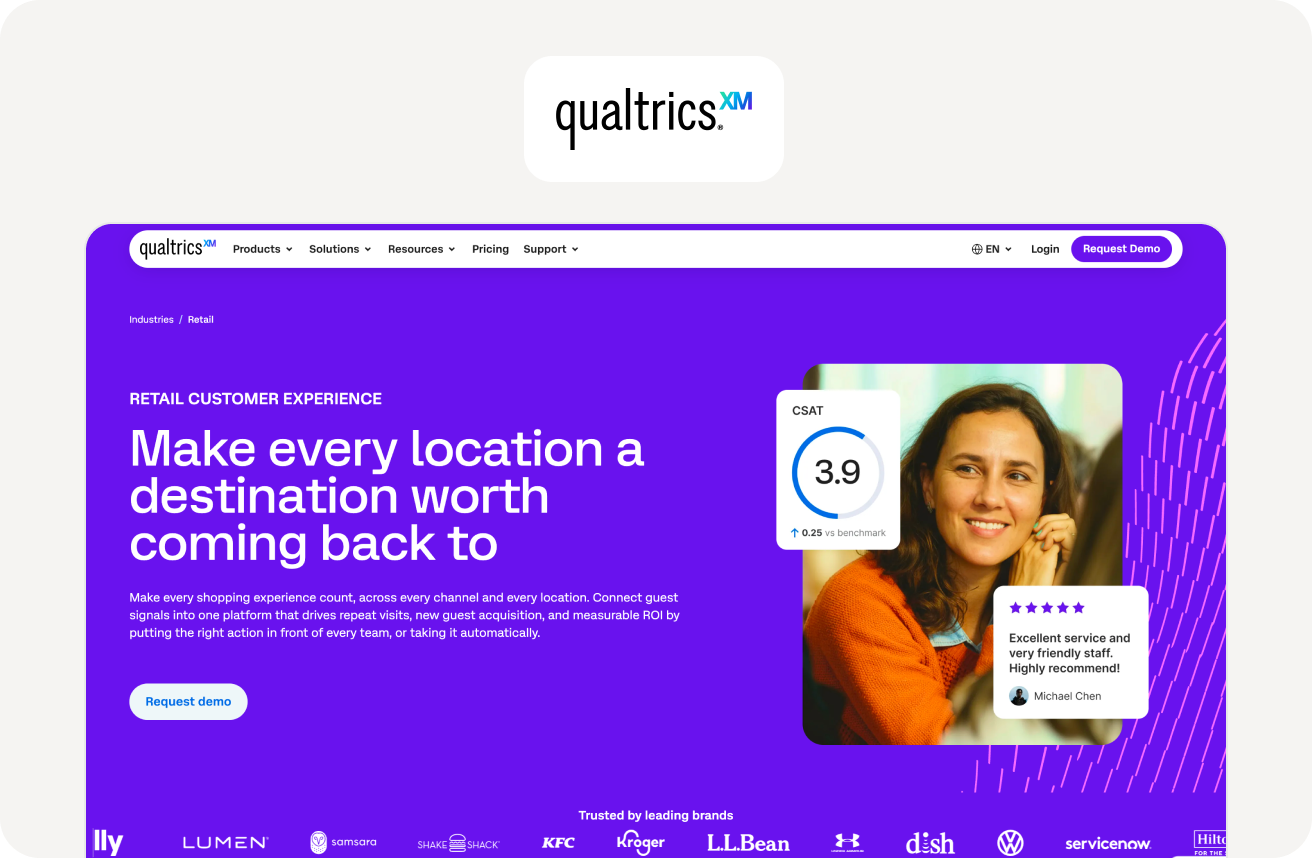
Qualtrics focuses on customer feedback, analytics, and experience management.
Retailers can collect quantitative and qualitative feedback, track customer satisfaction, identify pain points, and close the loop by routing issues to teams that can act.
Its value is strongest when the priority is understanding why an experience works or fails. Feedback from stores, digital journeys, surveys, and service interactions can reveal patterns transactional data may miss.
Best fit: Large retailers with mature voice-of-customer programs across multiple locations and touchpoints.
Trade-off: It is stronger at understanding customer experiences than activating personalized marketing journeys.
Pricing: Depends on the products and program requirements selected.
15. Medallia
Medallia brings together experience signals, feedback, behavioral information, and analytics.
It helps retailers understand customer sentiment and identify where a poor experience affects satisfaction across stores, digital channels, and service interactions.
This can help large retailers spot recurring store issues, service problems, or digital friction and route insights to the teams responsible for fixing them.
Best fit: Enterprise retailers that need deep feedback and experience measurement across many touchpoints.
Trade-off: Native loyalty and direct marketing activation usually require other tools.
Pricing: Public list pricing isn’t provided.
The right tools aren’t necessarily the ones with the most features. Focus on what you need natively, where integrations are acceptable, and which platform removes the most day-to-day friction.
Why retail customer experience platforms must unify data, loyalty, and activation
A connected retail experience depends on how quickly information can move between your systems.
If someone moves into a new loyalty tier after an in-store purchase, their next email should reflect it. The same applies when a customer moves between online shopping and physical stores.
Fragmented systems slow this down. Manual exports create delays and make it harder to understand behavior across customer touchpoints.
Connected systems make information actionable. A customer experience platform can connect profiles, loyalty activity, and activation so teams don’t have to rebuild audiences or transfer files before every campaign.
It also gives marketing, service teams, and sales associates better context without forcing them to search several systems.
Customer loyalty becomes easier to act on
By Malene Birger used Voyado to connect loyalty, automation, and customer information in its onboarding experience.
The retailer increased full-price shoppers by 109% while testing which benefits created more useful customer experiences.
Connected journeys can also support BOPIS, post-purchase messages, in-store interactions, and other omnichannel customer experience examples.
The goal is to give your teams enough context to deliver exceptional service wherever customers choose to shop.
Migration checklist: switching from legacy CRM or loyalty systems
Changing platforms affects both your technology and customer experience, so plan around the information and journeys customers already depend on.
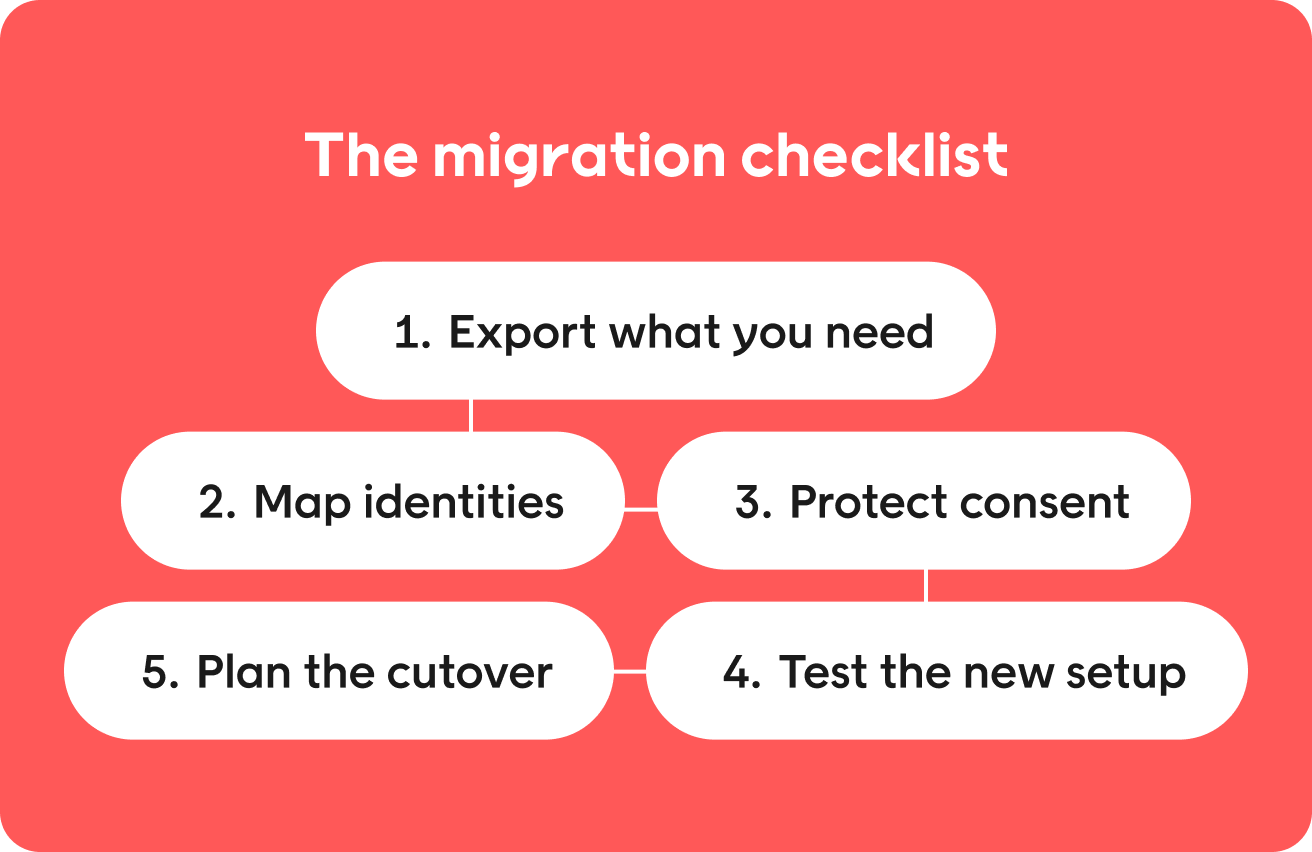
- Export what you need. Include profiles, transactions, loyalty balances, consent, preferences, and useful engagement history.
- Map identities. Decide how email, phone, customer IDs, and POS records will connect and resolve duplicates.
- Protect consent. Transfer consent and channel preferences accurately across every market.
- Test the new setup. Compare balances, records, segments, and key journeys before the switch.
- Plan the cutover. Use clear validation points and a rollback plan if something doesn’t work.
A phased migration can reduce risk across multiple locations or markets. Moving one market or set of journeys first gives your team time to catch problems before they affect everyone.
Good migration planning protects operational efficiency and customer satisfaction while the systems behind the experience change.
How to calculate ROI and time-to-value for your retail customer experience investment
Retail customer experience software should improve customer outcomes and reduce manual work for your team.
Measure customer impact
Start with a baseline for:
- Repeat purchases and retention
- CLV and conversion rates
- Customer satisfaction and loyalty activity
Then track what changes after implementation.
McKinsey found that CX transformation programs have delivered 15–20% increases in sales conversion rates and 10–20% improvements in customer satisfaction.
Better personalization can support conversion and retention with more relevant products, offers, and retail experiences. A good customer experience can also give shoppers a reason to choose your brand even when a competitor offers a lower price.
Retailers also need to adapt as customer expectations change. Shoppers increasingly expect better personalization, seamless omnichannel experiences, and more transparency from the brands they choose.
Measure team efficiency
Look at the work your platform could remove or simplify:
- Moving files between systems
- Fixing audiences and creating reports
- Managing repetitive campaigns
Automation can reduce tasks such as cart abandonment reminders and personalized follow-ups.
Retail customer experience software can also streamline customer support processes by connecting case management and digital engagement with useful customer information.
Measure time-to-value
Ask each vendor:
- How quickly can we launch our first useful journey?
- How long will POS, e-commerce, and loyalty integrations take?
- What implementation work will our team need to handle?
ROI isn’t only about increasing revenue. A strong platform should also help your teams create better customer experiences with less manual work.
Agentic AI for retail: What to require beyond personalization
AI can support predictive analytics, segmentation, recommendations, and automation. Agentic AI goes further by completing parts of the work, not just providing actionable insights.
For example, an AI system might identify changing behavior, build an audience, suggest a response, and trigger an approved action.
Ask for a real example. Don’t settle for a list of AI features. Ask the vendor to show how the system handles a full task from customer insight to action.
Check the guardrails. Your team should control which actions happen automatically and which require approval. Include consent checks, permissions, brand rules, and rollback options in the setup.
Think about employees too. Better AI should improve employee experience, not simply add another dashboard. It should remove repetitive work and help teams stay ahead of customer needs.
The strongest use of AI is practical. It helps your team create more relevant customer experiences while keeping control of important decisions.
Next steps: Build your retail customer experience platform shortlist
You don’t need 15 platforms on your final list. Use the eight-capability framework to get down to three or four.
Start with your non-negotiables:
- Can it connect store and online activity?
- Does it support the loyalty and personalization you need?
- Can your team work with it without constant technical help?
- Can you measure customer satisfaction, retention, and commercial impact?
Then check what each platform provides natively and what requires another system. This is often where similar-looking retail customer experience solutions start to feel very different.
Having an overview of the best omnichannel customer experience platforms can help if connected store and digital experiences are high on your list.
Does your team still have to piece together loyalty, customer profiles, and activation before it can create a useful campaign?

FAQs
What is a retail customer experience platform?
It connects customer information and interactions across the retail experience, from product selection and online shopping to stores, customer service, and aftercare. The goal is to help retailers create consistent, relevant experiences across channels to better meet customer expectations.
How is a CX platform different from a CRM in retail?
A CRM mainly stores customer information and interactions. Retail customer experience software uses that information across personalization, loyalty, service, and other customer experiences so teams can act on it.
What features should customer experience software for retail include?
Look for unified profiles, loyalty, omnichannel activation, POS integration, AI, predictive analytics, governance, multi-market support, and measurement. Customer feedback tools such as NPS and CSAT can also help you track customer satisfaction and continuous improvement.
Which platform is best for personalization at scale in retail?
There isn’t one best choice for every business. Voyado is a strong fit for omnichannel retailers that want profiles, native loyalty, and activation closely connected, while other platforms may suit different customer needs or technology setups.
Can a retail CX platform connect online and in-store customer data?
Yes. Modern retail customer experience solutions can connect e-commerce, POS, loyalty, apps, and other sources so teams understand customer behavior across physical and digital touchpoints.
We already have a CRM and loyalty vendor. Why consolidate?
Consolidation can reduce manual work and make it easier to use purchase and loyalty information across the customer journey. The change only makes sense when the simpler setup and better retail experience outweigh the cost and effort of migration.
About Author