
TL;DR
The biggest difference between Elasticsearch alternatives is who does the retail work. Open-source engines can be simpler to run, but your developers still build the ranking and merchandising, so they don’t remove the tuning work that sends retailers looking in the first place. E-commerce search platforms hand that work to merchandisers, though many still rely on manual rules for margin and stock.
When you compare platforms, check whether margin and stock ranking is automatic, whether each language needs its own setup, which AI features are add-ons, and how much day-to-day work still needs a developer. Then test your shortlist on your own catalog before you switch.
Elasticsearch can power fast, accurate search, but it isn’t made for the intricacies of retail. When understanding what shoppers are looking for and ranking around stock and margin are left to developers, your search is only as good as the engineering resources behind it.
This guide compares 15 search platforms with e-commerce in mind so you can find the right Elasticsearch alternative for your team, rely less on developers, and create a more relevant search experience for your customers.
Why retailers outgrow Elasticsearch for e-commerce sites
Elasticsearch is an open-source, distributed search and analytics engine that powers website search behind the scenes, indexing large amounts of data so it can be searched very quickly. Retailers use Elasticsearch to index their product catalog, and it can combine keyword search and semantic search to show relevant results to shoppers.
But because Elasticsearch isn’t made specifically for e-commerce, you need to set up and maintain the advanced search features shoppers expect, such as typo tolerance, synonyms, merchandising rules, and stock availability. Even with Elastic’s fully managed service, Elastic Cloud Serverless, those features are still yours to set up and tune.
As a result, e-commerce teams often find the operational overhead and steep learning curve too much, when what they really need is a ready-made product discovery tool.
Evaluating Elasticsearch alternatives: What to look for
When you explore alternatives, keep these criteria in mind to ensure the platforms you shortlist are better suited to e-commerce search:
- Natural language processing (NLP). The platform understands meaning beyond just matching keywords, so when shoppers misspell a word or describe what they want, they still get relevant results.
- Multilingual handling. Shoppers get relevant results in their own language, and you can serve several languages in a market without maintaining a separate catalog for each.
- Personalization. Results adapt to each shopper’s behavior, so returning customers see the products they’re most likely to buy first.
- Facets. Filters adjust to each category and search, so shoppers only see options that narrow down the products in front of them.
- Search analytics. Merchandisers can see which searches fail or lead to exits, and fix them without waiting for a developer.
- Onboarding effort. Product data comes in through a ready-made connector or a straightforward integration with minimal configuration.
Platforms that meet all these criteria give your customers a high-quality search experience.
Quick comparison table of Elasticsearch alternatives
| Platform | What it is | Best for | Biggest gain over Elasticsearch |
| Voyado | Product discovery platform for retail | Retailers selling in several markets and languages | Merchandisers set a revenue or profit goal instead of developers writing ranking rules |
| Algolia | Hosted search service | Developer teams that want to keep building search themselves | No search servers to run, and margin and stock signals without custom code |
| Coveo | Enterprise AI search | Enterprises using Elasticsearch in several places | One setup covers 50+ markets, instead of one per country |
| Netcore Unbxd | Retail search platform | Merchandising teams that like hands-on control | Merchandisers change rules without waiting for a developer |
| FactFinder | Search and navigation platform | European sellers that want EU-hosted search | Merchandisers rank by margin and stock without code |
| Athos Commerce | Search and merchandising platform | Mid-sized retailers on Shopify and similar platforms | AI suggests promotions, and merchandisers approve them |
| Constructor | E-commerce search and discovery | Retailers that want a commerce-only specialist | Ranking works toward profit automatically, replacing hand-written rules |
| Bloomreach | Marketing platform with search | Search and marketing under one roof | Margin is weighted automatically against relevance |
| Nosto | Personalization platform with search | Search and personalization in one place | Search results adapt to each shopper’s behavior |
| Dynamic Yield | Personalization platform with search | Existing Dynamic Yield customers | Results personalized from each shopper’s browsing and search history |
| Clerk.io | Search bundled with email marketing | Smaller shops short on engineering time | One campaign sets priorities for search and email together |
| OpenSearch | Community-run search engine | Teams already on AWS that like how Elasticsearch works | Your team’s Elasticsearch skills carry over, so the switch is small |
| Meilisearch | Open-source search engine | Small teams with developers but no search specialist | Simpler to set up and run |
| Typesense | Open-source search engine | Developers who want less configuration | Pinning and typo tolerance come built in |
| Apache Solr | Open-source search platform | Teams with search engineers who want full control | Mature faceting for large catalogs, though merchandising still needs engineers |
15 best Elasticsearch alternatives for e-commerce
1. Voyado
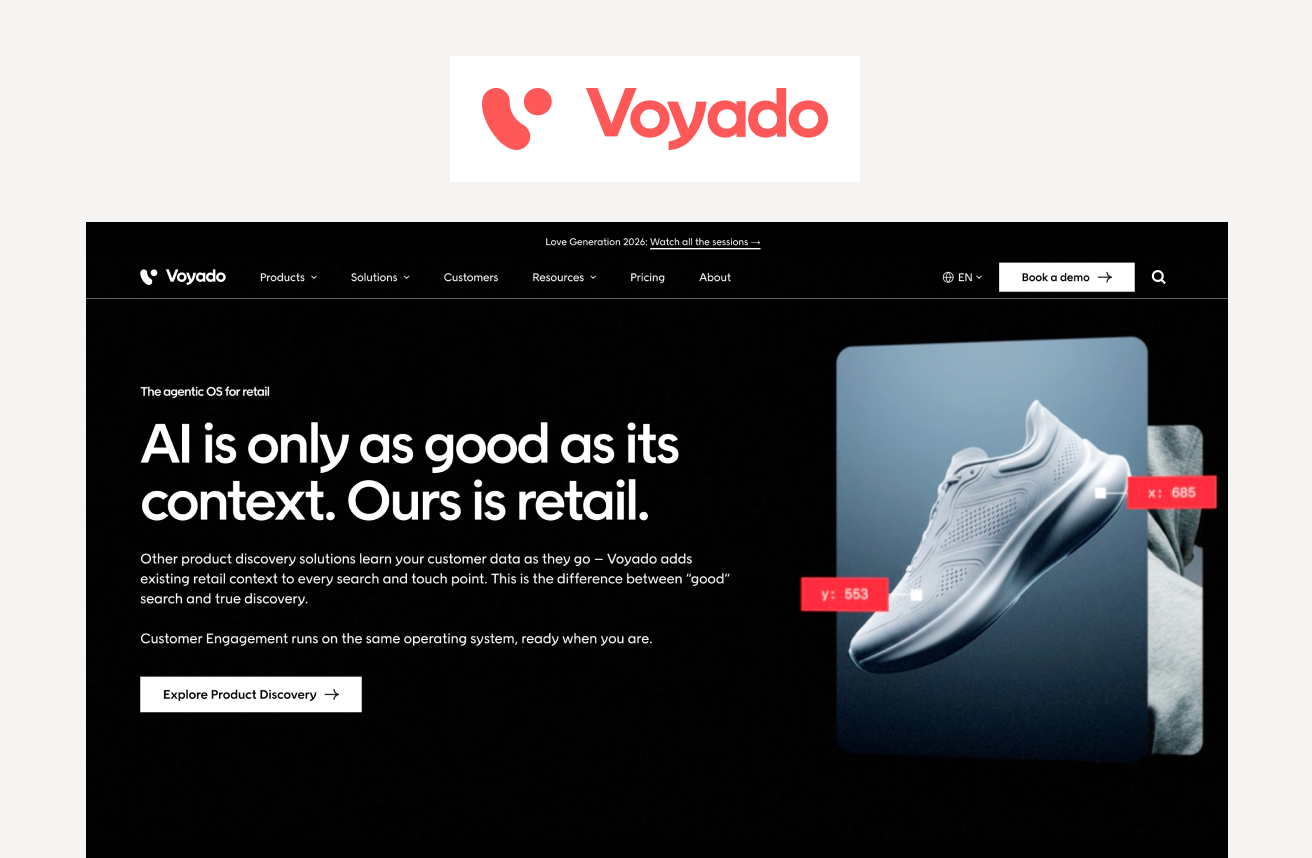
Voyado is an agentic OS with retail knowledge built in, from how sizes and colors relate to how stock levels should change what shoppers see. It suits retailers that want relevant search in every market they sell in, without developers tuning it by hand.
Search that understands what shoppers mean
Voyado’s site search combines language models with retail-specific knowledge to work out what each search means, so “sadnals” still finds sandals and overly narrow searches are relaxed instead of returning nothing. When H&M rebuilt search and ranking with Voyado, zero-hit searches fell by 50%.
One setup across markets and languages
Voyado supports 31 languages, with built-in dictionaries and automatic language detection. One market can serve several languages, so shoppers in every language there feed the same ranking, instead of each language needing its own setup as it does on Elasticsearch.
Agentic merchandising that replaces hand-written ranking rules
Instead of custom scoring code, merchandisers choose a goal such as revenue or profit, and Voyado’s algorithms rank every product toward it using real-time stock, newness, trends, and each market’s shopper behavior. Merchandisers can still boost or pin products when a campaign needs it. After switching to a profit strategy, Bygghemma raised profit by 6.2% on average.
Analytics capabilities that show what to fix
The search phrase report shows no-hit searches, user engagement such as clicks, and conversion rates for every phrase in each market, and merchandisers can add a synonym for a failing phrase straight from the report.
Pros
- Ranking works toward a revenue or profit goal on its own, so merchandisers set the strategy instead of writing a rule for every case.
- If you also use Voyado’s marketing automation, merchandisers can target boosts at the same customer audiences you email.
See how Voyado automates product discovery for retailers. Book a demo.
2. Algolia

Algolia is a hosted search service, so your team can still build and customize the search experience without having to manage the servers that power it. It suits teams that want control over how search works but would prefer their search provider to handle the underlying infrastructure.
Key features
- Multi-Signal Ranking adds business data such as profit margin or excess inventory to the ranking without code.
- NeuralSearch combines keyword and meaning-based matching.
- Merchandising Studio lets business teams run campaigns and adjust results.
- Product recommendations run on the same platform as search.
Pros
- Margin and stock signals switch on without code, so your developers don’t have to write custom scoring to rank for profit.
- Algolia searches any language and adds extra handling for 67 languages, which covers most markets a retailer is likely to sell in.
Cons
- AI ranking needs the Grow Plus plan or higher, so the advanced features that set it apart from Elasticsearch cost more than the entry plans.
- The core platform is built for developers, so you still need engineering time to build and change the search experience.
3. Coveo
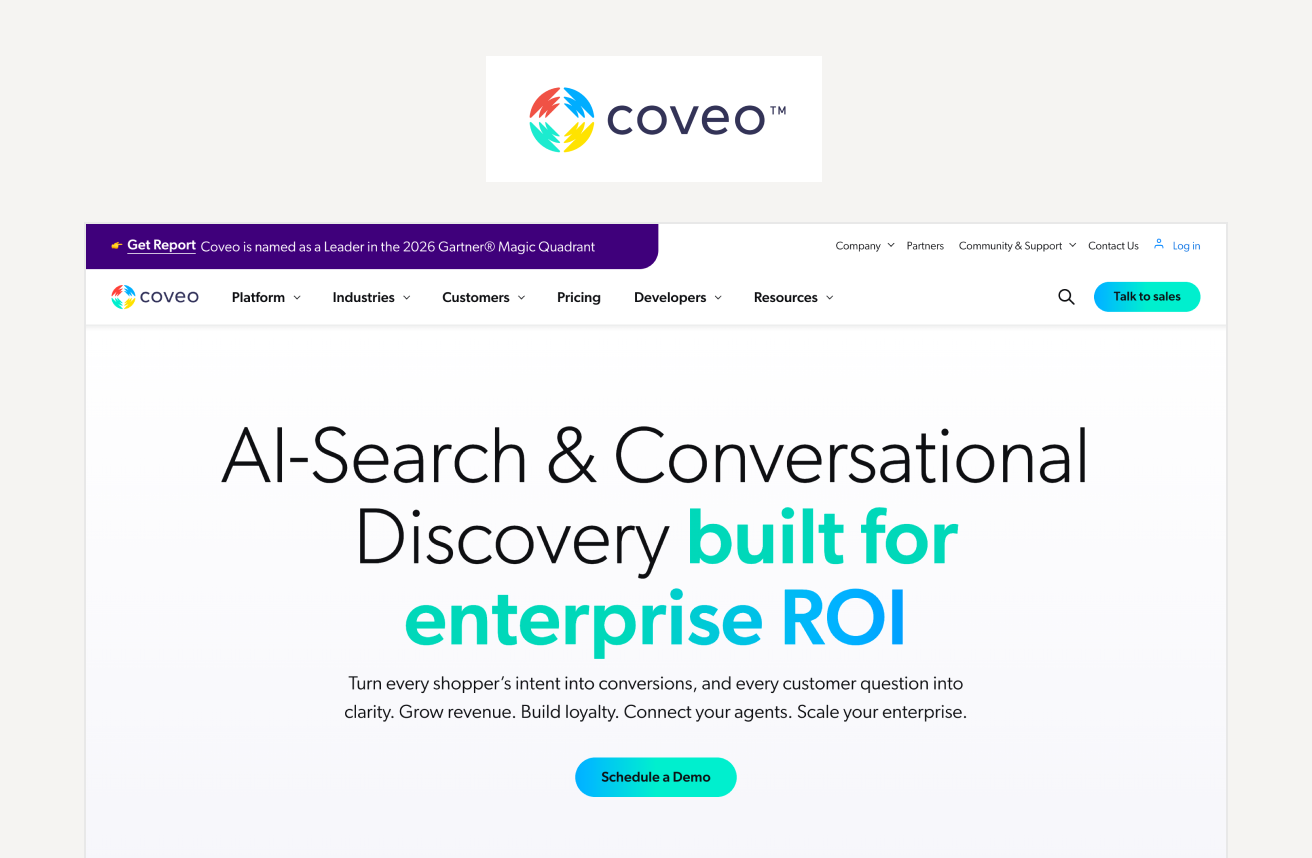
Coveo runs AI search for commerce alongside customer service and workplace search, so it can replace more than one Elasticsearch setup in a large company. It suits enterprises using Elasticsearch in several places that want one vendor for all of them.
Key features
- The Merchandising Hub lets merchandisers set boost rules for all searches or specific ones, and schedule them ahead.
- Conversational product discovery, sold as an add-on, lets shoppers describe what they need in their own words.
- Image search lets shoppers search with a photo instead of words.
- Catalog enrichment uses AI to fill gaps in product data.
Pros
- More than 50 languages and 50 markets run in one environment, so you manage one setup instead of one per country.
- The same platform can power customer service and workplace search, which helps if you want one search vendor across the business.
Cons
- Margin and stock only affect ranking through manual boost rules, so merchandisers have to write and maintain a rule for each case.
- Several AI features are add-ons, so the price of the setup you want can climb past the base package.
4. Netcore Unbxd
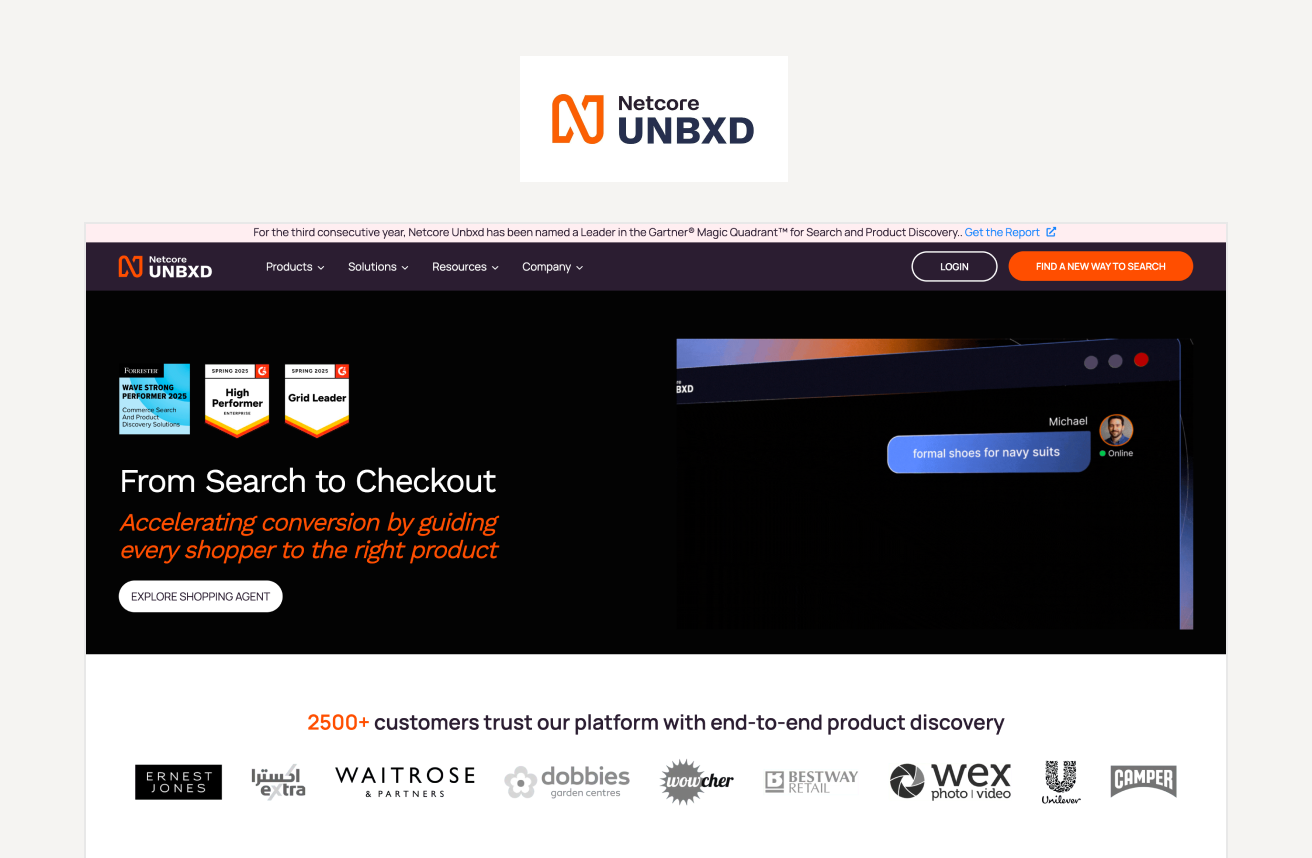
Netcore Unbxd is a retail search platform where merchandisers set their own ranking rules without code, on top of AI ranking. It suits retailers who want the detailed rule control they had with Elasticsearch, without needing a developer to make each change.
Key features
- The Visual Workbench lets merchandisers boost, bury, pin, and sort products without code, for the whole site or a single search.
- Dynamic ranking uses AI to rank products toward conversions and order value, and takes inventory into account.
- Merchandising Copilot builds production-ready merchandising rules from plain-English requests.
- Visual search lets shoppers search with an image.
Pros
- Merchandisers can change results without code, so campaign changes don’t wait in a developer queue.
- Rules can target a region or device, which lets you tailor results for each market or for mobile shoppers.
Cons
- Margin only affects ranking through rules, so protecting profit depends on merchandisers keeping those rules up to date.
- The documentation lists 10 search languages, so check that your markets are covered before you shortlist it.
5. FactFinder
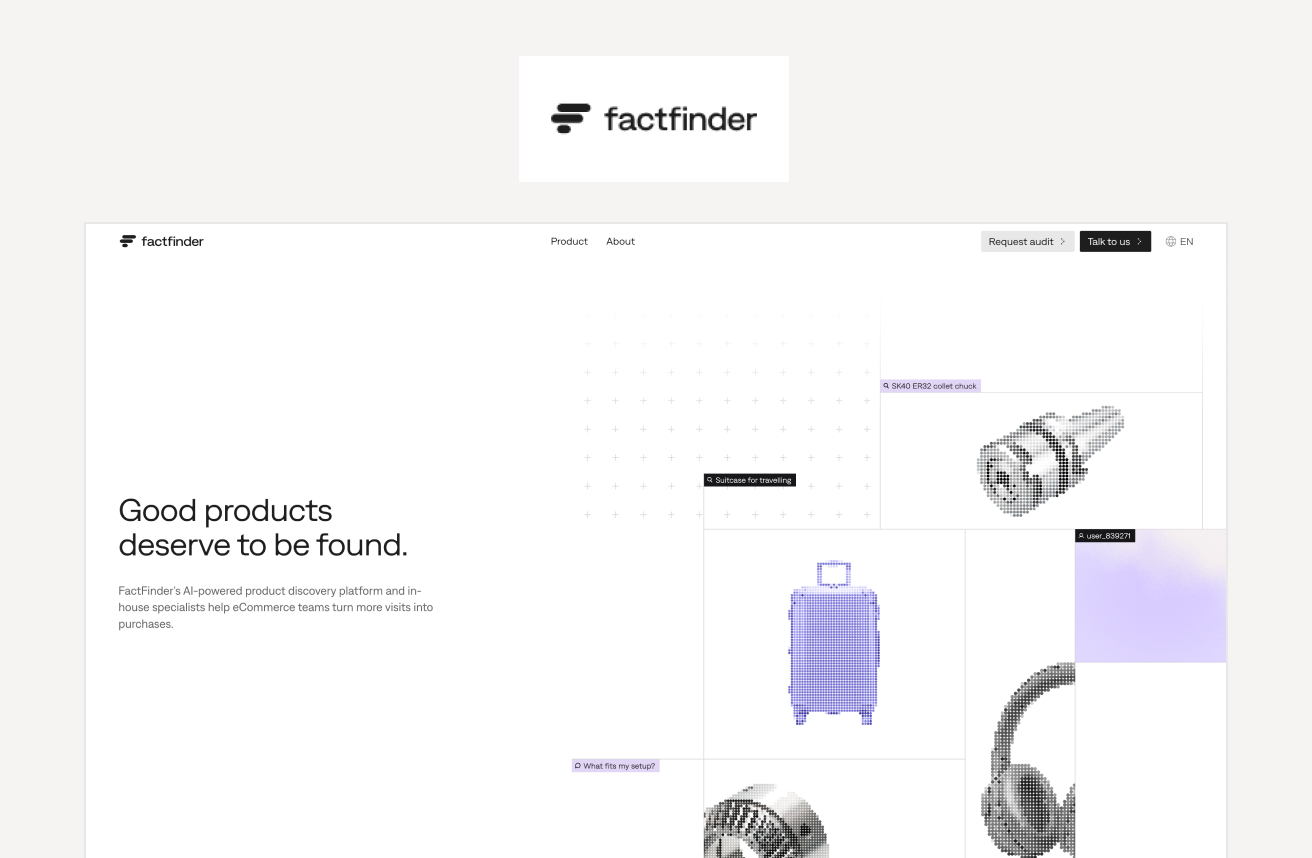
FactFinder handles search and category navigation for brands with complex or technical product catalogs. It suits European retailers and B2B sellers who want to stop running their own search servers but keep their search data hosted in the EU.
Key features
- The cockpit lets merchandisers set business rules and campaigns, and rank results by margin, stock, brand, or season.
- Vector and semantic search match searches by meaning as well as exact words.
- Atlas AI adjusts product rankings automatically.
- Ready-made connectors for Shopify, Shopware, OXID, and Magento cut the integration work.
Pros
- FactFinder understands 43 languages, and settings such as ranking rules can be shared across languages, so you don’t rebuild them for each one.
- Hosting in the EU can make data protection reviews simpler for European retailers.
Cons
- Margin and stock ranking runs on manual rules, so merchandisers have to keep them in line with your commercial goals.
- Each language runs as a separate channel, which adds setup and upkeep for every new market.
6. Athos Commerce
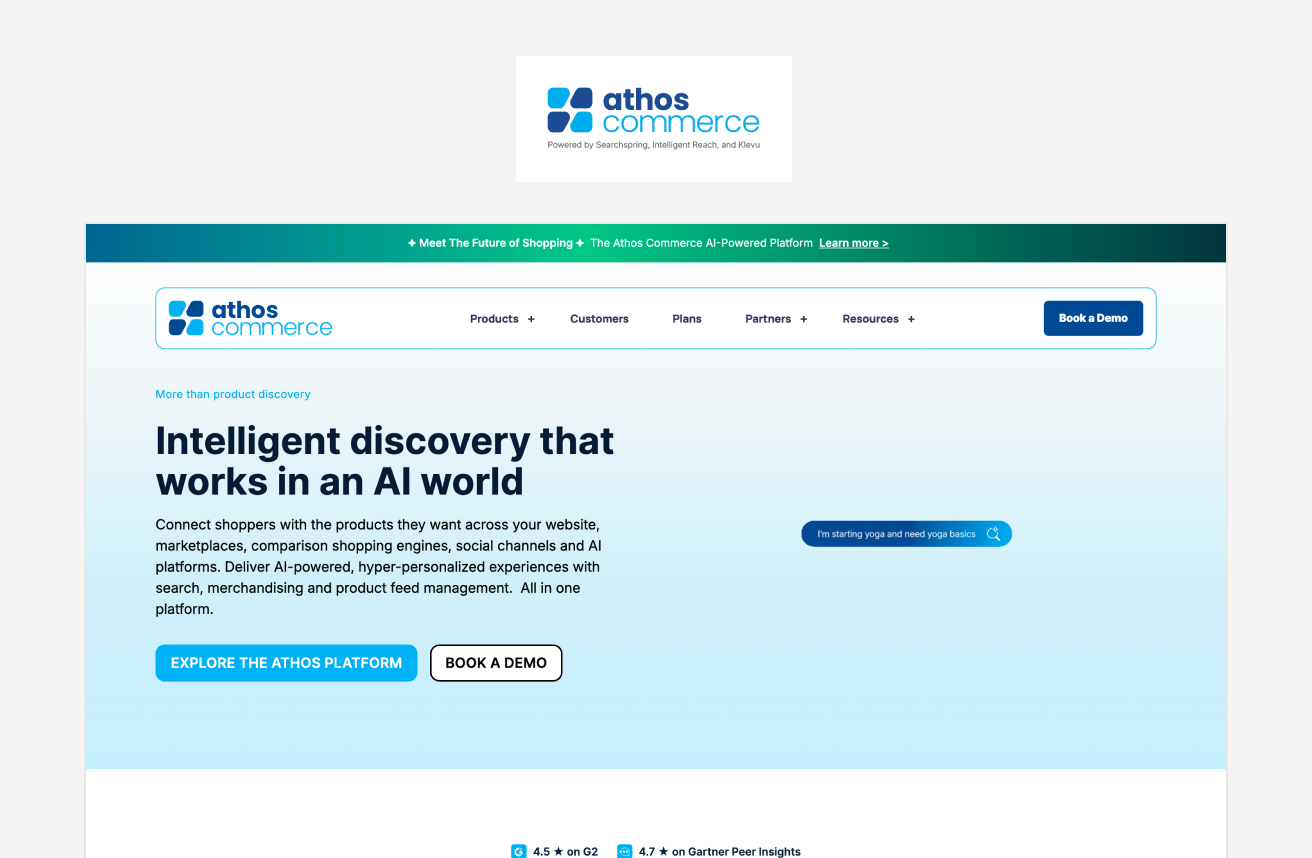
Athos Commerce runs search, merchandising, personalization, and product feeds from one platform, built for merchandisers to manage day to day. It suits mid-sized retailers on platforms like Shopify that want strong search without the developers an Elasticsearch setup needs.
Key features
- AI data enrichment fills in missing product attributes, so search and filters work even when product data is thin.
- AI suggests promotions, and merchandisers approve or override them.
- A conversational assistant lets shoppers ask for products in their own words.
- Product feed management runs on the same platform.
Pros
- Merchandisers work in a visual interface without code, so a small team can run search without developer help.
- Search runs in 31 languages, which covers most markets a mid-sized retailer sells in.
Cons
- Margin and stock only affect ranking through boost rules, so someone has to set and maintain them.
- AI search and AI merchandising are add-ons to the standard search plan, so the features that do most to replace Elasticsearch’s tuning work cost extra.
7. Constructor
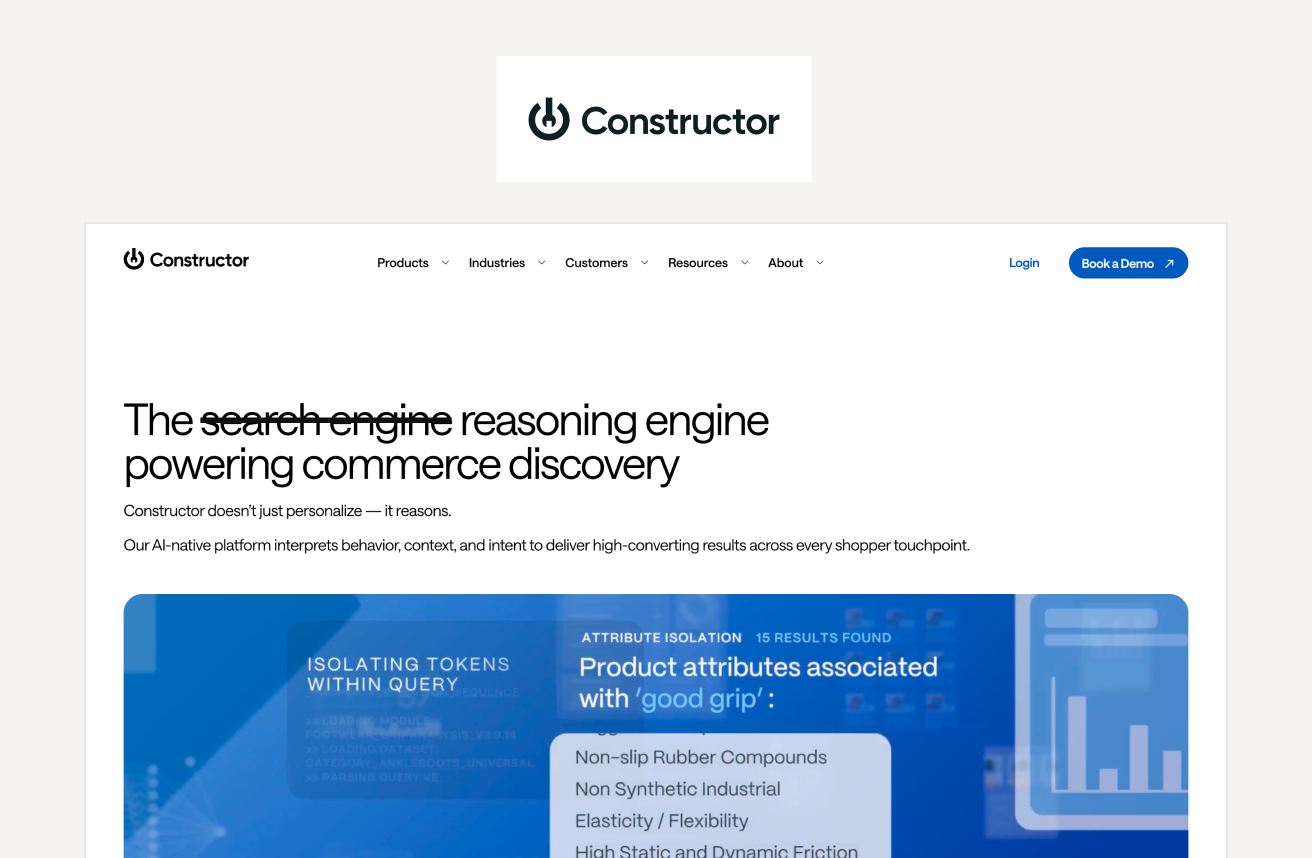
Constructor focuses entirely on e-commerce search and discovery, and its ranking model optimizes for a business metric you choose, such as revenue per visitor or profit. It suits retailers that have built up a lot of hand-written ranking rules in Elasticsearch and would rather have the model rank toward a commercial goal.
Key features
- Attribute Enrichment uses generative AI to automatically add missing product attributes.
- An AI shopping agent lets shoppers describe what they need in natural language.
- Quizzes guide shoppers who don’t know what to search for toward the right product.
Pros
- Ranking works toward a goal such as profit automatically, so merchandisers don’t write a rule for every case.
- It’s built only for commerce, so features and support are shaped around online retail.
Cons
- Each market runs on its own index, which means more setup and upkeep for retailers selling in many countries.
8. Bloomreach

Bloomreach is a marketing platform with e-commerce search built in, so search sits next to your email and SMS. It suits retailers replacing Elasticsearch who also want search and marketing under one roof.
Key features
- Loomi AI ranks products on category pages as well as in search results.
- Ranking Studio, a Premium-tier feature, lets you add signals such as margin, and the model learns how much weight to give them.
- A merchandising dashboard lets merchandisers build ranking rules and adjust results.
Pros
- Margin works as a learned signal, so the model balances profit against relevance without a rule for every search.
- If you already use Bloomreach for email and SMS, search shares the same platform and customer data.
Cons
- Each of its 38 languages needs its own catalog and product feed, so every new language adds a feed to maintain.
- Ranking Studio needs the Premium tier, so margin-aware ranking isn’t part of every package.
9. Nosto
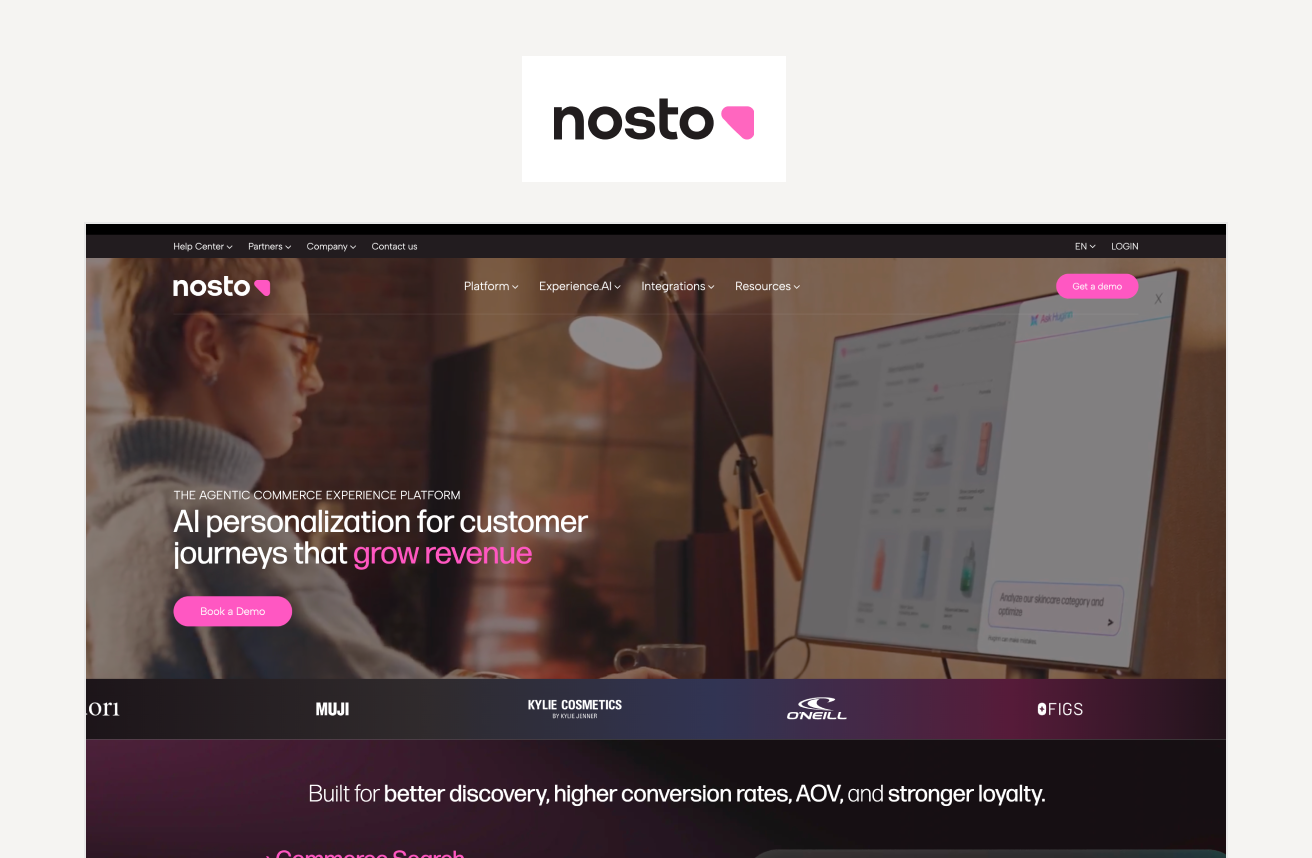
Nosto offers search as part of a wider personalization platform, alongside recommendations and user-generated content. It suits retailers whose Elasticsearch search sits apart from their personalization tools and who want both in one place.
Key features
- Semantic search uses vector embeddings to match searches by meaning.
- Search results adapt to each shopper’s behavior.
- Merchandising rules give extra weight to attributes such as margin and inventory level, can be scheduled ahead, and extend to category pages.
- Onsite personalization and customer reviews and photos run on the same platform.
Pros
- Search and personalization share one platform, so shopper behavior from one improves the other.
- Nosto supports 27 languages, and rules can be adapted by market, so each country can have its own priorities.
Cons
- Margin and stock only affect ranking through manual rules, so merchandisers have to keep them current as stock and prices change.
10. Dynamic Yield

Dynamic Yield is Mastercard’s personalization platform, and its Experience Search product brings shopper profiles into site search. It suits retailers already running Dynamic Yield who want to retire a separate Elasticsearch setup.
Key features
- Semantic search understands intent and closes the gap between how shoppers search and how products are tagged.
- Visual search lets shoppers search with a photo.
- Results are personalized using what each shopper has browsed and searched for before.
- Results can be adjusted toward business goals such as return rates or profit margins.
- Shopping Muse, a conversational shopping assistant, recommends products from a shopper’s description.
Pros
- If you already use Dynamic Yield, search runs on the tracking and product feed you have in place, so there are fewer steps to go live.
- Search works in any language, which suits retailers selling across many markets.
Cons
- Search is one module in a wider personalization platform, so it makes most sense if you already use or want the rest.
- Developers build the search results page through Dynamic Yield’s search API, so it’s a development project rather than a plug-in.
11. Clerk.io
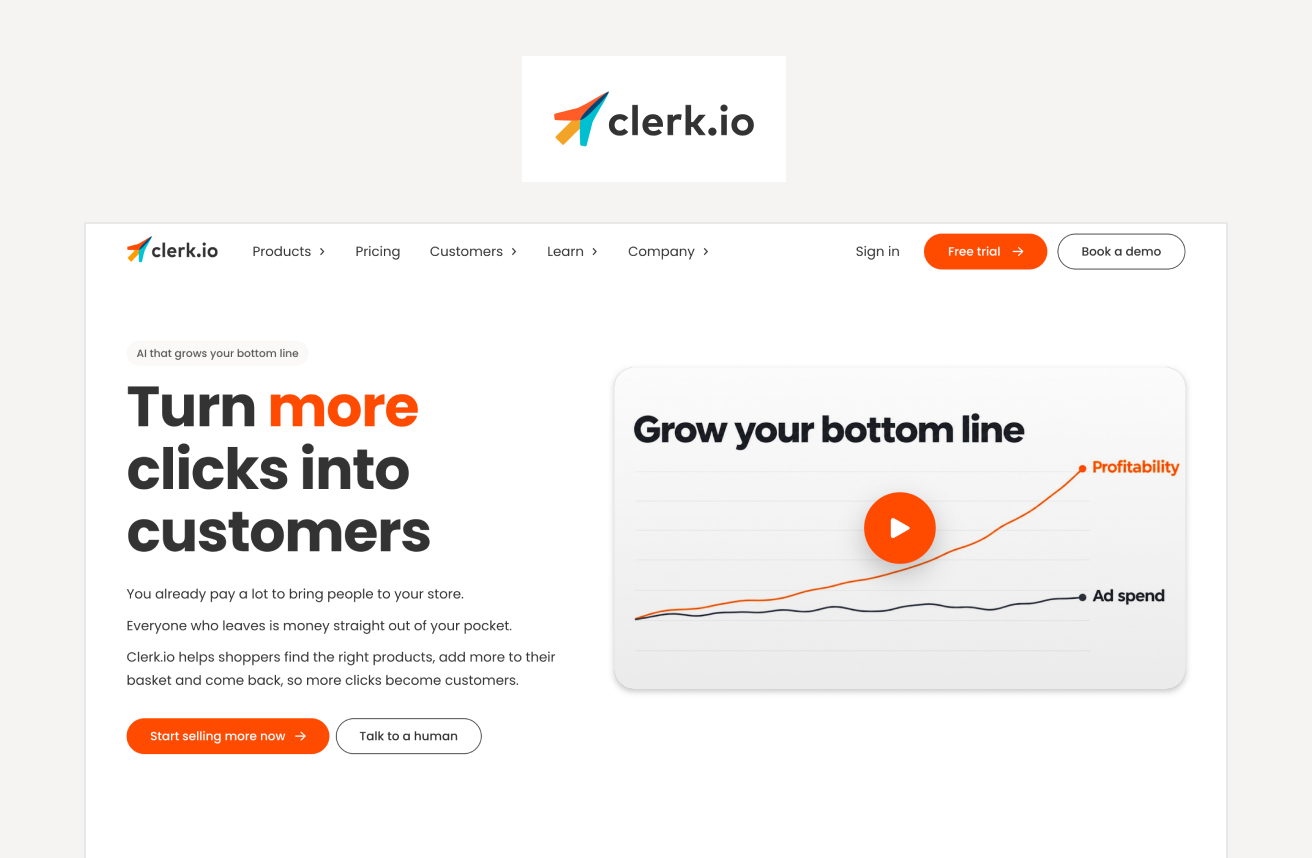
Clerk.io bundles search with email marketing and other personalization tools for online shops. It suits smaller shops without the engineering time an Elasticsearch setup takes.
Key features
- Search ranks results using sales data and availability, and puts out-of-stock items at the bottom.
- One merchandising campaign can boost your highest-margin items across search and email at once.
- A generative chatbot handles shopper questions on the same platform.
- Email and audience tools use the same product data as search.
Pros
- One campaign covers search and email, so a small team sets a priority once instead of in several tools.
- Ready-made integrations cover platforms including Shopify and WooCommerce, which keeps setup light for smaller shops.
Cons
- Margin ranking depends on campaigns you set up, so it only reflects profit if someone keeps those campaigns current.
- Each language version of your shop is a separate store, which adds setup for every new market.
12. OpenSearch
OpenSearch is a fork of Elasticsearch 7.10.2, meaning it started from that version’s code and has since become a separate, community-run search engine that works in much the same way. It suits teams that like how Elasticsearch works and would rather have Amazon run the servers for them through its Amazon OpenSearch Service.
Key features
- Vector search matches searches by meaning as well as exact words.
- Learning to Rank builds ranking models from your own usage data.
Pros
- It works much like Elasticsearch, so your team’s existing skills carry over, and the switch is smaller.
- It’s community-driven and released under the Apache 2.0 license, so no single vendor decides how it changes, and there’s less risk of vendor lock-in.
Cons
- Retail ranking and merchandising tools stay with your developers, so it doesn’t reduce the tuning work that pushes retailers off Elasticsearch.
- Learning to Rank needs your team to build and maintain the ranking models, which is a project in its own right.
13. Meilisearch
Meilisearch is an open-source search engine for website and app search, aimed at giving good results with little configuration. It suits small teams that found Elasticsearch too much to run and want something simpler to self-host or rent.
Key features
- Hybrid search combines full-text and semantic search in one engine.
- Faceted search lets developers build filter-based search pages with the same toolkit.
- Customizable ranking rules sort by fields such as popularity once text relevance is settled.
- Dedicated handling covers 15 languages and scripts, including German, Swedish, Chinese, and Japanese.
Pros
- It’s open source under the MIT license, so you can try it on your own catalog before paying for anything.
- Meilisearch is fast, retrieving results in under 50 milliseconds.
- Meilisearch Cloud removes the server setup, so a small team can skip running infrastructure.
Cons
- Ranking rules are set by developers through the API, so merchandisers can’t adjust results on their own.
- Retail signals such as margin have to be added as fields and ranked by your team, which is the same kind of work Elasticsearch needs.
14. Typesense
Typesense is an open-source search engine that pitches itself directly as an easier-to-use alternative to Elasticsearch. It suits developers who want to build an instant search experience but spend less time configuring and running it.
Key features
- Typo tolerance corrects misspellings automatically.
- Curation lets you pin products to set positions, or hide them, for specific searches.
- Faceting lets shoppers filter results by product attributes.
- Vector search matches searches by meaning as well as exact words.
Pros
- Pinning and hiding products come built in, so basic merchandising doesn’t need custom code.
- Typesense Cloud starts a cluster in a few clicks, so your team can test it quickly.
Cons
- Developers write the ranking into each search request, so ranking changes still go through engineering.
- Text is treated as English unless a language is set for each field, which adds setup for multilingual catalogs.
15. Apache Solr

Apacathe Solr is Elasticsearch’s closest relative, since both are built on the Apache Lucene search library. It suits teams with search engineers who want an open-source engine they fully control, and who don’t need retail tools out of the box.
Key features
- Several faceting types, including ranges and dates, help shoppers narrow results.
- Query Elevation pins or excludes products for specific searches.
- Spelling suggestions help shoppers correct misspelled searches.
- Vector and geospatial search work alongside full-text search.
Pros
- It’s open source with no license fee, so your costs are servers and staff.
- Faceting helps with large catalogs that need detailed filters.
Cons
- Merchandising changes go through configuration files, so merchandisers depend on engineers for every update.
- Your team runs and scales the servers, which adds operational complexity and takes engineering time away from other work.
Why retail product rankings must account for stock and margin
If your chosen search engine relies on text matching alone, it can produce technically relevant results that don’t serve your commercial goals.
For example, if a shopper searches for “red ballet pumps,” a text-based engine might rank a popular pair first even if it’s only in stock in one size and has a low profit margin. For the shopper, that means clicking a product they likely can’t buy and either scrolling on or leaving. For you, it means your most visible spot goes to a product that’s unlikely to sell, and earns little when it does.
Specialized tools for e-commerce search should factor stock and margin into ranking automatically, alongside relevance. The better ones also account for how fast products are selling and what’s popular in each market, so ranking keeps up without anyone rewriting rules.
How to compare your Elasticsearch alternatives shortlist
Once you’ve narrowed the list to a few platforms, test each one on your own catalog before you commit. Focus on these questions:
Does it work with your catalog?
- Ask for a trial so you can test your 100 most-used searches and your zero-result searches.
- Check how the platform handles product variants and filters, and how quickly price and stock changes show up in search results.
Can your team manage it?
- Ask a merchandiser to pin a product and change a business rule to see if they can do it without developer help.
- Check which features are available out of the box and which need add-ons or custom development.
What will it take to run?
- Ask for a breakdown of the subscription fee and any charges for going over usage limits, including how costs change as traffic grows.
- Confirm what your developers need to do to connect the platform to your product and stock data, and which maintenance tasks stay with your team.
Before switching over completely, send part of your traffic to the new search, such as one market or a small share of visitors, while the rest stays on Elasticsearch. Compare the two over the same period and see which has a greater impact on search conversion. This lets you check whether the new platform improves search before you move all your traffic.
Choose Voyado and let intent, margin, and stock drive ranking
Alternatives to Elasticsearch fall into two camps: open-source engines that make search simpler to run, and search engines built for online stores. Voyado product discovery is the Elasticsearch alternative for retailers who want ranking to follow what shoppers mean and your revenue or profit goals, without developers tuning it by hand.
FAQs
What are the most commonly recommended Elasticsearch alternatives on Reddit?
Commonly recommended Elasticsearch alternatives on Reddit include OpenSearch, which retains many Elasticsearch features, and Apache Solr, a mature search platform suited to complex queries and faceted search.
Typesense and Meilisearch are popular for their simpler setup and developer-friendly search features, while Manticore Search offers another lightweight option. For specialized needs, developers also suggest vector databases such as Qdrant for AI-powered search, or PostgreSQL for simpler use cases.
What are the best free alternatives to Elasticsearch?
Free and open-source alternatives to Elasticsearch include OpenSearch, which offers similar search features, and Apache Solr, which gives developers detailed control over how search works.
For e-commerce and website search, Meilisearch and Typesense are simpler to set up and support typo-tolerant searches. If you mainly use Elasticsearch to analyze logs, ClickHouse, an online analytical processing (OLAP) database built for real-time analytics, may be a better fit.
What open-source Elasticsearch alternatives are available on GitHub?
Popular open-source Elasticsearch alternatives on GitHub include OpenSearch, Apache Solr, Meilisearch, Typesense, Vespa, Quickwit, ZincSearch, and Sonic. OpenSearch is the closest like-for-like replacement, while Meilisearch and Typesense are simpler options for fast, typo-tolerant website and application search.
Apache Solr and Vespa suit teams that need more control over indexing, ranking, and large-scale search. For AI-powered semantic search, projects such as Qdrant and Weaviate are also open source, though they’re vector databases rather than full search platforms.
What is the difference between ELK Stack and Elasticsearch?
Elasticsearch is a search engine that stores semi-structured data, such as JSON documents, and lets you search it. The ELK Stack combines Elasticsearch with Logstash, which collects and processes data, and Kibana, which displays it in dashboards. Elasticsearch handles the search, while the ELK Stack includes the tools to collect, process, and view the data.
What are the best open-source alternatives to the ELK Stack?
The best open-source alternatives to the ELK Stack focus on reducing high memory usage and lowering infrastructure costs. Grafana Loki is a top choice for cloud-native setups because it only indexes metadata, which drastically cuts down on required storage.
SigNoz uses a highly efficient ClickHouse database to provide unified logs, metrics, and application tracking in one place. For smaller teams or budget-conscious setups, OpenObserve and VictoriaLogs offer lightweight, ultra-fast logging with lower resource consumption than Elasticsearch.
What is the ELK Stack, and how does it differ from e-commerce search?
ELK Stack is a toolset (Elasticsearch, Logstash, Kibana) built for engineers to collect, search, and analyze internal system logs and errors. In contrast, e-commerce search is a customer-facing search system optimized to help shoppers find and buy products from a digital catalog.
While ELK focuses on technical system monitoring, e-commerce search drives sales and commercial transactions. Both can use Elasticsearch as a base, but they serve completely different users and business goals.
What is ELSER in Elasticsearch, and how does it improve search relevance?
ELSER is a built-in AI tool in Elasticsearch that enables semantic search by understanding the meaning and intent behind your words instead of just matching text. It improves search relevance by making sure shoppers still find what they need even if they don’t use the exact keywords in your catalog.
What is Logstash, and is it used for e-commerce product search?
Logstash is a data processing tool that collects, cleans, and moves information from various sources to a final destination, usually Elasticsearch. It’s not used to directly run product searches for e-commerce customers. Instead, it works behind the scenes to sync and update product catalogs from your database into the search engine.