TL;DR
The biggest difference between customer engagement platforms for retail is where loyalty and store purchase data live. Some platforms run the loyalty program themselves and receive store sales directly. Others rely on connections to separate tools, which can leave messages out of step with what a customer has done.
To build a shortlist, check how store purchases reach the platform, whether loyalty is built in, what the AI features cover, and whether you can use the same customer activity to coordinate messages across channels.
If your loyalty program and marketing campaigns run in separate tools, customer information can get stuck between them. A customer might earn points in store but not see them online, or receive an offer for something they bought last week.
That makes it harder to give existing customers a consistent experience and good reasons to come back. This guide compares 15 customer engagement platforms and gives you five questions to help you narrow down the best solution for your team.
What is a customer engagement platform?
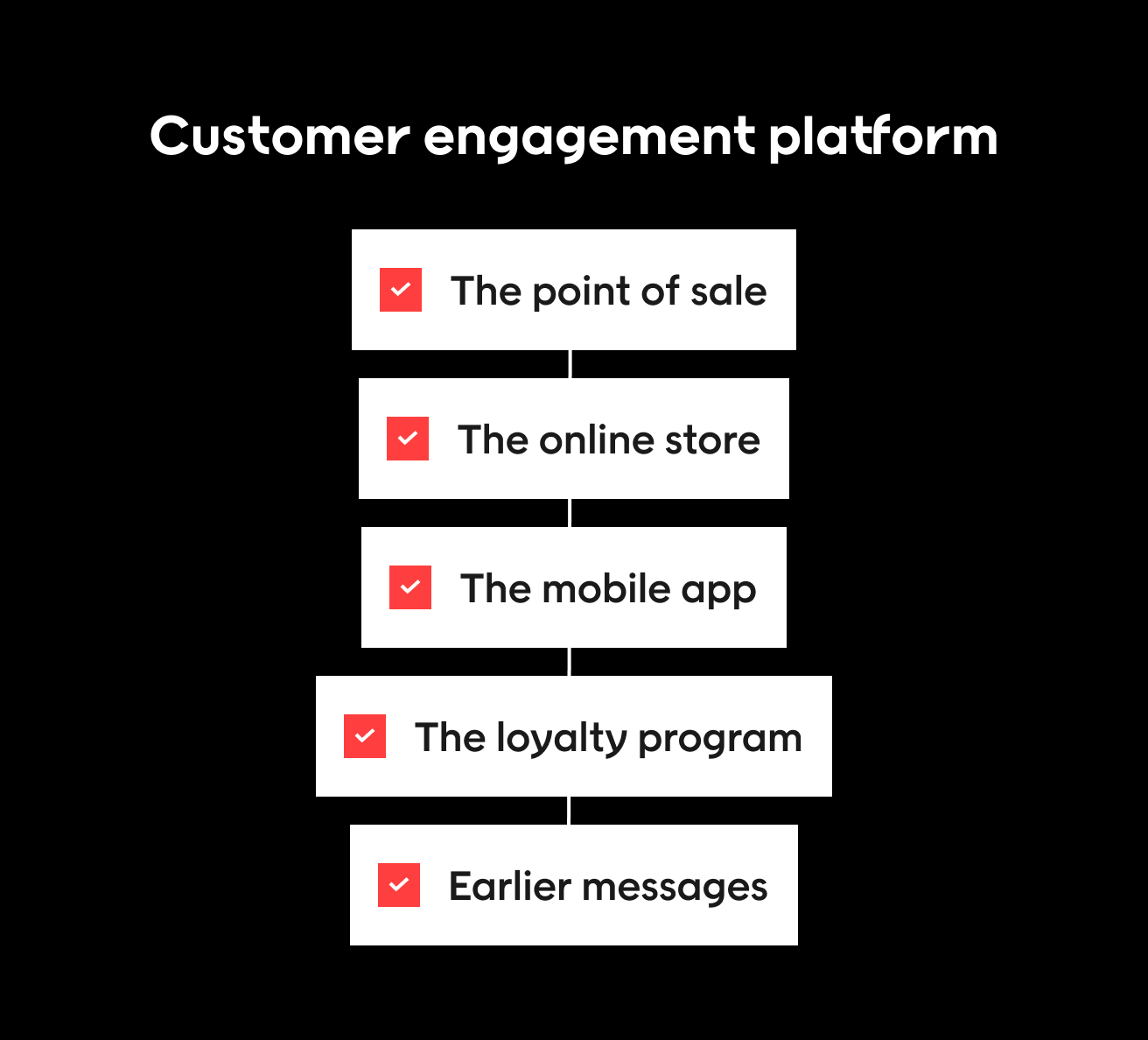
A customer engagement platform is software retailers use to compile customer data from different channels in one place and send messages based on that information. The customer data might come from:
- The point of sale. What a customer bought in store, and at which location.
- The online store. What they browsed, added to their cart, or ordered.
- The mobile app. What they looked at and whether they have notifications switched on.
- The loyalty program. How many points they hold and which tier they’re in.
- Earlier messages. Which emails or texts they opened and clicked.
For example, say a customer buys a designer handbag in store, then browses the same brand’s wallets on the retailer’s website. The platform links both customer interactions to one record, showing that the customer is interested in that particular brand. When the retailer later runs a promotion for the brand, that customer gets the offer instead of a generic one.
Why omnichannel retailers need a retail-native customer engagement platform
General-purpose customer engagement software is designed for many industries, so the platforms aren’t built around retail data and customer journeys. Retailers have to connect them to their existing store and loyalty systems before they can use that data, and each connection can add a delay between a customer’s action and the platform knowing about it.
For example, someone who buys a coat in store one morning could still receive an email that afternoon promoting the same coat. If a customer keeps getting irrelevant messages and promotions, over time it might make them less likely to engage and can even hurt customer satisfaction.
In Voyado’s Inside e-commerce 2026 survey, 48% of e-commerce leaders said their current tools lack personalization. A retail-native platform should have store and online purchases available alongside loyalty information from the start. Messages then reflect what the customer has done most recently, so the system knows the most relevant message or promotion to send next.
The cost of fragmented engagement tools
Running customer engagement across separate tools creates four problems:
- Maintenance time. Someone has to look after each tool and keep its data in step with the others.
- Late messages. Offers go out for things customers have already bought, because the purchase data hasn’t arrived yet.
- Channels out of sync. The email tool knows about a purchase while the SMS tool and store staff don’t.
- No view of customer value. With purchases spread across systems, nobody can see what a customer is worth over time.
The more tools you can combine on one platform, the less time your team spends managing systems and the easier it becomes to deliver personalized customer experiences across every channel.
How loyalty and engagement must work together
When you create an omnichannel experience where loyalty and messaging run on one platform, each step in a customer’s journey can trigger the next one automatically. Here’s an omnichannel customer experience example:
- A customer browses winter coats on the website.
- They get an email showing the coats they looked at.
- They buy one in store and scan their loyalty card at the register.
- Their points are added, and any further reminder emails are canceled.
- Their wallet pass updates with the new balance and a reward they can now claim.
- They redeem the reward on their next store visit.
AI in the platform can act at each step too, such as moving the customer out of the “browsing” group after the purchase and choosing what to send them next. When loyalty runs in a separate tool, steps 4 and 5 depend on a sync between systems, and someone has to build and maintain that link.
How much of this functionality a tool covers varies greatly by provider. Coming prepared with questions before a vendor demo will help determine which platforms have the coverage you need.
How to evaluate a customer engagement platform for retail
When comparing your shortlist of customer engagement tools, these questions show how well each is set up for retail.
Does the customer record include store purchases?
A platform needs to capture what customers buy in store as well as online. Look at how quickly store purchases reach the platform. Some receive each sale as it happens, while others import them in batches, which can leave too big a gap between the purchase and when the platform can use it.
The same applies to browsing behavior. When an anonymous visitor signs up, their earlier activity on the site should be linked to their new customer record rather than starting a new history.
Is the loyalty program part of the platform?
Some platforms run points and tiers themselves, while others connect to a separate loyalty tool. The important difference is how closely the two work together. If loyalty sits outside the platform, find out how often the systems sync and which loyalty events can trigger campaigns.
Built-in loyalty does not always mean it is included in the base price. Some vendors sell it as a separate product, so check exactly what the quoted price covers.
What does the AI do on its own?
AI features range from simple assistance, such as suggesting a subject line, to handling parts of a campaign without manual input. A useful way to compare them is to ask for a real example of what the AI can do without someone setting up every step.
The team should still be able to control what the AI can do. That might mean excluding anyone who bought recently from a discount campaign or needing approval before certain messages are sent.
Can one campaign reach every channel, including the store?
A platform should make it possible to coordinate customer engagement across different channels without requiring a separate campaign for each one, known as omnichannel orchestration. Some platforms can send an email and update a digital wallet pass from the same campaign, while others need a separate tool for anything outside their core channels.
Stores are part of any omnichannel retail strategy, so look at what staff can see at the register. They may need access to a customer’s loyalty status or other relevant information without switching to another system.
Can it handle more than one country?
Retailers operating across countries need to manage different consent rules, languages, and local campaign requirements. A platform should let a central team manage shared templates and settings while local teams adapt them for their market, rather than requiring a separate account for each country.
Customer preferences should work across markets and channels too. If someone opts out of marketing, that change should carry through their customer record rather than only stopping messages from one channel.
Comparison table: Best customer engagement platforms at a glance
Start with the “Best for” column to find the platforms that match your situation, then compare how each one handles store purchases, loyalty, and AI.
| Platform | Best for | How store purchases arrive | Where loyalty runs | What the AI does |
| Voyado | Omnichannel retailers replacing separate customer relationship management (CRM) and loyalty tools | From the POS, within minutes | Built in | Chooses the next message or offer for each customer, based on their shopping behavior |
| SAP Engagement Cloud | Large retailers with several brands or regions | Combined with online data | Built in | Plans and sends campaigns once you set the goal |
| Bloomreach Engagement | Retailers selling mostly online | From the POS, in real time | Another tool | Builds a campaign from your goal for you to review |
| Ometria | Retailers wanting retail-specific data and campaigns | Combined with online data | Another tool | Predicts when each customer will buy next and what they like |
| Optimove | Teams that want AI recommendations with sign-off | From the POS, in real time | Add-on module | Prepares campaigns that you switch on |
| Klaviyo | Retailers selling mainly online | Through an integration | Another tool | Builds a campaign from a written request |
| Insider One | Retailers that want to set how much AI does alone | By import or API | Another tool | Plans and sends campaigns, with as much independence as you allow |
| Braze | Retailers with a strong mobile app | By import or API | Another tool | Writes messages and sends each customer down a different path, based on their preferences and behavior |
| Salesforce Agentforce Marketing | Large retailers already on Salesforce | From the POS | Add-on product | Builds campaigns for you to approve |
| Adobe Journey Optimizer | Large retailers already on Adobe | Combined with online data | Another tool | Builds and tests a campaign from a written request |
| MoEngage | Digital-first retailers | By import or API | Another tool | Runs marketing workflows from start to finish |
| CleverTap | Retailers whose loyalty runs through an app | From the POS | Built in | Plans and sends campaigns, with as much independence as you allow |
| Capillary | Large retailers wanting loyalty and messaging from one vendor | From the POS, in real time | Core product | Sets up campaigns for you to approve |
| Antavo | Retailers keeping their current engagement platform | From the POS | Core product | Answers the team’s questions and summarizes member history |
| Talon.One | Teams with developers wanting control over incentives | From the POS | Core product | Chooses which offer each customer sees, based on how likely they are to buy |
Book a demo to see Voyado’s built-in loyalty and AI working from one customer record.
15 best omnichannel customer engagement platforms
Each platform profile below gives you a deeper look at its key capabilities for retail, so you can rule options in or out before booking demos.
1. Voyado, the Agentic OS for Retail
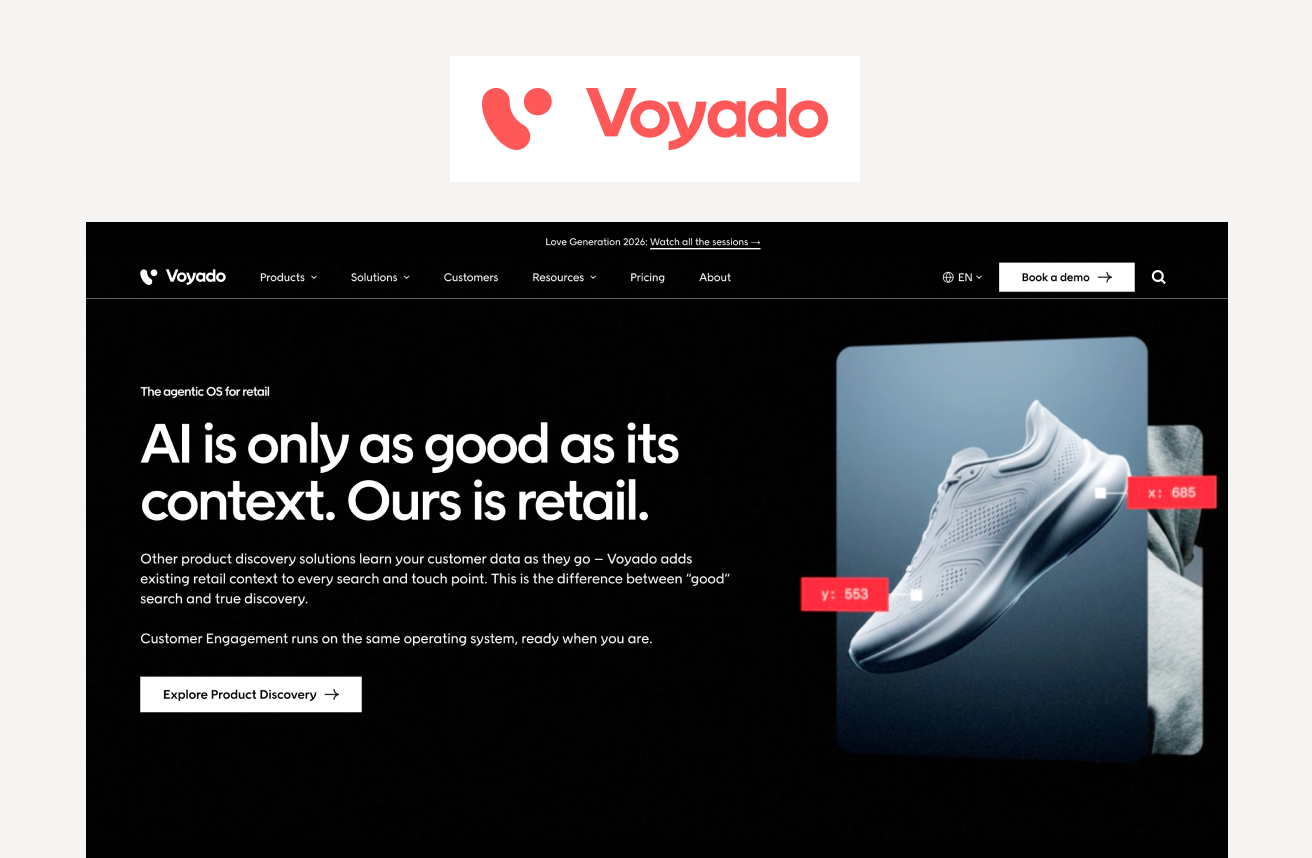
Voyado is an agentic OS platform made specifically for retail, with the loyalty program built in. It’s best for omnichannel retailers replacing separate CRM and loyalty tools with a single platform.
With Voyado, every message and reward reflects the individual customer’s activity, whether they shopped in store or online. A store purchase adds points and updates the wallet pass without a sync between tools, and the AI bases its recommendations on store purchases as well as online ones. Customers get a consistent experience on every channel, and your team isn’t maintaining links between separate systems.
Key features
- Get a single view of each customer. Online and in-store activity sits in one customer profile. Voyado connects anonymous and known visitors in a single first-party data model, and store purchases are linked to that profile through the POS.
- Run loyalty and marketing from the same place. The built-in loyalty program lets customers earn points, move through tiers, and receive rewards across channels, while the same customer loyalty platform manages the campaigns.
- Use AI to find and act on the next best action. Voyado’s AI is trained on retail data and can identify and build automations aimed at conversion. It works within the goals and consent rules marketers set.
- Connect digital loyalty to the store. Membership passes sit in Apple and Google Wallet, so members can tap or scan at checkout and be recognized automatically. Store staff can see customer data through the POS integration. Campaigns also go out by email and app push.
- Manage customer engagement across markets. Marketing and loyalty can be managed across multiple markets, with support for GDPR compliance.
Book a demo to see retail-trained AI and built-in loyalty working from one customer record.
“Building automations has been easy to work with. You don’t need a PhD in marketing automation to create complex, advanced campaigns. And the ability to output QR codes for loyalty members has made it even simpler to identify customers and boost brand loyalty.”
- Michael Ewald Hansen, Chief Digital Officer at LAKRIDS BY BÜLOW
2. SAP Engagement Cloud (formerly Emarsys)
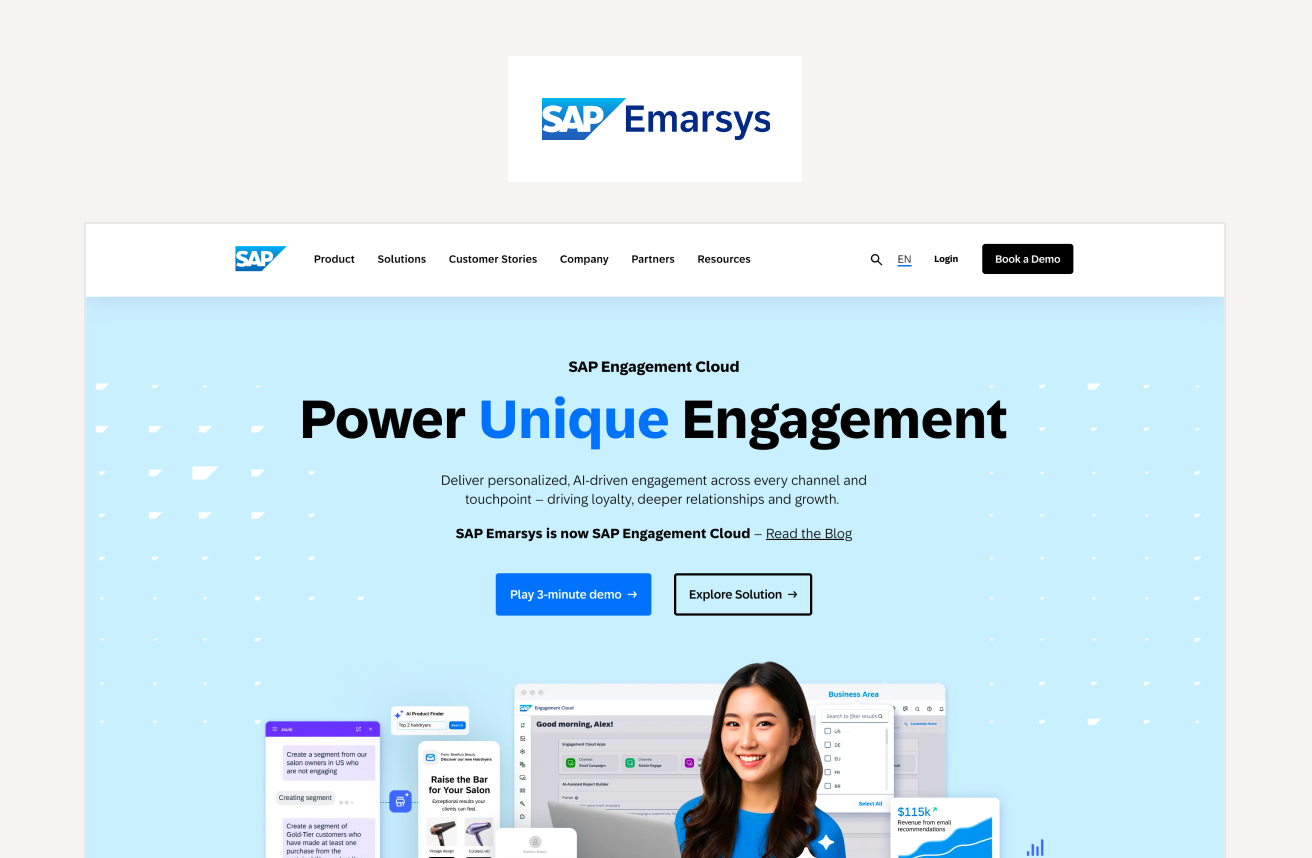
SAP Engagement Cloud is a customer engagement platform for retailers that brings customer data and marketing campaigns into one system. It’s best suited to larger retailers operating across multiple brands or regions, with central teams that need to manage campaigns while giving local teams room to adapt them.
Key features
- Store and online purchases feed one customer view. Data from across the business is combined in real time, and marketers can use it to personalize messages on every channel.
- Loyalty is built into the platform. Points and tiers are managed in the same tool that sends the campaigns, with pre-built tactics to get a program started.
- AI runs campaigns once marketers set the direction. Agents also work alongside teams on predictions and personalization.
- The mobile wallet connects campaigns to the store. A wallet loyalty card identifies members in-store, and vouchers sent to the wallet can be redeemed online or in person. Direct mail and contact center interactions sit alongside the digital channels.
3. Bloomreach Engagement
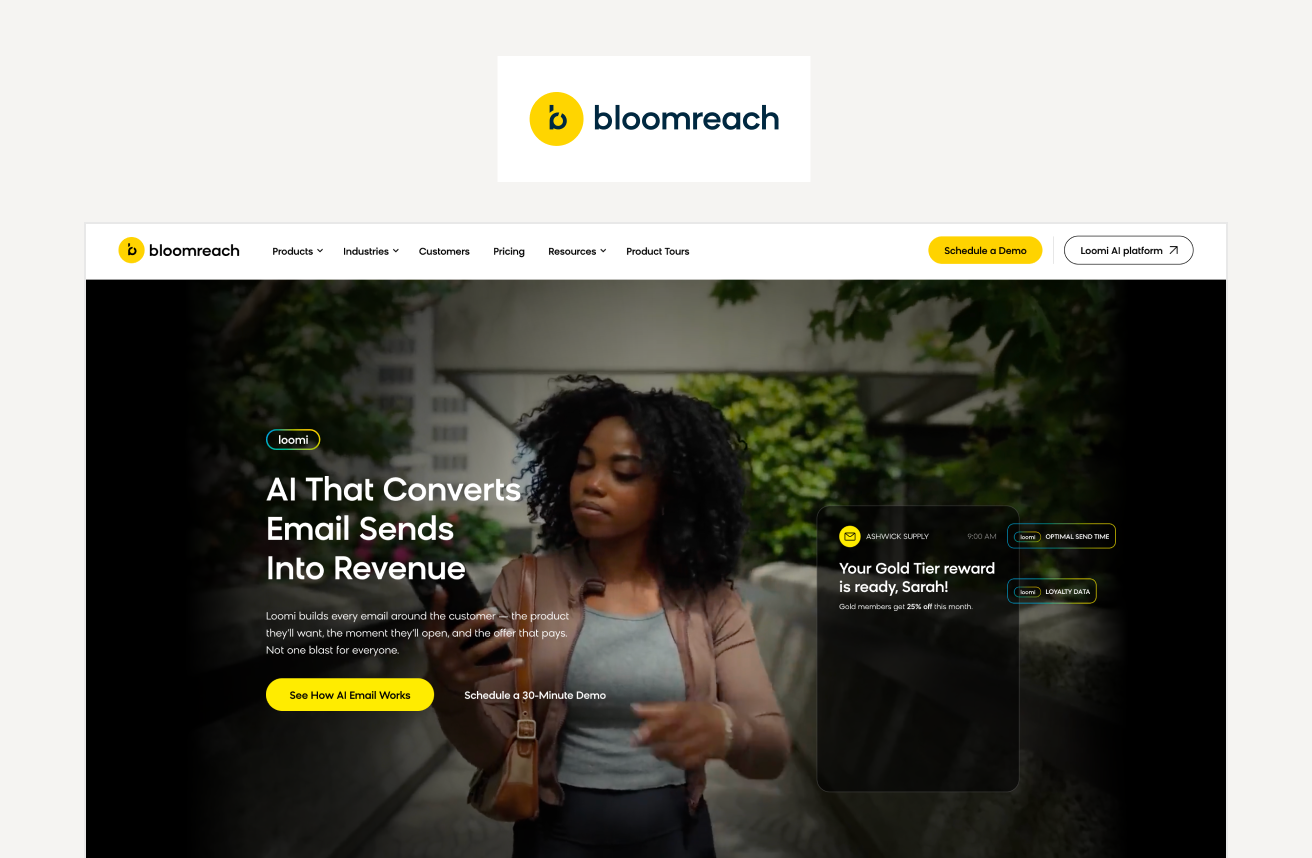
Bloomreach Engagement is a marketing automation tool with customer data built in, from a company that also makes e-commerce search tools. It’s best suited to retailers that sell mostly online and already manage loyalty in another tool.
Key features
- Profiles merge automatically when identifiers match. A shopper who logs in on a second device is joined to their existing record, and in-store purchases are added to that profile in real time.
- Loyalty tiers are built as customer groups. Marketers place customers in tiers based on purchases and browsing, then tailor messages to each tier. Points and rewards come from a connected loyalty tool such as Yotpo.
- A marketer states the goal and an agent builds the campaign. Loomi Marketing Agent assembles it in minutes, and each campaign stays open to review and adjustment.
- Store activity can trigger digital follow-up. A QR scan or POS purchase can start a campaign across email, SMS, web, and app.
4. Ometria
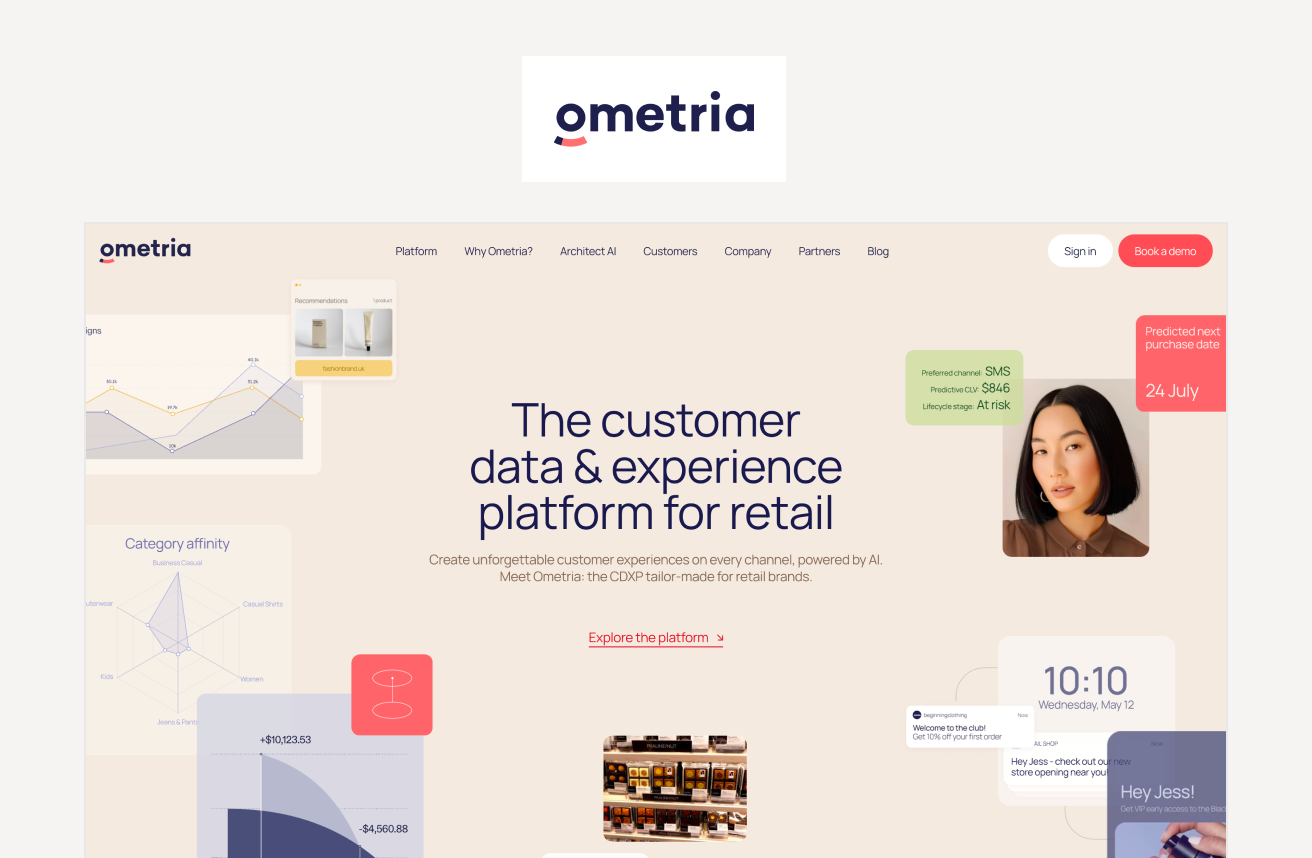
Ometria is a customer data and marketing platform built for retail. It’s best for retailers that want retail-specific data and campaigns and are comfortable running loyalty through a partner.
Key features
- Profiles merge when a match is certain and soft-link when it’s partial. Earlier anonymous browsing is attached once a shopper identifies themselves, and in-store touchpoints feed the same profile.
- Loyalty data comes in from third-party integrations. Points and tier data enrich each profile so campaigns can target members by status.
- AI predicts what each customer is likely to do next. Architect AI adds a predicted next purchase date to each profile, along with the products and categories that the customer leans toward. A data exploration agent answers the team’s performance questions in plain language.
- Store teams get customer profiles for clienteling. Geotargeted messages can also push shoppers toward specific stores.
5. Optimove
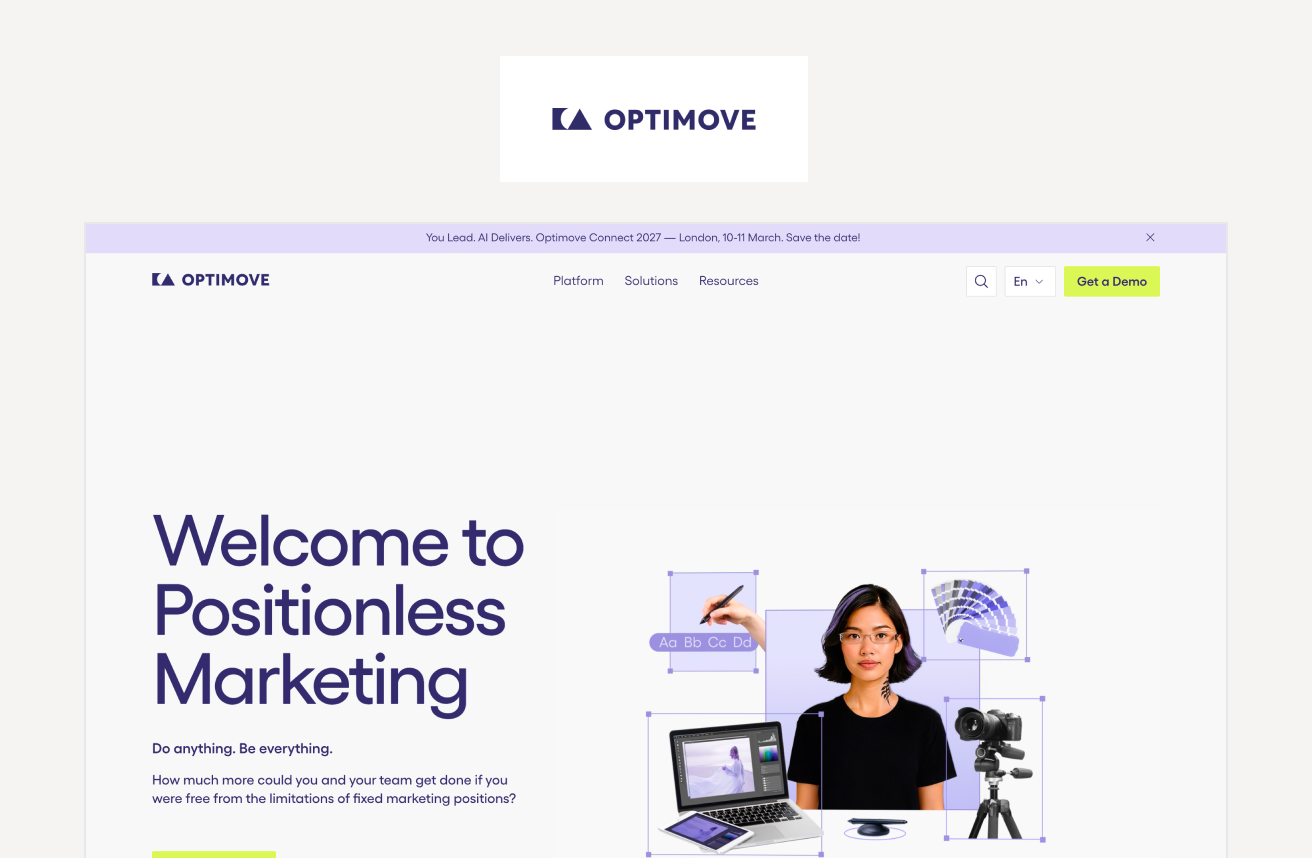
Optimove combines customer data, AI decision-making, and its own messaging channels. It’s best for teams that want AI to recommend the next action for each shopper while a person stays in charge of sending.
Key features
- Purchase history and live behavior sit in one profile. For retailers, that includes real-time data from e-commerce and POS.
- Loyalty runs through the Gamify module. It offers custom currencies, badges, and tiered promotions that scale with a customer’s VIP level or predicted value.
- Agents prepare campaigns and a marketer switches them on. They recommend offers and build audiences, and nothing is sent without manual activation.
- Email, SMS, push notifications, and web personalization are sent natively. Marketers can also pass each customer’s preferences and purchases to store staff for proactive outreach.
6. Klaviyo
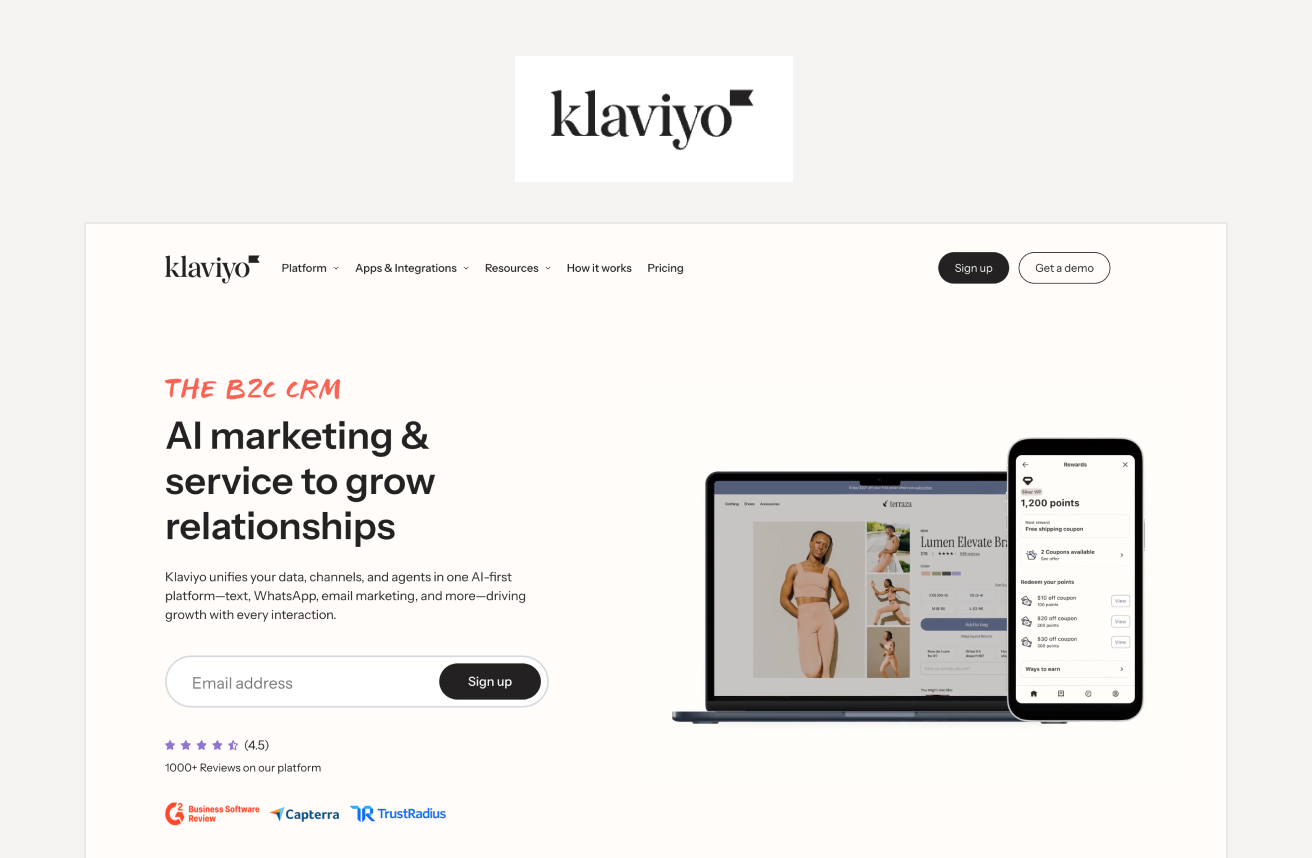
Klaviyo is a marketing and customer service platform for consumer brands, with a large library of ready-made integrations. It’s best for retailers that sell mainly online and add loyalty through a partner app.
Key features
- Profiles merge when two identifiers appear together. An email and phone number submitted on one form are joined to a single record, and browsing from before a shopper identified themselves can be backfilled.
- Loyalty comes from a connected app. Marketplace apps such as Leat supply points and tiers as events to build flows on.
- A plain-language request produces a full campaign. A marketer can ask Composer for a win-back campaign for lapsed VIPs with a set discount and get it built across channels. Customer Agent separately handles order and returns questions.
- Store activity reaches Klaviyo through POS integrations. Messages go out by email, text, push, and WhatsApp. Wallet passes depend on a partner app.
7. Insider One (formerly Insider)
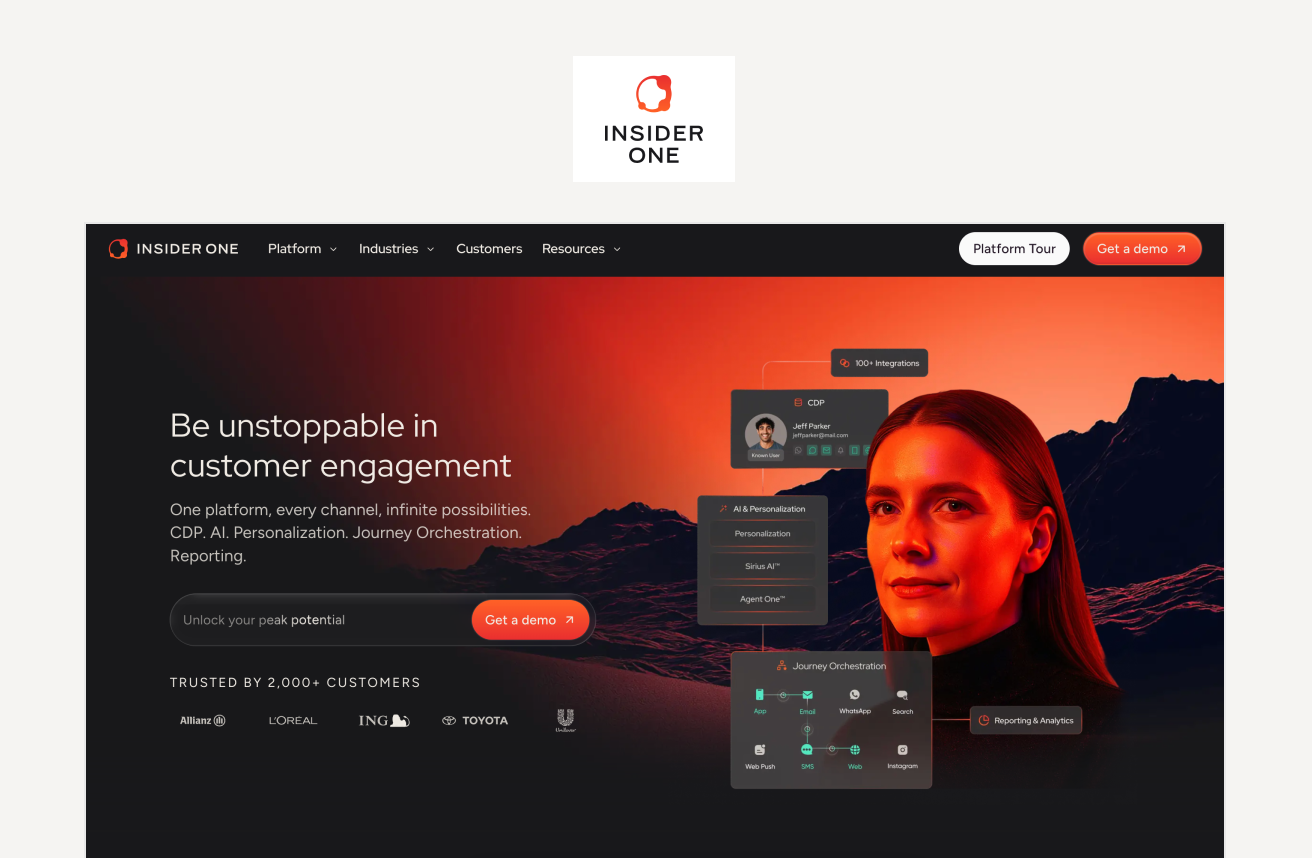
Insider One combines customer data with cross-channel campaigns and a set of AI agents. It’s best for retailers that want to choose how much the AI does on its own and already have a loyalty system to connect.
Key features
- Anonymous and known records merge into one profile. Matching is both exact and probabilistic, so a shopper is recognized across devices and sessions.
- Loyalty data is imported from another system. Tier, points, and reward data arrive by API and can then be used in targeting. A loyalty scan at the POS ties a store purchase to the digital profile.
- Teams choose how much the agents do alone. Four modes run from human-led execution to autonomous operation inside set limits. Agents check opt-in status on each channel before sending and log their actions for audit.
- Store purchases can trigger digital campaigns. In-store purchase history is brought in by API or file upload and can be used to target customers across email, SMS, WhatsApp, push, and web.
8. Braze
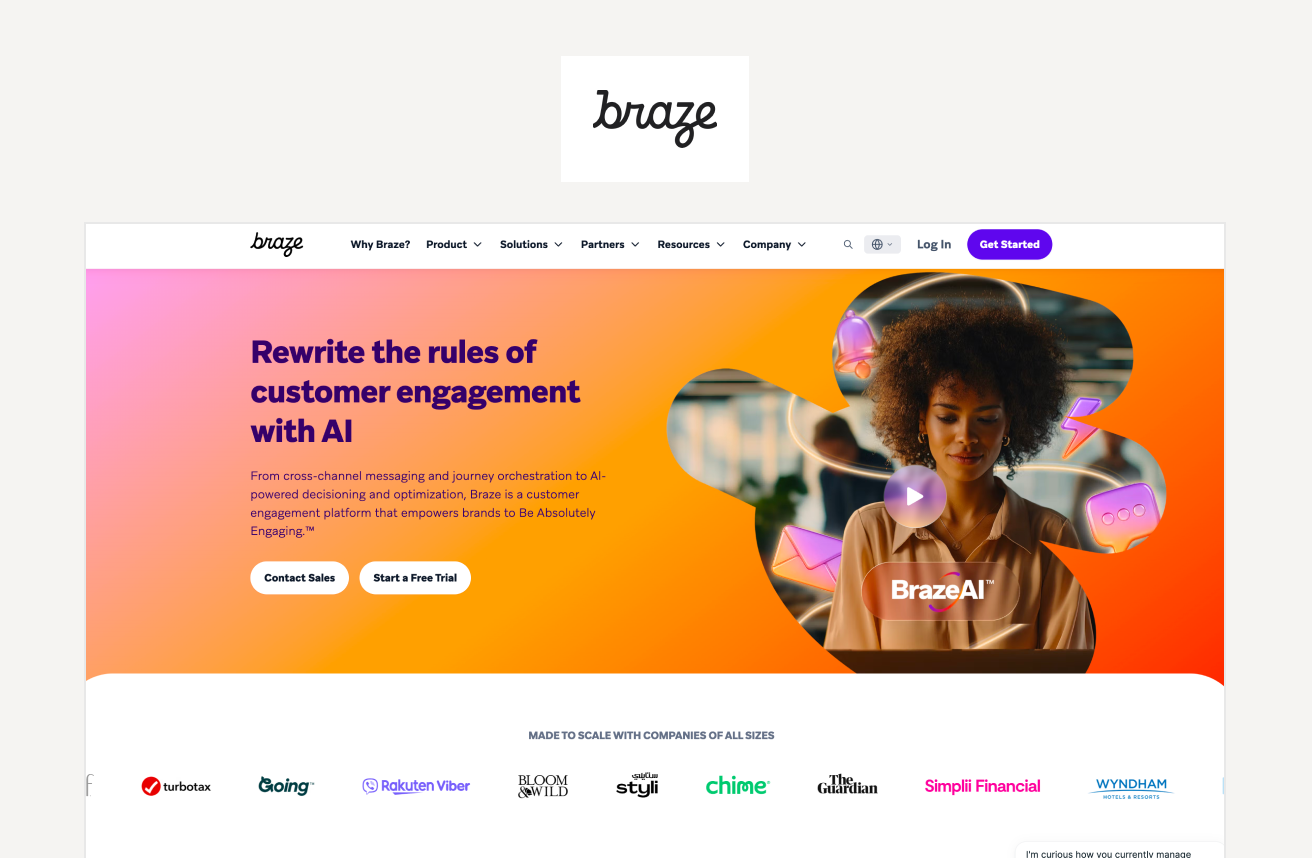
Braze is a customer engagement platform for sending real-time messages across channels. It’s best for retailers with a strong mobile app and a separate loyalty platform to plug in.
Key features
- Duplicate customer records are merged into one. Braze matches records on details such as email and phone number, and browsing from before a shopper signed up carries over. Store purchases are sent in by API or synced from a data warehouse.
- Loyalty data comes from a partner platform. Loyalty tools such as Open Loyalty and Talon.One Pass points balances and tier changes are sent to Braze, which can then trigger messages.
- AI agents work inside individual campaign steps. They write copy such as subject lines for each recipient and send people down different paths based on their behavior. Teams can test an agent’s output and see a log of each run.
- In-store shoppers are reached through their phone. A QR code in the store can open the retailer’s app, and a message can be sent when a customer is near a location.
9. Salesforce Agentforce Marketing
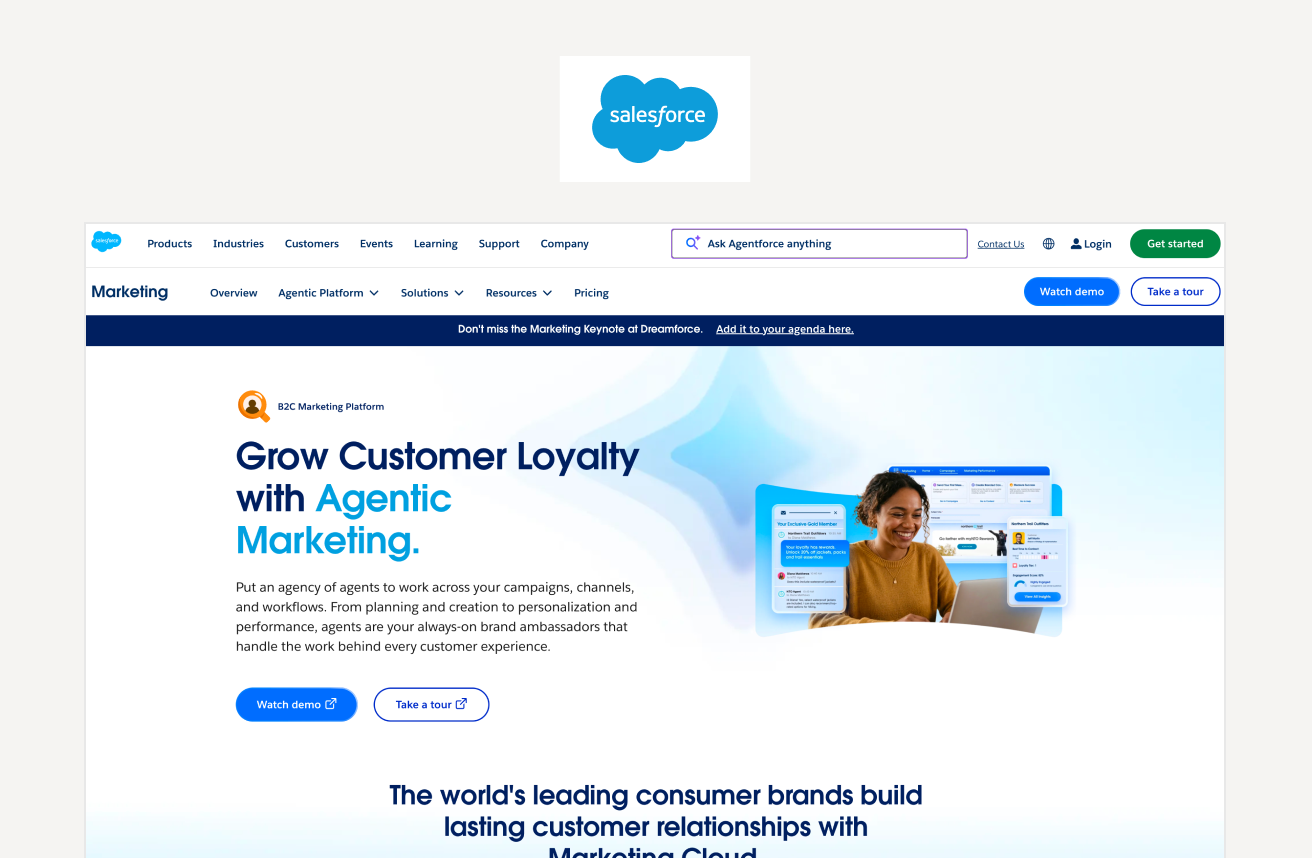
Agentforce Marketing is Salesforce’s marketing platform for B2C and B2B teams. It connects with Salesforce’s Loyalty Management product, so retailers can use loyalty data in campaigns and personalized customer journeys. It’s best suited to large retailers already using Salesforce for customer data.
Key features
- Scattered identifiers are matched into one record. Data 360 merges an email address and a device ID that belong to the same person, and audiences can be generated from that data in real time.
- Loyalty is a Salesforce product with its own license. Loyalty Management supports points, tiers, and custom reward currencies, and its Advanced edition runs several programs on one platform.
- Agents cover a campaign from audience to optimization. Campaign Agent builds segments and content and picks channel and timing, and marketers review and approve before it launches.
- Store systems connect through loyalty APIs. A POS can look up a member’s tier, enroll new members, and redeem points or vouchers.
10. Adobe Journey Optimizer
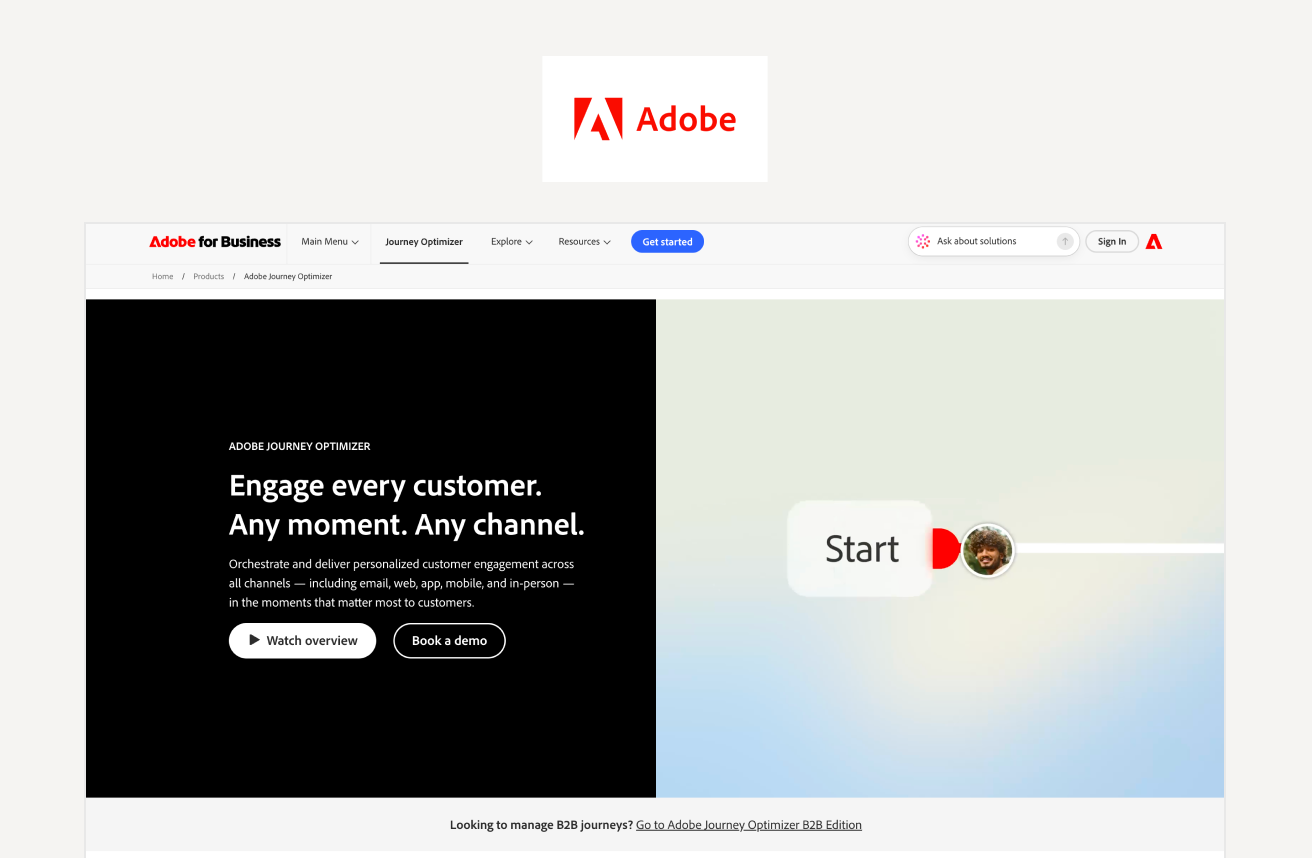
Adobe Journey Optimizer is the campaign and messaging application within Adobe Experience Platform. It’s best for large retailers already using Adobe’s platform, with a loyalty program run elsewhere.
Key features
- Profiles combine email, web, and in-store purchase data. The same profile and identity graph serve every Adobe application on the platform, so no separate integration is needed between them.
- A loyalty product works alongside an existing program. Journey Optimizer Loyalty adapts challenges, rewards, and timing to each member’s behavior, sitting on top of the loyalty program a retailer already runs.
- Journey Agent builds journeys from a written request. It sets up triggers, branches, and channel content, then simulates the journey with test users before activation.
- Messages go out by email, SMS, push, and direct mail. Channel-specific consent rules need a paid privacy add-on.
11. MoEngage
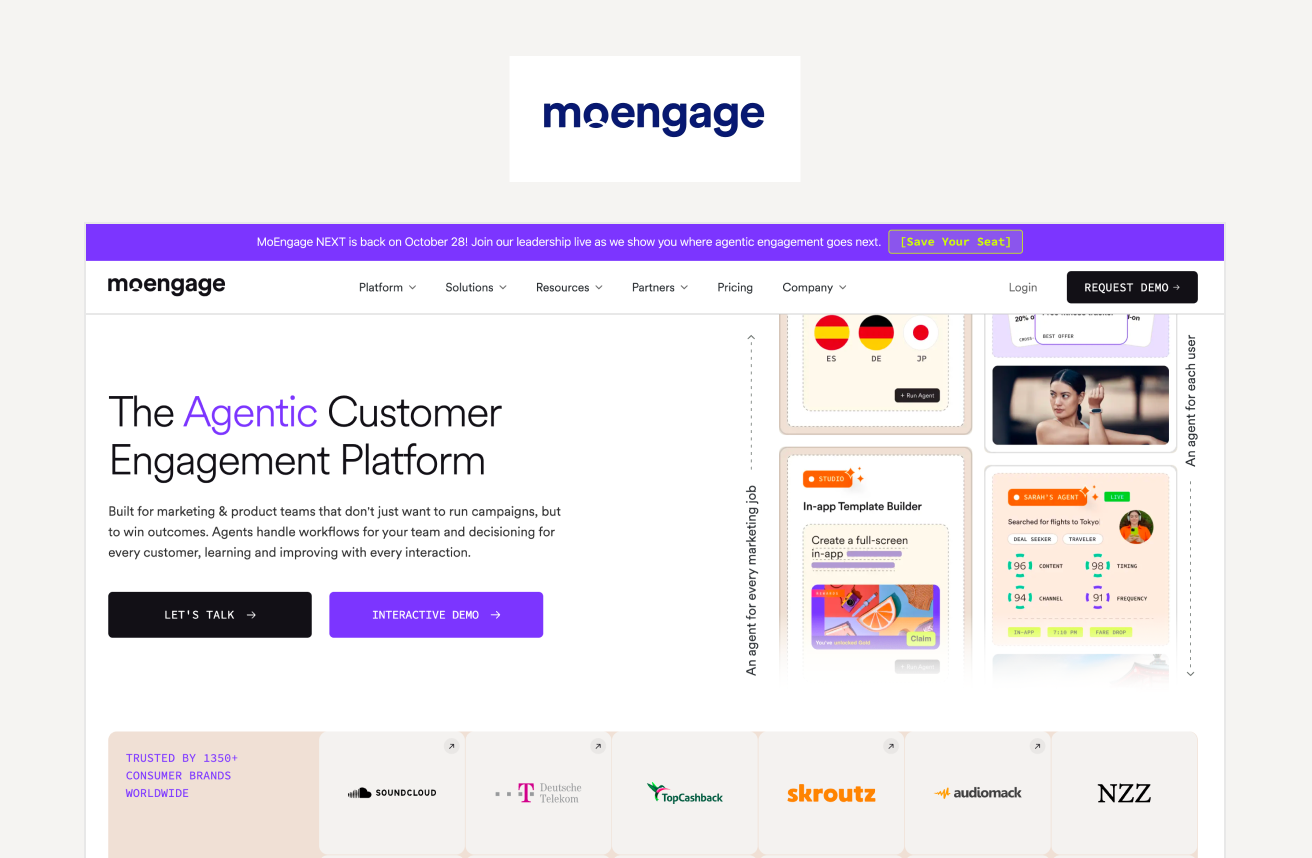
MoEngage is a customer engagement platform that builds customer profiles from a brand’s own systems and data warehouse. It’s best for digital-first retailers that keep loyalty in a partner tool.
Key features
- Profiles merge on identifiers the brand chooses. Matching is exact only, on values such as email, phone number, or customer ID, with rules for which data wins when two records combine.
- Loyalty data is pulled in from a partner. MoEngage integrates with loyalty vendors including Eagle Eye and LoyaltyLion, which let a campaign show a member’s current points.
- Agents cover both team workflows and per-customer decisions. Merlin AI includes agents for copy and design, and custom agents that own a marketing workflow end to end.
- Wallet passes come through partners. PassKit and Skycore generate the passes that MoEngage campaigns send, alongside its own digital channels such as email and WhatsApp.
12. CleverTap
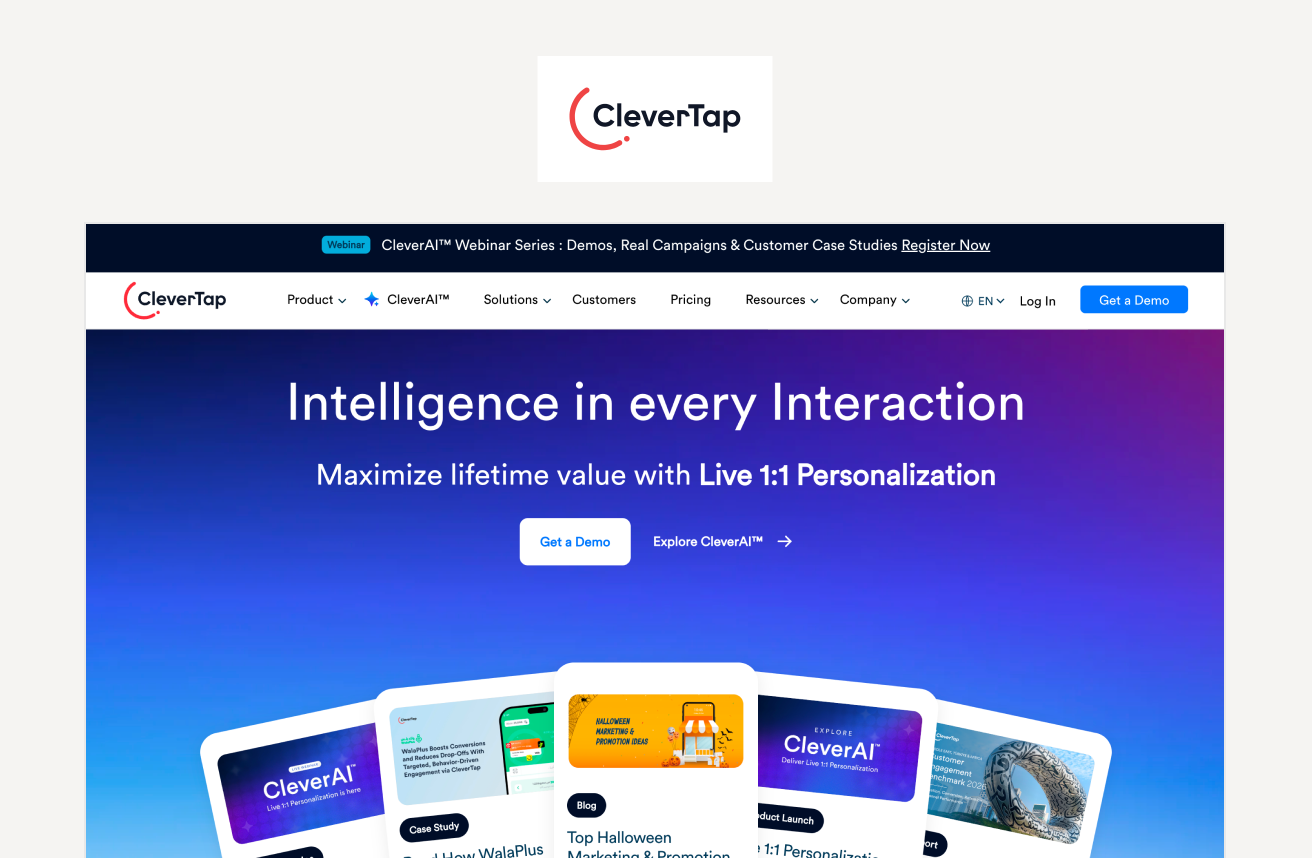
CleverTap is a customer engagement platform, originally built for mobile apps, that includes its own points and rewards tools. It’s best for retailers whose loyalty program runs mainly through an app.
Key features
- Anonymous history attaches to the shopper at login. A profile is then unified across every device where the same ID or email is used, so one person isn’t counted twice.
- A points wallet and reward campaigns are built in. Loyalty Wallets hold points with configurable expiry and redemption order, and Promo Campaigns issue points or coupons in response to what a customer does or fails to do in a set window.
- Agents are split by job, from strategy to execution. Agents plan toward a goal, choose the offer for each person, write the message, and run the journey at a trust level the team selects.
- Store purchases can add or remove points. The wallet API records POS as the sale channel along with a store code. Messages go out on digital channels such as push and WhatsApp.
13. Capillary Technologies
Capillary is a loyalty platform that also sells its own customer data and campaign products. It’s best for large retailers that want the loyalty program and the messages around it from one vendor.
Key features
- Loyalty card numbers are part of how identity is resolved. CDP+ links an app login and an in-store purchase to the same member, checking for duplicates as data arrives.
- Loyalty is the core product. Loyalty+ supports multiple tiers with upgrade and downgrade rules, and earning rates that differ by category or SKU.
- The AI prepares the work, and a person approves it. aiRA recommends a campaign and sets up the workflow, and nothing customer-facing goes live without sign-off from an authorized user.
- Points are earned and redeemed at the POS as well as online. A member who earns in-store sees the balance updated in the app. Engage+ sends campaigns by email, SMS, and social media.
14. Antavo
Antavo is a dedicated loyalty platform that runs the program and passes its data to other tools for messaging. It’s best for retailers that are happy with their engagement platform and want a more flexible loyalty engine behind it.
Key features
- Antavo collects member data without being the customer database. It gathers preferences through surveys and games and connects to a retailer’s CDP or CRM through pre-built integrations.
- Program rules go well beyond points. Tiers can be based on spend or be invitation-only, and programs can add challenges and referrals in several custom currencies.
- The AI advises the team. Timi AI analyzes workflows and summarizes a member’s history on request.
- Members are identified at the register and rewards are redeemed through the POS. Loyalty cards go to Apple Wallet and Google Wallet. Emails and push messages are sent by a connected platform such as Klaviyo or Braze.
15. Talon.One
Talon.One is a rules engine for promotions and loyalty that connects to a retailer’s checkout. It’s best for teams with developers that want fine control over incentives across several markets.
Key features
- Customer data comes from wherever it already lives. Talon.One uses segments and events sent from a retailer’s other systems, and keeps a profile for each member’s points.
- Loyalty and promotions run in the same tool. Programs can combine tiers with paid memberships, and points can be used inside promotions.
- AI picks which offer to show and when. Talon.One Predict estimates how likely a customer is to buy and applies an incentive in real time, within the budgets and rules the team has set.
- The register checks with Talon.One at checkout. Discounts and loyalty rewards are confirmed in real time, with offline and hybrid modes for stores with poor connectivity. Messages are sent by a connected engagement platform.
Any omnichannel customer engagement platform you choose needs to earn back more than it costs, so work out the numbers before you commit.
ROI framework: Calculating the business case for an omnichannel engagement platform
Whoever signs off the budget will trust savings they can check more than gains you’re predicting. Build the case on costs first, then add a cautious estimate of extra profit on top. Return on investment is that extra profit, minus the cost, divided by the cost. Here’s how to work it out, step by step.
Work out the cost
Add the platform fee to the staff time needed to run it. Then subtract what you’d stop paying: fees for the tools being replaced, and the hours spent moving data between them.
For example, if you pay €30,000 a year for the platform and estimate €20,000 in staff time to run it, your starting cost is €50,000. If you can retire €12,000 of other software and save €8,000 in staff time previously spent moving data between systems, your net annual cost is €30,000.
Work out the extra profit
Compare loyalty members with other customers on how often they buy and how much they spend per order. Multiply that gap by the number of members and your profit margin, then subtract what you spend on rewards. That’s the existing profit difference between members and other customers, and a platform earns its fee by getting members to spend more or bringing more customers into the member group.
If your 50,000 loyalty members place 4 orders a year at an average of €60, while other customers place 3 orders at €55, members spend €240 a year compared with €165. That’s a €75 difference per member. At a 40% profit margin, it represents €30 of profit per member, or €1.5 million across your member base. If rewards cost you €200,000 a year, the existing profit difference is €1.3 million.
Treat the result as a range
The costs are known, but the extra profit is a projection. Calculate it for a small improvement and a larger one, and ask each vendor for a retail customer whose results back up the estimate.
Suppose reward costs stay the same and the platform gets members to spend 0.5% more. That’s €1.20 in extra sales per member, or €24,000 in extra profit across 50,000 members at a 40% margin.
Against the €30,000 net cost, the return is −20%. If members spend 2% more, the extra profit is €96,000, and the return is 220%. The platform breaks even at just over 0.6%, so the question for vendors is whether they can show an improvement above that for a retailer like you.
Why Voyado is built to engage customers and win in retail
Customer engagement solutions built for retail from the start mean less stitching together different tools, and more confidence that your customers are getting the right information at the right time.
Voyado makes that possible by keeping each customer’s loyalty info and online and in-store activity on one profile. AI-powered recommendations then use that customer behavior to choose each person’s next message or offer, building stronger customer relationships and more repeat business.
FAQs
What is a customer engagement platform for retail?
A customer engagement platform for retail is software that brings all your customer data into one place, including store purchases and loyalty activity, and uses it to send personalized messages across multiple channels. Because every channel draws on the same customer information, a shopper gets a consistent customer experience whether they buy online or in store.
How is a retail-native platform different from generic marketing automation?
Generic customer engagement tools are built for many industries, so a retailer has to connect them to its store and loyalty systems, often through custom integrations. Those connections can delay data, and a customer may get an offer for something they bought that morning. A retail-native platform is designed around store sales and loyalty from the start, which gives marketing teams a unified customer view with less to connect.
What should retailers look for when evaluating a customer engagement platform?
Start with the data: check whether store purchases reach the customer record quickly and whether the loyalty program is part of the platform. Then look at what the platform does with it, meaning what the AI handles on its own and whether one campaign can reach customers on every channel, including in-store. Retailers selling in several countries should also confirm it works across markets.
What is agentic AI in a customer engagement platform?
Agentic AI carries out tasks itself, whereas most AI tools only make suggestions. In a customer engagement platform, that can mean building a campaign from a stated goal or choosing the channel and timing for each customer. Marketing teams stay in control by setting rules, such as no discount for anyone who bought in the past week, and by deciding which actions need approval.
How do you measure the ROI of a customer engagement platform?
Take the extra profit the platform generates, subtract its total cost, and divide the result by that cost. The cost is the platform fee plus staff time, minus the fees for any tools it replaces. The extra profit comes from customer retention: compare how often loyal customers buy and how much they spend per order against other customers, then apply the profit margin.
How long does implementation take?
Sending a first campaign usually takes between a few weeks and three months. The main factors are how many systems need connecting, such as the store register and the loyalty tool, and how much technical expertise the retailer has in-house. Ask each vendor how long setup took for a retailer of similar size.