TL;DR
- Salesforce Data Cloud is a Salesforce-native customer data platform designed for data unification and activation, but it is no longer the default choice for every enterprise business in 2026.
- Teams now evaluate Salesforce Data Cloud competitors across composable CDPs, neutral data platforms, and engagement suites that better support managing customer data and existing infrastructure.
- This guide explains where Salesforce Data Cloud fits, why buyers explore Salesforce Data Cloud alternatives, and how platforms differ in data architecture, unified customer profiles, and activation across multiple channels.
- For retail and e-commerce brands, Voyado offers a focused alternative that brings customer data, segmentation, personalized marketing, and omnichannel activation into one platform, without Salesforce lock-in.
Salesforce Data Cloud shows up in almost every shortlist for customer data unification.
That alone tells you how far it has come.
But for many enterprise and upper mid-market teams, the real question in 2026 isn’t, “Can Salesforce Data Cloud do this?” It’s “Is it the right fit for how we want to manage customer data, activate insights, and scale?”
You’ll see how Salesforce Data Cloud compares to other serious solutions, and what to look for if your goal is unified customer profiles that actually power customer journeys, not just sit in a data lake.
Why teams are evaluating Salesforce Data Cloud alternatives in 2026
Salesforce Data Cloud remains a strong customer data platform, especially for enterprise businesses already invested in Salesforce CRM.
But in 2026, more teams are weighing trade-offs around fit, cost, and speed.
Complexity and implementation effort
Salesforce Data Cloud offers deep data unification and identity resolution, but it often requires specialized skills.
Many teams rely on data architects, engineering teams, or external partners to manage data transformation, automation tools, and ongoing changes.
For marketing teams without that support, complexity can slow progress.
Total cost of ownership
Licensing is only part of the cost.
When teams factor in Salesforce tools, integration work, data storage, and ongoing administration, the total cost of ownership becomes a deciding factor.
This is why some organizations explore more cost-effective Salesforce Data Cloud alternatives.
Ecosystem lock-in
Salesforce Data Cloud works best inside the Salesforce ecosystem.
That is ideal for some enterprise companies, but less so for teams running mixed CRM software, external data sources, or non-Salesforce marketing automation platforms.
Neutral solutions often fit more naturally into an existing tech stack.
Data architecture preferences
Not every team wants customer data centralized inside a single platform.
Some prefer warehouse-centric or composable CDP approaches built around data lakes and data warehouses like Snowflake or Databricks.
These models offer more flexibility for managing customer data across multiple sources.
Vertical needs and time-to-value
Salesforce Data Cloud is designed to work across industries.
Retail and B2C teams often look for platforms with built-in customer engagement, personalization, loyalty, and faster activation.
This is where alternatives focused on quicker deployment and pre-built customer journeys start to stand out, including platforms featured in best omnichannel customer experience platforms.
Now it’s time to look at the available alternatives so that you can find the solution that best fits your business and teams.
Top Salesforce Data Cloud competitors for customer insight unification in 2026
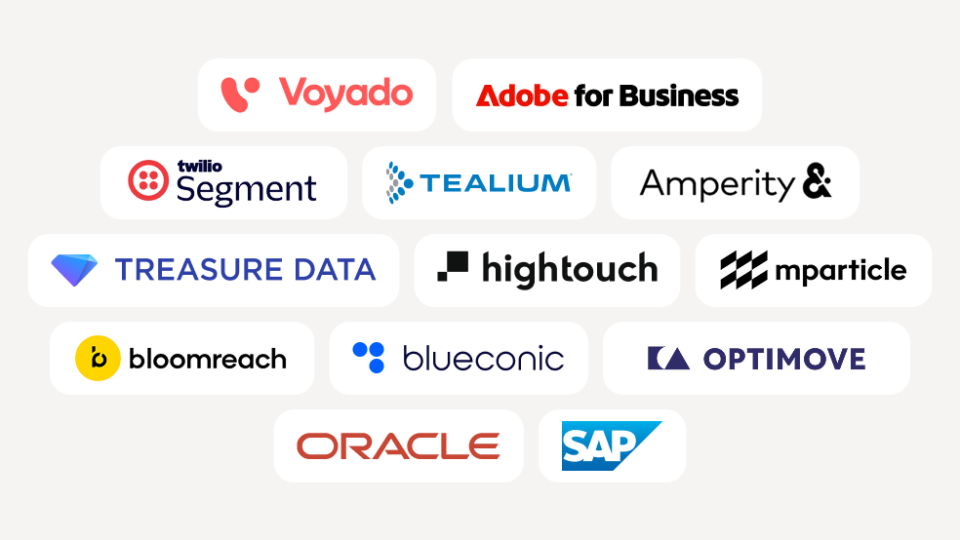
Below are the Salesforce Data Cloud competitors most often considered by enterprise and retail teams in 2026.
1. Voyado – retail-focused customer insight and engagement platform
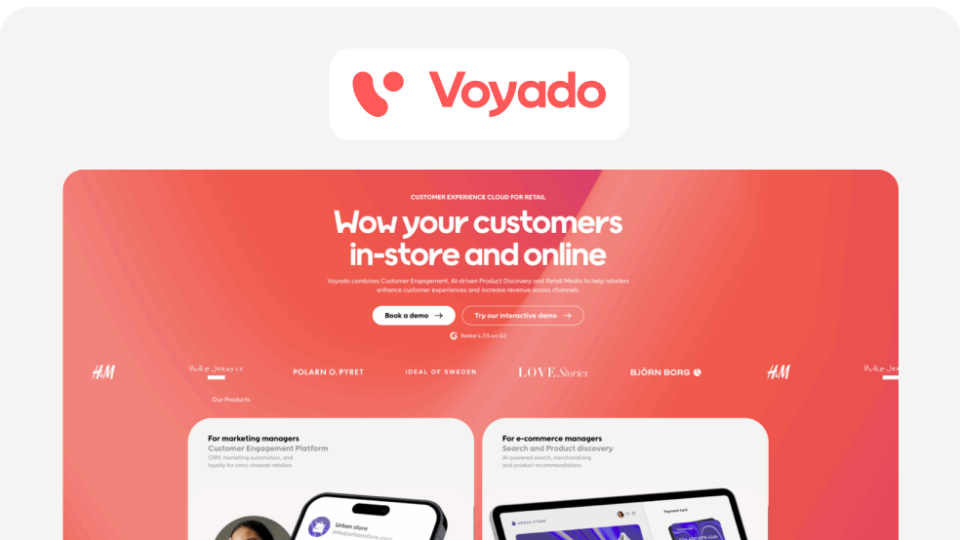
Voyado is a retail and e-commerce focused customer experience platform that combines customer data unification, segmentation, and omnichannel activation in one system.
Best for
Retail and ecommerce businesses that want unified customer profiles, customer engagement, and activation without relying on a Salesforce-centric tech stack.
Key strengths for customer insight unification
First-party data collection, identity resolution, built-in segmentation, and direct activation across email marketing, SMS, push notifications, and onsite personalization.
Things to consider
Designed specifically for retail and B2C. Not positioned as a general-purpose enterprise CDP for all industries.
2. Adobe Real-Time CDP
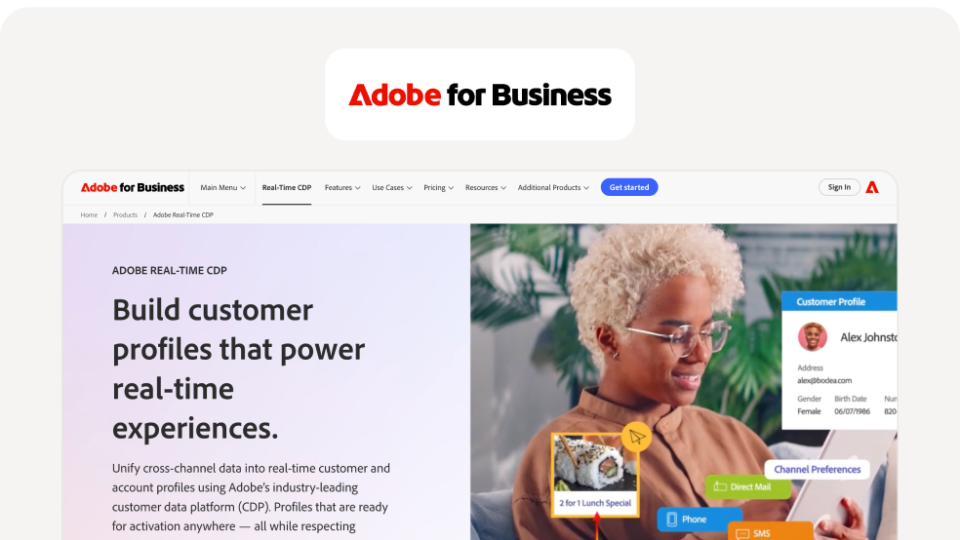
Adobe Real-Time CDP is part of Adobe Experience Cloud and focuses on real-time customer data unification across Adobe tools.
Best for
Enterprise companies already using Adobe Experience Cloud, Adobe Target, and Adobe Analytics products.
Key strengths for customer insight unification
Identity resolution at scale, large-volume data collection, and tight integration with Adobe marketing campaigns.
Things to consider
High complexity and cost. Best fit when Adobe is already central to the tech stack.
3. Twilio Segment
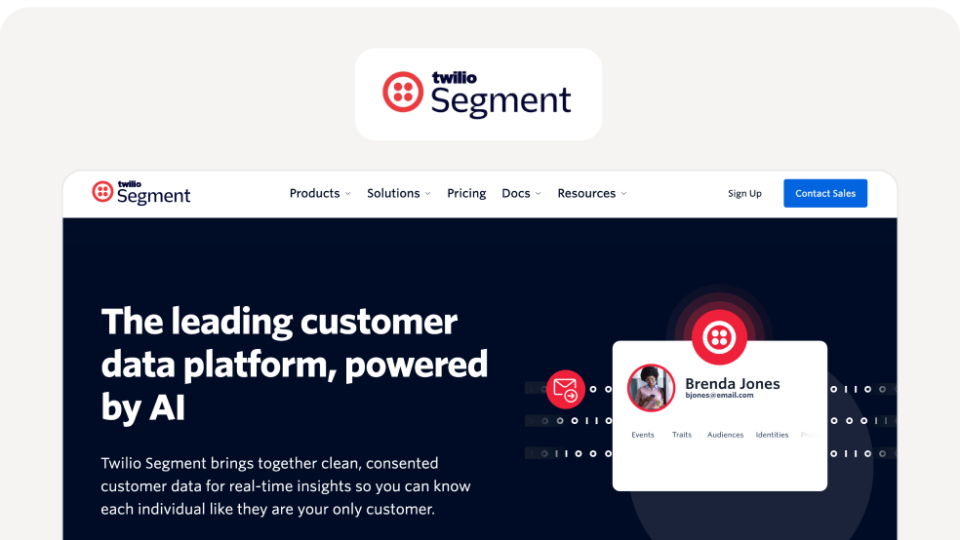
Twilio Segment is a customer data platform centered on data collection, routing, and event-based customer data pipelines.
Best for
Teams that want a composable CDP approach and control over how customer data flows into other tools.
Key strengths for customer insight unification
Broad connector ecosystem, real-time ingestion, and support for multiple sources and external data.
Things to consider
Limited native activation. Customer engagement requires additional tools.
4. Tealium Customer Data Hub
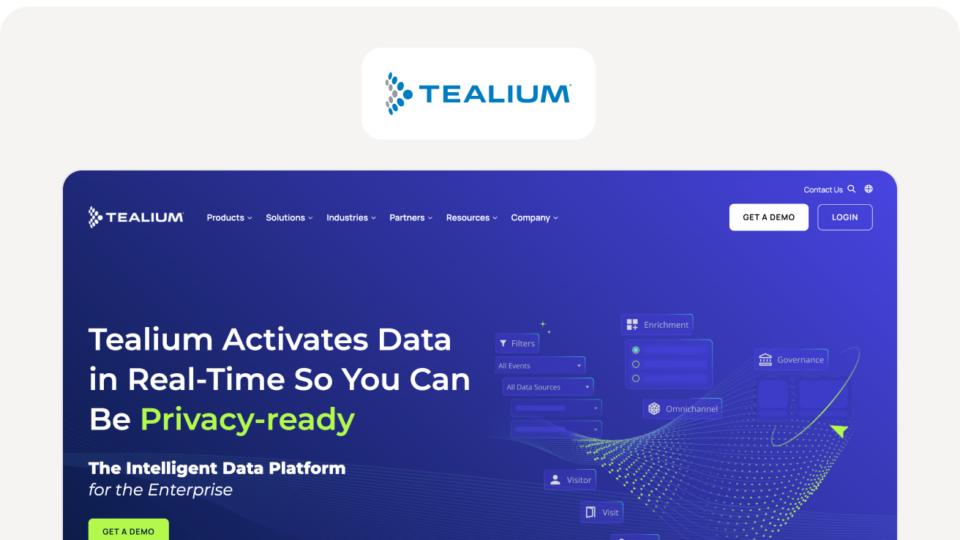
Tealium Customer Data Hub is an enterprise CDP with strong roots in tag management and real-time data orchestration.
Best for
Enterprise businesses managing complex data collection across web, mobile, and offline touchpoints.
Key strengths for customer insight unification
Real-time segmentation, consent management, and integrations with marketing cloud platforms.
Things to consider
Implementation effort can be high. Activation often depends on external systems.
5. Amperity Customer Data Platform
Amperity is a customer data platform focused on identity resolution and analytics for large consumer brands.
Best for
Organizations with fragmented customer data and complex identity challenges.
Key strengths for customer insight unification
Advanced identity resolution, rich customer profiles, and analytics to support data driven decisions.
Things to consider
Primarily insight-focused. Activation typically happens outside the platform.
6. Treasure Data CDP
Treasure Data is an enterprise CDP built on a data lake architecture with strong analytics capabilities.
Best for
Teams that want control over customer data storage and integration with existing data warehouses.
Key strengths for customer insight unification
Scalable data lakes, identity resolution, and support for complex data transformation.
Things to consider
Activation relies on external marketing tools. Less opinionated out of the box.
7. Hightouch (Composable CDP / Reverse ETL)
Hightouch is a composable CDP focused on syncing customer data from data warehouses into operational tools.
Best for
Teams using a warehouse-first architecture with platforms like Snowflake or BigQuery.
Key strengths for customer insight unification
Reverse ETL, warehouse-based unified customer profiles, and flexibility across tools.
Things to consider
Depends heavily on existing infrastructure. Limited native identity resolution.
8. mParticle
mParticle is a customer data platform originally focused on mobile and event-based data collection.
Best for
Product-led companies and digital-first businesses with complex event tracking needs.
Key strengths for customer insight unification
Real-time data collection, identity management, and integrations across multiple channels.
Things to consider
Marketing activation usually requires additional platforms.
9. Bloomreach Engagement
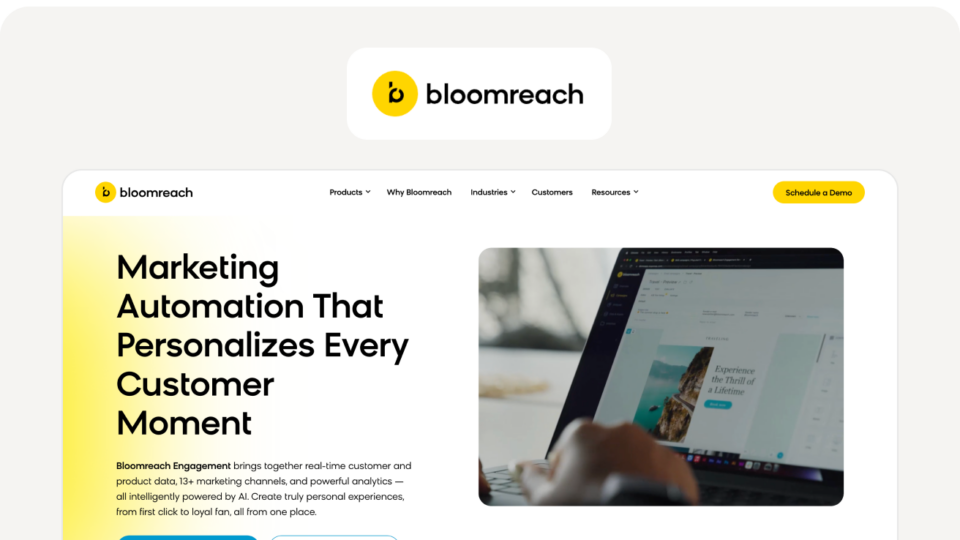
Bloomreach Engagement is a CDP and marketing platform with strong e-commerce personalization capabilities.
Best for
Retail and e-commerce brands focused on personalization and campaign execution.
Key strengths for customer insight unification
Customer profiles, segmentation, and built-in activation across email and web.
Things to consider
Less neutral than composable CDPs. Often evaluated alongside top Bloomreach competitors.
10. BlueConic
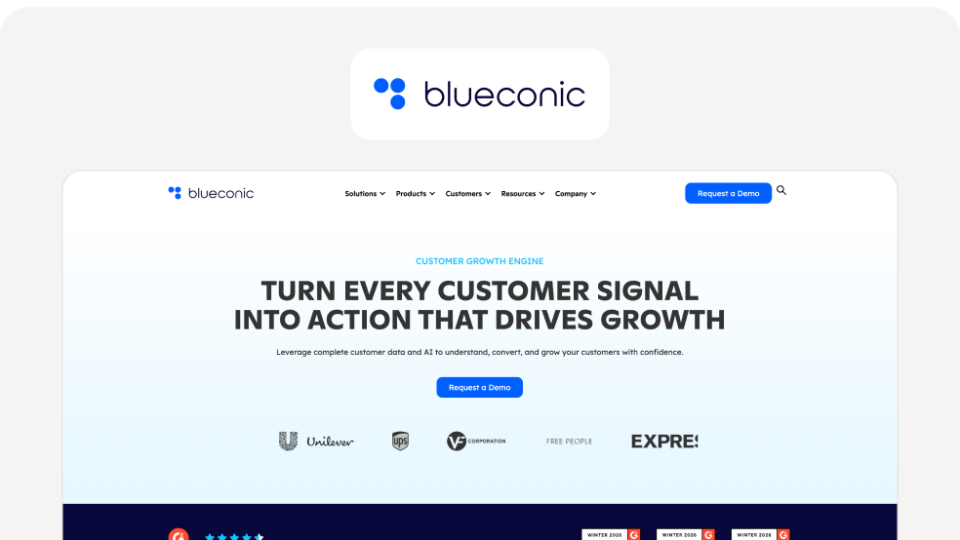
BlueConic is a customer data platform focused on first-party data collection and consent-driven profiles.
Best for
Marketing teams prioritizing privacy-friendly customer data strategies.
Key strengths for customer insight unification
Identity resolution, customer profiles, and integrations with marketing automation.
Things to consider
Advanced analytics may require external tools.
11. Optimove
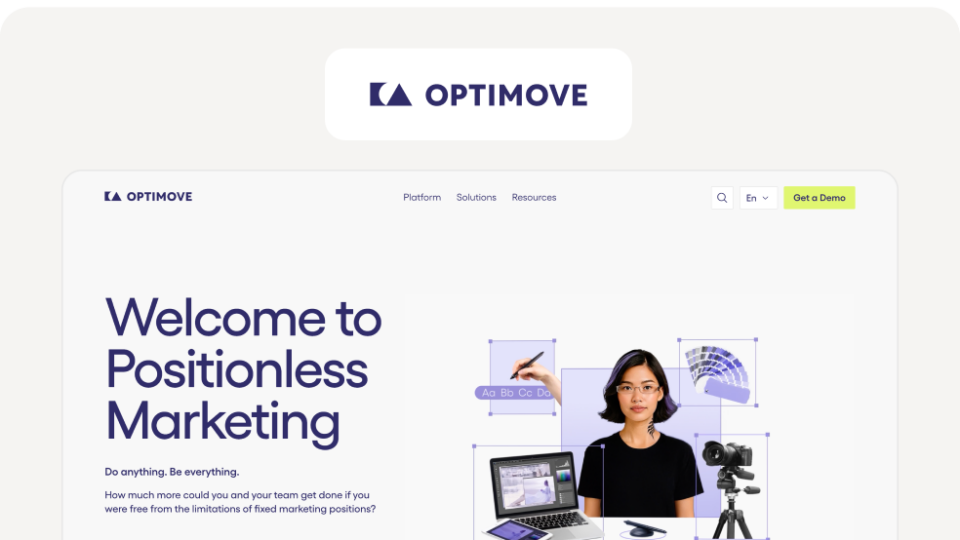
Optimove is a relationship marketing platform with CDP capabilities built around lifecycle marketing.
Best for
Brands focused on retention, loyalty, and personalized marketing.
Key strengths for customer insight unification
Customer journeys, predictive analytics, and integrated campaign execution.
Things to consider
Strongly opinionated platform. Less flexible as a neutral CDP.
12. Oracle Unity Customer Data Platform
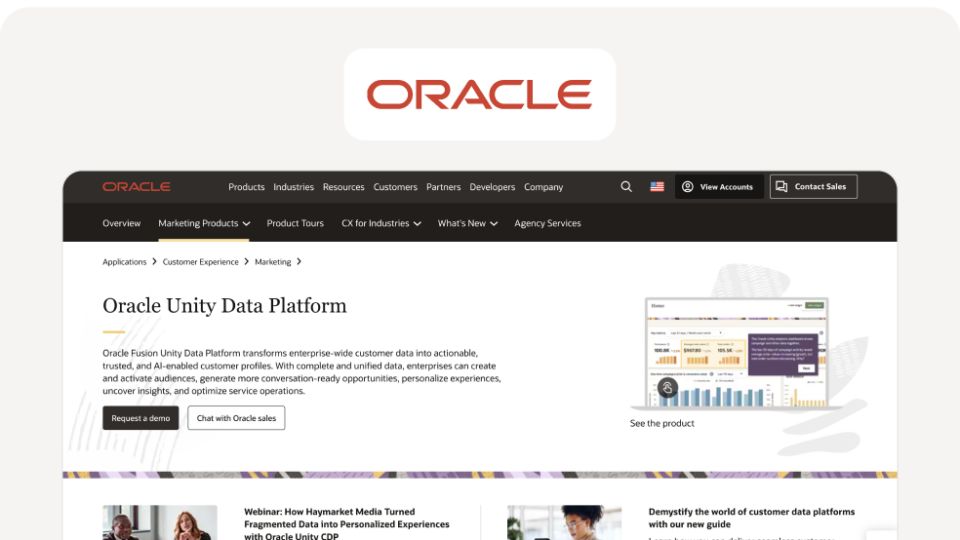
Oracle Unity CDP is Oracle’s enterprise customer data platform within the Oracle ecosystem.
Best for
Enterprise companies already using Oracle CRM and marketing tools.
Key strengths for customer insight unification
Data unification, analytics, and integration with Oracle customer service tools.
Things to consider
Best suited to Oracle-centric environments. Can be complex to deploy.
13. SAP Customer Data Platform
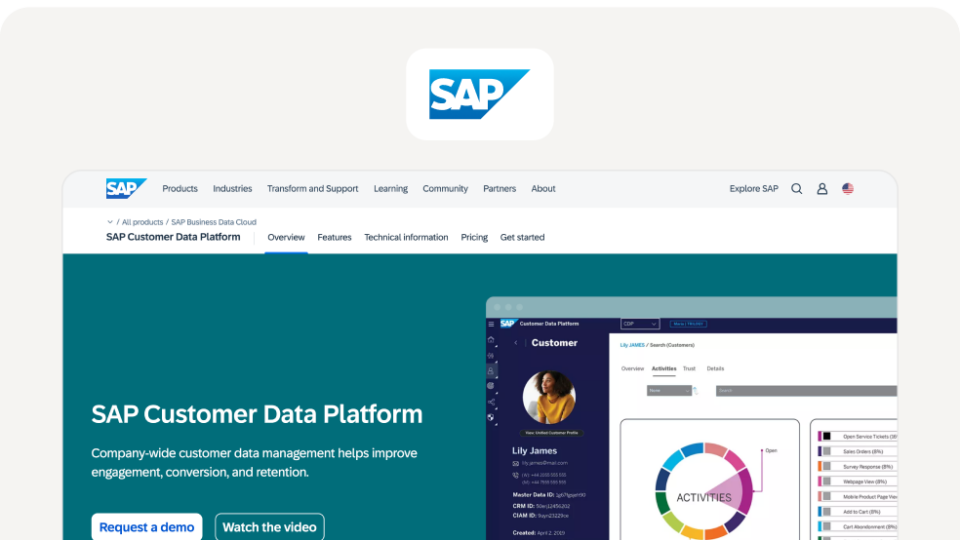
SAP Customer Data Platform is designed to unify customer data across SAP systems and digital touchpoints.
Best for
Enterprise businesses using SAP CRM, commerce cloud, and service cloud tools.
Key strengths for customer insight unification
Integration with SAP data, identity resolution, and enterprise governance.
Things to consider
Optimized for SAP environments. Less flexible for mixed stacks.
Taken together, these Salesforce Data Cloud competitors highlight how differently teams approach customer insight unification in 2026.
What stands out is that there is no single best solution for every business. Fit depends on industry, activation needs, and how closely customer data and execution need to work together.
That is where Voyado stands apart, focusing on retail teams that want customer data unification and omnichannel activation in one platform.
Where Voyado fits among Salesforce Data Cloud competitors
Voyado is designed specifically for retail and e-commerce brands that want customer insight unification and customer engagement to live in one platform, not spread across multiple systems.
Unlike generic customer data platforms, Voyado combines:
- CRM-grade customer profiles
- Customer data unification across online and in-store touchpoints
- Loyalty management
- Segmentation and predictive scoring
- Omnichannel activation across email, SMS, onsite, in-app, and in-store
This makes Voyado a specialized alternative for brands that might otherwise use Salesforce Data Cloud together with Salesforce Marketing Cloud, and often an additional loyalty system, to stitch everything together.
Voyado is particularly well-suited to fashion brands, specialty retail, multi-country omnichannel retailers, and e-commerce-led businesses that need faster activation from unified customer data.
When Salesforce Data Cloud may be a fit
- Large enterprise businesses heavily invested in Salesforce Sales Cloud, Service Cloud, and Marketing Cloud
- Organizations using Salesforce Data Cloud as a central data platform across multiple divisions
- Teams prioritizing broad data unification over built-in engagement execution
When Voyado may be a better fit
- Retail and e-commerce brands that want unified customer profiles, loyalty, and marketing automation in one place
- Teams looking for faster time-to-value with retail-specific use cases
- Brands that want less integration overhead for core customer engagement and lifecycle campaigns
Salesforce Data Cloud vs Voyado for retail and e-commerce
The table below compares Salesforce Data Cloud and Voyado side by side, with a focus on retail and e-commerce use cases.
| Dimension | Salesforce Data Cloud | Voyado |
| Primary focus | Enterprise-wide data platform / CDP in Salesforce | Retail-ready customer insight + engagement |
| Ecosystem | Deeply tied to Salesforce stack | Integrates broadly, optimized for retail stacks |
| Loyalty capabilities | Requires add-ons or separate tools | Native loyalty and retention tools |
| Activation | Via Salesforce Marketing / other products | Built-in marketing automation and personalization |
| Time-to-value for retail use cases | Depends on implementation partners | Retail-specific templates, faster rollout |
| Best suited for | Large orgs with complex Salesforce environments | Omnichannel retail and e-commerce brands |
This comparison highlights the core difference between Salesforce Data Cloud and Voyado for retail teams. One acts as a central data layer. The other brings customer insight unification and activation together in a single, retail-focused platform.
The remaining question is not which platform is “better,” but which one fits your business, your teams, and how you plan to use customer data.
How to choose the right Salesforce Data Cloud alternative
If you are comparing Salesforce Data Cloud competitors, a short checklist helps keep the decision grounded in reality, not brand names or feature lists.
Use the questions below to narrow your options.
Clarify your main jobs to be done
Decide whether you need a centralized data layer for managing customer data, or a combined data and engagement platform that also supports customer communication and marketing campaigns.
Map your current and future tech stack
Look at how deeply you are invested in the Salesforce ecosystem versus running a more mixed or composable setup across multiple tools.
Decide between a neutral data layer and a vertical engagement suite
Some Salesforce Data Cloud alternatives focus on warehouse-first architectures with reverse ETL. Others are built as integrated platforms for specific industries, similar to tools compared in guides like the best omnichannel e-commerce platforms.
Check data and governance requirements
Consider real-time needs, privacy, and PII handling, data residency, and how identity resolution works across customer touchpoints.
Evaluate implementation effort and total cost of ownership
Factor in internal skills, reliance on partners or engineering teams, and realistic time-to-value.
For retail and e-commerce brands
Check whether loyalty management, segmentation, and omnichannel activation are built in, or if you will need to add multiple tools to support customer journeys.
The strongest Salesforce Data Cloud alternative is rarely the most complex platform. It is the one that fits your business needs, your team structure, and how quickly you need to act on customer data.
Final thoughts: The best Salesforce Data Cloud competitor depends on your stack and strategy
There is no single “best” platform for every organization.
The right Salesforce Data Cloud competitor depends on your data architecture, existing investments, and what you expect customer insights to power.
For some enterprise companies, a broad CDP like Adobe Real-Time CDP or Tealium makes sense as a central data layer across many teams and use cases.
For data-engineering-led organizations, composable setups built around a data warehouse and tools like Hightouch can offer more flexibility.
For retail and e-commerce brands, platforms like Voyado combine unified customer data, loyalty, personalization, and omnichannel activation to reduce complexity and time-to-value.
Your next steps
- Shortlist platforms based on your core use cases, not brand names or feature breadth
- Map what you already have in place, including CRM, data warehouse, and activation tools
- Prioritize time-to-value and operational simplicity over theoretical flexibility
If you are exploring alternatives to Salesforce Data Cloud for retail and e-commerce use cases, book a Voyado demo to see how unified customer insights can turn into action.
FAQs
Does Salesforce Data Cloud compete with Snowflake?
No. Snowflake is a data warehouse, while Salesforce Data Cloud is a customer data platform focused on data unification and activation, often used together or compared with warehouse-first alternatives.
What is the difference between Salesforce Data Cloud and a CDP?
Salesforce Data Cloud is Salesforce’s CDP, built to unify customer data and activate it across Salesforce tools, while other CDPs may be more neutral, composable, or industry-specific.
Who are the biggest Salesforce Data Cloud competitors?
Major Salesforce Data Cloud competitors include Adobe Real-Time CDP, Tealium, Hightouch, and retail-focused platforms like Voyado, alongside marketing-led options reviewed in Emarsys competitors and alternatives.
Why are companies looking for Salesforce Data Cloud alternatives?
Companies explore Salesforce Data Cloud alternatives due to complexity, cost, ecosystem lock-in, or a desire for faster time-to-value and built-in activation.
What is the best alternative to Salesforce for retail brands?
For retail and e-commerce brands, the best alternative is often a platform that combines unified customer data, loyalty, personalization, and omnichannel activation, similar to tools compared in the best e-commerce personalization software.