TL;DR
AI agents for marketing automation help retail teams move beyond static workflows and manual segmentation. They use customer data, signals, and timing to decide who to engage, when to act, and which channel to use next.
The strongest platforms support loyalty, retention, and real-time journey orchestration across multiple channels, not just content creation or campaign setup.
Retail-ready solutions combine customer engagement, omnichannel triggers, and next-best-action decisioning into a single system. Voyado stands out by connecting a retail marketing automation engine with a customer loyalty platform and agentic AI trained on real retail data to guide the next best action.
What AI agents for marketing automation actually do in retail
AI agents for marketing automation help retail marketing teams move beyond static workflows. Instead of fixed rules, they react to customer data and signals in real time.
Traditional marketing automation platforms execute journeys. AI agents help decide what happens next. This shift is central to how agentic AI for marketing improves timing, targeting, and channel selection across marketing workflows.
They analyze behavior, detect intent, and trigger actions automatically. That can include adjusting audiences, launching email campaigns, or activating SMS based on relevant context.
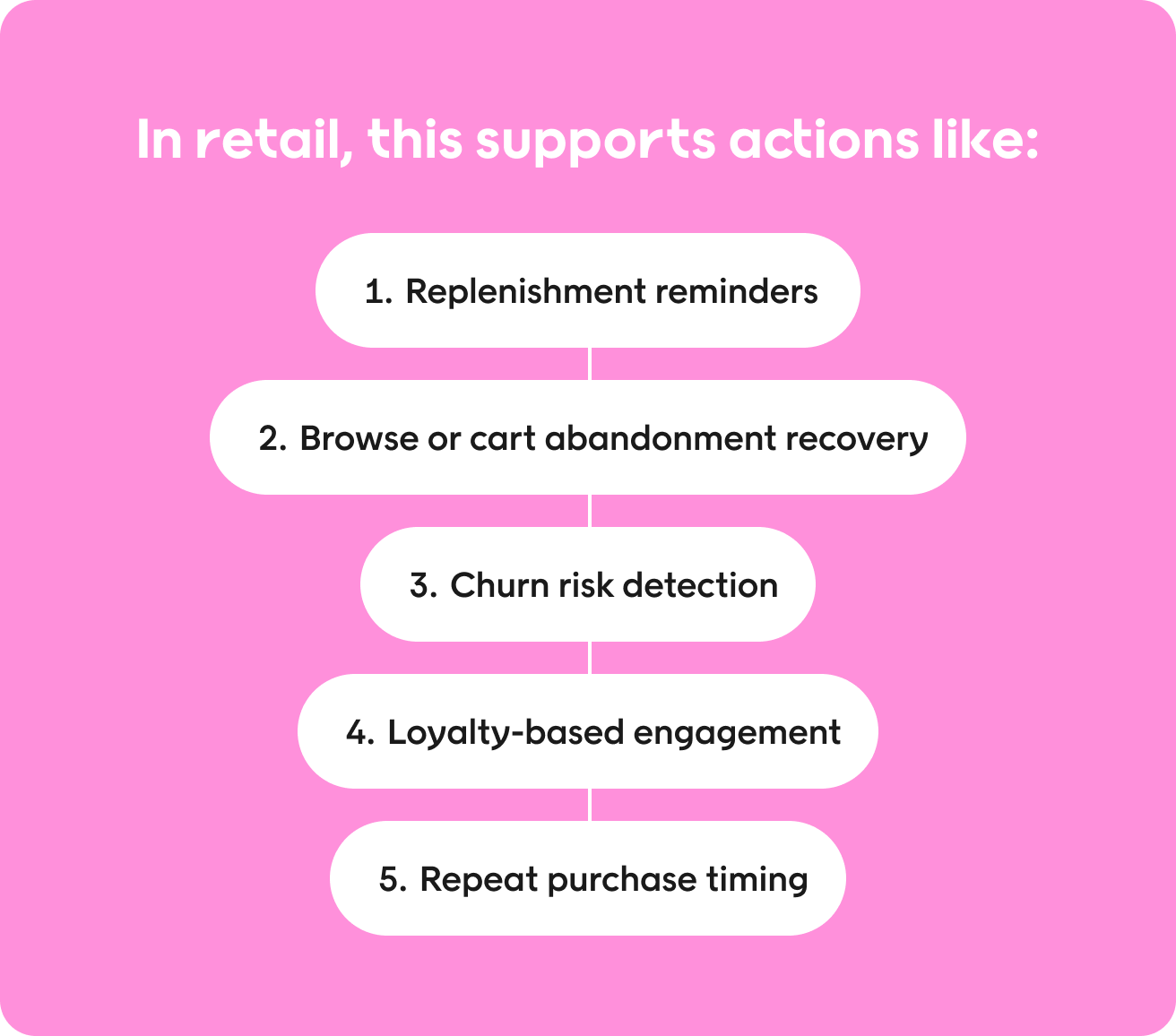
In retail, this supports actions like:
- replenishment reminders
- browse or cart abandonment recovery
- churn risk detection
- loyalty-based engagement
- repeat purchase timing
This is where agentic AI in retail becomes especially valuable. Instead of running static marketing campaigns, AI agents help optimize customer engagement across multiple channels.
Not every marketing automation platform supports this level of adaptive orchestration. The platforms below are the strongest options for retailers evaluating AI agents for marketing automation.
To help retailers evaluate their options, the platforms below represent the strongest AI agent–enabled solutions currently available.
The 12 best AI agents for marketing automation in retail
AI agents for marketing automation support retail lifecycle execution in different ways. Some focus on messaging orchestration. Others specialize in personalization, retention, or journey decisioning.
The platforms below represent the strongest options for retailers evaluating AI agents that can react to customer signals, support next-best-action decisions, and coordinate engagement across multiple channels.
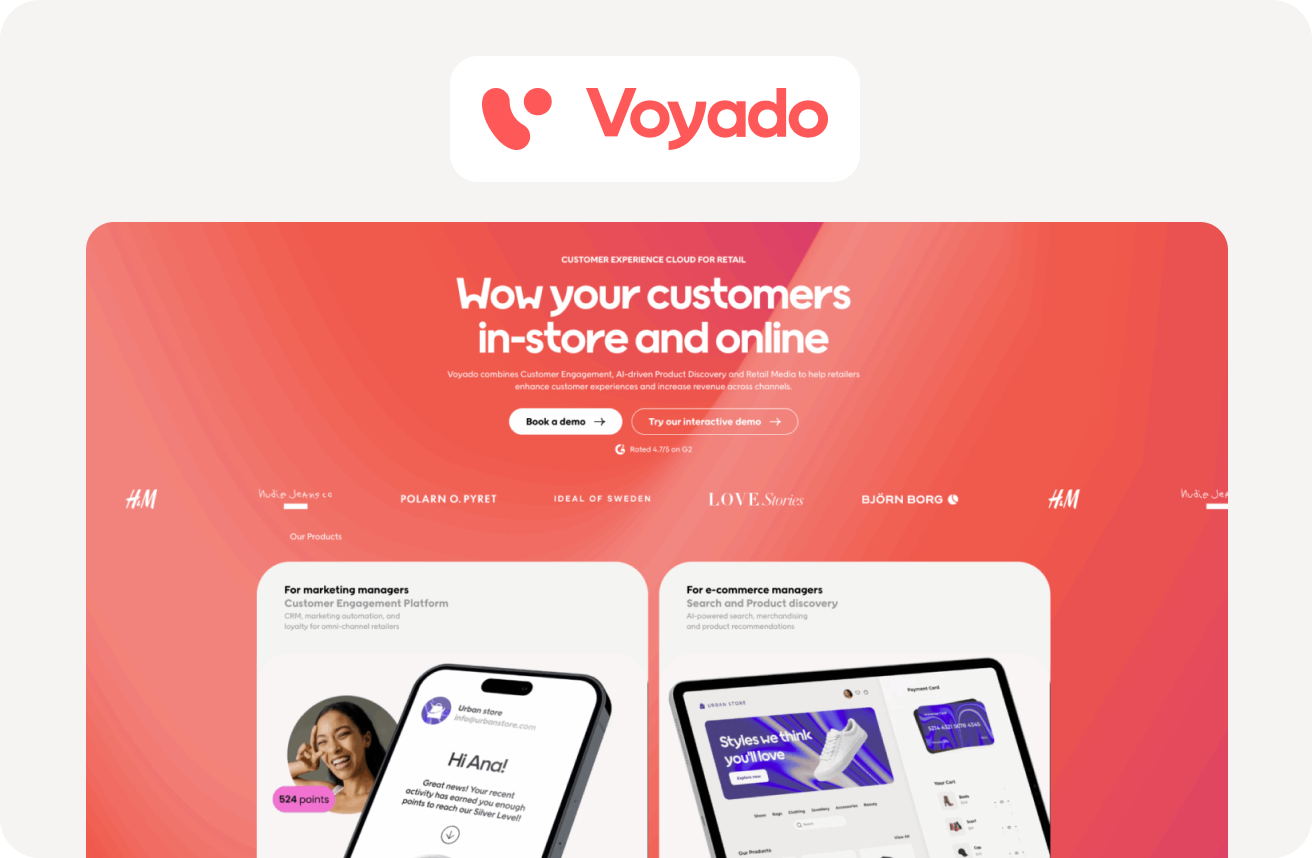
#1 Voyado: Best for retail-native lifecycle marketing and next-best action
Best for:
Retailers that want AI agents for marketing automation connected to loyalty, customer engagement, and customer retention across multiple channels.
Why it’s here:
Voyado combines retail marketing automation, omnichannel loyalty, and AI-powered journey orchestration in one platform built specifically for retail.
Its agents support AI automation using customer data, product signals, and real-time triggers to guide the next best action across the customer journey and reduce repetitive tasks for marketing teams.
Standouts:
- prebuilt retail workflows like abandoned cart, back-in-stock, replenishment, win-back, and anti-churn automation
- AI-assisted workflow creation with Bonnie AI
- loyalty and lifecycle marketing in the same customer loyalty platform
- product recommendations connected directly into automated journeys
- strong fit for e-commerce and multi-market retail marketing teams working across a complex marketing stack
Retail caveat:
Best fit for retailers evaluating AI marketing tools designed for lifecycle engagement. Less suited for companies looking for cross-industry marketing automation platforms.
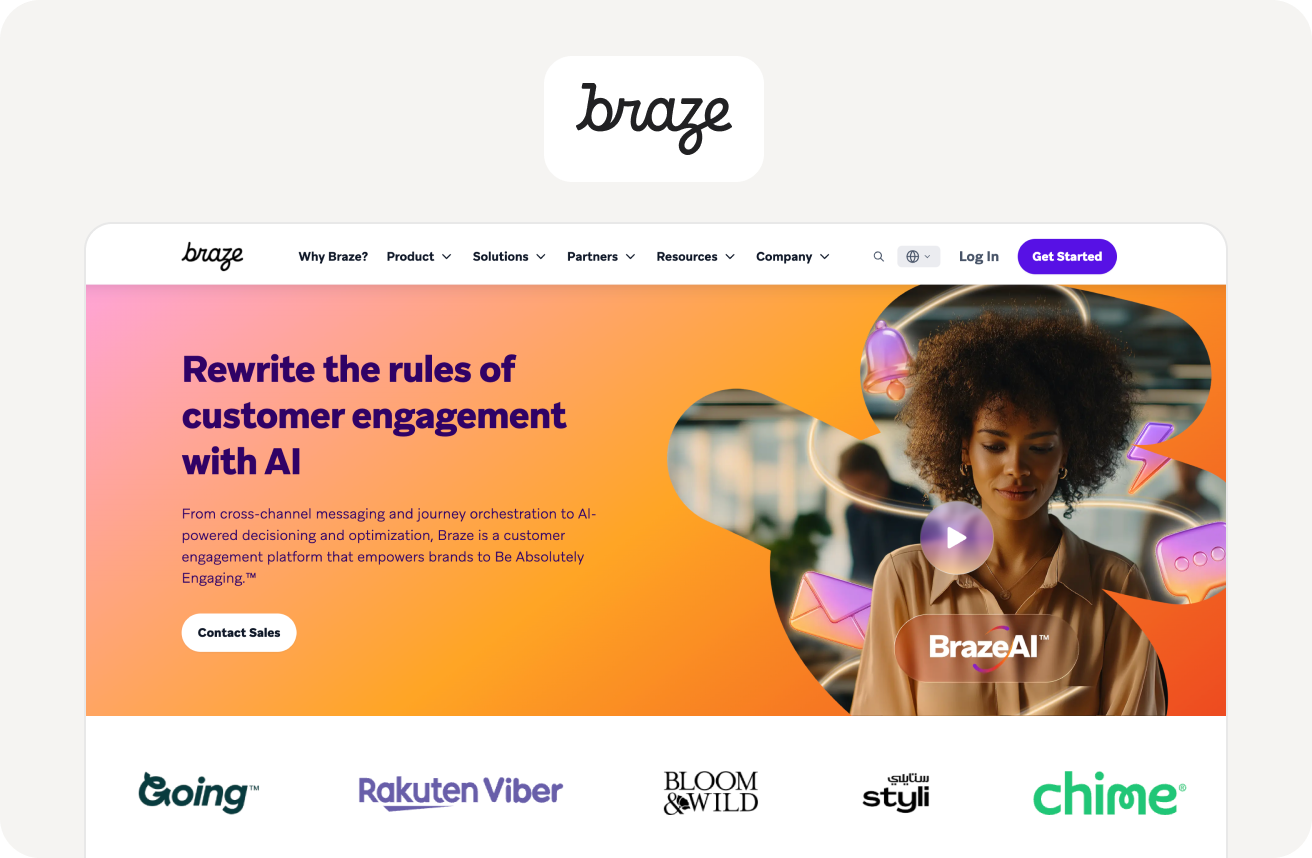
#2 Braze: Best for enterprise cross-channel journey orchestration
Best for:
Enterprise retail marketing teams coordinating real-time lifecycle engagement across multiple channels.
Why it’s here:
Braze supports event-driven journey orchestration across messaging environments, including email campaigns, mobile messaging, and social media marketing. Its AI agents help marketing teams react to performance data faster and improve campaign performance across the customer journey.
Standouts:
- real-time triggers supporting automated processes across lifecycle stages
- personalization logic informed by customer data and behavioral signals
- supports analyzing performance across complex workflows
Retail caveat:
Requires structured implementation across marketing systems.
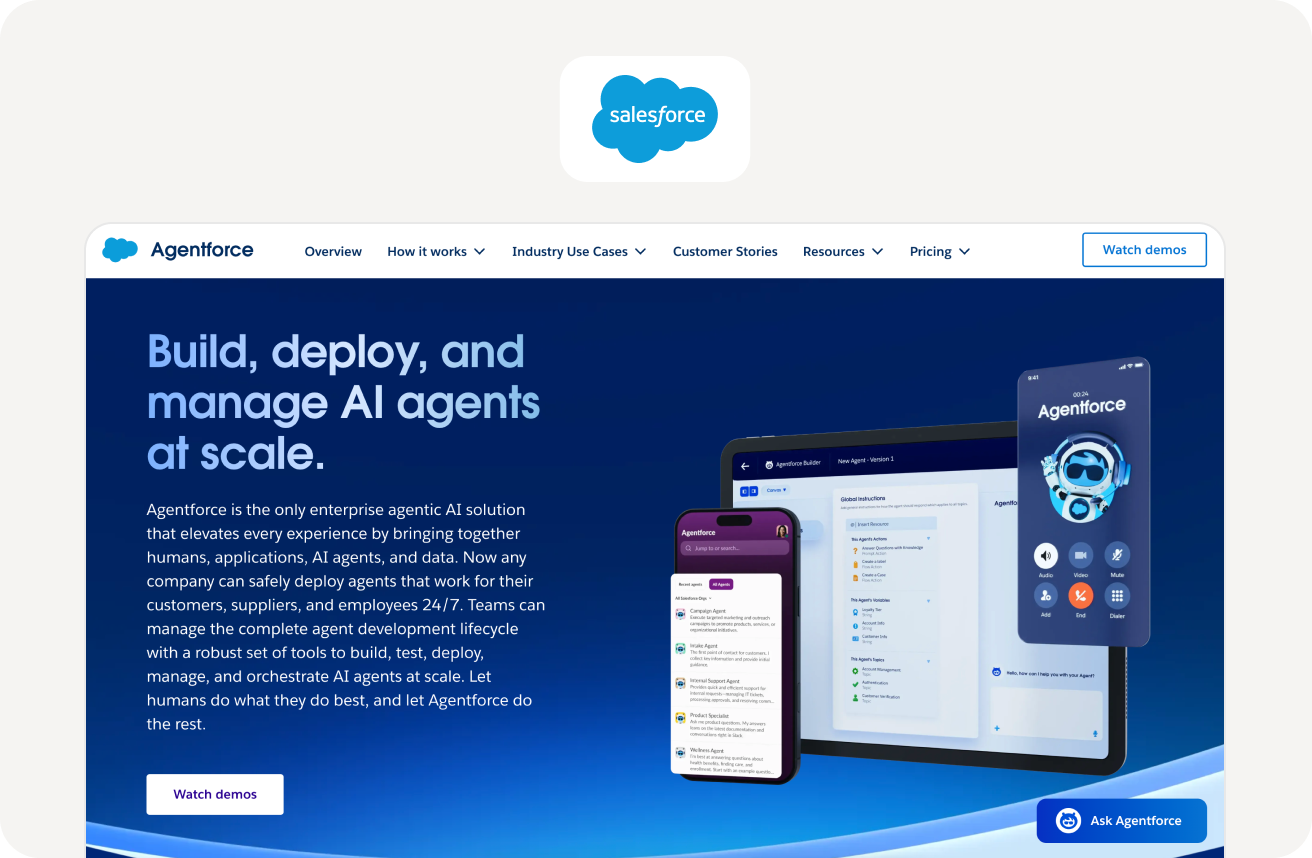
#3 Salesforce Agentforce: Best for Salesforce-centric enterprise ecosystems
Best for:
Retailers already operating inside Salesforce CRM and customer data environments.
Why it’s here:
Salesforce Marketing Cloud combined with Agentforce introduces AI agents for marketing automation that assist with segmentation, decisioning, and campaign execution across enterprise marketing automation platforms. These AI-powered capabilities support large-scale marketing efforts aligned with business goals.
Standouts:
- predictive segmentation using machine learning models
- orchestration across multiple channels inside a unified marketing stack
- supports deploying AI agents across enterprise marketing workflows
Retail caveat:
Implementation complexity can slow adoption compared with retail-native AI marketing tools.
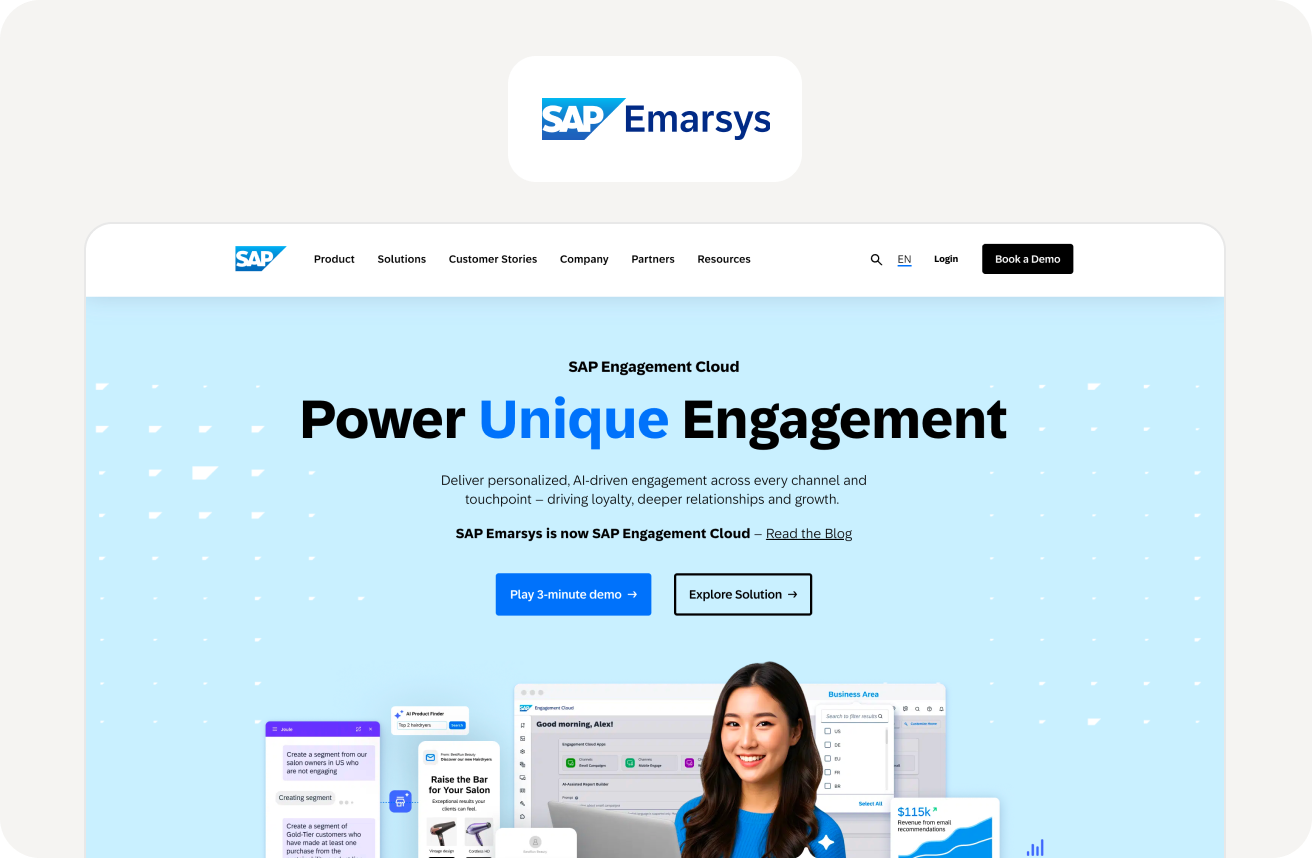
#4 SAP Emarsys: Best for omnichannel retention and loyalty-led lifecycle automation
Best for:
Retailers prioritizing customer retention and lifecycle engagement.
Why it’s here:
SAP Emarsys provides lifecycle automation templates designed for retail marketing campaigns such as replenishment journeys and loyalty activation. Its AI automation supports repetitive tasks while helping marketing teams maintain consistency with brand guidelines across engagement programs.
Standouts:
- predictive engagement scoring informed by artificial intelligence
- lifecycle automation supporting end-to-end workflows
- strong retention orchestration across email, mobile, and web channels
Retail caveat:
Works best when integrated with SAP marketing systems and commerce infrastructure.
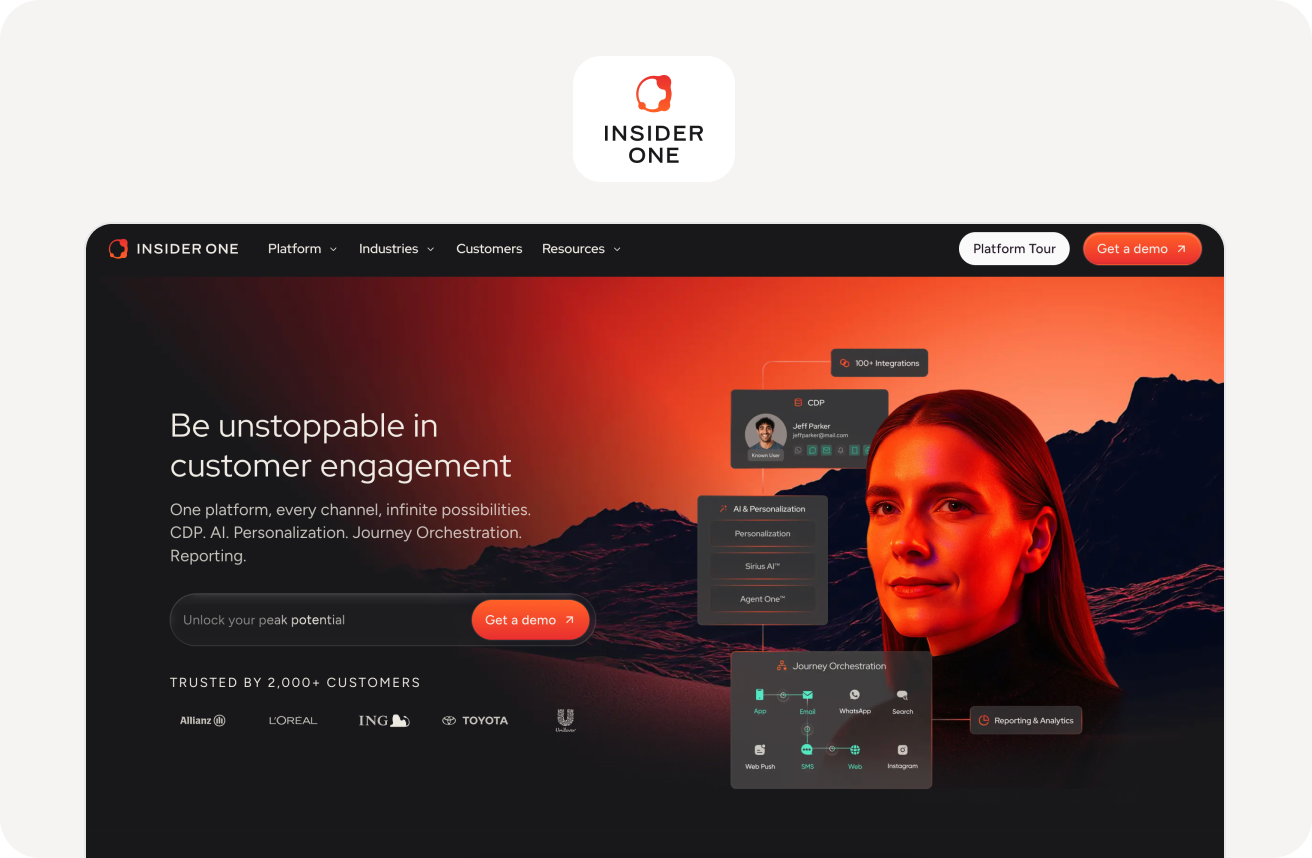
#5 Insider: Best for cross-channel personalization across web and app experiences
Best for:
Retail teams focused on coordinated personalization across web, app, and messaging environments.
Why it’s here:
Insider combines predictive segmentation, journey orchestration, and generative AI tools to support content creation and customer engagement across digital touchpoints. It helps marketing teams coordinate AI-powered marketing decisions across different systems without fragmenting the customer journey.
Standouts:
- personalization across multiple channels from a single interface
- supports landing pages and social media posts alongside messaging journeys
- enables analyzing performance across marketing campaigns
Retail caveat:
Stronger in engagement orchestration than loyalty-native lifecycle strategy.
#6 HubSpot Breeze Agents: Best for simpler AI-assisted growth workflows
Best for:
Retail marketing teams seeking accessible automation with lighter implementation effort.
Why it’s here:
HubSpot Breeze introduces an AI marketing agent that helps teams create content, support lead generation, and coordinate marketing workflows across campaigns. These AI agents act as a virtual assistant layer supporting human marketers with complex tasks while reducing manual coordination effort.
Standouts:
- supports AI chatbots and automated processes inside one platform
- assists with ad campaigns, including Google Ads coordination
- improves efficiency gains across internal operations
Retail caveat:
Less specialized for retail lifecycle orchestration than dedicated retail AI marketing platforms.
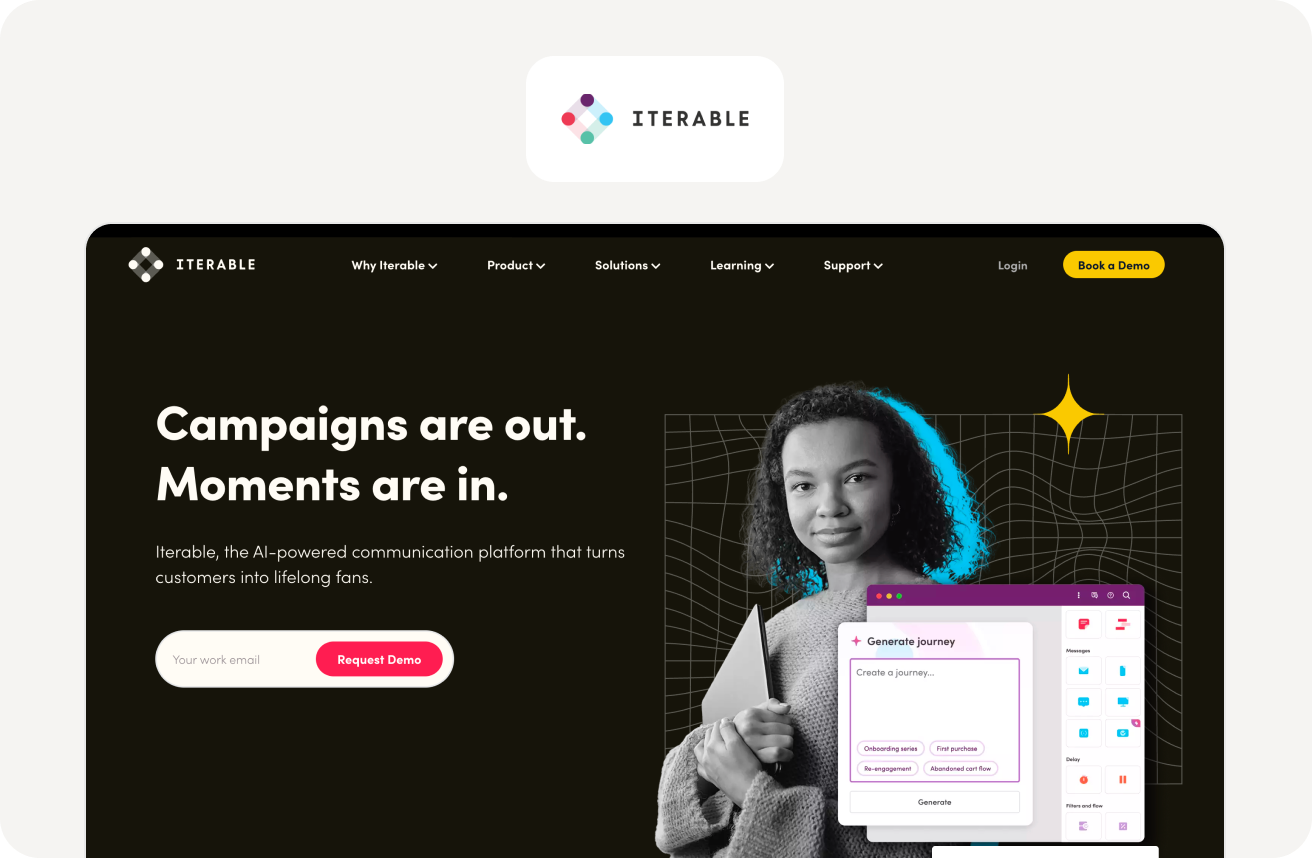
#7 Iterable: Best for flexible lifecycle experimentation
Best for:
Retail marketing teams testing and refining lifecycle engagement across channels.
Why it’s here:
Iterable helps marketing teams orchestrate lifecycle messaging across email, mobile, and in-app environments while experimenting with journeys using performance data and behavioral signals.
Platforms like those featured in a summary of the best AI agents in retail increasingly support teams deploying AI agents to adapt messaging decisions across the customer journey.
Standouts:
- supports experimentation across lifecycle messaging programs
- enables analyzing performance using real-time engagement signals
- helps coordinate journeys across different systems
Retail caveat:
Requires clear ownership from the human team to scale experimentation effectively.
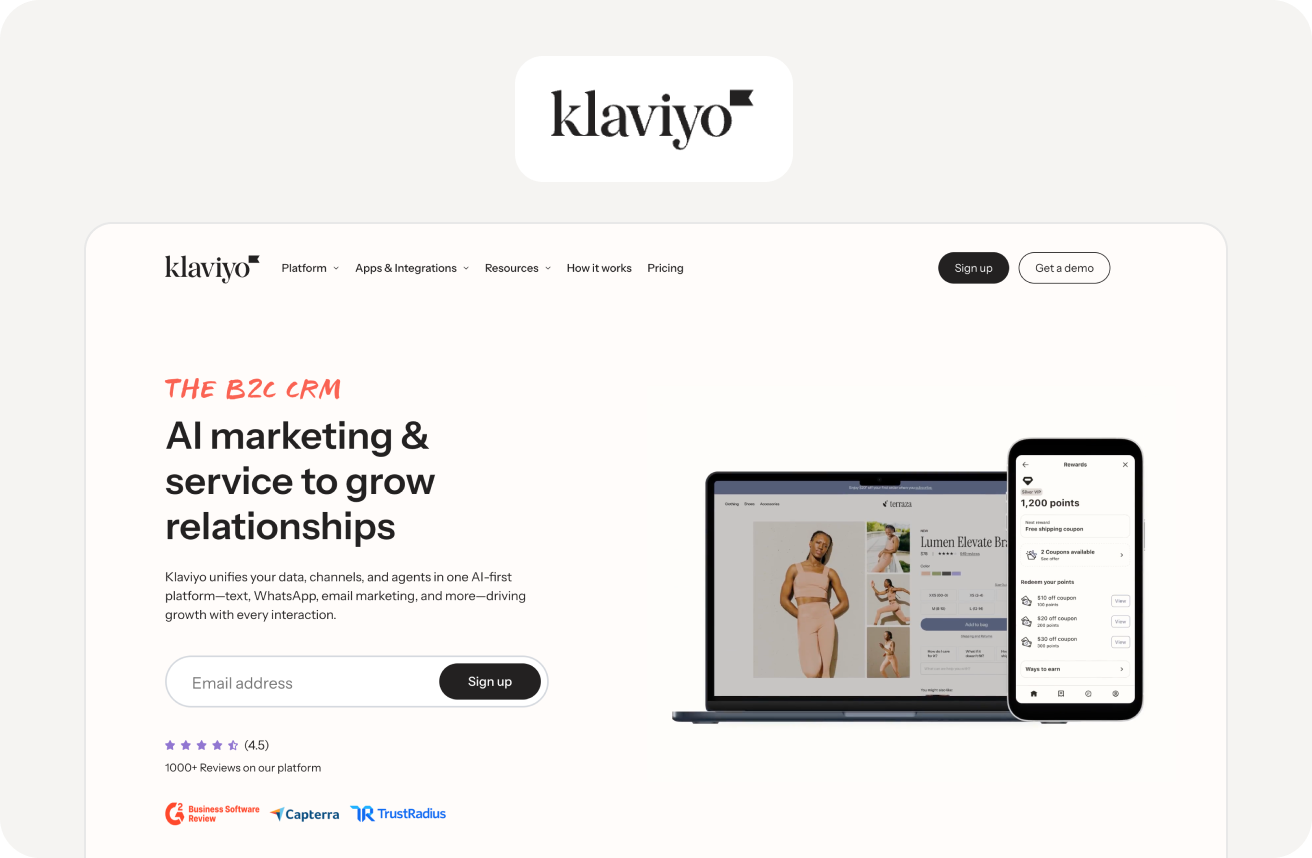
#8 Klaviyo: Best for e-commerce-first retention marketing
Best for:
Retail marketing teams prioritizing segmentation, personalization, and customer retention.
Why it’s here:
Klaviyo helps teams coordinate lifecycle messaging using predictive segmentation and campaign automation built around e-commerce customer data.
You can also evaluate your e-commerce marketing automation stack to support retention and personalization across the customer journey.
Standouts:
- supports retention programs using behavioral signals
- improves campaign timing across email campaigns
- enables marketing teams to create content faster using AI automation
Retail caveat:
Less suited for enterprise orchestration across complex marketing systems.
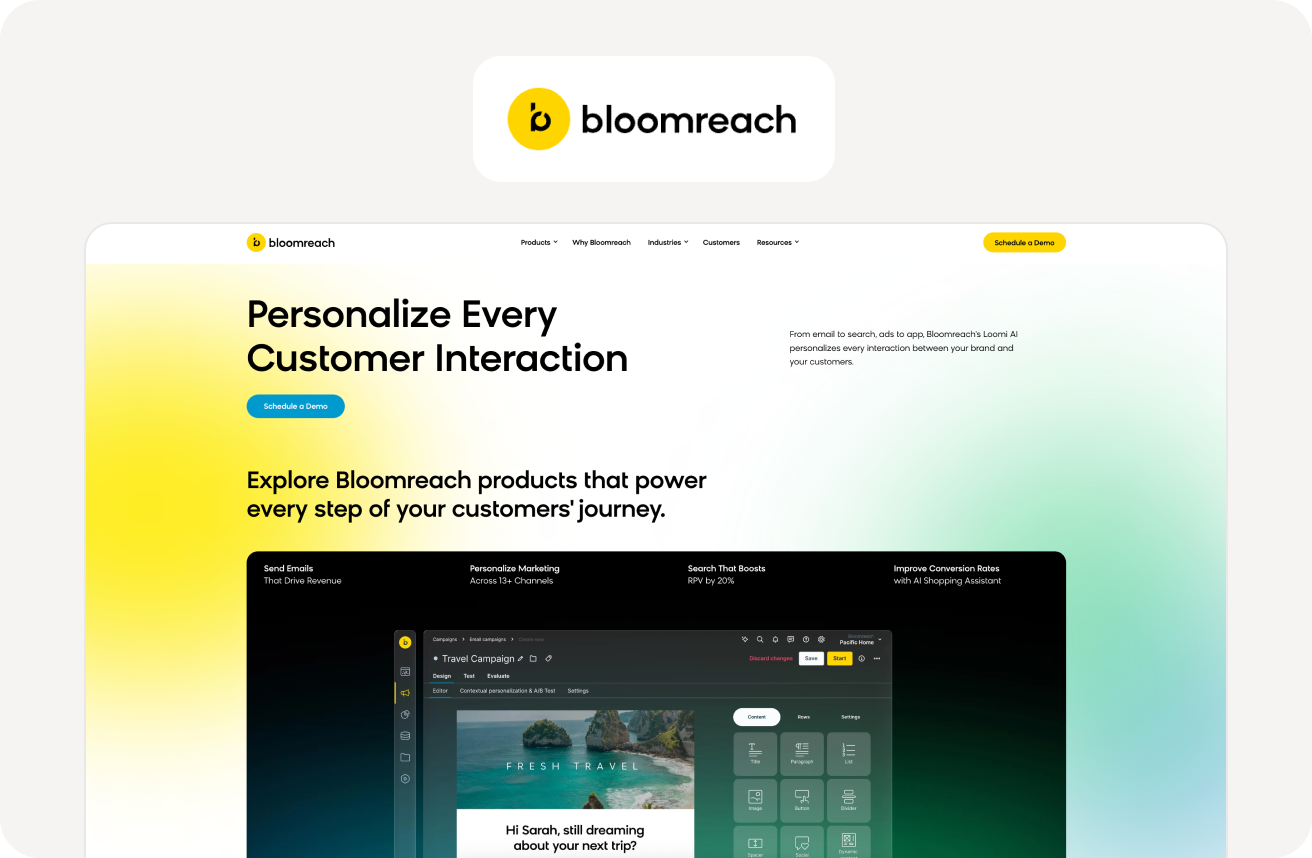
#9 Bloomreach Engagement: Best for data-rich personalization and customer journey depth
Best for:
Retailers using behavioral signals to coordinate personalization decisions across journeys.
Why it’s here:
Bloomreach Engagement combines predictive segmentation, recommendations, and generative AI tools to help marketing teams respond to shopper intent using performance data and data analysis.
Many retailers comparing discovery and engagement platforms also evaluate solutions across broader e-commerce AI agent categories when shaping their marketing strategy.
Standouts:
- supports personalization using real-time behavioral signals
- enables journey decisions informed by large language models
- connects discovery signals with engagement orchestration
Retail caveat:
Requires strong access to customer data to unlock full value.
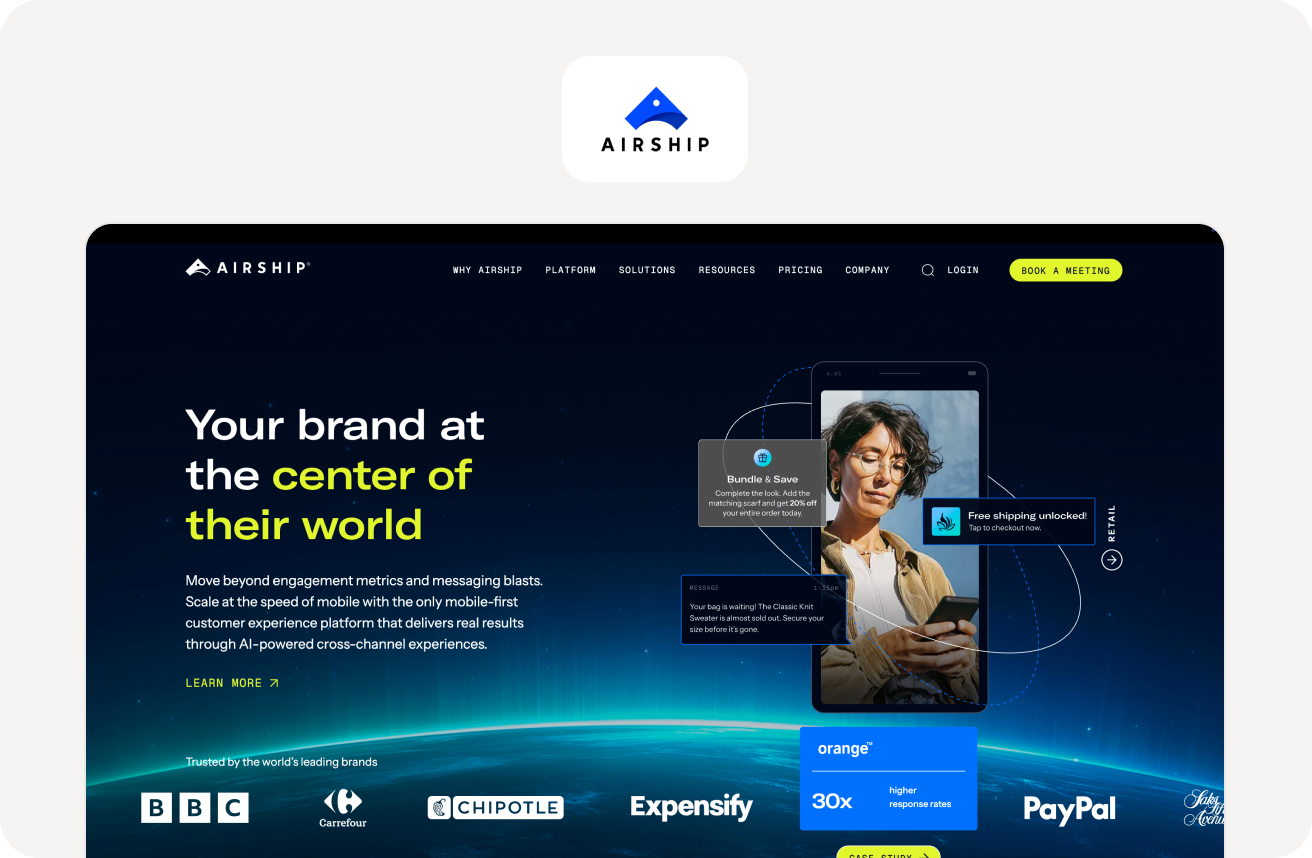
#10 Airship: Best for mobile-first customer engagement
Best for:
Retail brands prioritizing app engagement and mobile lifecycle messaging.
Why it’s here:
Airship supports lifecycle messaging across push notifications, in-app experiences, and SMS, helping marketing teams coordinate engagement across mobile touchpoints.
These capabilities are increasingly relevant as retailers explore how agentic AI in customer experience supports adaptive messaging decisions across multiple channels.
Standouts:
- strong mobile messaging orchestration
- supports personalization across app-based journeys
- enables teams to coordinate engagement across multiple channels
Retail caveat:
Less focused on email-first lifecycle orchestration compared with some marketing automation platforms.
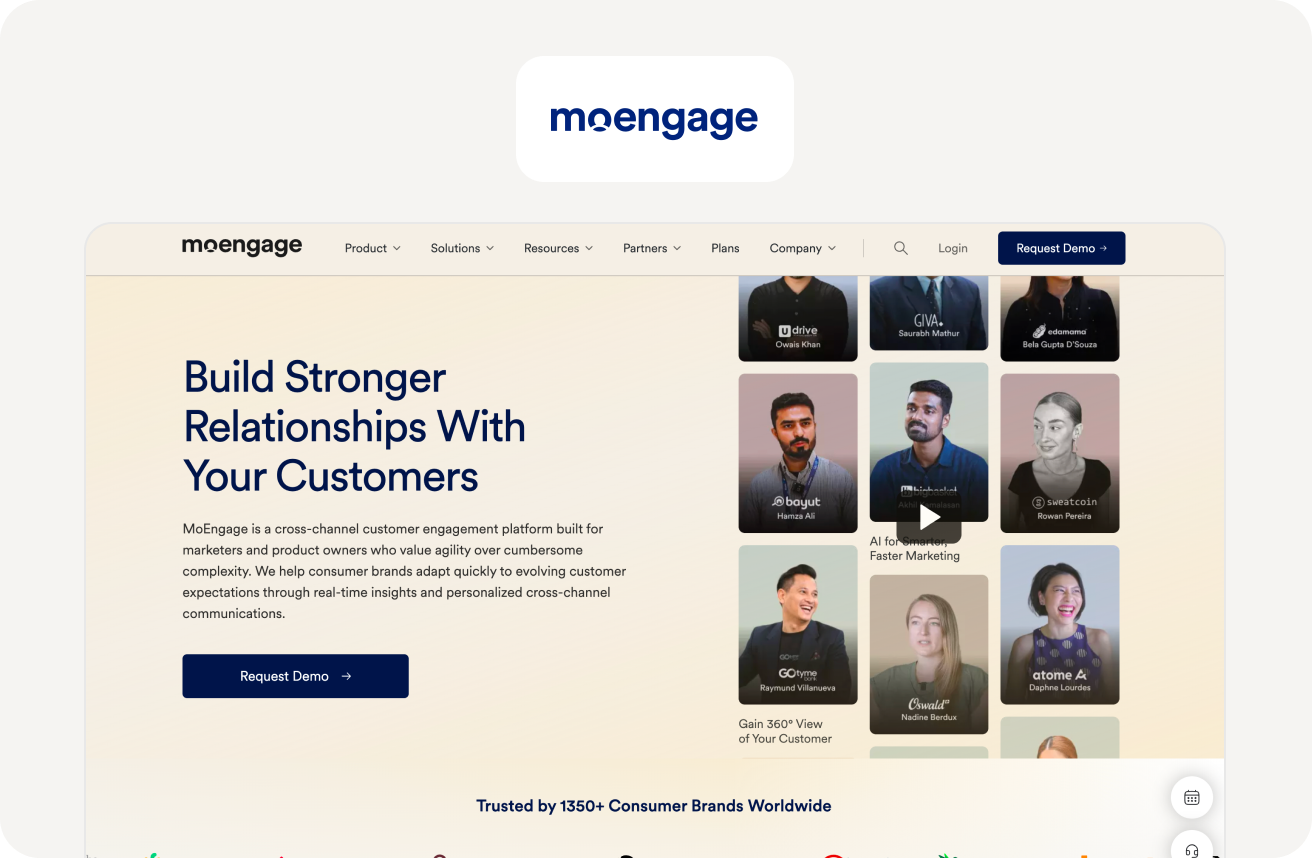
#11 MoEngage: Best for engagement-heavy, app-centric retail brands
Best for:
Retailers coordinating messaging across mobile-led customer journeys.
Why it’s here:
MoEngage supports lifecycle orchestration across mobile, web, and messaging environments using AI agents that help marketing teams automate repetitive tasks and coordinate automated processes across engagement programs.
These capabilities align closely with platforms supporting B2C marketing automation across multiple channels.
Standouts:
- supports lifecycle messaging across app-first engagement programs
- enables automation across repetitive engagement workflows
- improves coordination across marketing efforts using behavioral signals
Retail caveat:
Less specialized for loyalty-led retention strategies.
#12 Optimove: Best for retention marketing and customer-led optimization
Best for:
Retailers prioritizing predictive lifecycle optimization using behavioral modeling.
Why it’s here:
Optimove supports retention orchestration using predictive segmentation and AI-powered decisioning across lifecycle programs aligned with business goals. These capabilities complement platforms like a customer loyalty platform designed to strengthen long-term customer relationships and retention strategies.
Standouts:
- predictive lifecycle segmentation across retention programs
- supports campaign optimization using behavioral signals
- enables continuous improvement across lifecycle engagement strategies
Retail caveat:
Requires structured governance to coordinate execution across complex workflows.
Main takeaways
The tools show that AI agents are moving beyond isolated automation into coordinated decision support across marketing workflows, customer engagement, and lifecycle orchestration.
The right choice depends on how well a platform fits your existing marketing strategy, integrates with your marketing systems, and helps your team move from fragmented campaigns to connected end-to-end workflows.
Here’s the framework we used to evaluate how well each platform supports real retail marketing automation decisions.
How we evaluated these AI agents
To make this comparison useful for retail teams, we evaluated each platform against the capabilities that matter most for lifecycle marketing execution.
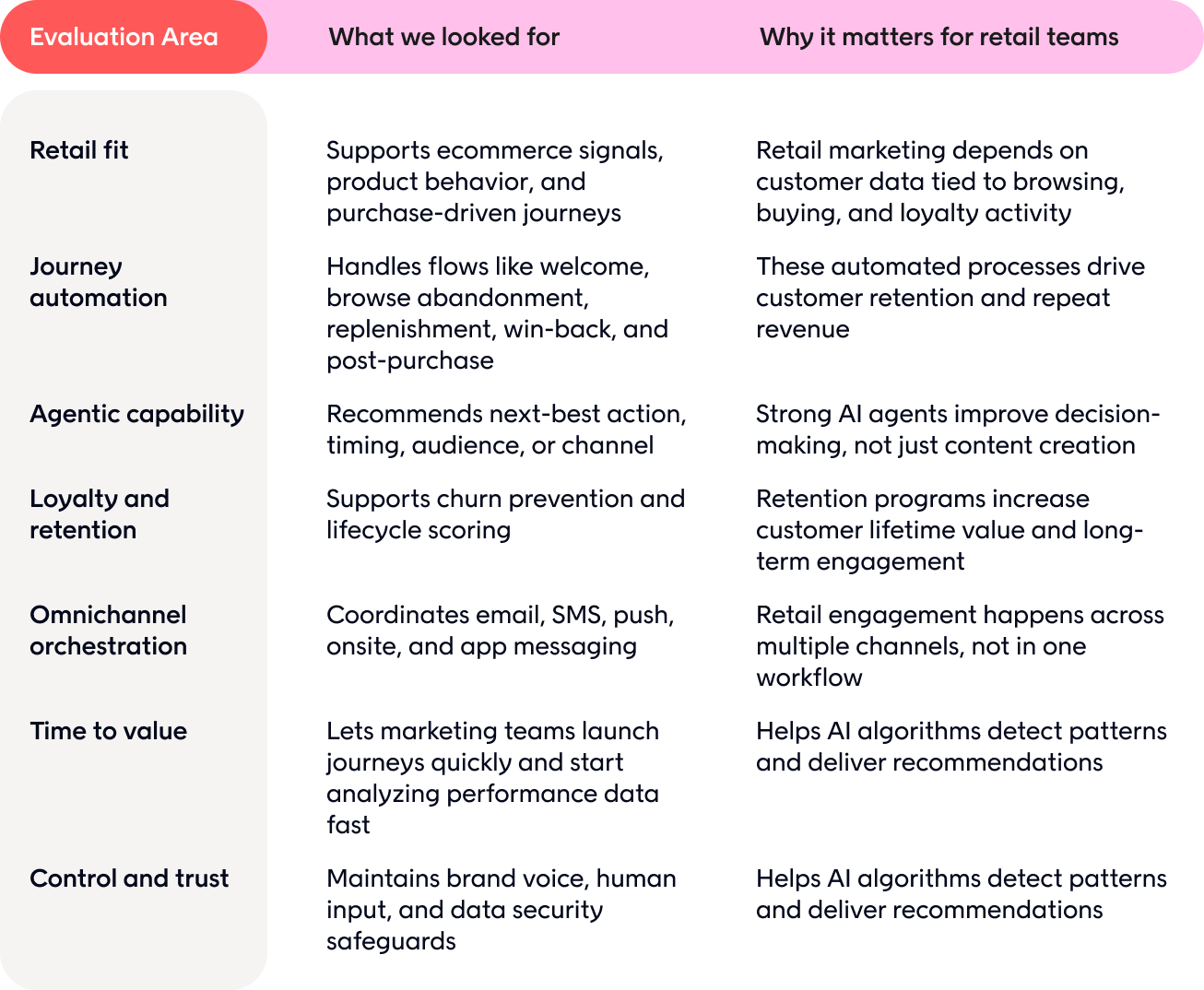
These criteria explain how we assessed the platforms above. The next step is understanding what retail teams should prioritize when selecting a solution for their own marketing stack.
What retail teams should look for before choosing a platform
Comparing AI agents is useful, but choosing the right platform is harder.
Retail teams usually succeed when they evaluate how well a system supports real lifecycle execution, not just how advanced its AI features appear on paper.
These are the signals that matter most before deciding.
Retail-specific triggers and templates
Retail marketing depends on predictable lifecycle moments, like browse abandonment, replenishment timing, back-in-stock alerts, and post-purchase follow-up.
Platforms designed for retail marketing automation already understand these workflows and provide prebuilt triggers that reduce setup time. This shortens the path from implementation to measurable campaign performance improvements.
Loyalty and customer lifetime value support
Many marketing automation platforms focus on acquisition and campaign execution. Fewer support long-term customer retention strategies.
Retail teams should look for systems that connect lifecycle messaging to loyalty activity, churn-prevention signals, and customer lifetime value development, rather than treating retention as a secondary workflow.
Product and customer data together
Customer engagement improves when messaging reflects both who the customer is and what they are interested in right now.
The strongest retail platforms combine behavioral customer data with product signals so teams can create content that reflects real purchase intent across the customer journey instead of relying solely on campaign events.
Human control and trust
AI agents should support decision-making, not replace it.
Retail teams need visibility into how automation works, where human input is required, and how messaging stays aligned with brand voice and brand guidelines across marketing workflows.
Speed to value
Retail teams rarely have months to wait for results.
Platforms that provide retail-ready triggers, workflow templates, and AI-assisted setup help marketing teams activate journeys faster and start improving key metrics earlier in the rollout process.
Beyond implementation speed, it also helps to understand which types of AI agents actually shape how retail marketing automation works in practice.
Which types of AI agents matter most in retail marketing automation
| Agent type | What it does | Why it matters for retail teams |
| Journey-building agents | Help teams draft and structure workflows based on goals and behavioral signals | Reduces setup time and speeds up lifecycle execution |
| Next-best-action agents | Recommend the best action, timing, audience, or channel for each customer | Improves relevance across the customer journey |
| Retention and churn agents | Detect at-risk customers and trigger re-engagement or loyalty-saving flows | Supports customer retention before churn becomes visible |
| Recommendation-enhanced automation agents | Add product relevance to journeys like browse abandonment and post-purchase messaging | Connects engagement decisions to purchase intent |
| Omnichannel orchestration agents | Coordinate actions across email, SMS, push, onsite, and app experiences | Turns marketing automation into cross-channel lifecycle coordination |
Across these evaluation areas, some platforms treat AI agents as add-ons. Others build them directly into lifecycle decision-making. This is where Voyado takes a different approach.
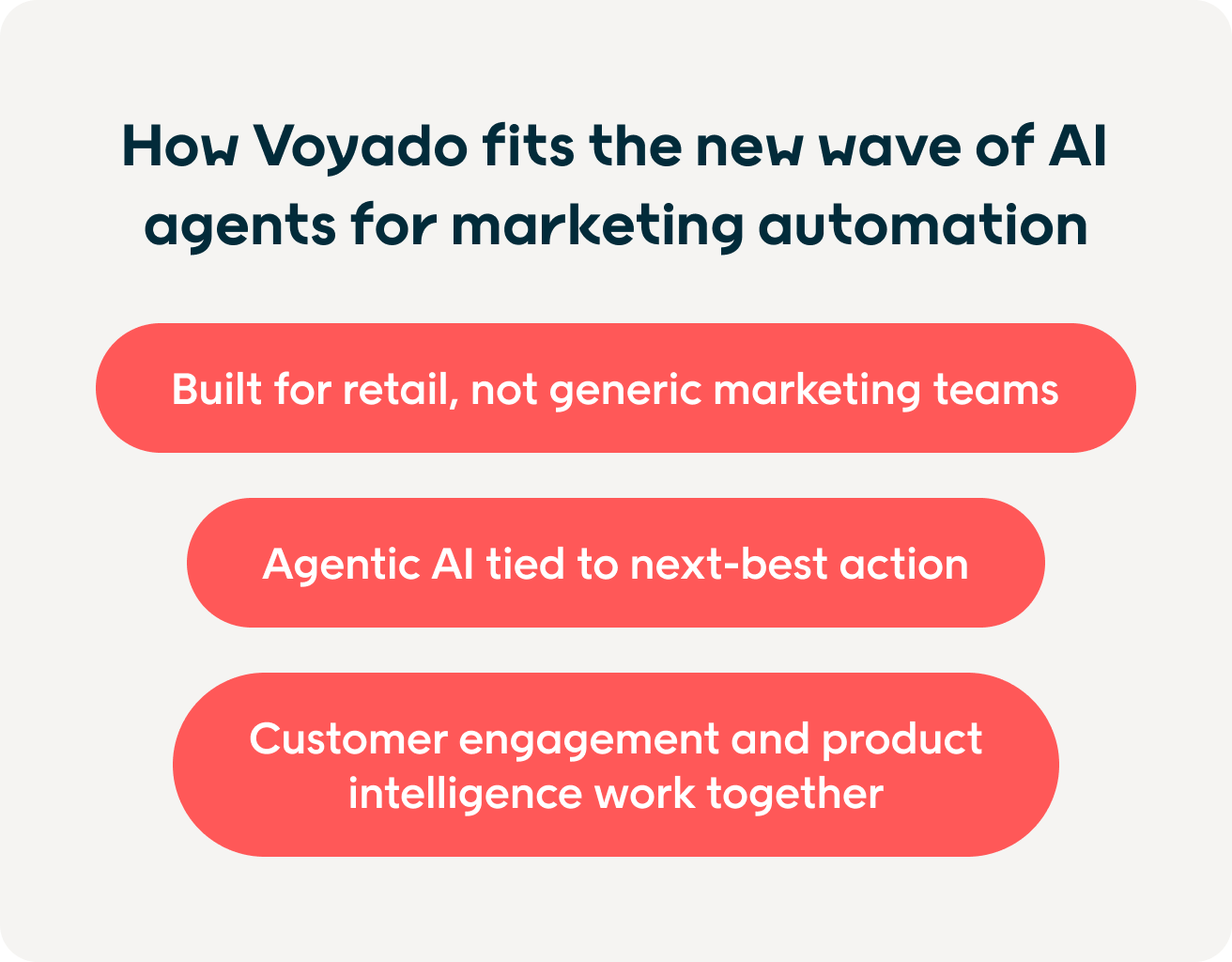
How Voyado fits the new wave of AI agents for marketing automation
Most platforms add AI agents on top of existing marketing automation. Voyado builds them into retail lifecycle decision-making from the start.
This shows up in three areas that matter during platform evaluation.
Built for retail, not generic marketing teams
Voyado is designed specifically for retail and e-commerce workflows.
That means teams start with:
- preset triggers for browse abandonment, replenishment, and post-purchase journeys
- lifecycle automation aligned with purchase behavior, not lead funnels
- faster activation without adapting templates from other industries
Result: less setup friction and quicker time-to-value.
Agentic AI tied to next-best action
Voyado applies agentic AI to decision-making inside journeys and not just content support.
In practice, this helps teams:
- prioritize timing and channel selection automatically
- react to loyalty and engagement signals earlier
- adjust messaging using more data from the customer lifecycle
Human judgment stays in the loop, so automation supports marketers instead of replacing them.
Customer engagement and product intelligence work together
Most platforms separate lifecycle messaging from product discovery signals.
Voyado connects both in the same interface, so journeys reflect:
- customer behavior
- product relevance
- purchase intent
This makes recommendation-driven automation easier to apply across retention flows and post-purchase engagement.
Result: stronger coordination between personalization and lifecycle execution, which creates a real competitive edge.
You now have a framework for comparing platforms and identifying what actually drives value in retail marketing automation.
The next step is selecting a solution that can support your lifecycle strategy, not just automate campaigns.
Final take
Retail teams don’t need more disconnected AI tools.
They need AI agents that help automate the right journeys, choose the right action, and improve customer lifetime value through better timing, relevance, and cross-channel coordination.
The strongest platforms in this category understand retail triggers, loyalty signals, and product context, not just generic workflow automation.
Voyado stands out because it brings retail marketing automation, loyalty, next-best-action AI, and product-aware journey execution together in one retail-focused platform.
Next steps for evaluating your options:
- Identify which lifecycle journeys you want AI agents to optimize first
- Check whether the platform supports loyalty and retention, not just campaign execution
- Confirm it can coordinate decisions across channels, not operate in silos
See how Voyado helps retail marketers move from static automation to smarter, AI-assisted customer journeys.
FAQs
What are AI agents for marketing automation?
AI agents for marketing automation analyze customer signals and automatically decide what action to take next across channels, audiences, and journeys.
How are AI agents different from regular marketing automation?
Traditional marketing automation follows fixed rules. AI agents adjust timing, channel selection, and messaging based on behavior, context, and performance data.
What are the best AI agents for marketing automation in retail?
Retail teams typically evaluate platforms like Voyado, Salesforce Marketing Cloud, SAP Emarsys, Insider, Bloomreach Engagement, Klaviyo, and Iterable depending on their lifecycle and retention needs.
How do AI agents improve customer journeys?
AI agents improve customer journeys by selecting the next best action, coordinating engagement across channels, and responding to behavioral and loyalty signals in real time.
Can AI agents help with loyalty and retention?
Yes. Retail-focused AI agents can identify churn risk, trigger retention journeys, support loyalty programs, and improve customer lifetime value through better targeting and timing.
What should retailers look for in an AI marketing automation platform?
Retailers should look for support for lifecycle triggers, loyalty integration, product-aware personalization, omnichannel orchestration, and clear marketer control over automation decisions.
How does Voyado use AI in retail marketing automation?
Voyado uses AI to support next-best-action decisions, automate lifecycle journeys, connect loyalty signals to engagement, and coordinate communication across channels within a retail-focused customer engagement platform.