TL;DR
E-commerce is still growing, and total global retail sales continue shifting online. But conversion and profit are under pressure.
Many brands have strong traffic to their online store, yet revenue leaks across product discovery, site search, and disconnected customer journeys.
Today’s e-commerce industry challenges are no longer just about logistics or competition. They’re about customer experience, first-party data, and infrastructure that can’t keep up with rising customer expectations.
These are practical challenges you can fix with stronger data foundations and retail-focused platforms like Voyado that connect engagement, loyalty, and discovery into one intelligent experience.
Conversion is the growth lever in 2026
Conversion is the priority. Not traffic. Not awareness. Revenue.
In our Inside E-commerce report, 68% of leaders say improving conversion is their top focus.
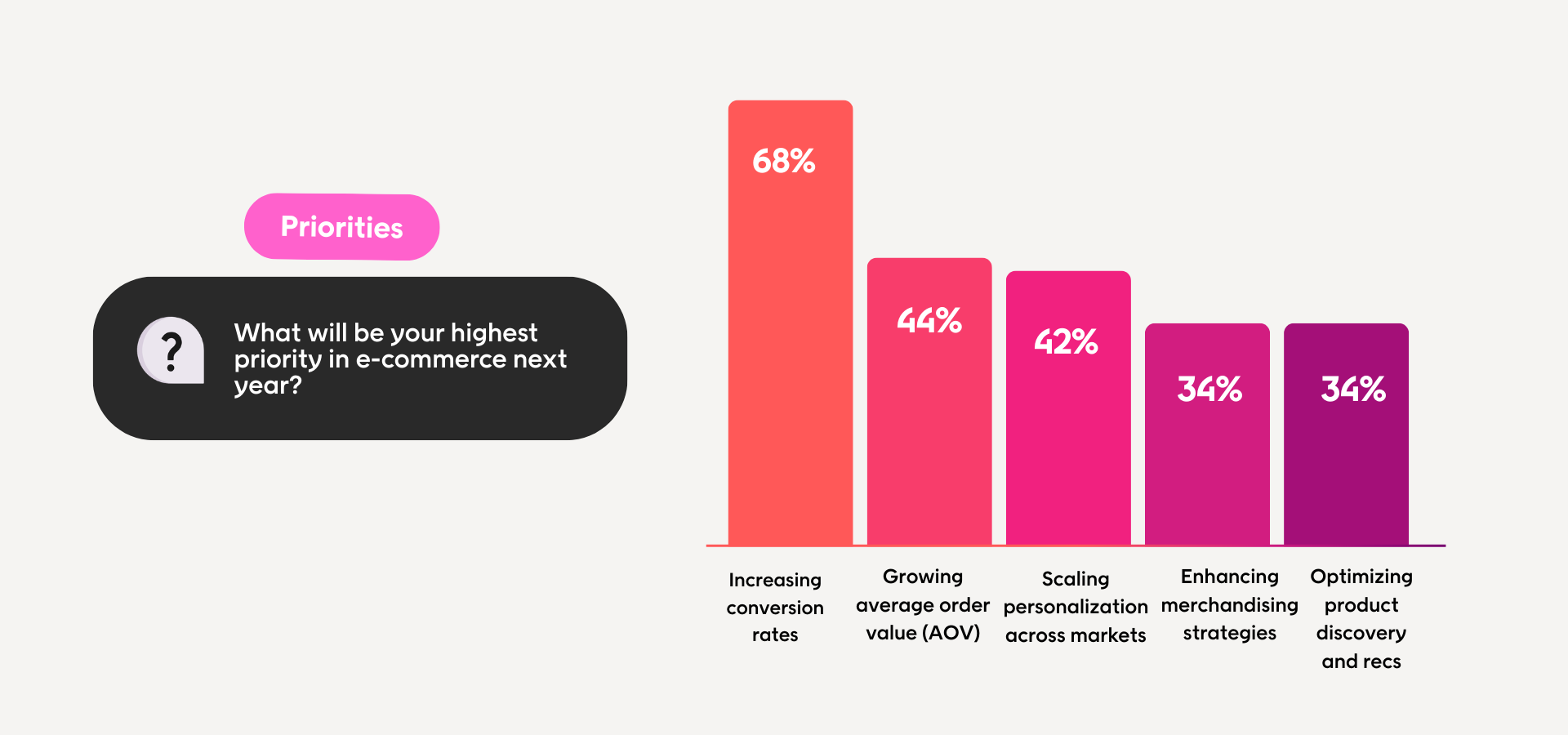
Teams know where growth lives. It’s not about getting more visitors to your online store. It’s about getting more value from the ones already there.
But in today’s e-commerce industry, that’s easier said than done.
Customer expectations keep rising. Online shoppers expect seamless shopping experiences across mobile commerce, physical store touchpoints, and social media.
At the same time, many e-commerce businesses are still working with disconnected systems, manual workflows, and limited visibility into customer data.
That gap between ambition and infrastructure is where most e-commerce industry challenges sit.
It’s fixable. But first, it helps to understand why profitable growth feels harder than it used to.
Why does it feel harder to grow profitably in e-commerce right now?
Because growth isn’t the same as profit.
Customer expectations have changed fast. Online shoppers expect seamless shopping experiences across mobile commerce, physical store touchpoints, and social media. Fast delivery. Easy returns. Personalized experiences. Exceptional service.
Meeting that bar takes a stronger omnichannel e-commerce strategy than many businesses are built for.
At the same time, costs are rising:
- Ad spend in a highly competitive environment
- Discounting that erodes margins
- Delivery costs and returns that strain your supply chain and inventory management
Growth no longer comes cheaply.
There’s also a mindset shift in the e-commerce sector. Leaders now prioritize profitable growth, stronger customer relationships, and a loyal customer base over short-term online sales.
That forces teams to rethink their e-commerce strategy tips and how success is measured.
Marketing efforts, product discovery, and customer engagement have to work harder. Not just to attract potential customers, but to convert them efficiently and keep them coming back.
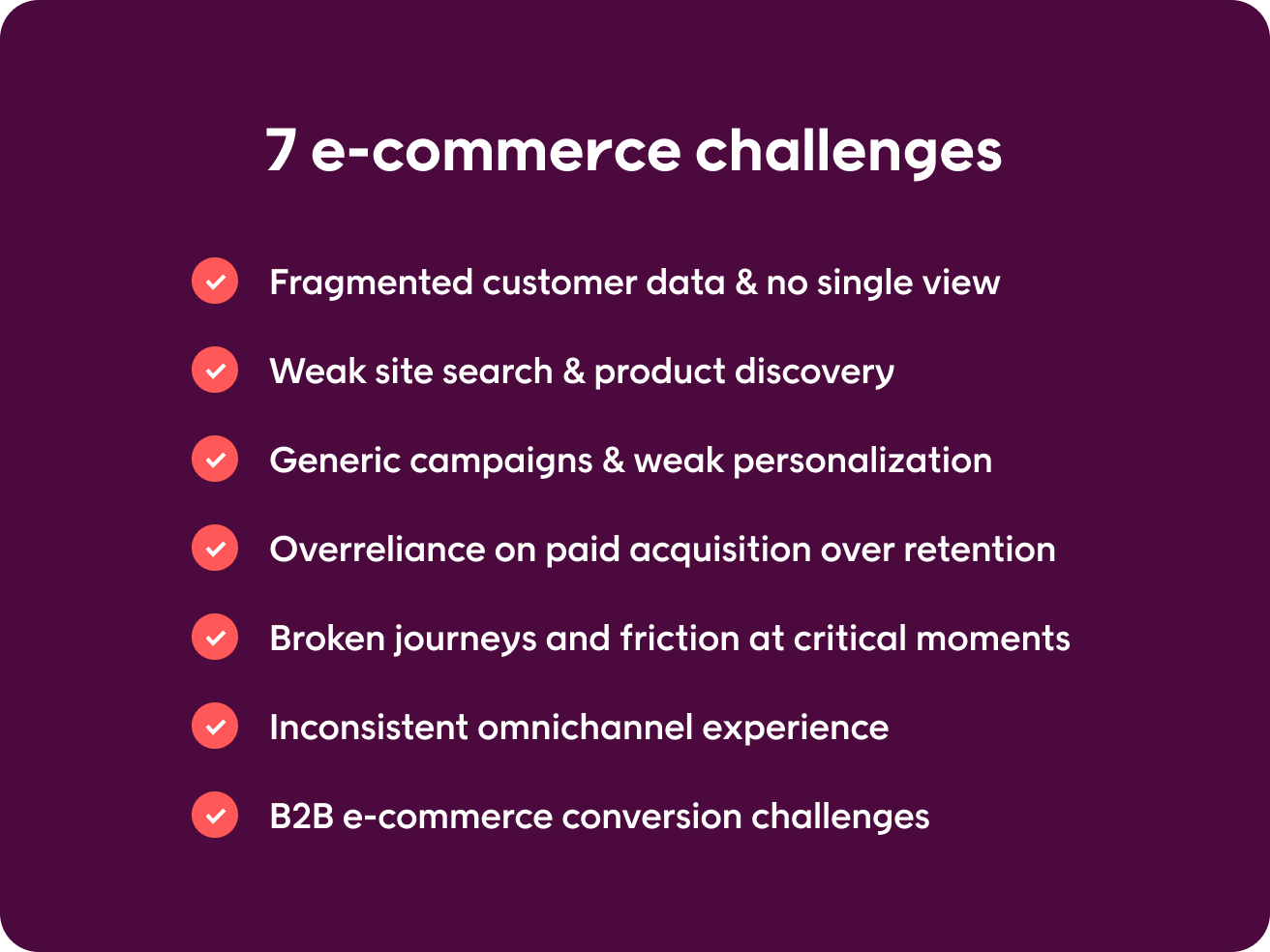
The 7 key e-commerce industry challenges holding conversion back
If growth feels harder, it’s rarely because your team isn’t working hard enough.
Most e-commerce industry challenges today sit inside experience, data, and execution. Not in the idea of selling online itself.
Here are the key challenges of e-commerce in 2026 that directly affect conversion and profitable growth.
1. Fragmented customer data and no single view
Customer data is everywhere. In your e-commerce platform. In your ESP. In loyalty tools. In ads. In your POS. Across mobile apps and social media.
But it’s rarely unified.
In the Inside E-commerce report, 57% of leaders say first-party data is critical to future growth. Teams know data matters. The problem is turning that data into one consistent view of customer behavior and value.
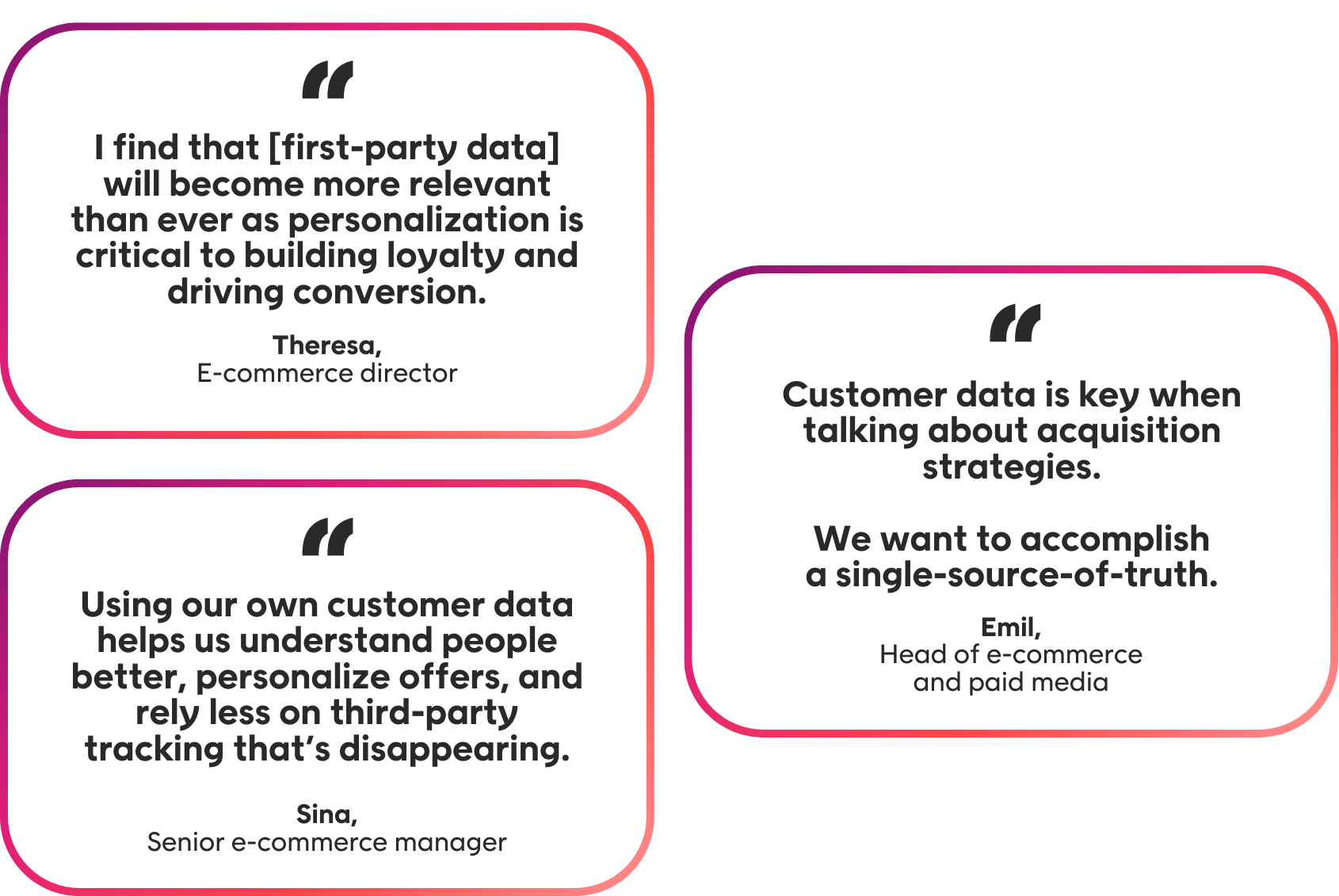
Teams understand the importance of first-party data. The challenge is turning it into one unified, actionable view of customer behavior and value.
What this looks like in practice
- No consistent view of purchase history or lifetime value
- Customers are treated differently across marketing channels
- Duplicate or irrelevant campaigns
- Limited visibility into how online sales connect to in-store behavior
How this hurts conversion
Without unified customer data, personalization becomes generic. And generic experiences don’t convert online shoppers in a highly competitive environment.
How teams can respond
- Build a unified data foundation across online business and store systems
- Prioritize consent-based first-party data collection
- Make profiles accessible so marketing and merchandising teams can act without IT bottlenecks
A strong CRM for e-commerce built on a retail-native customer data platform helps unify profiles, track customer behavior across online and in-store touchpoints, and activate that data in real time.
When your infrastructure connects engagement, loyalty, and product discovery, smarter journeys become automatic instead of manual.
2. Weak site search and product discovery
Search is a high-intent moment in your online store.
But many e-commerce businesses still rely on basic tools that can’t keep up with rising customer expectations.
In our Inside E-commerce report, discovery features like relevant results and recommendations directly impact online sales.
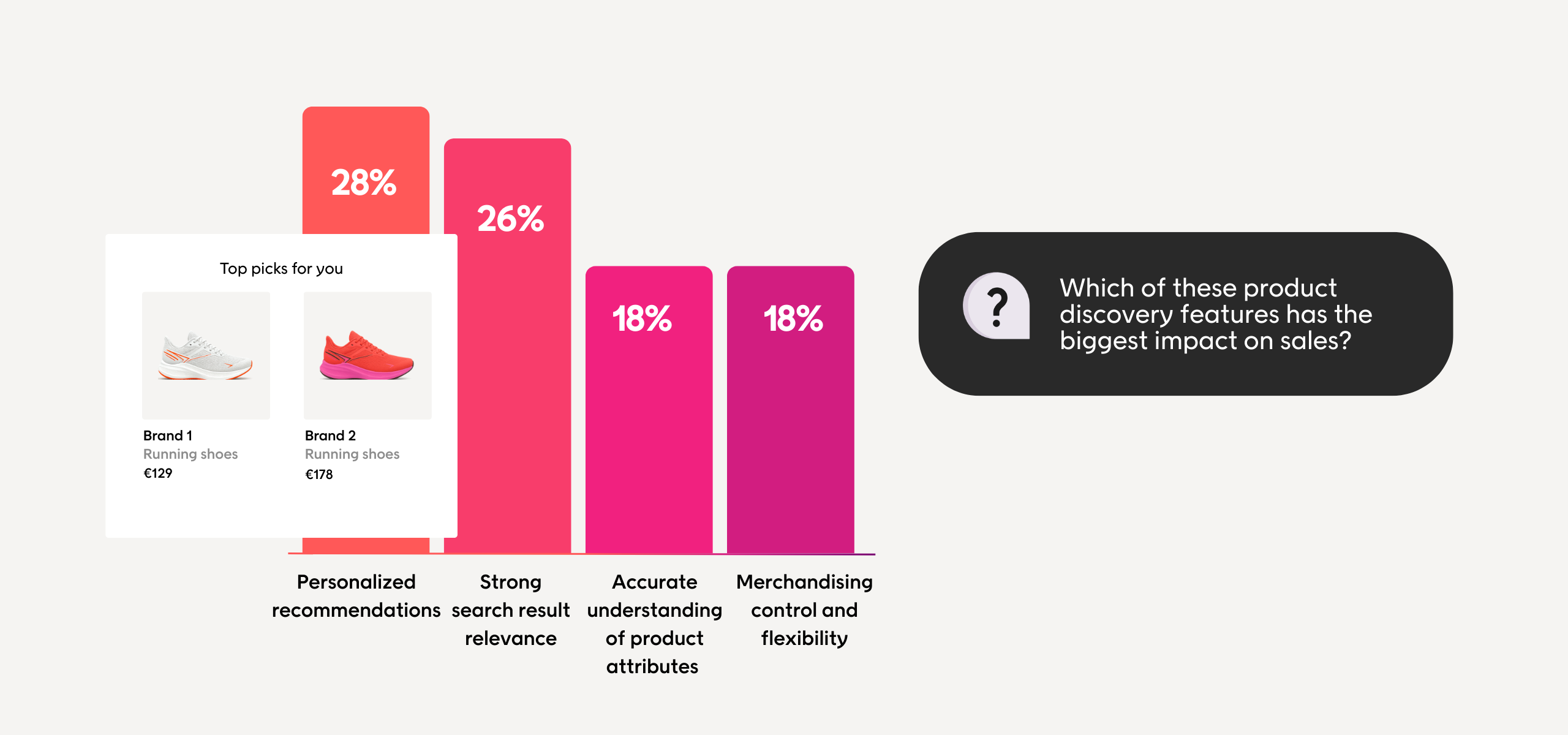
Yet many online retailers admit their current solutions fall short.
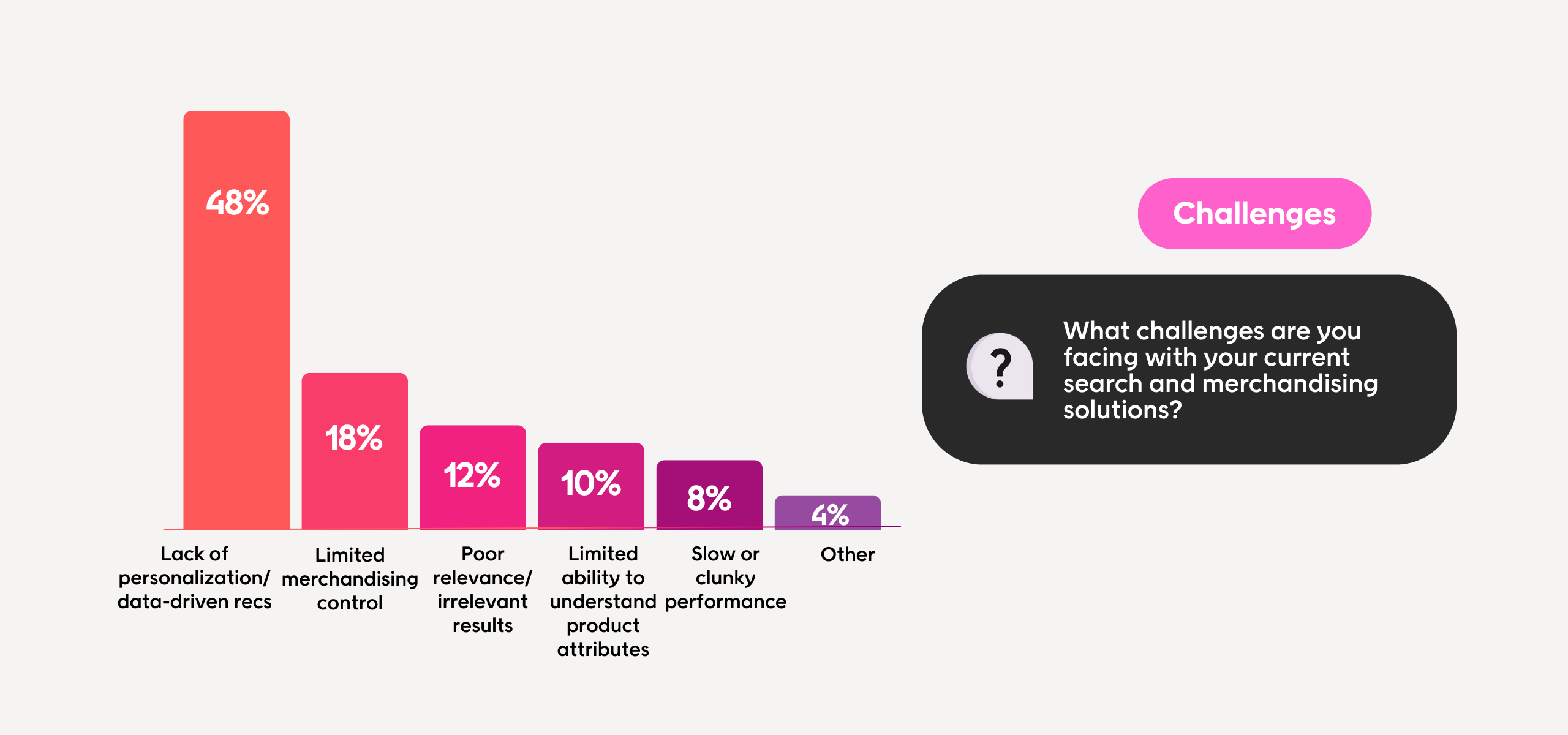
Legacy systems create technical challenges across mobile commerce, m-commerce, and integrated platforms.
What this looks like in practice
- Search struggles with synonyms and long-tail queries
- Ranking ignores stock, margin, and competitive pricing
- Out-of-stock products surface first
- Experiences aren’t easy to navigate across mobile apps and desktops
How this hurts conversion
High-intent sessions exit fast. In a highly competitive environment with rising costs and high ad spend, that loss compounds.
Weak discovery damages customer experience and blocks seamless shopping experiences.
How teams can respond
- Improve ranking logic beyond keywords
- Fix zero-results queries
- Align discovery with inventory management
- Connect search to first-party data and real customer behavior
Modern site search uses advanced technology to balance relevance with business goals. AI-driven discovery and searchandising help commerce businesses remain competitive.
If you’re comparing tools, this overview of e-commerce search solutions outlines what to evaluate for scalable e-commerce success.
3. Generic campaigns and underpowered personalization
Many e-commerce business teams still rely on one-size-fits-all marketing campaigns.
Emails are built manually. Segments stay static. Messages go out by calendar instead of customer behavior. In today’s e-commerce industry, that’s one of the leading challenges commerce businesses face.
Online shoppers move between mobile commerce, m-commerce, mobile apps, and brick-and-mortar stores. They expect personalized experiences that reflect real intent, not generic blasts.
What this looks like in practice
- The same newsletter sent to your entire e-commerce store database
- Static segments that ignore real-time activity
- Promotions pushed to loyal customers who would purchase anyway
- No link between online shopping behavior and follow-up journeys
How this hurts conversion
Missed upsell and cross-sell opportunities reduce lifetime value. Weak onboarding limits repeat online sales. Customer loyalty drops when experiences feel transactional instead of relevant.
In a highly competitive environment with rising costs and ad spend pressure, generic messaging wastes traffic and weakens customer trust.
How teams can respond
- Use behavioral and lifecycle segmentation
- Trigger journeys based on browse, cart, and purchase activity
- Automate replenishment and loyalty programs
- Connect marketing efforts to unified first-party data
Modern e-commerce marketing automation turns customer data into real-time journeys across marketing channels.
When powered by a retail-focused foundation, automation supports stronger customer relationships and long-term e-commerce success.
These e-commerce email marketing tactics show how online retailers can move from batch campaigns to a consistent brand experience and measurable growth.
4. Overreliance on paid acquisition and underinvestment in retention
One of the biggest e-commerce challenges in 2026 isn’t traffic. It’s a dependency.
Many e-commerce business teams rely heavily on paid acquisition to drive online sales. But rising ad spend and platform volatility are major challenges to e-commerce growth.
This is one of the clearest challenges faced by e-commerce today.
What this looks like in practice
- Customer acquisition costs are rising faster than lifetime value
- Heavy discounting to maintain competitive pricing
- Performance swings when ad algorithms change
- Limited investment in loyalty programs or post-purchase journeys
For many commerce businesses, this business model creates short-term spikes but long-term instability.
How this hurts conversion
Conversion is not just the first purchase. It’s turning online shoppers into repeat buyers and brand advocates.
When retention is weak, customer loyalty drops. Marketing efforts become more expensive. E-commerce issues and challenges compound over time.
How teams can respond
- Strengthen onboarding and post-purchase journeys
- Reward behavior through loyalty programs
- Use first-party data to identify high-value segments
- Balance acquisition with retention across marketing channels
Profitable growth in the e-commerce industry now depends on building a loyal customer base, not just driving more traffic.
Teams that rebalance acquisition and retention are better positioned for long-term e-commerce success.
5. Broken journeys and friction at critical moments
Some of the most damaging challenges of e-commerce don’t happen at the top of the funnel.
They happen at checkout, on mobile, or right before a customer commits.
These challenges of an e-commerce business often show up as small friction points that quietly reduce conversion rates.
What this looks like in practice
- Guests are forced to create accounts before purchase
- Confusing delivery costs or unclear same-day delivery options
- Weak trust signals around payments or data protection
- Mobile experiences that are not easy to navigate
- Poor alignment between online store and physical store expectations
Individually, these seem minor. Together, they create hesitation.
How this hurts conversion
Online shoppers abandon carts when journeys feel complicated or risky. Security concerns and unclear policies reduce customer trust. In a highly competitive environment, even small friction points send customers elsewhere.
These are some of the most persistent challenges to e-commerce growth because they directly affect the final step of the purchase journey.
How teams can respond
- Simplify checkout and reduce forced account creation
- Make delivery, returns, and same-day delivery options transparent
- Reinforce data protection and robust security measures clearly
- Ensure mobile commerce and m-commerce journeys are optimized
While platforms don’t directly fix checkout UX, stronger lifecycle communication can reduce friction. Triggered browse and cart recovery journeys help recover lost intent. Clear post-purchase messaging reinforces reassurance and builds customer experience consistency.
Teams that address friction early don’t just increase conversion. They protect customer loyalty and strengthen long-term customer relationships.
6. Inconsistent omnichannel experience across online and in-store
For retailers operating both online and in brick-and-mortar stores, one of the most complex challenges and opportunities of e-commerce is consistency.
Customers don’t think in channels. They move between mobile apps, social media, online shopping, and physical store visits without noticing the shift. But many commerce businesses still manage these touchpoints separately.
That gap creates real friction.
What this looks like in practice
- Loyalty data is not shared between the online store and physical store
- Promotions available online but not recognized in-store
- Store inventory is not visible during online shopping
- Customer service lacks visibility into the full purchase history
These challenges e-commerce teams face often stem from disconnected systems rather than strategy.
How this hurts conversion
When journeys feel disjointed, customer experience suffers. Customers feel unknown. Trust weakens. Switching channels mid-journey becomes risky instead of seamless.
In a highly competitive environment, that inconsistency sends online shoppers to brands that feel more unified.
How teams can respond
- Start with shared IDs and unified customer data
- Connect loyalty programs across online and offline
- Ensure inventory visibility supports both mobile commerce and in-store visits
- Align messaging across marketing channels
Unified infrastructure supports consistent brand experience and long-term customer loyalty.
The best CRM for e-commerce outlines for teams evaluating systems what to look for in platforms that connect data, journeys, and engagement across channels.
Retailers that close the gap between online business and store operations don’t just streamline operations. They create seamless shopping experiences that support sustainable e-commerce success.
7. B2B e-commerce challenges that hit conversion differently
The challenges of B2B e-commerce look different from retail, but they still impact conversion.
B2B buyers expect the same ease they experience in online shopping. But B2B journeys often involve complex pricing, negotiated contracts, approval flows, and multiple stakeholders.
That complexity creates structural friction.
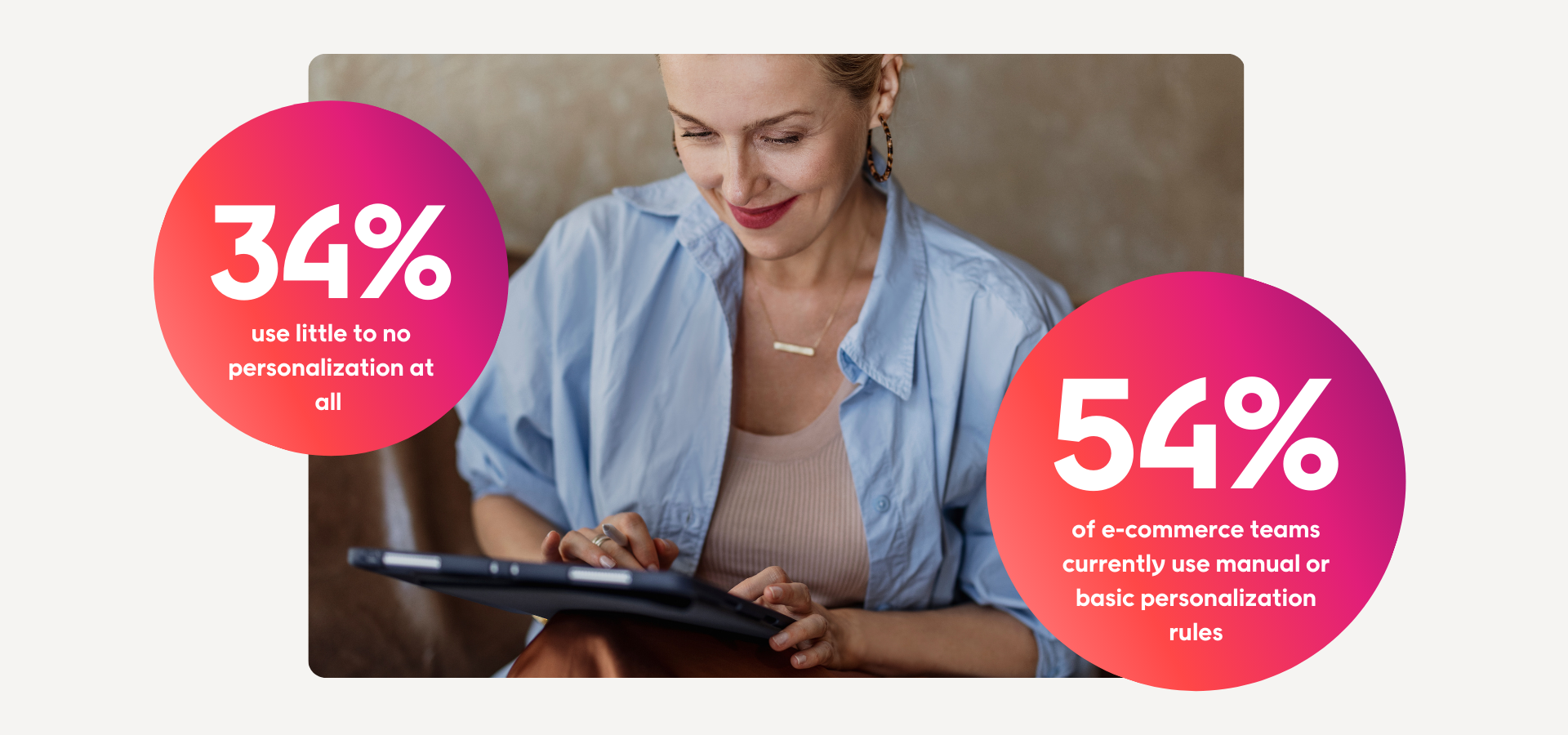
The Inside E-commerce report highlights a clear maturity gap between ambition and infrastructure. In B2B, that gap is often wider. Systems struggle to support account-level logic, reordering behavior, and personalized services online.
What this looks like in practice
- Contract pricing is not reflected in the e-commerce store
- Manual approval steps that interrupt checkout
- Poor bulk ordering or reordering UX
- Limited visibility into account-level purchase history
These are some of the more technical challenges businesses face when adapting an existing business to the e-commerce world.
How this hurts conversion
When buying feels complicated, deals stall. Friction increases drop-off. Customer experience suffers even if demand is strong.
How teams can respond
- Simplify reordering and repeat purchase flows
- Segment communication at the account level
- Use behavior-based reminders for replenishment
- Support relationship-building beyond the first transaction
While not every operational constraint sits inside marketing, unified customer data still plays a role.
Relationship-focused journeys help maintain customer loyalty, strengthen account-level customer relationships, and turn repeat buyers into long-term partners.
Taken individually, these may look like isolated e-commerce industry challenges.
But together, they point to something bigger. Infrastructure, data, and execution gaps are limiting growth more than demand ever could.
The opportunity isn’t to work harder. It’s to work smarter.
Let’s look at how forward-thinking teams are turning these challenges into measurable opportunities.
From challenges to opportunities: Where teams can act in 2026
The e-commerce industry challenges we’ve covered are real. But they’re also fixable.
Here’s where you can focus in the next 3–6 months.
1. Start with the data layer
Before fixing campaigns or journeys, fix your foundation.
Unify customer data from your e-commerce platform, email, loyalty programs, POS, and customer service tools. Build a single view that supports segmentation, attribution, and real-time action.
Inside E-commerce shows that first-party data is central to profitable growth.
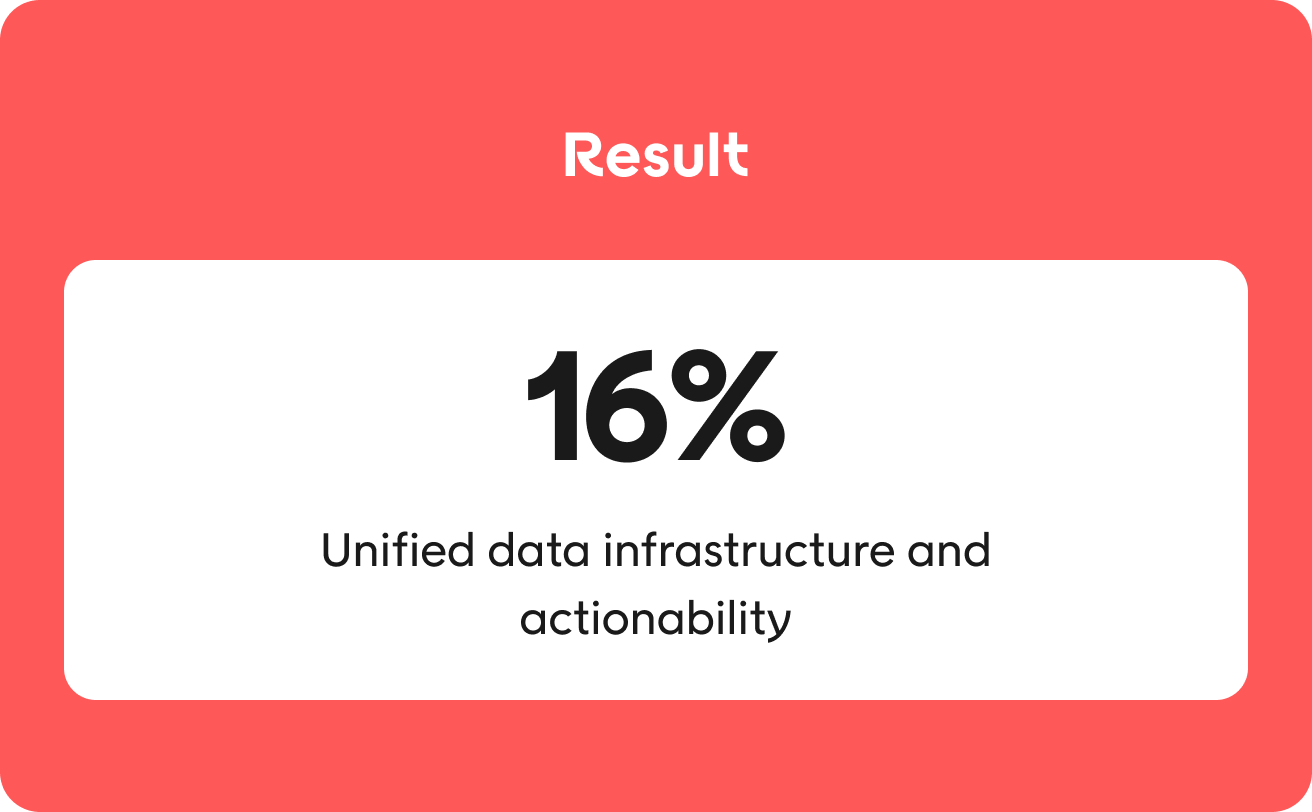
When behavior is visible, optimization becomes practical instead of reactive.
2. Fix high-intent journeys first
Don’t optimize everything at once.
Start where intent is strongest:
- Site search and category navigation
- Product pages and checkout
- Post-purchase and second purchase journeys
Track search conversion, cart conversion, and repeat purchase rate. Improving these moments often drives faster gains than increasing traffic.
3. Build always-on lifecycle and retention programs
Shift from campaign bursts to continuous engagement.
Implement:
- Welcome and onboarding flows
- Cart and browse recovery
- Replenishment and repeat purchase triggers
- Lapsed customer win-back journeys
Retention strengthens customer loyalty and supports long-term e-commerce success.
4. Measure what actually matters for conversion
Vanity metrics won’t solve the challenges of an e-commerce business.
Focus on metrics that reflect real impact:
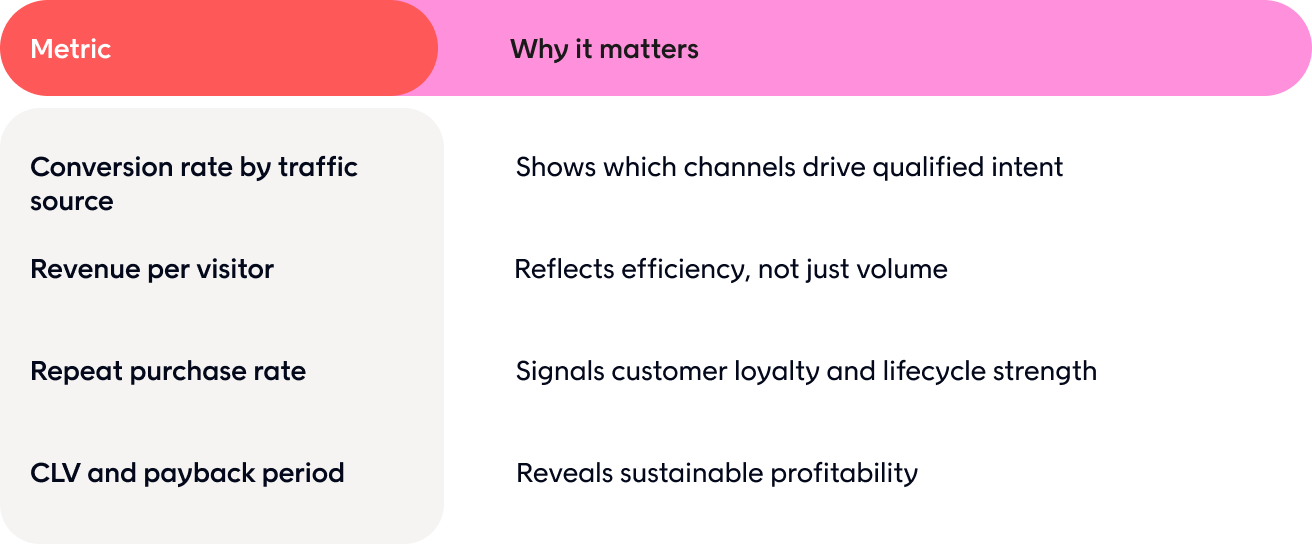
When these metrics connect back to unified customer data and automated journeys, optimization becomes systematic instead of guesswork.
Platforms like Voyado bring data, journeys, and measurement into one loop. That’s how teams move from reacting to challenges to building durable growth.
How Voyado helps retailers tackle e-commerce challenges
The e-commerce industry challenges we’ve covered often come back to disconnected data, manual journeys, and fragmented experiences.
Voyado is built to solve those at the root.
A unified customer view
A retail-native CRM for e-commerce brings customer data together across your e-commerce store, loyalty programs, and physical store systems. One profile. One view. Smarter segmentation and attribution.
Smarter personalization and journeys
Built-in e-commerce marketing automation turns first-party data into behavior-driven journeys. Loyalty-led customer experience becomes part of everyday marketer workflows.
Retail-optimized product discovery
Voyado’s site search connects relevance, stock, and intent. Discovery supports both customer experience and business priorities.
Always-on retention orchestration
Lifecycle flows across email and owned channels turn first purchases into repeat behavior. Retention becomes structured instead of reactive.
Voyado is built specifically for retail teams operating in a complex e-commerce world. Agentic retail capabilities help teams move from knowing what’s wrong to fixing journeys that drive measurable growth.
Your next steps:
The e-commerce industry is not short on ambition. What most teams need is better infrastructure.
Explore the Inside E-commerce guide to see how leaders are responding, or book a demo to see how those capabilities come together inside Voyado.
FAQs about e-commerce industry challenges
What are the main e-commerce industry challenges in 2026?
The main e-commerce industry challenges in 2026 center on fragmented customer data, weak personalization, underperforming product discovery, and overreliance on paid acquisition. While logistics and competition still matter, many challenges of e-commerce now sit in experience, infrastructure, and execution.
How do e-commerce challenges affect conversion specifically?
E-commerce challenges impact conversion by creating friction at key moments. Generic campaigns, poor site search, and disconnected journeys reduce relevance and weaken customer trust. When customer data is not unified, optimization becomes guesswork instead of strategy.
What are the biggest challenges of e-commerce for B2B brands?
The biggest challenges of e-commerce for B2B brands include complex pricing, approval workflows, account-level segmentation, and reordering UX. These challenges of B2B e-commerce often slow down high-intent buyers and require stronger data foundations to support personalized services online.
Are logistics and supply chain still the biggest challenges to e-commerce?
Logistics, inventory management, and supply chain pressures remain important challenges to e-commerce, especially with rising costs and cross-border complexity. However, many conversion losses now stem from experience gaps rather than fulfillment constraints alone.
How can retailers tackle these e-commerce issues and challenges without replatforming?
Retailers can address many e-commerce issues and challenges by unifying first-party data, improving high-intent journeys, and automating lifecycle programs. Fixing data and customer experience layers often delivers measurable gains without a full replatform.
About Author