95% of retailers use AI. Only 5% see ROI. Read the report →
The economic impact

AI maturity is becoming a financial variable

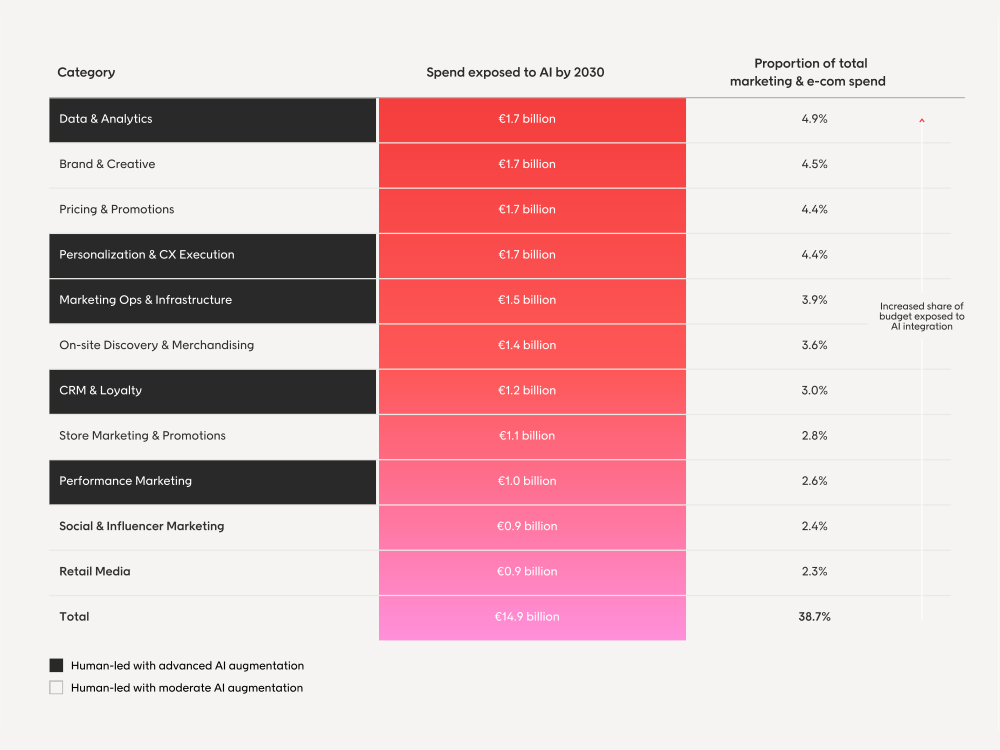
€14.9 billion of retail marketing and e-commerce spend is set to be reshaped by AI in 2030. How that exposure is distributed across functions and regions, and how deeply AI is integrated, will determine whether that spend translates into value.
Voyado and Retail Economics_The Economic Models

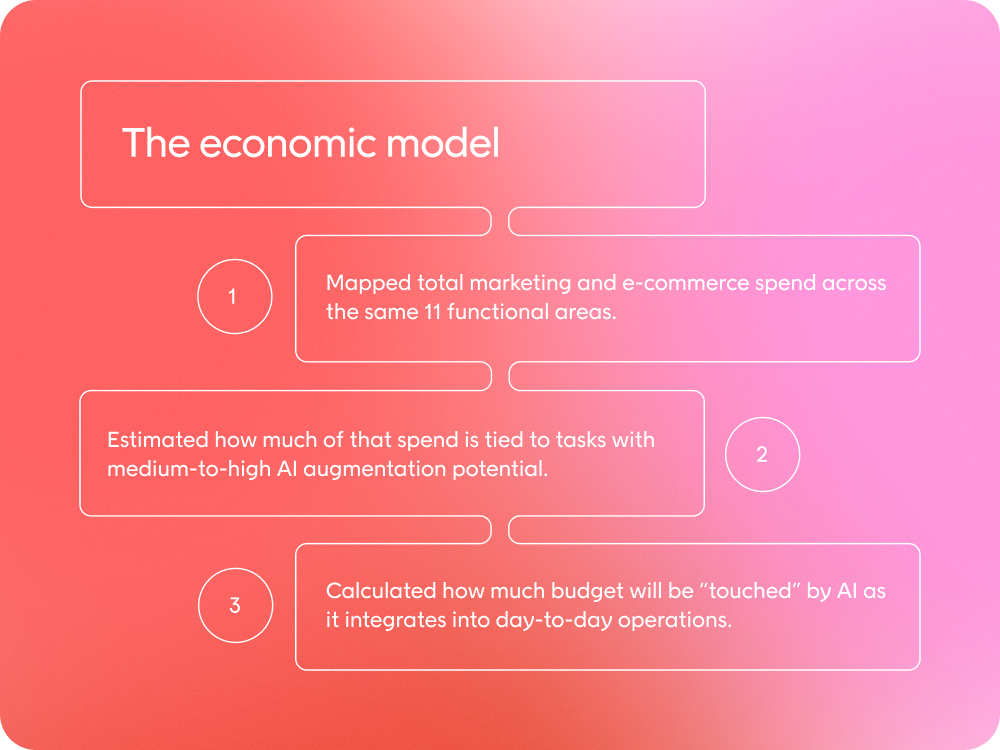
How retail spend will be exposed to AI

Through economic modelling, we have identified where AI is likely to augment, automate, or materially influence workflows.

We also distinguish between degrees of AI integration – the ‘human in the loop’ factor – identifying moderate AI augmentation versus advanced augmentation (where AI reshapes workflows and decision-making).

AI integration and spend

AI will reshape €14.9 billion in retail spend

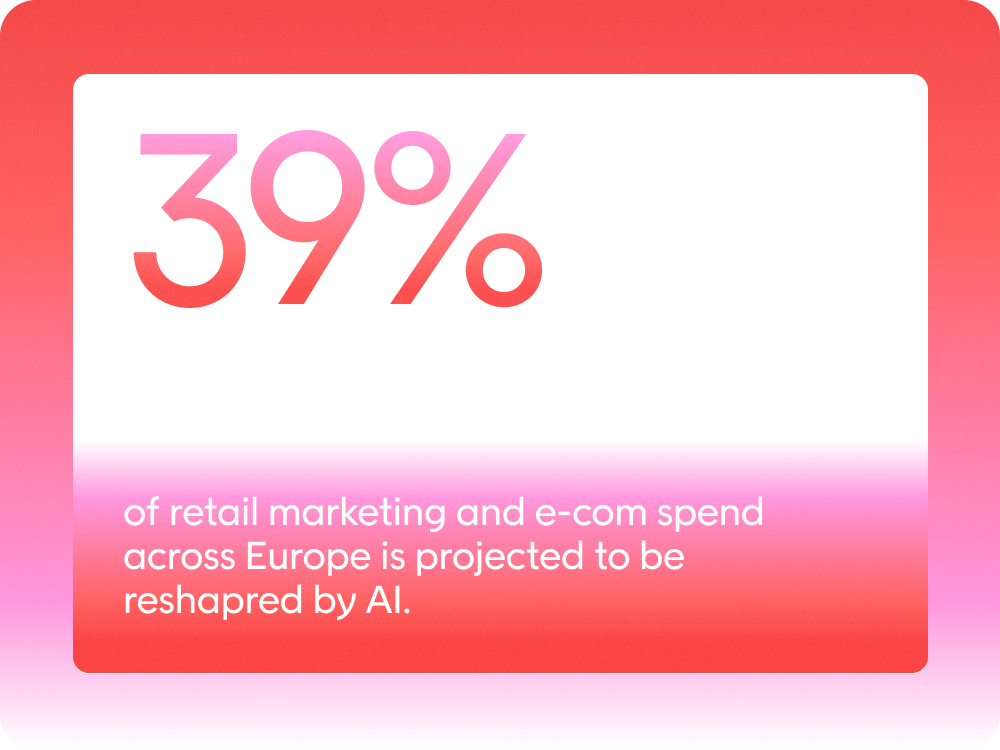
By 2030, 39% of retail marketing and e-commerce spend across Europe is projected to be exposed to AI. This equates to approximately €15 billion annually across the markets analyzed.

AI is changing how this spend is used – not removing it. How budgets are deployed, optimized, and managed will fundamentally shift, with a growing share of marketing and e-commerce activity relying on AI-enabled execution to remain competitive.

And as exposure increases, so does the penalty for fragmented data, unclear governance, and slow integration.

Regional differences in AI exposure

While the shift is happening across Europe, the scale and proportional exposure vary by region.

€4.3B
per year

€1.6B
per year

€7.3B
per year

€1.7B
per year
39% of retail marketing and e-com spend set to be reshaped by AI

AI is changing how spend performs

The significance of this exposure isn’t the distribution of spend across regions, but the growing role AI will play in how that spend performs. As AI influences a larger share of marketing and e-commerce budgets, the maturity gap becomes financial. Retailers that integrate AI effectively will see stronger performance from the same spend, while those that don’t will struggle to convert that investment into measurable return.

Frame 47

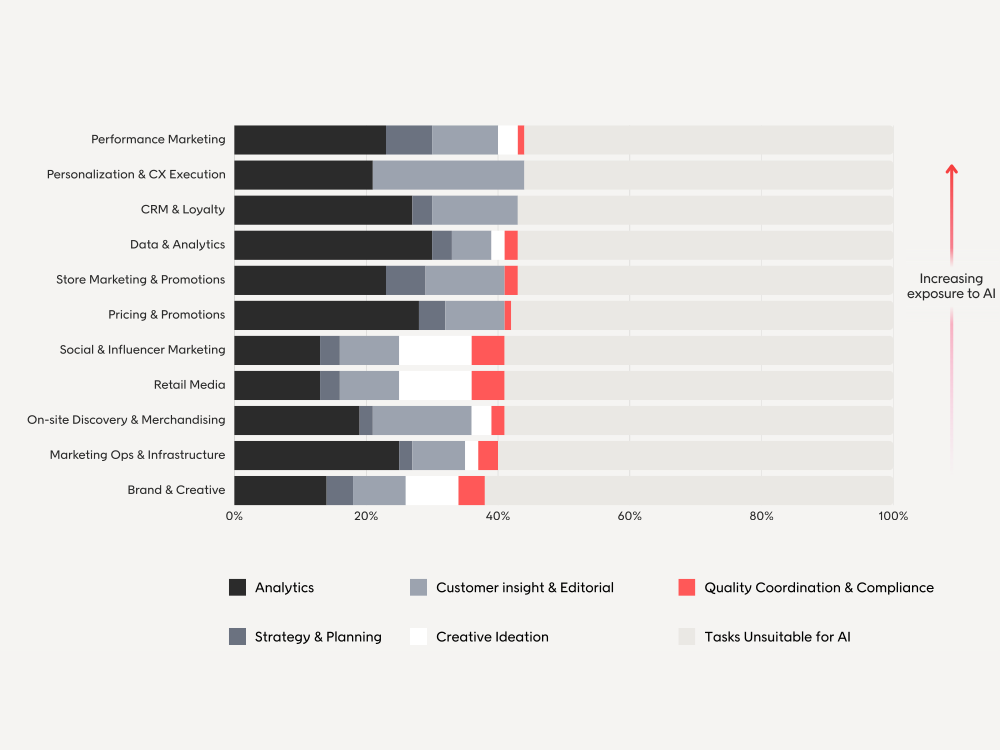
AI does not impact every function equally

AI exposure varies across marketing and e-commerce functions. Data-heavy, optimization-driven areas such as analytics, CRM, and on-site discovery are the most AI-ready, where AI is likely to become a core operating layer influencing decisions and performance.

In more experience-led functions (e.g. brand, creative, and in-store marketing) human input remains central, though there are still clear opportunities for AI to augment specific tasks.

The implication isn’t that some functions will avoid AI, but that how AI is used will differ. In some areas, it will directly reshape workflows, while in others, it will support human decision-making.
Richard Lim Quote_State of AI in European Retail

AI is becoming a driver of financial performance

The financial stakes extend beyond technology investment. AI is reshaping how marketing and e-commerce budgets are structured, governed, and measured.

Retailers that fail to integrate AI effectively risk allocating growing budgets into systems that cannot convert investment into performance. Those that do can turn that exposure into measurable return.

In this environment, AI maturity becomes a driver of financial performance.

Next section: The cost of delay →

download_report_bg_state of AI in retail download_report_bg_state of AI in retail

Download the full report

Access the full research from Voyado and Retail Economics to discover what separates leaders from the rest.