TL;DR
- An omnichannel retail strategy is a customer-first way to connect in-store, online shopping, mobile apps, and service into one seamless experience.
- The payoff is clear. Higher conversion, stronger customer loyalty, better inventory management, and more value from physical stores.
- A successful omnichannel retail strategy rests on four pillars: customer insight, connected channels, commerce operations, and team coordination.
- This guide gives you a practical framework, real retail journeys, and clear metrics, plus how Voyado helps you execute faster.
- If you want proof of why omnichannel is important for modern retail strategy, you are in the right place.
Does your retail business still treat each channel as a separate lane?
An omnichannel retail strategy is not about you adding more platforms or running more omnichannel marketing campaigns.
Your customers browse products online, visit a local store, buy online, return in store, and expect the experience to feel joined up.
You should be creating one consistent retail experience across physical and digital channels, supported by unified customer data and shared rules.
You’ll learn today what an omnichannel retail strategy actually means in practice, how to build one step by step, and how to turn it into real customer journeys that boost customer satisfaction and long-term growth.
What is an omnichannel retail strategy?
An omnichannel retail strategy is a plan for how your retail business works as one system across in-store, online shopping, mobile apps, and customer service.
It connects every part of the customer journey. Customer data, inventory management, offers, and service rules are shared instead of locked in separate tools or teams.
Think about how customers shop today:
They browse products online > They check stock before visiting a brick and mortar store > They buy online and pick up in store > They return items through a different channel than where they bought them
And, they expect all of this to feel easy and consistent.
An omnichannel retail strategy makes that possible.
Omnichannel retail vs omnichannel marketing
This is where many retail strategies fall short.
Omnichannel marketing focuses on campaigns. Email, SMS, social media platforms, and targeted marketing across digital channels. That matters, but it only covers part of the customer experience.
An omnichannel retail strategy goes further. It connects:
- Sales channels
- Inventory management
- Customer service interactions
- Loyalty and rewards
- In-store experiences and online stores
In other words, it connects how customers shop, not just how you communicate.
If marketing efforts are aligned but commerce and service are not, friction still shows up. Offers do not match. Stock is unclear. Returns become painful. Customer satisfaction drops.
That’s not a seamless shopping experience.
Single channel, multichannel, omnichannel explained simply
Here is a quick way to see the difference.
| Approach | What it means | What customers experience |
| Single-channel retail | You sell through one main channel, like a retail store or an online business. | A simple experience, but limited choice and flexibility. |
| Multichannel retail | You sell through multiple channels such as physical stores, online stores, and mobile apps. Each channel runs on its own, with separate data and rules. | More ways to shop, but inconsistent offers, service, and stock visibility. |
| Omnichannel retail | All channels share the same customer data, purchase history, and customer preferences. | A seamless experience where customers shop in store, online, or in an app with the same offers, service, and experience every time. |
It is also the difference between adding more channels and building a successful omnichannel retail strategy that customers actually notice.
But why should you care about having an omnichannel retail strategy?
Why omnichannel retail strategy matters now
An omnichannel retail strategy matters now because it aligns how your business operates with how customers actually shop, return, and engage. It affects experience, profitability, and long-term relevance at the same time.
Customer expectations
Customers move between channels based on convenience, timing, and need. A strong omnichannel retail strategy supports this behavior without forcing customers to adapt.
- Buy anywhere, return anywhere.
- Same prices, offers, and loyalty benefits across channels.
- Consistent product and stock information in store and online.
- Smooth customer service interactions across touchpoints.
When these expectations are met, the experience feels reliable and effortless. When they are not, customers quickly lose trust in the brand.
Profitability
Connecting channels is not just about experience. It has a direct impact on commercial performance.
When inventory, content, and offers line up across sales channels, retailers see higher conversion and higher average order value. Customers are more confident completing purchases when availability is clear, and alternatives are visible.
- Higher conversion and AOV when stock, content, and offers line up.
- Better use of physical stores as fulfillment hubs and service points.
This also improves inventory management and helps retailers move stock more efficiently across channels.
Data advantage
When customer journeys are connected, retailers gain a clearer view of customer behavior, customer preferences, and purchase history across online and offline channels. That means more relevant targeting, better assortment decisions, and stronger planning.
- Unified journeys improve targeting and personalization.
- Better data supports smarter assortment and demand planning.
Instead of guessing, teams can act on how customers actually shop.
Competitive reality
The standard has already been set by pure-play e-commerce brands and marketplaces.
When combining physical and digital channels into one experience, you can compete on service, availability, and trust, not just price.
- Pure-play e-commerce and marketplaces set the bar.
- An omnichannel strategy is how retail brands like yours can stay competitive today.
Customer expectations set the standard. Profitability is where the omnichannel retail strategy proves its value.
The 4 pillars of an omnichannel retail strategy
A successful omnichannel strategy is not about running more channels. It is about creating one omnichannel retail experience across physical stores, online stores, and mobile apps.
The simplest way to align teams is to use a shared model. One that connects customer experience, sales channels, and operations without adding complexity.
That model is built on four pillars.
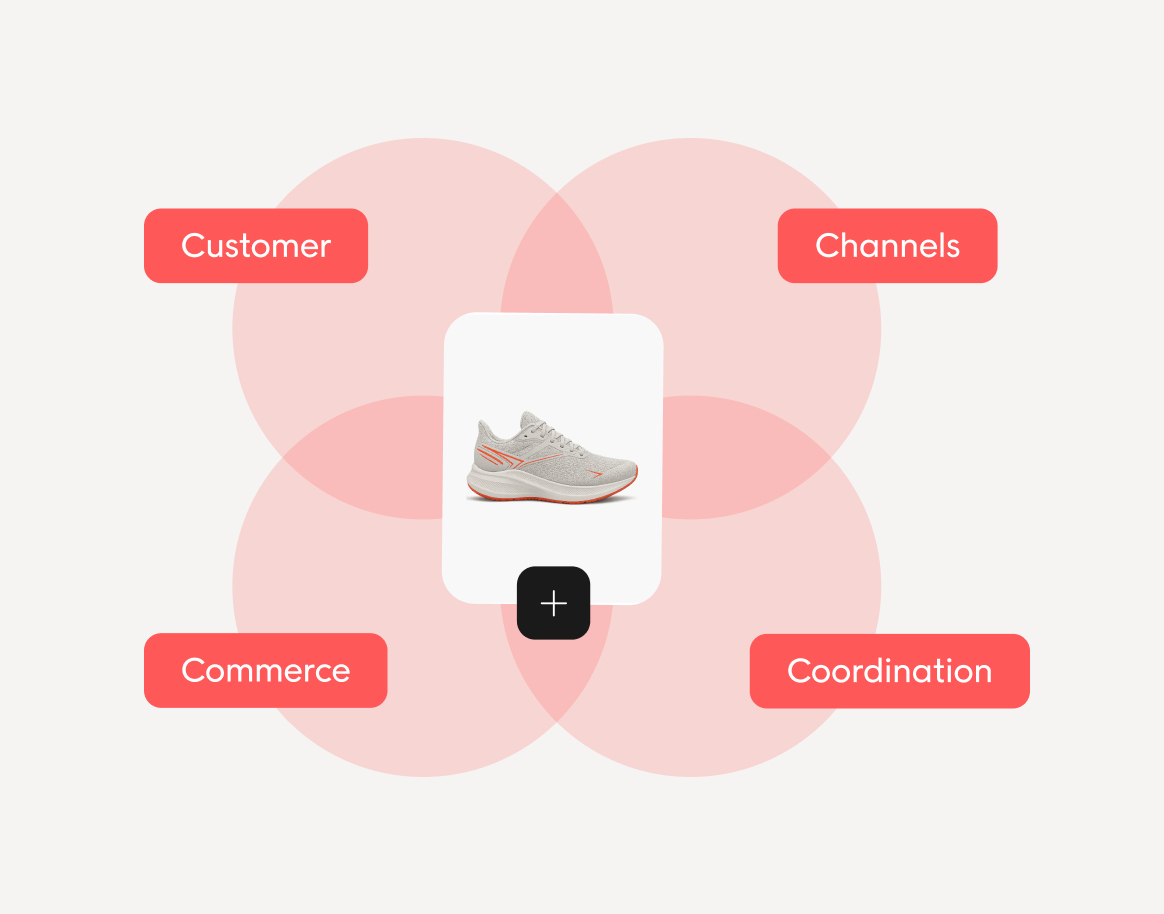
Customer | Channels | Commerce | Coordination
Each one supports the others. If one is weak, the seamless omnichannel experience breaks, no matter how strong the rest looks on paper.
This framework helps retail strategy teams:
- Align online and offline channels around the same goals
- Focus on journeys that improve customer satisfaction and customer loyalty
- Build an omnichannel retail strategy that is realistic to execute
It also reinforces why you need omnichannel marketing as part of a broader omnichannel retail strategy, not as a standalone effort.
Let’s start with the customer.
1. Customer – unified view and clear segments
This pillar is about creating a seamless customer experience across every interaction, not optimizing channels in isolation.
To do that, retailers need a single view of the customer that connects all customer touchpoints, from online shopping to in-store purchases and customer service interactions.
What this pillar needs to support:
- A seamless customer experience across online and offline channels
- Connected customer touchpoints instead of fragmented interactions
- A consistent brand experience across stores, apps, and digital channels
When customer data and purchase history live in one place, teams can recognize customers wherever they engage and respond in a consistent way.
Segmentation should also reflect how customers actually behave, not where they shop.
For example:
- New customers discovering the brand
- Loyal customers shopping across multiple channels
- Customers showing early signs of churn
Customer feedback helps close the loop. Returns, service conversations, and post-purchase feedback reveal where journeys break and where experience improvements matter most.
When this pillar is strong, everything else becomes easier to design and measure.
2. Channels – consistent journeys across touchpoints
This pillar focuses on how omnichannel retail connects customer journeys across all sales channels.
Customers do not think in terms of channels. They move between online and offline channels based on convenience, timing, and need.
An effective omnichannel retail strategy supports that movement with consistent rules and a consistent brand experience.
What this pillar needs to support:
- Connected customer journeys across multiple channels, including online stores, mobile apps, and physical stores
- Clear handoffs between digital channels and in-store experiences
- A consistent brand experience at every customer touchpoint
This means pricing, promotions, and loyalty benefits behave the same way whether customers shop in store, browse products online, or use mobile apps. It also means customer service interactions continue smoothly across channels.
When omnichannel retail journeys are consistent, customers feel confident moving between channels. That confidence directly improves customer experience and customer satisfaction.
3. Commerce – inventory and fulfillment as one system
Commerce is where your omnichannel retail strategy becomes visible to customers.
Customers expect products to be available across online and offline channels. That only works when inventory management, fulfillment, and returns operate as one system across sales channels.
What this pillar needs to support:
- Shared inventory visibility across online stores and physical stores
- Flexible fulfillment options such as buy online, pick up in store, ship from store, and endless aisle
- Simple returns and exchanges that work in-store and online
Physical stores play a central role in omnichannel retail. They support in-store purchases, local fulfillment, and customer service, while also helping retailers balance inventory across the network.
When commerce works this way, retailers deliver a seamless experience, reduce friction, and improve customer experience across the full customer journey.
4. Coordination – teams, metrics, and technology aligned
An omnichannel retail strategy only works when teams operate around the same goals.
This pillar is about aligning people, metrics, and technology around a shared omnichannel strategy and a unified customer experience.
What this pillar needs to support:
- Shared ownership of the customer journey across teams
- Common metrics tied to customer experience, customer engagement, and customer satisfaction
- Technology that enables seamless integration across online and offline channels
Many retailers have strong tools but disconnected teams. When coordination is missing, customer touchpoints feel inconsistent, and journeys break.
When coordination is in place, omnichannel retail becomes easier to execute. Teams move faster, customer feedback travels across departments, and improvements show up as a unified customer experience instead of isolated wins.
Now that you understand what’s important, it’s time to build your strategy framework.
Step-by-step omnichannel strategy framework
An effective omnichannel strategy is not built all at once. It works best when teams move through clear phases, focusing on a few high-impact improvements at a time.
This framework breaks the work into six practical steps. You can use it to assess where you are today, decide what to fix first, and move forward without overwhelming teams or systems.
Step 1: Diagnose your starting point
Before you design new journeys, you need a clear view of what you already have and where friction shows up for the omnichannel customer.
Use the questions below to ground the conversation.
| Area | What to assess |
| Channels | Which sales channels do you operate today? Online stores, physical stores, mobile apps, marketplaces, service channels |
| Data | Where is customer data siloed? POS, e-commerce, loyalty, email, and customer relationship management systems |
| Experience gaps | Where do customers struggle? Returns, stock visibility, inconsistent offers, service handoffs |
| Costs | Where do disconnected journeys increase customer acquisition costs or support effort |
To keep this simple, place yourself on a basic maturity scale:
| Stage | What it looks like |
| Basic | One main channel, limited data sharing |
| Multichannel | Several channels, managed separately |
| Early omni | Some shared data and cross-channel journeys |
| Advanced | Unified journeys, data, and measurement |
Step 2: Define outcomes and a small set of hero journeys
A strong omnichannel strategy starts with outcomes, not features.
First, define 3–5 business goals that matter now. For example:
- Increase repeat purchase
- Reduce stock-outs
- Improve NPS or customer satisfaction
- Lower customer acquisition costs
- Grow customer lifetime value
Next, choose 2–3 hero journeys that are both high-volume and high-friction. These are the journeys where improvements will be visible fast.
Common starting points include:
- Buy online, pick up in store from search to pickup
- New loyalty member onboarding across store and digital
- Returns and exchanges from online to physical stores
Focusing on a few journeys keeps the omnichannel strategy realistic and measurable.
Step 3: Map journeys across channels and data
Once hero journeys are chosen, map them end to end.
This is not about documentation for its own sake. It is about spotting gaps that break the experience.
| Journey element | What to identify |
| Triggers | What starts the journey? Search, purchase, return, service request |
| Channels | Which channels are involved at each step |
| Data | Where customer data, inventory data, and purchase history are needed |
| Decisions | Where offers, eligibility, or alternatives are shown |
| Support | Where store staff or service teams step in |
Mapping journeys this way highlights what an omnichannel customer actually experiences, not what systems assume should happen.
Step 4: Design experiences and rules
With journeys mapped, teams can design clear rules that keep experiences consistent.
Key decisions to make early:
- Where stock availability and alternatives are shown
- How promotions and loyalty earn or burn and how rules behave across channels
- How personalization works by customer segment
Keep rules simple at the start. Over-engineering slows teams down and makes testing harder.
The goal is not perfection. It is to create a consistent brand experience customers can trust across channels.
Step 5: Connect tech and data to support journeys
Only now does technology come into focus.
At this stage, identify the connections needed to support journeys, not the other way around.
Typical connections include:
- POS and e-commerce
- Loyalty or CDP and marketing automation
- Inventory systems and customer touchpoints
Be clear about timing. Some moments require real-time events. Others work fine with daily updates.
This is also where teams often review their broader omnichannel e-commerce strategy to ensure platforms, data, and engagement tools support the journeys they want to run.
Step 6: Launch, test, and iterate
An omnichannel retail strategy is never finished. It improves through testing and learning.
A practical rhythm looks like this:
- Launch one hero journey per quarter
- Use control groups to measure impact
- Review performance, operational feedback, and customer feedback
- Adjust rules, messaging, or fulfillment where needed
Over time, this approach improves customer experience, increases customer lifetime value, and builds confidence across teams.
But how do you know everything is working? It’s time to get down to numbers.
Metrics and KPIs for omnichannel strategy
Your strategy only works if your team can measure what is improving and what is not. These metrics help you track progress across experience, revenue, and operations without drowning in dashboards.
The key is to measure performance by journey and across channels, not in isolation.
Customer and loyalty metrics
These metrics show whether the omnichannel customer experience is actually improving over time.
| Metric | What it tells you |
| Repeat purchase rate | Whether customers return across online and offline channels |
| Purchase frequency | How often customers buy after their first interaction |
| Customer lifetime value | Whether connected journeys are increasing long-term value |
| Cross-channel usage | How many customers shop across two or more channels |
| Loyalty participation | Whether loyalty works consistently in-store and online |
If these numbers improve together, your omnichannel strategy is strengthening customer loyalty, not just driving one-off sales.
Acquisition and cost efficiency metrics
Omnichannel journeys should reduce friction early in the customer journey. These metrics show whether that is happening.
| Metric | What it tells you |
| Customer acquisition costs | Whether connected journeys reduce paid acquisition pressure |
| First-to-second purchase time | How quickly new customers return |
| Assisted conversion rate | How often do stores or service support online purchases |
| Channel mix at acquisition | Which channels bring in high-value customers |
When journeys are connected, acquisition becomes more efficient and less dependent on constant spend.
Commerce and operational metrics
These metrics reveal how well your omnichannel strategy supports day-to-day retail operations.
| Metric | What it tells you |
| Buy online, pick up in store share | Adoption of omnichannel fulfillment |
| Ship-from-store share | How effectively stores support online demand |
| Inventory accuracy | Whether stock data can be trusted across channels |
| Return-to-exchange rate | How well returns are converted into new purchases |
Strong performance here shows that inventory management and fulfillment are working as one system.
Experience and service metrics
Customer experience breaks most often during handoffs. These metrics focus on those moments.
| Metric | What it tells you |
| NPS or CSAT by journey | Experience quality for BOPIS, returns, onboarding |
| Resolution time | Speed of customer service interactions across channels |
| Service handoff rate | How often customers switch channels during support |
| Customer feedback themes | Where friction shows up most often |
These insights help teams fix the journeys that matter most instead of guessing.
Program and platform health metrics
Finally, track whether your omnichannel setup supports execution.
| Metric | What it tells you |
| Offer redemption vs margin | Whether promotions drive profitable behavior |
| Journey completion rate | How many customers finish key journeys |
| CRM profile coverage | How complete customer profiles are in your customer relationship management system |
| Data freshness | Whether teams act on real behavior, not outdated reports |
This is also where your team should evaluate their analytics setup and tooling. Many retailers compare their capabilities against the best retail omnichannel analytics tools to understand what deeper journey-level measurement looks like.
How to use these metrics in practice
You won’t need to track everything at once.
Start with:
- 3–5 core metrics per hero journey
- One primary experience metric
- One revenue or efficiency metric
Over time, this approach improves customer experience, lowers customer acquisition costs, and increases customer lifetime value across the entire omnichannel customer base.
Tech stack requirements (without overkill)
By this point, one thing should be clear. An omnichannel strategy doesn’t depend on having the biggest or newest tech stack. It depends on whether your tools can support real customer journeys across channels.
This section focuses on what teams actually need to make omnichannel work in practice, without turning the stack into a maintenance project.
Tech stack essentials at a glance
| Must-haves | Nice-to-haves |
| Shared customer data that brings together purchase history, behavior, and loyalty | Real-time triggers for moments like abandoned carts or in-store purchases |
| Reliable connections between POS, e-commerce, loyalty, and marketing tools | On-site or in-app personalization based on customer behavior |
| Journey and campaign orchestration across channels | Store-aware messaging using location or inventory signals |
| Cross-channel reporting across online and offline channels | Advanced decisioning and prioritization rules |
| Clear ownership and governance across teams | AI-assisted recommendations or optimization |
The must-haves make it possible to run consistent journeys. The nice-to-haves help teams move faster and fine-tune experiences once the basics are working.
Retailers often see the fastest progress when customer data, loyalty, and omnichannel engagement live close together. Fewer handoffs make execution easier and insights clearer.
Next, let’s look at how Voyado brings these pieces together for retail teams.
How Voyado powers a real omnichannel retail strategy
A strong omnichannel strategy only works if teams can move from planning to execution without friction. That’s where Voyado fits in.
Voyado is built specifically for retail. It brings customer data, loyalty, engagement, and analytics together so teams can run consistent journeys across channels, without stitching together endless tools.
Retail-native customer data
Voyado creates unified customer profiles that combine POS, e-commerce, app, and loyalty data into one view. This gives teams a clear picture of the omnichannel customer, not fragmented records spread across systems.
That unified view is what allows journeys to stay consistent when customers move between in-store and digital touchpoints.
In practice
Samsoe Samsoe unified customer data across channels to recognize customers wherever they shop and interact.
Omnichannel engagement from one place
With Voyado, teams can activate journeys across email, SMS, on-site, app, and store triggers from a single platform. Journeys respond to real customer behavior, not just static segments.
This makes it easier to coordinate engagement across channels without conflicting messages or duplicated effort.
In practice
The Sting improved how customers move between online and in-store journeys by aligning engagement across channels.
Loyalty built in, not bolted on
Loyalty in Voyado is part of the core platform. Tiers, offers, and rewards behave the same way across channels, so customers don’t have to relearn the rules depending on where they shop.
This consistency supports a stronger customer experience and helps grow customer lifetime value.
In practice
LAKRIDS BY BÜLOW used loyalty and engagement together to deepen relationships and drive long-term value.
Analytics and incrementality that show what works
Voyado’s analytics focus on journeys, not just channels. Teams can see which journeys drive engagement, conversion, and repeat purchases, and measure incrementality instead of relying on last-click assumptions.
This makes it easier to prove impact and improve journeys over time.
Faster time to value
Voyado is designed to help retail teams move quickly. Connectors, templates, and playbooks for common retail journeys reduce setup time and lower the barrier to execution.
Teams don’t have to start from scratch. They can launch, learn, and iterate faster.
See Voyado in action
If you want to see how Voyado helps teams turn omnichannel strategy into live customer journeys, book a Voyado demo.
Bringing it all together
Your omnichannel strategy will only work when it’s grounded in how customers actually shop and how teams actually operate. So don’t make it about adding more channels. Instead, make the experience feel whole, wherever customers engage.
Here’s what to take with you:
- One customer experience matters more than more channels. Consistency across touchpoints is what builds trust and loyalty.
- The four pillars give you a shared model. Use them to align teams and spot what needs fixing first.
- Start small and stay focused. Pick 2–3 hero journeys, measure impact incrementally, then expand.
- Technology should simplify execution, not add friction. You need unified data and activation working together, which is exactly what Voyado is built for.
From here, the next step isn’t more planning. It’s choosing the first journey to improve and putting it live.
FAQs
What is an omnichannel retail strategy?
An omnichannel retail strategy connects online shopping, mobile apps, physical stores, and service into one seamless customer experience. It focuses on one unified customer journey instead of managing multiple channels separately.
What are the 4 pillars of omnichannel?
The four pillars are customer, channels, commerce, and coordination. Together, they support a consistent brand experience across physical and digital channels and enable a successful omnichannel strategy.
How is omnichannel different from multichannel?
Multichannel retail uses multiple channels that operate separately. Omnichannel retail connects those sales channels so customer data, inventory, and service work together across online and offline channels.
What is a simple omnichannel example for retail?
Customers browse products online, buy online, and pick up in-store at a local store. Loyalty benefits apply everywhere, inventory is accurate, and customer service interactions continue smoothly if needed.
What’s the first practical step to start an omnichannel retail strategy?
Start by reviewing your sales channels, customer data, and inventory management. Identify where broken journeys increase customer acquisition costs or frustrate customers, then prioritize one or two fixes.
Do you need a CDP to run an omnichannel retail strategy?
Not always. What you need is unified customer data. This can come from a customer relationship management system, a loyalty platform, or a retail-native solution that supports customer insights and higher customer lifetime value.