Almost nothing that goes wrong during Black Week goes wrong during Black Week. It usually goes wrong weeks earlier, in a segment nobody double-checked, a feed import that wasn’t reviewed, and a loyalty play nobody planned for.
By the time Black Week arrives, most of the decisions that determine how it goes have already been made. So, we asked four Voyado teams what they wish every retailer knew before November, from the send-timing rules that break campaigns behind the scenes to the loyalty moves most brands skip entirely.
Here’s what they shared.
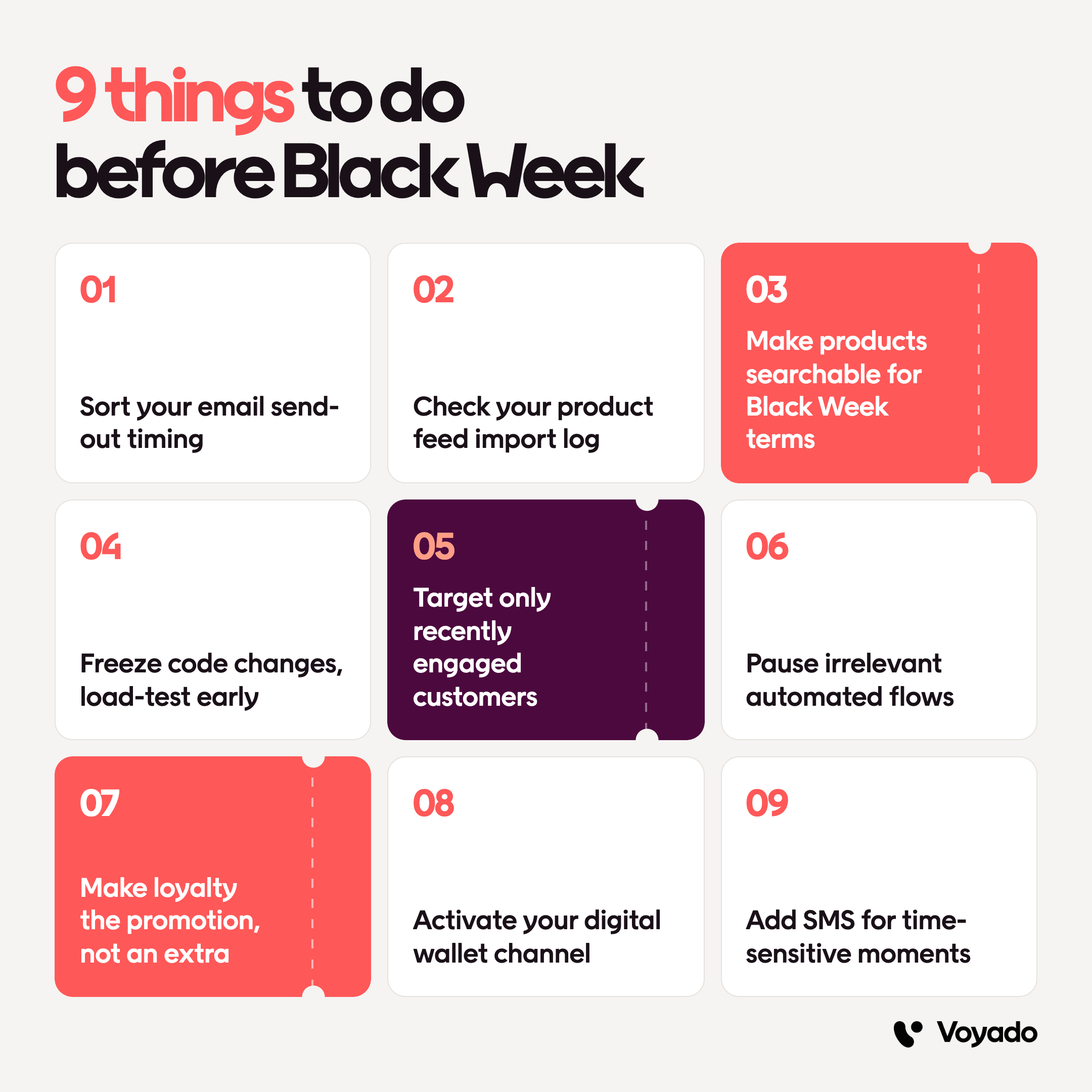
Start moving before Friday
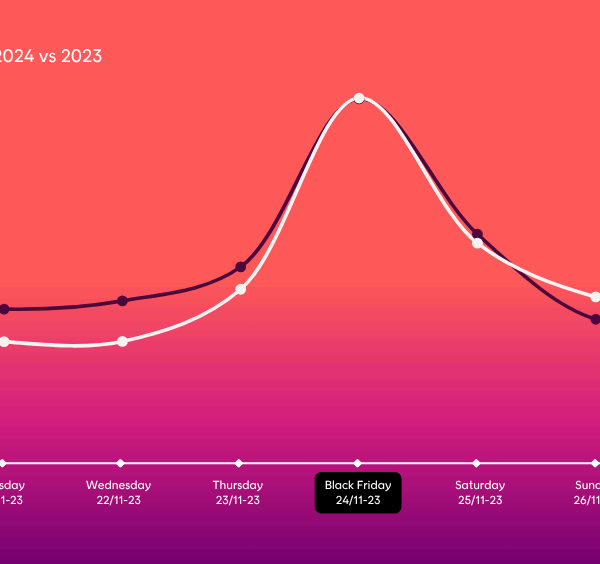
Start with the shape of the week itself, because it explains everything else. Shoppers increasingly aren’t holding out for the biggest headline discount to land on Friday. Now, they’re converting the moment an offer clears their bar, and loyalty-driven journeys can create that moment well before the weekend even arrives.
So, if your campaign plan has one big push aimed at Friday, you’re building for a week that no longer behaves that way. Early visibility is where a meaningful share of the week’s results now come from — not just a nice-to-have.
Send to fewer people, not more
The CSM team flags a pattern that runs counter to the instinct most brands have during Black Week: the urge to reach more people, not fewer:
- Narrow your targeting instead of broadening it. Focus on customers who’ve been active recently. For example, anyone who’s opened an email in the past 180 days. Black Week isn’t the moment to suddenly email groups you rarely contact, or to widen your usual audience just because the offer is bigger. In fact, doing that is the fastest way to trigger spam complaints and damage the sender reputation you’ll rely on for the other 51 weeks of the year!
- Pause automated flows that don’t belong this week. Win-back and activation campaigns, in particular, are easy to forget about because they run pretty inconspicuously in the background of your operations. But they’re built for a different moment than Black Week, and leaving them live can send the wrong message at the wrong time.
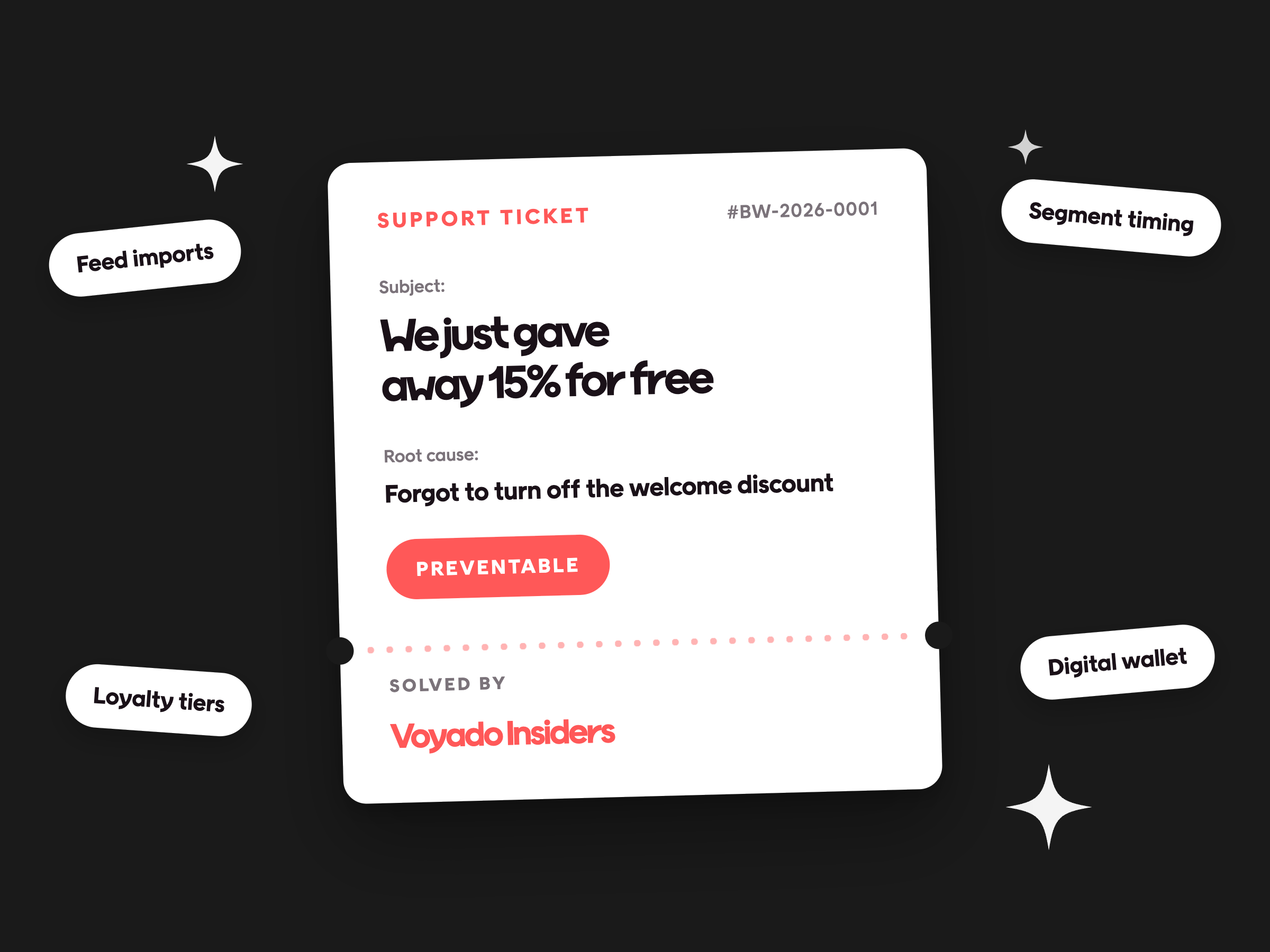
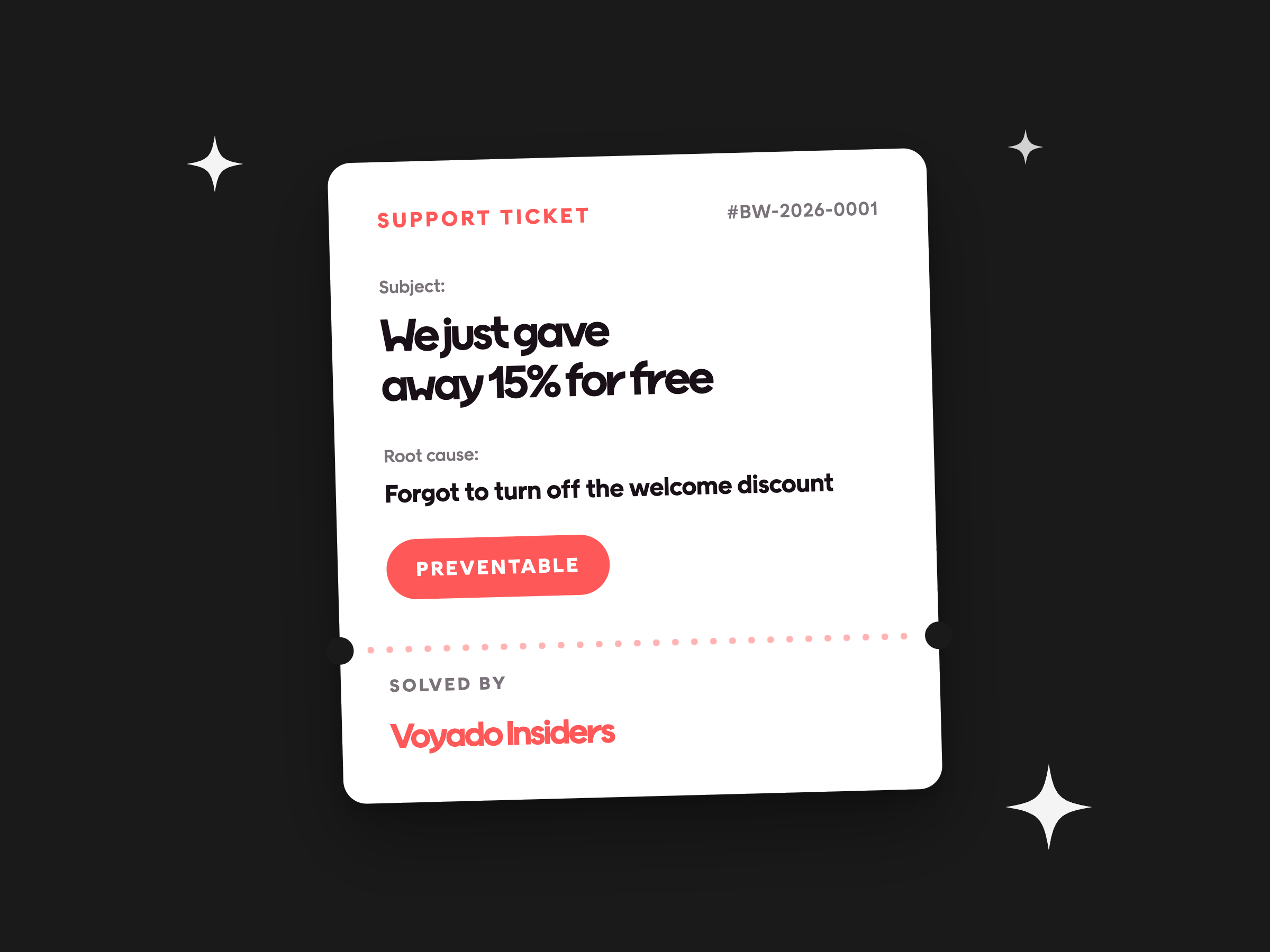
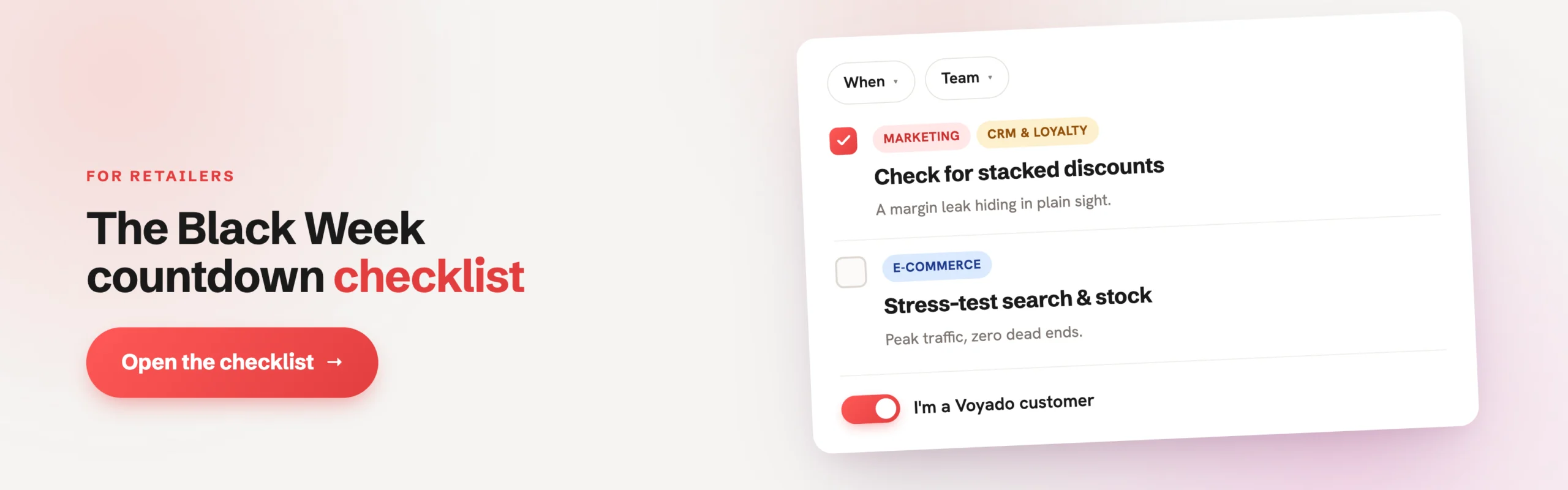
- Check that your discounts aren’t stacking. This one’s a margin leak hiding in plain sight: a 15% welcome discount left active in on-site messaging, sitting on top of an already heavily discounted Black Week price. This is worth a deliberate check across every channel rather than assuming it’s fine!
Don’t run Black Week on one channel
The CSM team’s second flag for the week: don’t let all your Black Week messaging live in one inbox.
Email volume rises during Black Friday week, with every retailer sending more into the same inboxes at the same time. Meanwhile, most consumers now expect to hear from a brand on more than one channel during BFCM, and each one has a different job to do: email tends to carry the story, SMS carries urgency, push carries activation. A single channel is a single point of failure in your highest-stakes week.
If SMS isn’t part of your mix yet, two ways to start small:
- Use it for the one genuinely time-sensitive moment of the week, like a doorbuster opening or a stock-almost-gone alert, rather than replicating your full email cadence.
- Let email carry the story and SMS carry the trigger. They do different jobs and don’t just deliver the same message twice.
Check your feed before your prices go stale
Emelie, Technical Support Specialist, says this is one of the most common Black Week tickets her team sees — and it’s one you can check today with zero help from support:
 |
Whatever CRM or ESP you use, the prices shown in a product-feed-driven email come from the last successfully completed import of that feed, not the current state of the feed at the source. If an import fails in the background, prices simply stop updating in your emails, no matter how recently they changed upstream. It’s an easy trap: the price is correct in your PIM, correct on your site, and still wrong in the email, because the email is working from an import that never went through.
Emelie, Technical Support Specialist |
Two things worth checking now:
- Find your platform’s import or integration log. Most CRM/ESP tools have some version of this, showing whether feed imports are succeeding and on what schedule. Recurring failures usually show the reason, so you can fix it yourself or bring it to support with the answer already half-solved.
- Check the feed URL directly before opening a ticket. A large share of “wrong price” or “missing product” tickets turn out to be a product that simply isn’t in the feed yet. That’s a fix on the retailer’s end, and checking it first saves the wait time of a ticket that ends in exactly that answer.
Make your product findable before you make it discounted
Karin, Customer Success Manager, hears the same gap every year: retailers plan in detail what to put on sale but should spend much more time planning how findable it will be for customers.
 |
I just talked to a customer today who’s starting to prepare their campaign and think about which products to market during Black Week. That also means thinking about the product data — they might want to add data to make it searchable for Black Week searches, or add products to specific categories.
Karin, Customer Success Manager |
Most of this is prep work worth doing well before the week itself, with one exception, flagged below, that’s worth checking during it too:
- Confirm your product data actually supports the terms people actually search for. This is often generic ones like “discount,” “sale,” or your local equivalent, alongside “campaign,” “black week,” and “black friday”. This means promoted products surface when customers search for them, not just when they browse to them.
- If product data isn’t something you can update directly (common when it lives in a PIM), a keyword-targeted landing page built specifically for the campaign is a working alternative for the same outcome.
- Some platforms also let you boost visibility by tag rather than product-by-product, and it’s worth checking if yours does. Either way, most merchandising platforms already adjust product rankings automatically based on real-time trends, often faster than a person could manually re-order them. During Black Week specifically, heavy manual boosting or burying can end up working against your own automation rather than with it, and a lighter touch tends to outperform constant manual intervention.
- If your returning-customer rate is low, this is a good moment to retarget one-time buyers specifically. Try a dedicated send with a connected landing page, built around your brand’s own story rather than just the discount. This tends to work better than a generic blast.
- The one thing worth checking during the week, not just before it: your search-term reports across markets. Black Week search behavior throws up terms you won’t have anticipated, and a quick synonym fix can rescue a product that would otherwise stay invisible.
Lock it down before the traffic hits
This is the part of Black Week nobody finds exciting, and that’s exactly why it keeps getting skipped. That is, right up until it’s the reason the whole week goes sideways! None of it requires deep technical knowledge to follow, either: it mostly comes down to discipline about when you make changes and how much load you’ve planned for.
- Lock front-end and API changes for the critical window. An untested change going live mid-week is one of the most common — and most preventable! — causes of a Black Week incident.
- Load test before November, not the week you actually need it to hold.
- Check mobile checkout specifically. Most Black Week traffic is mobile, and every extra step in checkout is a conversion you lose exactly when you can least afford to.
- Tell your CSM your expected traffic in advance, so scaling is proactive rather than reactive on both sides.
- Save your platform’s incident number before you need it.
Make loyalty part of your Black Week strategy, not the exception to it
This is the reframe Malin, Product Manager, wants more retailers to sit with, because it runs against the grain of how many brands behave during the week.
 |
I see Black Week as a non-loyalty event — a lower amount of promotions generated, no vouchers created. The data and feeling we get is that retailers reduce personalization and go spray-and-pray instead. But I think companies have the possibility to do so much more.
Malin, Product Manager |
Her case is that this is exactly backward, and there’s more room to differentiate here than at any other point in the year, not less:
- Tiering: give gold members, or any specific high-value segment, early access before the general sale opens. It rewards the customers worth rewarding, and it spreads demand instead of concentrating all of it on one day.
- Points over discounts: a points boost doesn’t erode margin the way a blanket discount does, and unlike a discount, it gives the customer a reason to come back and spend it in January when sales usually go quiet.
Far from being a soft, brand-values argument, this is about margin and retention, and the timing data above supports it directly. If loyalty-driven journeys are already what’s pulling purchases earlier in the week, then loyalty mechanics aren’t a nice extra layer on top of your Black Week strategy — they’re an important part of what’s driving the week’s results in the first place.
Put your digital wallet to work this Black Week
Niclas, VP of Digital Wallet, shared five concrete moves for the week itself:
- Send a dedicated card email the week before Black Friday to anyone who hasn’t downloaded their card yet, using the sale itself as the hook: “Download your card before Black Friday and get [offer].”
- Redesign the card with a Black Friday theme. The seasonal look is the reason to send that email, and it makes the card feel current.
- Update geo-location messages before the week starts so they reference the sale, not a generic message that has been live since October. A member walking past your store should hear about Black Friday specifically.
- Push a Black Friday morning notification to all cardholders. It could be a points balance, an active voucher, or a specific offer, for example. Time-sensitive and relevant is going to beat generic every time.
- Use geo triggers throughout the week to convert proximity into foot traffic: “Black Friday is here, and you’re near us! Come in and use your points.”
 |
If you’ve implemented a digital wallet, remember: you’re still early. Cut through the noise with push and geo notifications, and differentiate your brand from the competition. Black Week is noisy — your customers’ wallets give you a direct line to their pockets. Use it.
Niclas, VP of Digital Wallet |
The pattern behind every tip
Look back across all of the advice here, and it’s the same tip again and again: the decisions that determine your Black Week outcome were already made weeks before Black Week started.
Nothing above requires new headcount or a bigger budget. It requires moving the decision earlier: checking the feed before the prices look wrong, freezing the code before you’re tempted to ship “just one small fix,” pausing the flow before it fires at the wrong moment, choosing the loyalty play before the discount does the talking for you.
Black Week doesn’t reward the retailers who work hardest during the week. It rewards the one who finished preparing before it began.
With thanks to Emelie Tarvainen, Karin Fredholm, Malin Sangell, and Niclas Blomqvist for their time and insider knowledge.
About Author