TL;DR
AI agents for personalization help retailers move beyond static segments and one-size-fits-all journeys. They use customer data and customer behavior to decide what to show each customer next across the customer journey.
The strongest platforms support real-time personalization across email, SMS, apps, onsite experiences, search, personalized recommendations, and loyalty touchpoints.
The best tools connect customer engagement, product discovery, and customer loyalty in one place. Voyado stands out with retail-trained agentic AI that helps teams choose the next best action across channels.
The 10 best AI agents for personalization
Retail teams evaluating AI agents for personalization are moving beyond basic personalization and static customer segments. They need systems that use customer data and customer behavior to support real-time personalization across the customer journey.
The platforms below use agentic AI, predictive analytics, and machine learning to anticipate customer needs, strengthen customer relationships, and deliver personalized experiences across every customer touchpoint.
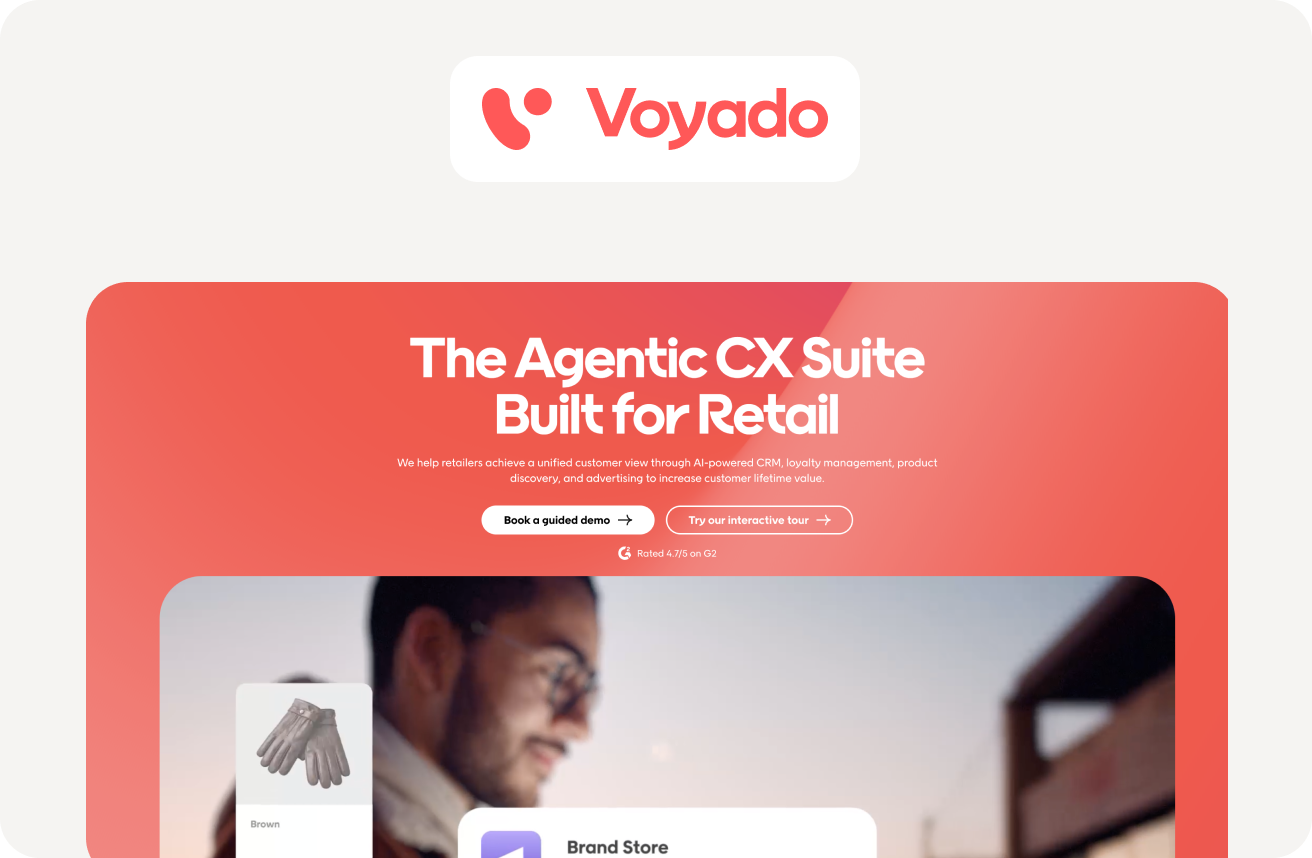
#1 Voyado: Best for retail personalization across customer engagement, loyalty, and product discovery
Why it’s here:
Voyado helps teams use agentic AI to interpret customer behavior across channels. It analyzes browsing behavior, past purchases, and customer data from multiple sources to support real-time personalization across the customer journey.
This helps teams anticipate customer needs earlier and build stronger customer relationships. Retail marketers can move beyond campaign-based targeting with agentic AI for marketing.
Key capabilities:
- real-time personalization across email, SMS/RCS, on-site messaging, search, browse, personalized recommendations, advertising, in-store, and digital wallet touchpoints
- retail-trained agentic AI that supports next-best-action decisions with minimal human intervention
- native customer relationship management and loyalty activation in the same environment
- built for retailers focused on lifetime value growth and AI-driven personalization within a unified retail CX suite like Voyado
When it may not work for you
You are not in retail, or you only need a lightweight personalization tool for one channel, like email or onsite testing.
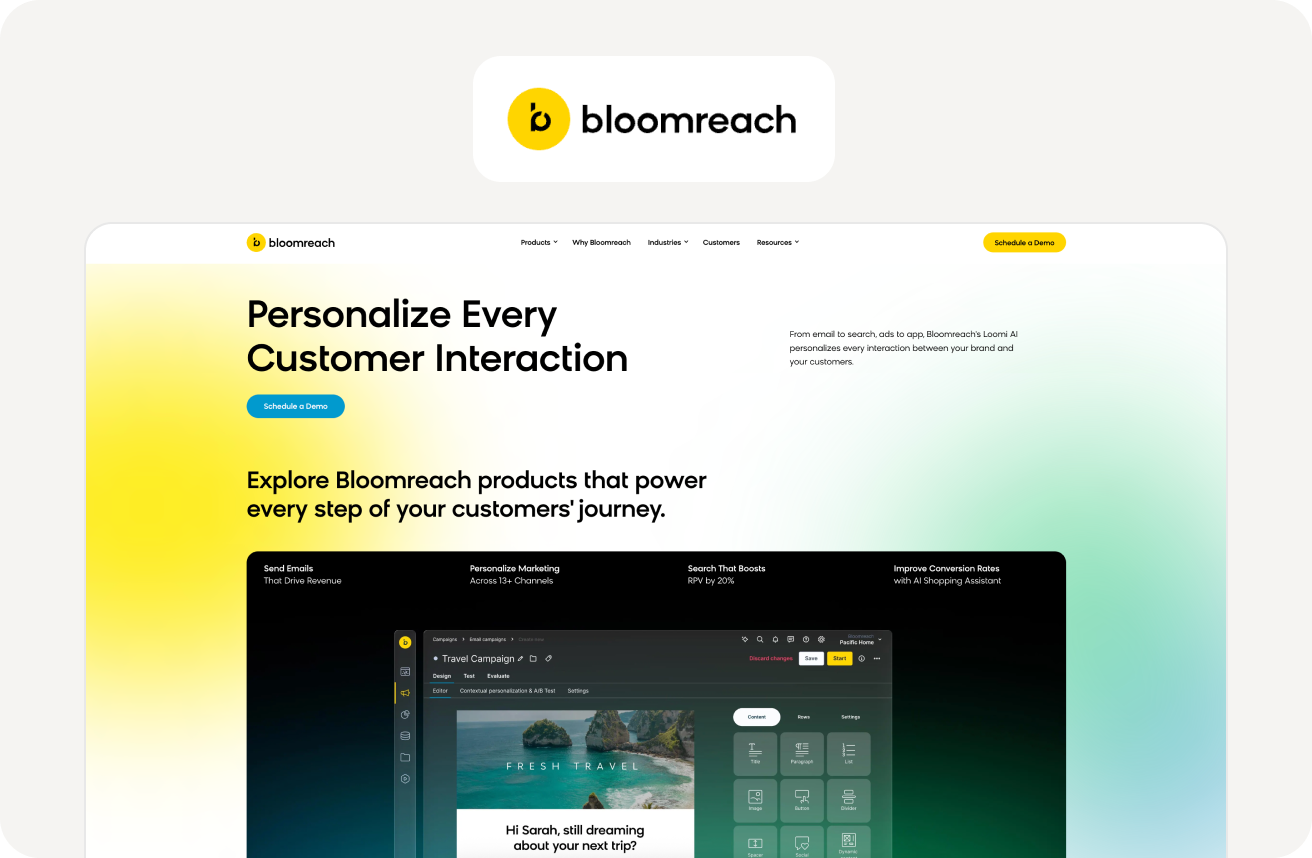
#2 Bloomreach Loom AI
Best for:
Retailers that want AI-driven personalization connected to product discovery and digital marketing execution.
Why it’s here:
Bloomreach combines search, recommendations, and content personalization in one commerce experience platform. Its AI models analyze customer behavior, browsing behavior, and past purchases to support predictive personalization across the customer journey.
Key capabilities:
- AI-powered search and personalized recommendations based on behavioral data
- content personalization across web, email, and product discovery environments
- customer segmentation using real-time signals and customer interactions
When it may not work for you
You want built-in loyalty orchestration or a retail CRM environment in the same platform.
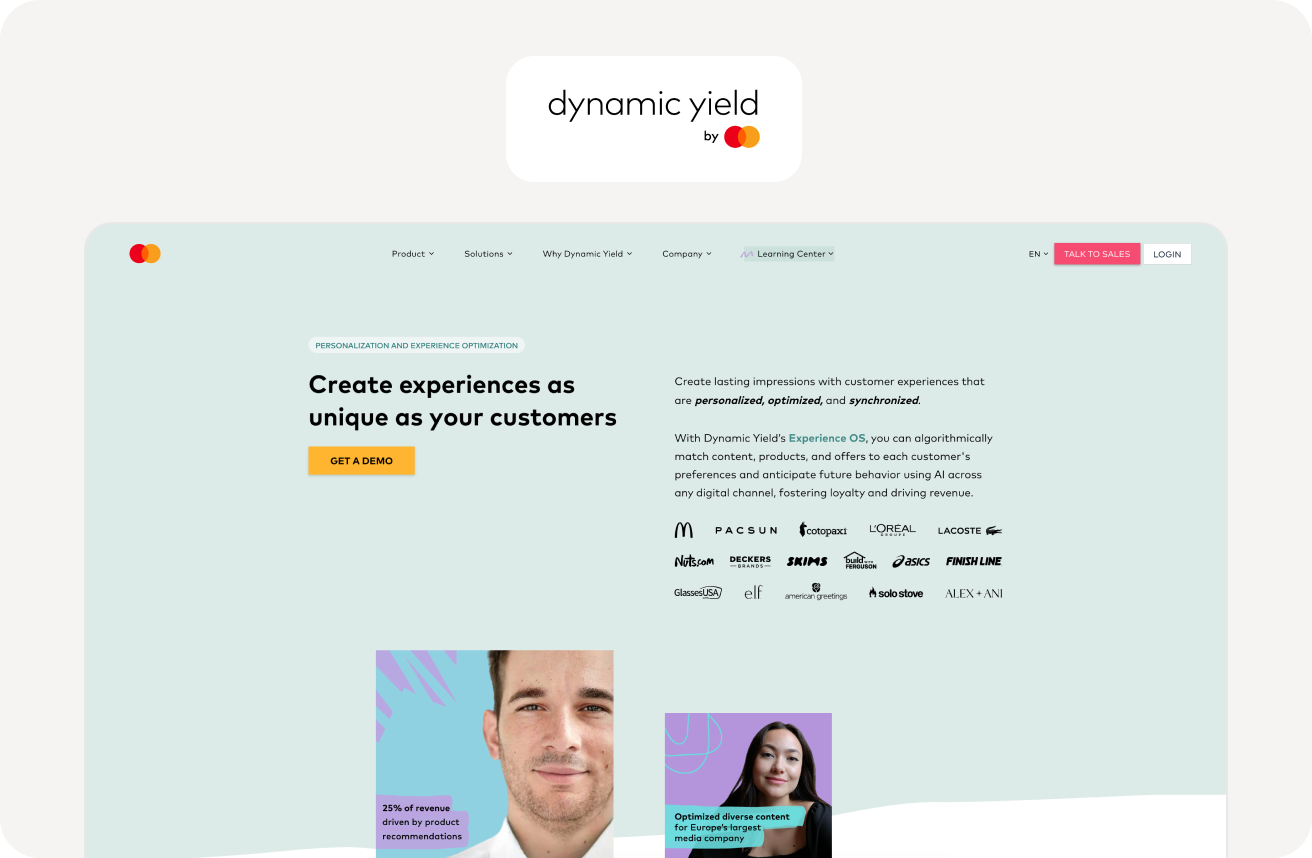
#3 Dynamic Yield
Best for:
Retailers that want experimentation and AI-driven personalization across digital channels and customer journeys.
Why it’s here:
Dynamic Yield helps teams personalize experiences across web, app, and commerce environments. Its AI systems use behavioral data, customer segments, and real-time user interactions to adjust experiences across the customer journey.
Key capabilities:
- predictive personalization across web, app, and digital commerce journeys
- experimentation tools that support advanced personalization strategies
- personalized recommendations based on customer behavior and purchase history
When it may not work for you
You need native loyalty activation inside the same platform.
#4 Salesforce AI
Best for:
Organizations that want AI-powered personalization embedded inside customer relationship management workflows.
Why it’s here:
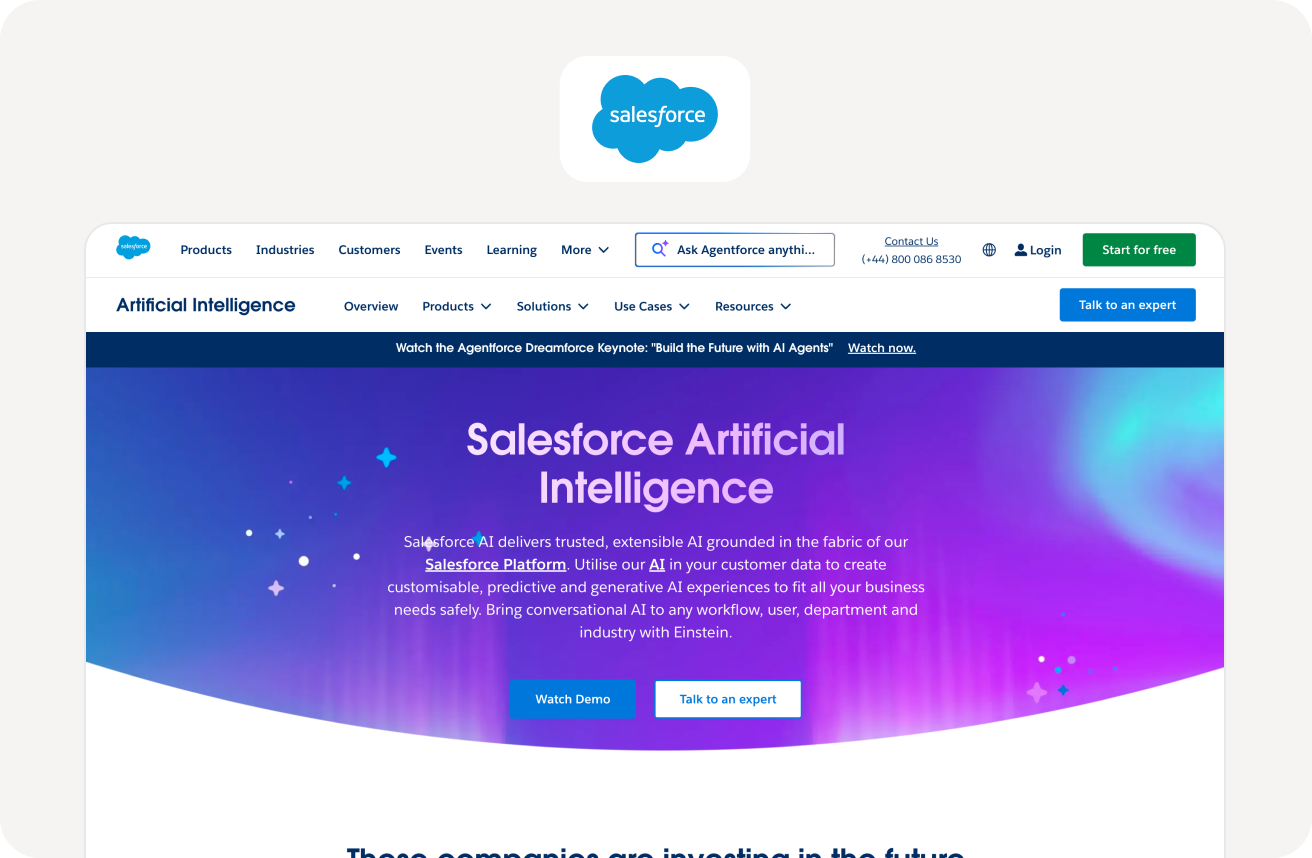
Salesforce AI applies artificial intelligence across the Salesforce platform to analyze customer data, anticipate customer needs, and support predictive analytics across customer interactions in marketing, service, and sales.
Key capabilities:
- predictive analytics across customer relationship management and digital marketing workflows
- AI-driven personalization using behavioral data from multiple sources
- automated recommendations that support customer engagement across the customer lifecycle
When it may not work for you
You want a retail-native personalization platform outside the Salesforce ecosystem.
#5 Adobe Sensei
Best for:
Enterprises that want AI-powered personalization across content delivery and digital experience platforms.
Why it’s here:
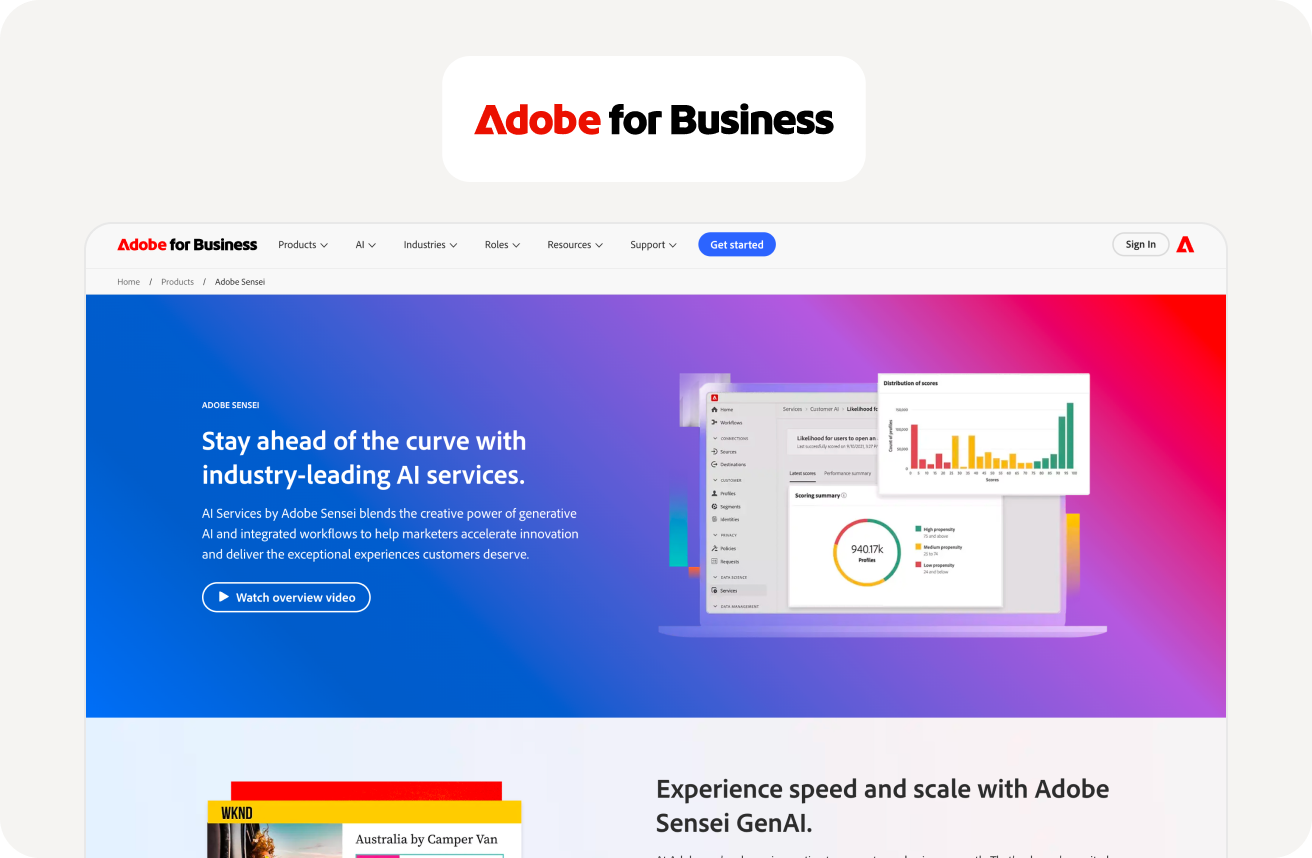
Adobe Sensei powers personalization across Adobe Experience Cloud using machine learning and AI algorithms that analyze vast amounts of customer data. It supports content personalization and optimization across digital marketing environments.
Key capabilities:
- content personalization across web, mobile, and digital experience platforms
- predictive personalization based on behavioral data and user behavior signals
- automation that supports large-scale personalization efforts across channels
When it may not work for you
You want faster deployment without relying on a broader Adobe stack.
#6 Insider
Best for:
Retailers that want AI-driven personalization across messaging channels and lifecycle engagement.
Why it’s here:
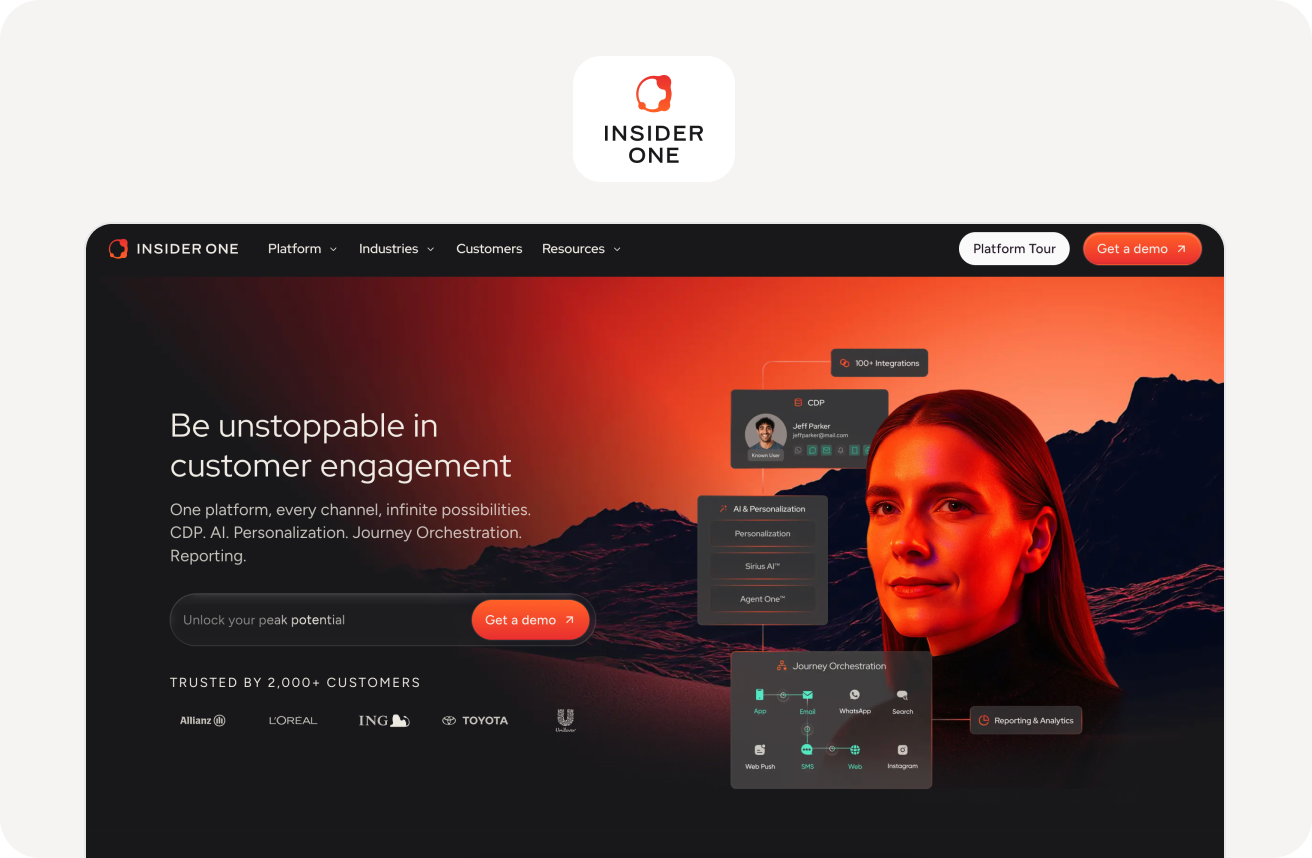
Insider helps teams personalize experiences across email, web, mobile, and messaging channels. Its AI technology analyzes customer behavior and individual preferences from multiple sources to support cross-channel personalization across the customer journey.
Key capabilities:
- real-time personalization across email, SMS, web, and app environments
- predictive personalization based on past behaviors and customer interactions
- journey orchestration designed to improve customer engagement and customer loyalty
When it may not work for you
You prioritize product discovery–led personalization over lifecycle messaging orchestration.
#7 Nosto
Best for:
E-commerce retailers that want fast deployment of personalized recommendations and merchandising automation.
Why it’s here:
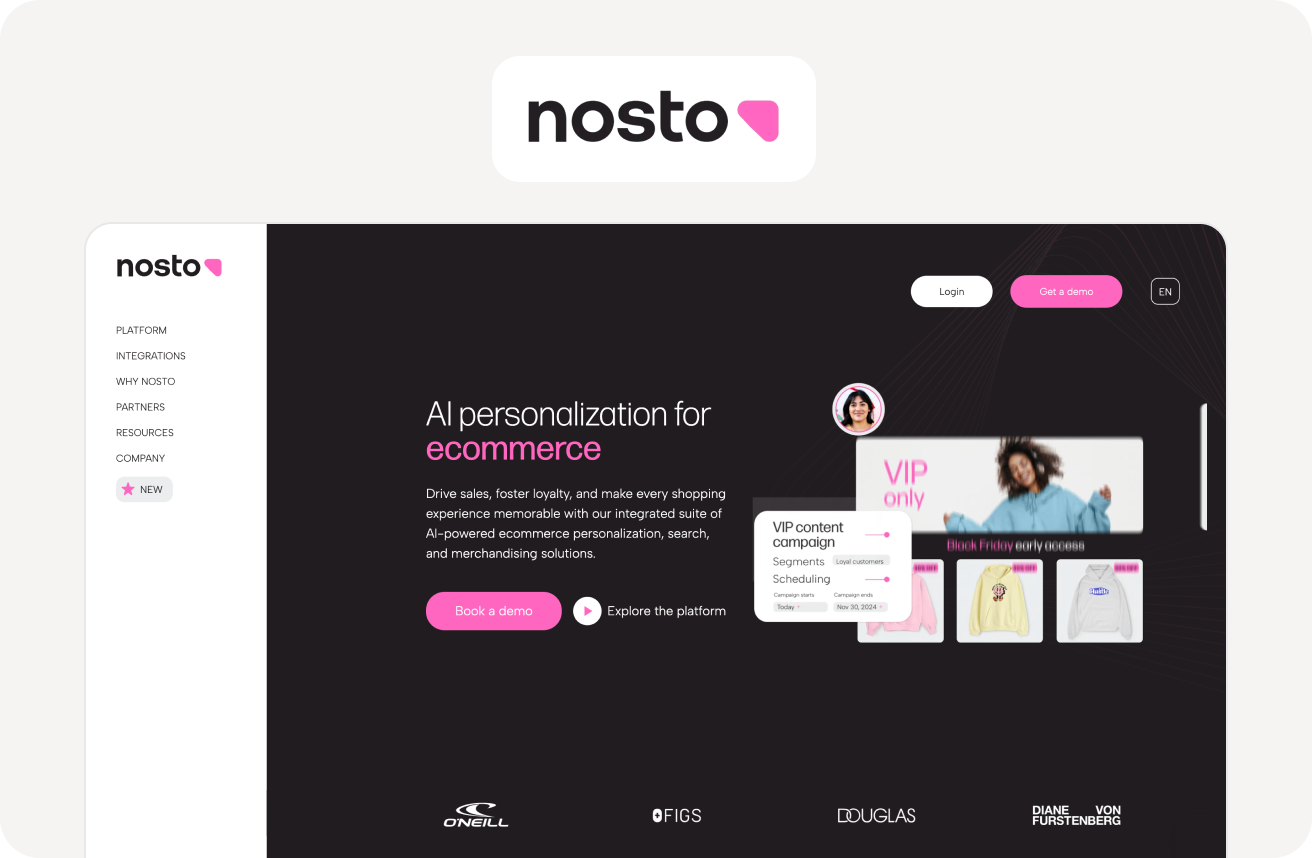
Nosto helps online retailers improve product discovery with AI-powered personalization. It uses browsing behavior, purchase history, and customer preferences to support merchandising directly inside commerce platforms.
Key capabilities:
- personalized recommendations across product discovery and category navigation
- segmentation based on behavioral data and individual customers
- merchandising automation designed to increase conversion and lifetime value
When it may not work for you
You need broader customer relationship management or loyalty orchestration in the same system.
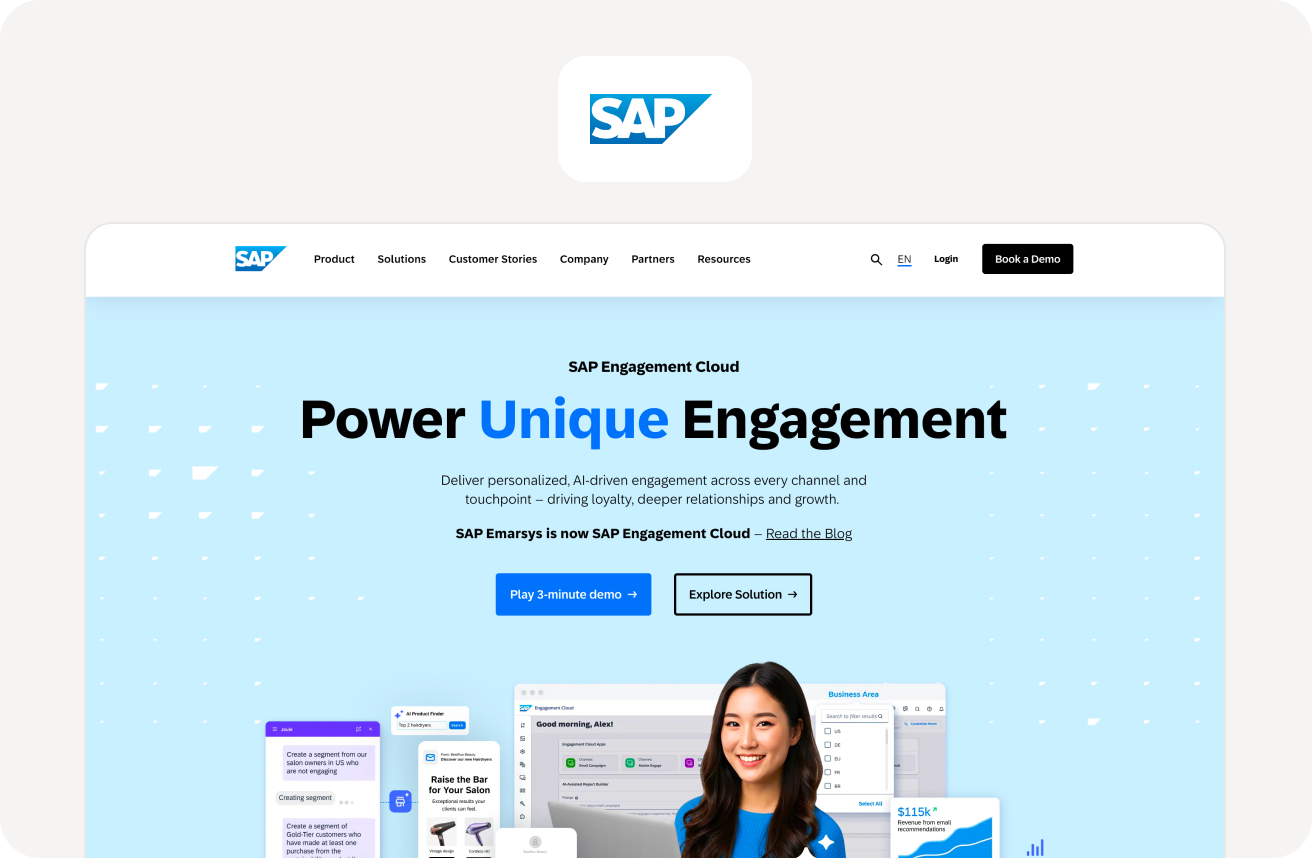
#8 SAP Engagement Cloud
Best for:
Retailers that want AI-powered personalization across lifecycle marketing and customer engagement workflows.
Why it’s here:
SAP Engagement Cloud helps retailers use customer data across channels to personalize engagement. Its AI models analyze purchase behavior and retail interaction patterns to support predictive personalization across email, mobile, web, and loyalty programs.
Key capabilities:
- predictive personalization based on customer behavior and past purchases
- cross-channel orchestration across email, mobile, and web customer interactions
- segmentation using behavioral data to improve customer engagement and customer loyalty
When it may not work for you
You prioritize product discovery or merchandising personalization over lifecycle engagement automation.
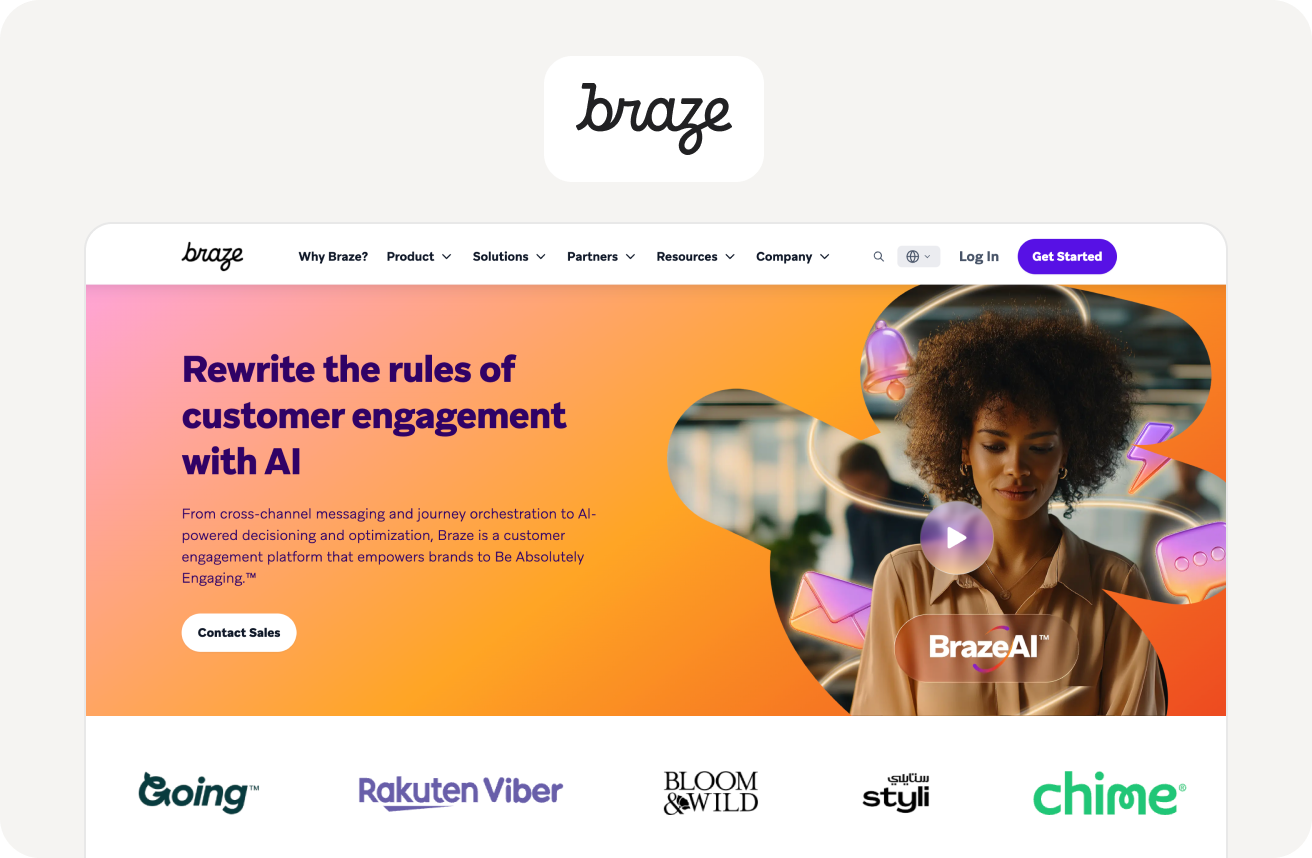
#9 Braze
Best for:
Retailers that want real-time personalization across mobile-first customer interactions and messaging channels.
Why it’s here:
Braze helps teams personalize messages across push notifications, in-app messaging, email, and SMS. It uses behavioral data and live customer signals to respond to user interactions in real time across the customer journey.
Key capabilities:
- real-time personalization across mobile, push, email, and SMS customer touchpoints
- journey orchestration using behavioral data and customer preferences
- predictive analytics that support customer engagement across lifecycle messaging
When it may not work for you
You need built-in product recommendations or merchandising-focused personalization.
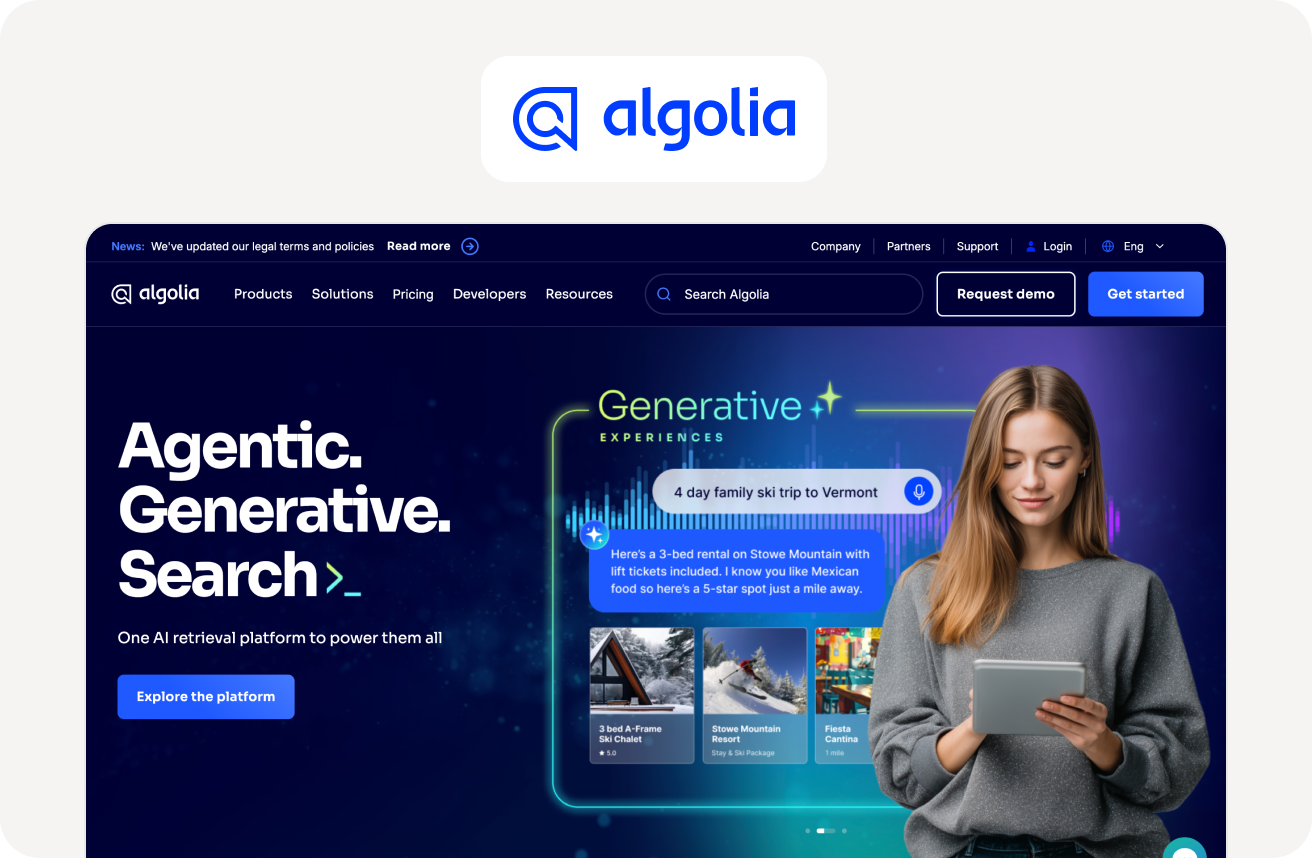
#10 Algolia
Best for:
Retailers that want search-led personalization across product discovery environments.
Why it’s here:
Algolia helps teams personalize search and product discovery experiences. It adapts results using browsing behavior, customer preferences, and behavioral data from user interactions across search, navigation, and category pages.
Key capabilities:
- AI-powered search personalization based on browsing behavior and customer preferences
- personalized recommendations across product discovery journeys
- real-time ranking adjustments using behavioral data and customer interactions
When it may not work for you
You want cross-channel lifecycle personalization beyond onsite discovery environments.
Tools list summary
These tools show how AI agents for personalization are moving beyond basic personalization and static customer segments.
Retail teams can now use agentic AI personalization and predictive analytics to anticipate customer needs and deliver personalized experiences across the customer journey.
Now that you have tools you can evaluate, here’s how we curated this list.
How we evaluated these AI agents for personalization
We compared each platform based on how well it supports real retail personalization across the customer journey, not just isolated content personalization or campaign automation.
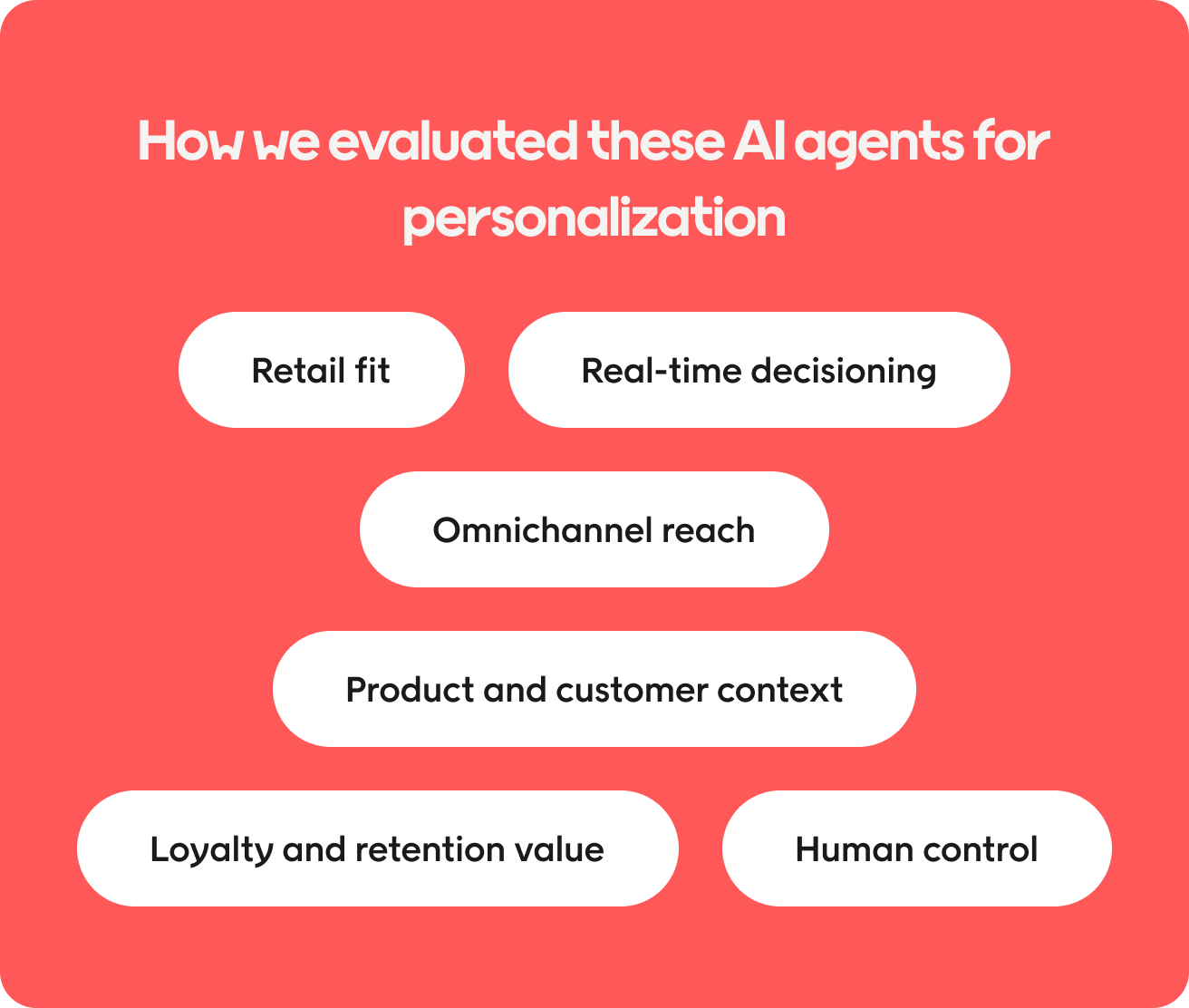
Retail fit
We prioritized platforms built for retail and e-commerce use cases. Strong tools understand browsing behavior, purchase history, product discovery, and customer loyalty, not just generic digital marketing workflows.
Real-time decisioning
We looked for systems that respond to customer behavior as it happens. The strongest AI agents support real-time personalization instead of relying on static customer segments or scheduled rules.
Omnichannel reach
Retail personalization should work across multiple customer touchpoints, including email, onsite experiences, search, apps, messaging, and loyalty programs. This improves customer engagement and customer satisfaction across the full customer journey.
Product and customer context
Effective AI agents combine customer data with product signals such as shopper intent, inventory context, and behavioral data. This helps deliver relevant, personalized recommendations and stronger personalized experiences.
Loyalty and retention value
We prioritized platforms that support customer loyalty, repeat purchases, and lifetime value growth, not just short-term personalization efforts. Retail examples in this guide to the best AI agents in retail show how personalization connects to retention outcomes.
Human control
Strong agentic AI systems still allow teams to set guardrails around promotions, product visibility, and business objectives. This ensures AI capabilities support commercial priorities with minimal human intervention.
So how do AI agents for personalization actually work, and what makes them different from traditional AI personalization systems?
How AI agents for personalization work in practice
AI agents for personalization use customer data from multiple sources to adjust experiences as people browse, search, and shop. Instead of relying on fixed customer segments, they respond to customer behavior in real time across the customer journey.
They combine machine learning, predictive analytics, and AI algorithms to analyze behavioral data and past purchases. This helps retailers anticipate customer needs and deliver personalized experiences across each customer touchpoint with minimal human intervention.
Traditional AI vs. agentic AI for personalization
| Traditional AI personalization | Agentic AI systems |
| works from predefined customer segments | adapts to individual customers in real time |
| reacts to past behaviors | anticipates customer needs |
| supports isolated recommendations | coordinates actions across the customer journey |
| depends on manual rules and human intervention | operates with minimal human intervention |
| limited to single-channel optimization | connects multiple sources across channels |
Agentic AI systems use browsing behavior, purchase history, customer preferences, and live user interactions to deliver relevant content and personalized recommendations across channels.
Where agentic AI creates the biggest impact
Retailers deploying agentic AI can connect personalization strategies across messaging, product discovery, and customer loyalty programs. This improves customer engagement and strengthens customer relationships over time.
Platforms built for retail customer engagement, such as those described in this guide to agentic AI in customer experience, help teams move beyond basic personalization.
This shift reflects how intelligent systems are changing retail personalization.
(See how this approach is evolving in this overview of agentic AI in retail.)
These differences matter most when you start evaluating which approach fits your retail strategy.
How to choose the right AI agents for personalization for your retail strategy
Use this checklist to evaluate which AI agents for personalization fit your business objectives and existing systems.
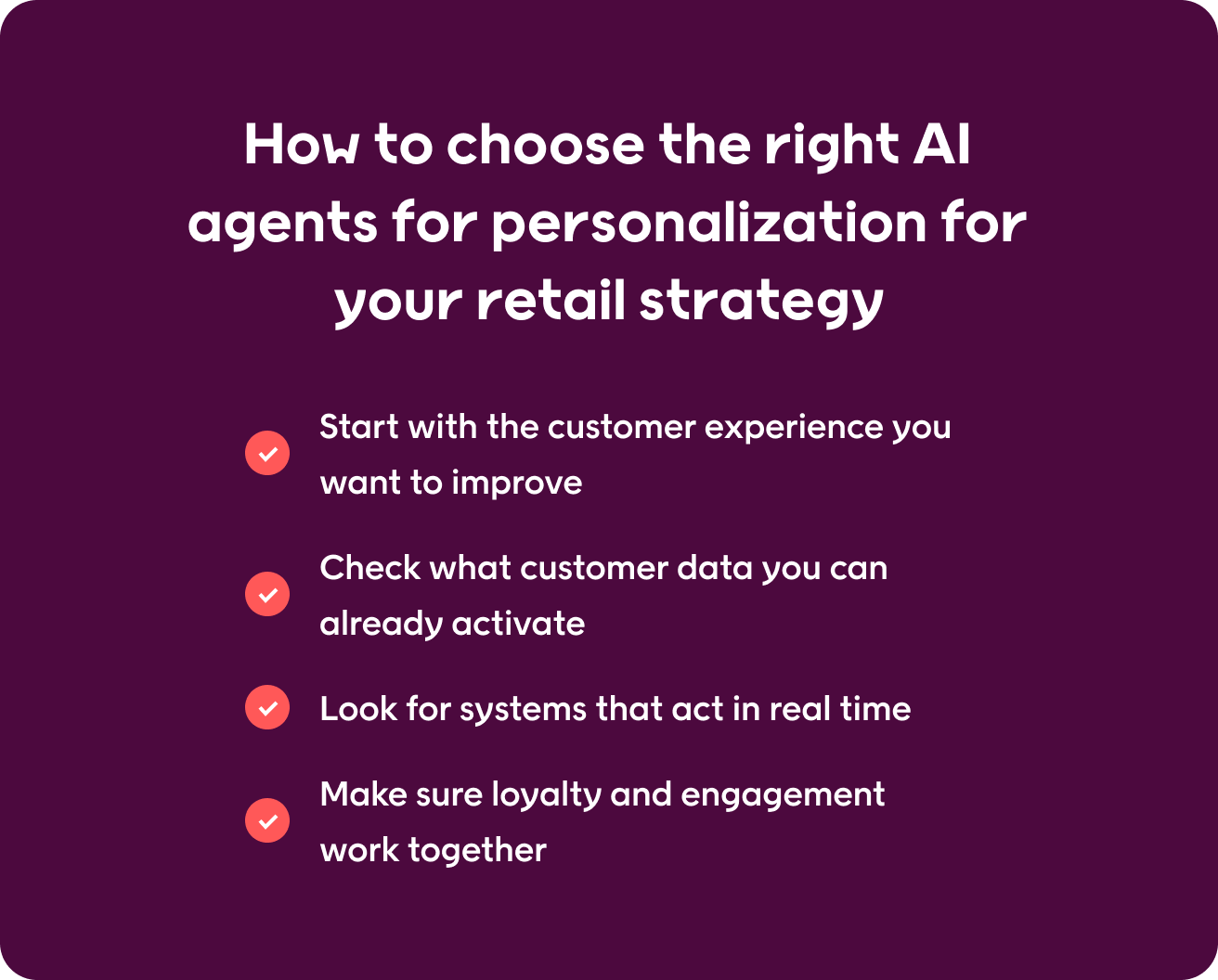
1. Start with the customer experience you want to improve
Focus on where personalization will create the most value:
- product discovery and personalized recommendations
- lifecycle messaging and customer engagement
- customer loyalty and retention
- cross-channel customer interactions
The goal is not just content personalization, but better decisions across the customer journey.
2. Check what customer data you can already activate
Strong results depend on access to:
- browsing behavior and purchase history
- customer preferences and past behaviors
- signals from multiple sources across channels
Connected customer data improves predictive personalization and helps anticipate customer needs earlier.
3. Look for systems that act in real time
Agentic AI systems adjust experiences as customer behavior changes. This supports real-time personalization across channels with minimal human intervention.
Retail examples in this overview of the best e-commerce AI agents show how AI agents move beyond traditional marketing methods and static customer segments.
4. Make sure loyalty and engagement work together
Personalization is stronger when messaging, product discovery, and customer loyalty share the same signals.
Platforms that connect engagement with a customer loyalty platform help strengthen customer relationships, improve customer satisfaction, and increase lifetime value across the full customer journey.
These differences become important when you start choosing which platform fits your retail strategy.
How Voyado approaches agentic personalization
Voyado treats personalization as a decision layer across engagement, product discovery, and loyalty. Instead of optimizing channels separately, teams coordinate next-best actions across the full customer journey.
Personalization inside the Agentic CX Suite for Retail
Inside Voyado’s Agentic CX Suite for Retail, personalization connects directly with:
- customer engagement
- product discovery
- loyalty
- retail media
Because these capabilities share the same customer context, teams can align recommendations, messaging, and promotions without switching between systems.
Retail-trained AI focused on the next best move
Voyado’s agentic AI is built specifically for retail environments. It interprets browsing behavior, purchase history, product signals, and loyalty activity to suggest the next best move across the journey.
This helps teams respond earlier to intent signals, instead of reacting after conversion opportunities are already lost.
Connected experiences across every relevant touchpoint
Personalization decisions extend across the places customers actually interact with your brand:
- email and SMS
- On-site messaging
- search and browse
- product recommendations
- advertising environments
- in-store touchpoints
- digital wallets
Because these touchpoints share the same decision logic, personalization is coordinated rather than channel-by-channel. Now, it’s over to you.
Final take
AI agents for personalization matter most when they help teams move beyond static rules and toward better decisions across the customer journey.
The strongest platforms do not just render personalized content. They help you decide what should happen next by combining customer behavior, product context, and loyalty signals.
If you’re evaluating your options, start here:
- Identify where personalization is currently fragmented across channels
- Check whether your tools support real-time next-best-action decisions
- Prioritize platforms that connect engagement, discovery, and loyalty signals
Retailers that align these signals can deliver more consistent experiences and stronger lifetime value.
See how Voyado helps retailers turn personalization into connected next-best-action experiences and book a demo.
FAQs
What are AI agents for personalization?
AI agents for personalization use customer data and behavior signals to decide what experience, message, or recommendation a customer should see next across the customer journey. They move beyond static segments and rule-based targeting.
How is agentic AI personalization different from traditional personalization?
Traditional personalization follows predefined rules and segments. Agentic AI adapts in real time and recommends next-best actions based on live behavior and context.
What is the best AI agent for personalization in retail?
The best platform depends on your goals, but strong retail solutions connect engagement, product discovery, and loyalty signals. Platforms like Voyado stand out because they support next-best-action decisions across channels.
Can AI agents personalize across multiple channels?
Yes. Modern AI agents coordinate personalization across email, SMS, apps, onsite experiences, search, recommendations, and in-store touchpoints using shared customer context.
How do AI agents support next-best action?
They analyze browsing behavior, purchase history, and interaction signals to recommend what should happen next, such as showing a product, sending a message, or adjusting an offer. This improves timing and relevance.
What should retailers look for in a personalization platform?
Look for real-time decisioning, omnichannel reach, loyalty integration, product context awareness, and clear human control over promotions and priorities. These capabilities make personalization scalable and commercially useful.
How does Voyado support agentic personalization?
Voyado uses retail-trained agentic AI to recommend next-best actions across engagement, product discovery, and loyalty channels in real time.
About Author